

Off the south-west coast of County Kerry, two jagged rocks rise from the Atlantic Ocean. The larger one is Skellig Michael. The smaller is Little Skellig. Together, they form one of the most dramatic seascapes in Ireland — and one of the most visited, if briefly, in the world.
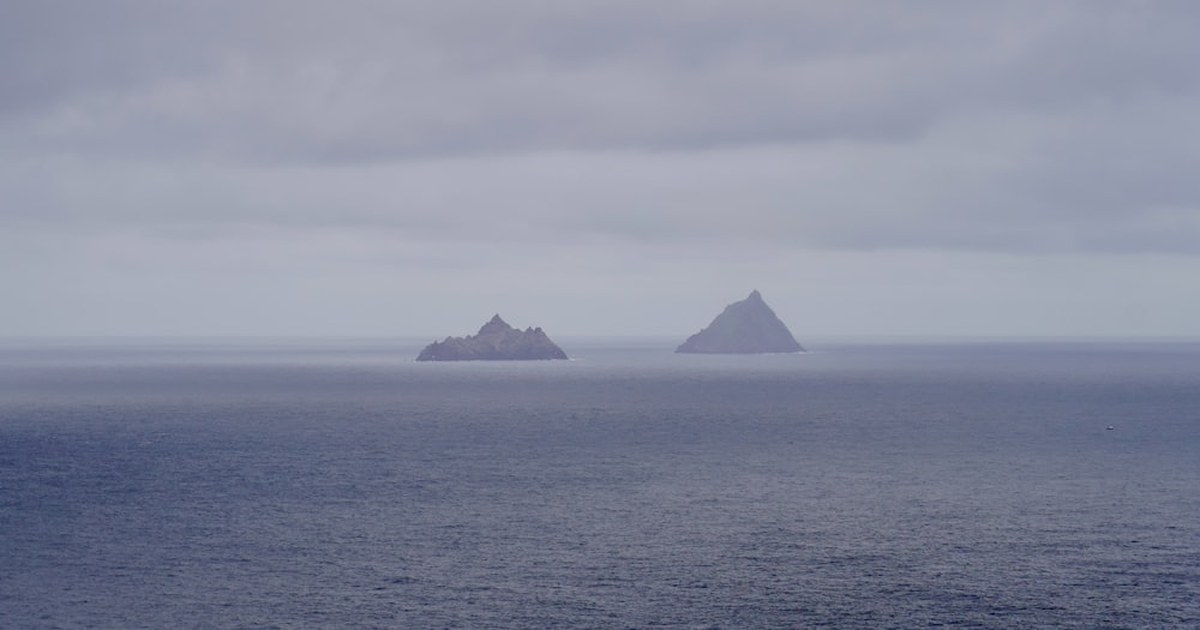
Standing on the steep cliffs of Skellig Michael and looking across to Little Skellig, you get a view that’s difficult to put into words. The smaller island is completely inaccessible to visitors — a near-vertical rock coated in gannets, home to the second-largest gannet colony in the world. It sits maybe 1.5 kilometres away, but it feels utterly unreachable. That contrast — where you are standing and where you are looking — creates a sense of solitude that very few places in Ireland can match.
This article covers what Skellig Michael actually is, why it matters, what the experience of visiting is like, and how to plan a trip if you want to see it for yourself.
What Is Skellig Michael?
Skellig Michael is a UNESCO World Heritage Site located roughly 12 kilometres off the Iveragh Peninsula in County Kerry. The island rises to 218 metres at its highest point and is composed almost entirely of hard sandstone. There is no soil to speak of. There are no trees. The terrain is steep, exposed, and shaped entirely by the sea and the wind.
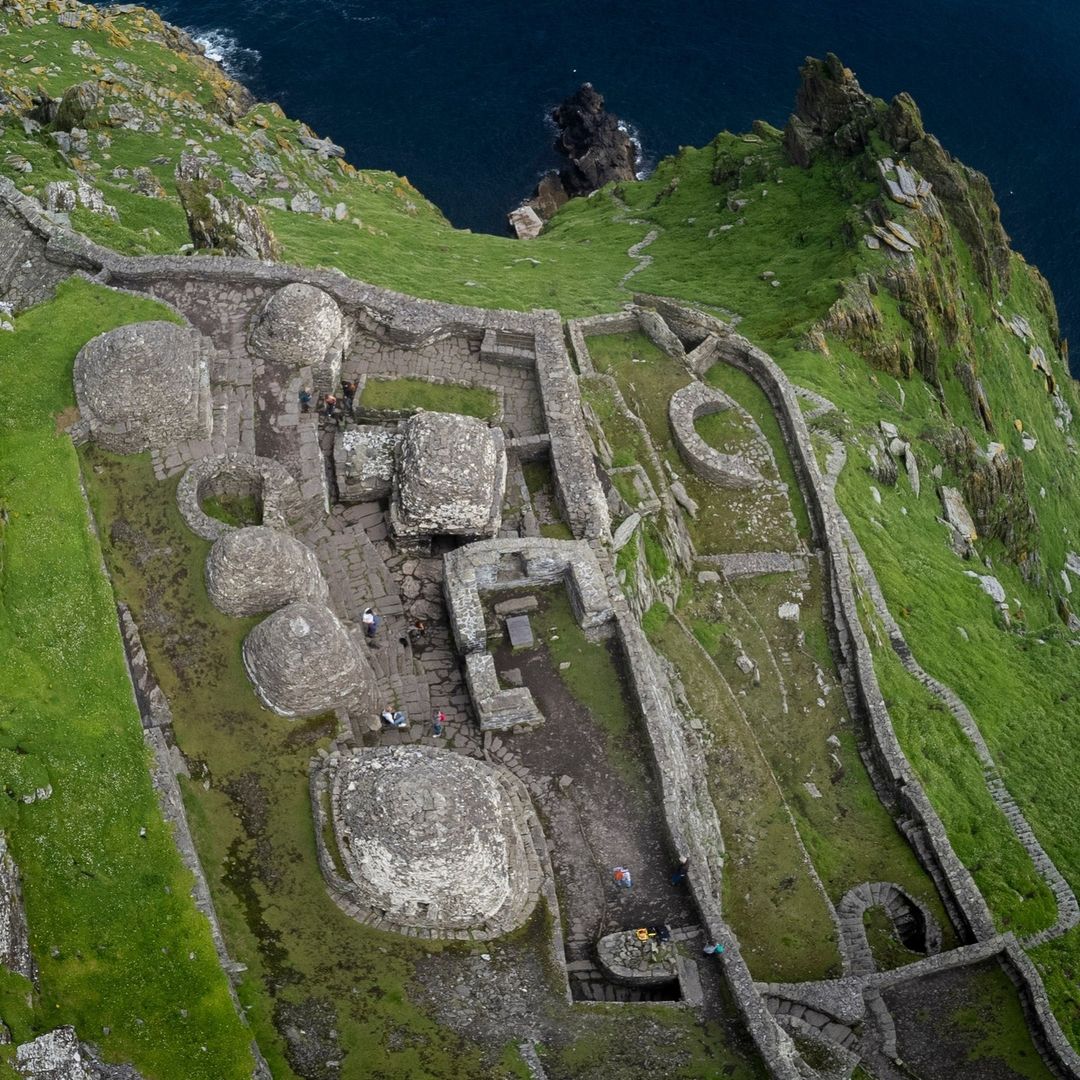
What makes the island so significant — historically and visually — is the monastic settlement at its summit. Sometime around the 6th century, a group of early Christian monks established a community on this rock. They built dry-stone beehive huts, oratories, and terraces out of the raw landscape, using nothing but stone-on-stone construction without mortar. Those buildings are still standing today.
The monks lived here for several centuries. There is no documentary evidence confirming an exact founding date — historians place it sometime between the 6th and 8th centuries, with tradition (though not firm evidence) crediting a Saint Fionán — and the settlement remained occupied until around the 12th or 13th century. Life on the island would have been extraordinarily harsh. They grew small gardens on man-made terraces, fished, collected rainwater, and lived in near-total isolation in pursuit of a contemplative religious life.
What they built has lasted over a thousand years. The beehive huts (called clochans) are among the best-preserved examples of early medieval stone architecture in Europe. The site was inscribed as a UNESCO World Heritage Site in 1996.
Little Skellig: The Island You Can Only Look At
Little Skellig is the island you see from Skellig Michael’s cliffs — and the one you cannot visit. It is private, protected, and almost entirely covered by gannets for much of the year.
Around 70,000 gannets nest on Little Skellig, making it the second-largest gannet colony in the world after Bass Rock in Scotland. The sheer number of birds means the rock appears white from a distance — not from the stone itself, but from the birds covering every surface. During nesting season, the noise carries across the water.
Puffins also nest on Skellig Michael itself, typically arriving in spring and leaving by late summer. They burrow into the soft grassy areas near the cliffs and are remarkably unbothered by visitors, making them easy to observe at close range — one of the unexpected highlights of any visit.
The view from Skellig Michael toward Little Skellig is one of those sights that genuinely stops people mid-sentence. The combination of the scale of the rock, the volume of gannets, and the open ocean surrounding it creates an impression of the natural world operating completely independently of human activity — which, apart from the research boats that occasionally visit, it largely does.
The Climb: 600 Steps of Uneven Stone
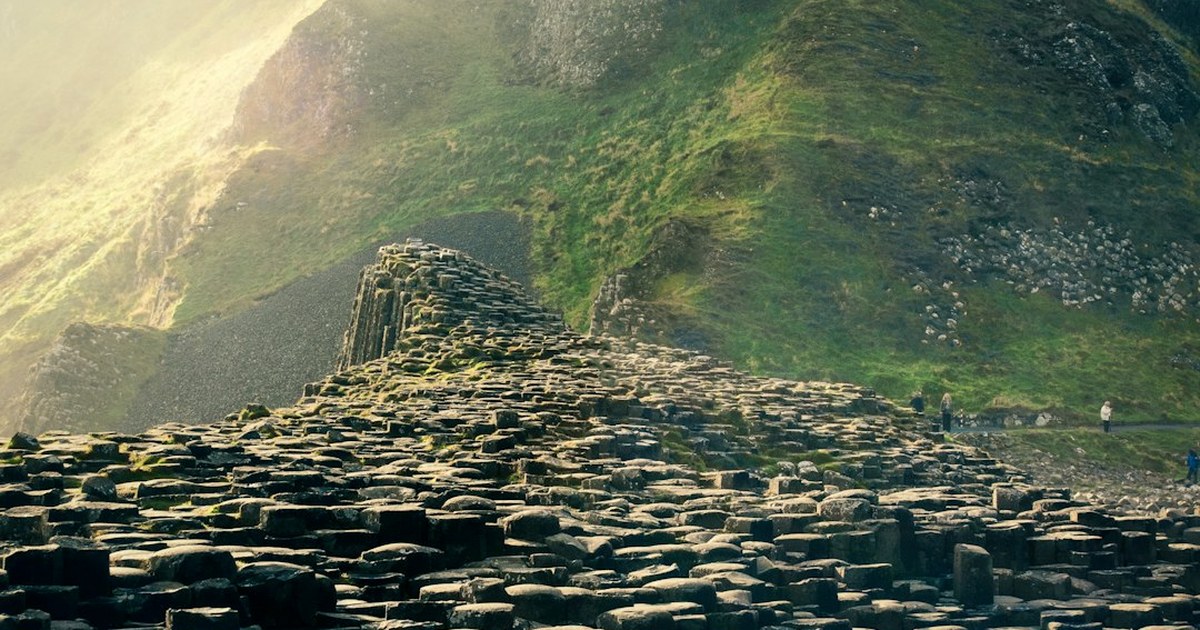
Visiting Skellig Michael is not a gentle experience. The island has no road, no cable car, and no lifts. Access to the monastic settlement at the top requires climbing approximately 600 steep stone steps, many of which are uneven, exposed to the wind, and without handrails. The path was built by the monks themselves and has not been significantly altered since.
The climb takes most visitors between 30 and 60 minutes one way, depending on fitness and pace. The views from the path are extraordinary, but the focus required to place your feet correctly means you spend a lot of time looking down rather than out. There are points on the route — particularly a section known as the Needle’s Eye — where the steps narrow considerably and a head for heights becomes genuinely useful.
Once at the top, the settlement itself is well preserved and clearly laid out. The beehive huts vary in size; the largest is large enough to stand in. The oratories — small boat-shaped stone prayer houses — are structurally remarkable given their age. You can walk through the settlement and look inside the structures. There are information boards explaining the history and layout.
Visitors are permitted to spend around two hours on the island before boarding the return boat. Most find that is enough time to climb, explore the settlement, watch the puffins, and take in the views of Little Skellig and the Kerry coastline. Official info: en.wikipedia.org/wiki/The_Climb.
Skellig Michael and Star Wars
Skellig Michael gained a significant new audience when Star Wars: The Force Awakens was released in December 2015, revealing that its closing sequence had been filmed on the island the previous year. The island stood in for the remote planet Ahch-To, where Luke Skywalker had gone into hiding. Further scenes were filmed there for The Last Jedi.
The film crew used the existing stone paths and beehive huts, with minimal dressing required — the landscape was deemed visually suitable as-is. The production brought significant international attention to the island, and visitor numbers increased noticeably in the years following the film’s release.
For visitors who come because of Star Wars, the reality of the island typically outweighs the fictional association quickly. The history and the physical landscape are striking enough on their own terms. The monastic settlement predates the films by about 1,400 years.
How to Visit: Practical Information
Skellig Michael is only accessible by boat, and boats only run when sea conditions allow. Most boats depart from Portmagee or nearby Valentia Island, where the crossing takes around 45 minutes; boats from Ballinskelligs run a longer route and can take closer to 90 minutes, so check your operator’s departure point before booking. The island is typically open to visitors from mid-May to early October, though this varies by year and weather.
Visitor numbers are strictly limited. Only a small number of licensed boats are permitted to land passengers, and each carries a limited number of people. The total daily visitor count is capped by the Office of Public Works (OPW), which manages the island. Booking well in advance — often months ahead — is essential during peak summer months.
There is no food, water, or shelter on the island beyond a small landing jetty and the stone structures themselves. Visitors should bring their own water, wear sturdy footwear with good grip, and dress in layers. The wind at the summit can be significant even in summer, and the temperature on the exposed cliff tops is typically lower than on the mainland.
Children can visit, but the climb should be assessed carefully before booking. The steps are steep and long, and there is no alternative route to the monastic settlement. The OPW advises that the site is not suitable for very young children or those with limited mobility.
Boats depart in the early morning and conditions can change quickly. Trip cancellations due to weather are common, particularly in May and September. Operators will typically offer an alternative date or a refund if a trip is cancelled, but flexibility in your travel plans is advisable if visiting Skellig Michael is a priority.
The View That Stays With You
The image from the original Facebook post — that view of Little Skellig from the cliffs of Skellig Michael — is one that a lot of visitors describe as the moment the island truly made an impression. You have climbed 600 steps. You are standing at the edge of Europe, more or less. The wind is there. The Atlantic is below you. And that smaller island, white with gannets, sits in the water like something from another time entirely.
Ireland has many places that produce a feeling of scale and distance. Skellig Michael produces both of those things and adds isolation in a way that is hard to replicate on the mainland. For a few hours, you are genuinely far from ordinary life — not because there is nothing to see, but because what is there has nothing to do with the modern world at all.
The monks who built those huts understood this. Whether or not that was the point of their location, it is the effect it has. It is one of the most distinctive experiences available anywhere on the island of Ireland. If the wild Atlantic edge of Kerry appeals, the story of the Great Blasket Island — visible from the coast on a clear day — is worth reading before or after your visit.
Thinking about it seriously?
If you’ve started actually planning a move, our complete the full Move to Ireland guide walks through every step, every cost, and the paperwork that catches most people out.
Tours & experiences you might love


Powered by Viator. Some links are affiliate links — we may earn a small commission at no extra cost to you.
Secure Your Dream Irish Experience Before It’s Gone!
Planning a trip to Ireland? Don’t let sold-out tours or packed attractions spoil your journey. Iconic experiences like visiting the Cliffs of Moher, exploring the Rock of Cashel, or enjoying a guided walk through Ireland’s ancient past often sell out quickly—especially during peak travel seasons.

Booking in advance guarantees your place and ensures you can fully immerse yourself in the rich culture and breathtaking scenery without stress or disappointment. You’ll also free up time to explore Ireland’s hidden gems and savour those authentic moments that make your trip truly special.
Make the most of your journey—start planning today and secure those must-do experiences before they’re gone!
Subscribe Free