

The Cliffs of Moher draw millions of visitors every year. They are famous, well-signposted, and easy to find. But there is another set of sea cliffs on the Irish coastline that stands nearly three times taller — and far fewer people make the journey to see them.
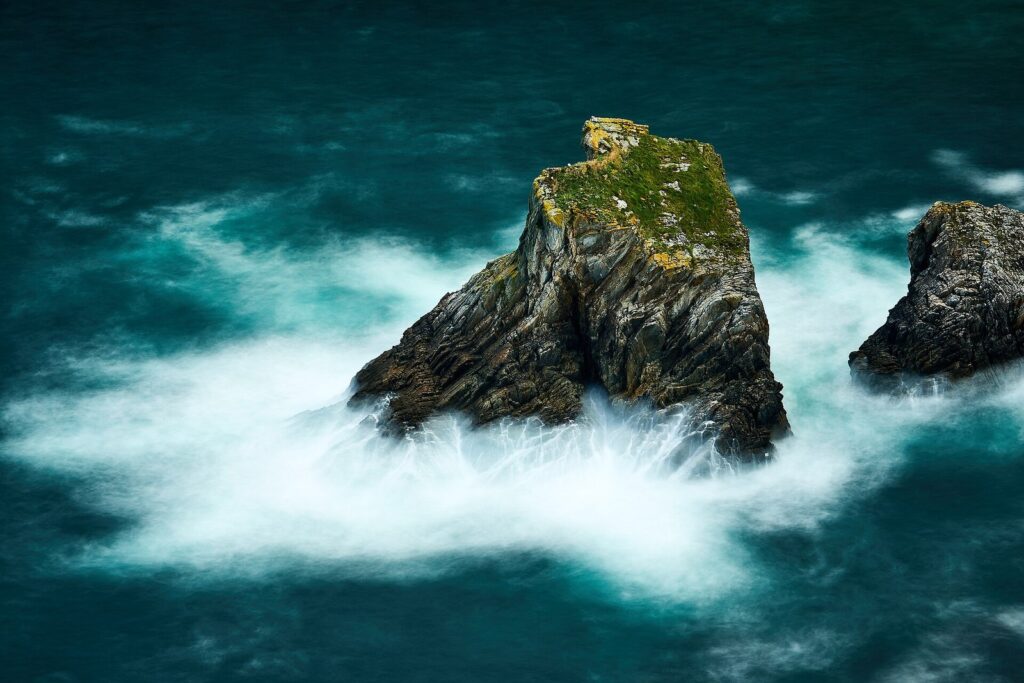
Slieve League (Sliabh Liag in Irish) rises to 601 metres above the Atlantic Ocean along the south-west coast of County Donegal. That makes it one of the highest sea cliffs in Europe. The views from the top are vast, and the surrounding landscape — wild, quiet, and remote — gives the whole experience a different quality to the more visited sites further south.
This guide covers everything you need to know about visiting Slieve League, from how to get there and which viewing points are worth your time, to the walking routes and what to do once you have seen the cliffs.
What Are the Slieve League Cliffs?
Slieve League is a mountain on the south-west tip of County Donegal, overlooking the Atlantic Ocean. The sea-facing side of the mountain forms a continuous wall of rock and grass that drops steeply to the water below. At its highest point, the cliff face measures 601 metres (1,972 feet) — making it one of the tallest coastal cliffs in Europe.
The cliffs are part of the Wild Atlantic Way, the coastal driving route that runs along Ireland’s entire western seaboard. They are located near the village of Carrick and the small harbour at Teelin, in an area of Donegal known for its raw, largely unchanged landscape.
How Do Slieve League Compare to the Cliffs of Moher?
It is a fair question, because the Cliffs of Moher in County Clare are Ireland’s most visited natural attraction, drawing in well over a million visitors a year.
The Cliffs of Moher reach a maximum height of 214 metres (702 feet). Slieve League, at 601 metres, is almost three times that height. In terms of sheer scale, Slieve League wins on the numbers.
What the Cliffs of Moher do offer is accessibility. There is a large visitor centre, good parking infrastructure, and a clear path along the top. Slieve League is quieter, more rugged, and requires more effort — but that is also part of the appeal. On a busy summer day at Moher, you may share the path with thousands of other people. At Slieve League, the experience is far more open.
For visitors who have already seen Moher, or who prefer to travel off the well-worn path, Slieve League is worth the extra distance north.
💌 Want more hidden gems and honest travel guides for Ireland? Subscribe to our free newsletter — delivered straight to your inbox. Subscribe here →
How to Get to Slieve League
Slieve League is located in the south-west of County Donegal, roughly 50 kilometres (31 miles) from Donegal Town and about 23 kilometres (14 miles) from the fishing town of Killybegs.
There is no public transport that goes directly to the cliffs. The most practical way to visit is by car. The route from Donegal Town takes approximately one hour and runs through Killybegs and Kilcar before reaching the turning for Carrick and Teelin.
From Dublin, allow around four hours by car. From Galway, the drive takes roughly three hours.
The road to the upper viewing area narrows significantly in the final kilometre. Large vehicles and campervans should park at the lower car park and walk the remainder. The approach road is single-lane in places, so take care on the bends.
The Best Viewing Points at Slieve League
There are two main viewing areas at Slieve League.
Lower Car Park (Slieve League Cliffs Centre): The visitor centre sits at the lower level and offers a viewing area with a view of the cliffs across the water. This is also where you will find facilities including toilets, a café, and parking. It is the most accessible option for visitors who are not planning to walk.
Bunglas Viewpoint (Upper Car Park): This is the dramatic one. The upper viewpoint sits much closer to the cliff edge, and the views from here are significantly more impressive. From Bunglas, you can see the full face of the cliffs and the Atlantic stretching out below. On a clear day, the Aran Islands and even parts of the Scottish coast can be visible. Private car access up the final stretch to Bunglas is limited — most visitors reach it on the shuttle bus that runs from the visitor centre, with direct vehicle access reserved for taxis and disabled permit holders.
The walk from the upper car park to the cliff edge takes only a few minutes. This is where most photographs from Slieve League are taken.
Walking Routes at Slieve League
For those who want to go further, there are two main walking options.
The Pilgrim Path: This is a lower-level coastal walk that runs from Teelin up to the cliffs. It is a well-worn route and not too technically demanding. The path is named after the ancient pilgrim tradition that once connected this coastline to sacred sites throughout Donegal. At 3.5km, allow three to three and a half hours return.
One Man’s Pass: This is a narrow ridge walk that runs along the top of the cliffs towards the summit of Slieve League. It is exposed, and in places the ridge is very narrow indeed — wide enough for one person at a time, as the name suggests. The drop on either side is severe. This route is not suitable for anyone with a fear of heights, and should not be attempted in wet or windy conditions. Proper footwear is essential.
Both routes offer extraordinary views when the conditions are right. If you are walking to the top, check the weather forecast before setting out. Conditions at the summit can change very quickly, and mist can roll in fast.
💌 Sign up for our free newsletter for more practical travel guides, hidden corners of Ireland, and local tips. Subscribe here →
What to Expect on the Day
The cliffs are at their best in good light — early morning or late afternoon tends to give the most dramatic colours and shadows on the cliff face. The midday sun can wash out some of the texture in photographs.
Expect wind. Even on a warm, calm day at lower elevations, the clifftop is usually breezy. A windproof layer is worth packing even in summer.
The Slieve League Cliffs Centre is open from 9am to 6pm daily. Parking at the visitor centre is free. Private vehicle access up to the Bunglas viewing platform is restricted — most visitors take the shuttle bus from the visitor centre (a small fee applies), with direct car access reserved for taxis and disabled permit holders. The shuttle may be suspended during very high winds or severe weather.
In peak summer (July and August), the visitor centre car park and shuttle queue can get busy early in the day. Arriving before 10am or after 4pm will give you a quieter experience and better light for photos.
Nearby Attractions in South Donegal
Slieve League sits at the heart of one of Ireland’s most undervisited corners. A few places worth adding to your itinerary if you are in the area — and for a full picture of the county, see our guide to the best things to do in Donegal.
Killybegs: Ireland’s largest fishing port, about 23 kilometres from the cliffs. The harbour is active and working, and the town has good food options. The smell of fish is real — this is a working port, not a tourist reconstruction.
Glencolmcille: A Gaeltacht village about 20 kilometres west of Slieve League. The village has a folk village museum that gives a clear picture of rural Irish life over the past three centuries. Irish is still spoken here as a first language by much of the community.
Malin Beg and Silver Strand: A small, sheltered beach at the end of a steep road, about 25 kilometres from Slieve League. One of the finest and least crowded beaches in Donegal.
The Atlantic Drive: The road connecting Killybegs, Kilcar, Carrick, and Glencolmcille is worth taking slowly. The views across Donegal Bay are consistent throughout, and the road itself passes through genuinely beautiful coastal scenery.
Planning Your Visit: Practical Information
- Address for sat-nav: Teelin, County Donegal, F94 EV52
- Parking: Free at the Slieve League Cliffs Centre (lower). Direct car access to the upper Bunglas viewpoint is restricted to taxis and disabled permit holders — other visitors take the shuttle bus (small fee, weather permitting)
- Opening hours: Centre open 9am–6pm daily
- Facilities: Café, toilets, and gift shop at the visitor centre
- Best time to visit: April to September for the best daylight and weather. Avoid Bank Holiday weekends if crowds are a concern
- What to bring: Waterproof jacket, walking boots if hiking, windproof layer
- Mobile signal: Patchy on the cliff top. Download offline maps before you go
Slieve League is not the most famous destination on the Irish coastline, and that is a genuine part of its appeal. If you are planning a trip to Ireland and can go further north than most visitors bother to travel, these cliffs are worth every kilometre of the journey.
💌 If you love discovering places like this — honest, practical travel writing about the Ireland that most visitors never find — subscribe to our free newsletter. New issues every week. Subscribe to the Love Ireland newsletter →
Image credit: Shutterstock
Thinking about it for retirement?
If you’ve started thinking seriously about retiring there, our complete our full Retire in Ireland guide covers the visa, healthcare, cost-of-living, and the regions worth shortlisting.
Tours & experiences you might love


Powered by Viator. Some links are affiliate links — we may earn a small commission at no extra cost to you.
Secure Your Dream Irish Experience Before It’s Gone!
Planning a trip to Ireland? Don’t let sold-out tours or packed attractions spoil your journey. Iconic experiences like visiting the Cliffs of Moher, exploring the Rock of Cashel, or enjoying a guided walk through Ireland’s ancient past often sell out quickly—especially during peak travel seasons.

Booking in advance guarantees your place and ensures you can fully immerse yourself in the rich culture and breathtaking scenery without stress or disappointment. You’ll also free up time to explore Ireland’s hidden gems and savour those authentic moments that make your trip truly special.
Make the most of your journey—start planning today and secure those must-do experiences before they’re gone!