

The Giant’s Causeway stops you in your tracks. One moment you’re walking along a coastal path in County Antrim, Northern Ireland, and the next you’re standing before 40,000 interlocking basalt columns descending in perfect geometric steps into the North Atlantic — and you feel, in the most unexpectedly pleasant way, impossibly small. That’s not a flaw in the experience. It’s the whole point.
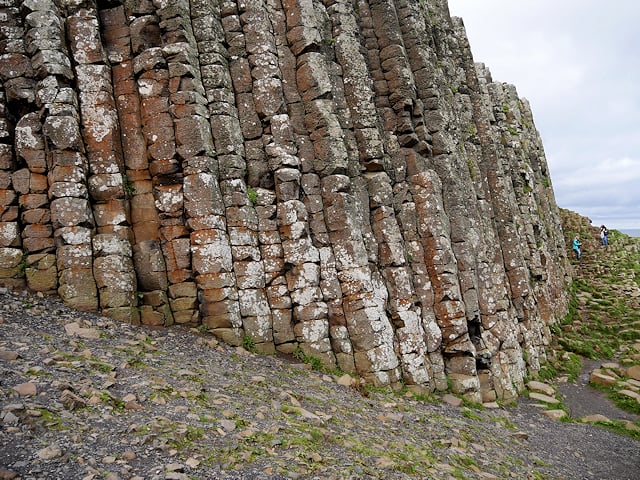
What you’re looking at is approximately 60 million years of Earth’s history made visible. During a period of intense volcanic activity, molten lava pushed up through chalk beds and cooled with extraordinary regularity, contracting into the hexagonal columns we see today. The result is something that looks almost too deliberate — too architectural — to be the work of geology rather than a giant. Irish legend, of course, agrees: this is where Fionn mac Cumhaill built his causeway to Scotland to fight his rival Benandonner. Science and story are equally compelling here.
UNESCO recognised the Giant’s Causeway as a World Heritage Site in 1986, making it one of only three UNESCO World Heritage Sites on the island of Ireland (alongside Brú na Bóinne and Skellig Michael). It remains one of Northern Ireland’s most visited tourist attractions, drawing hundreds of thousands of visitors each year — and still managing to feel, at the right hour, completely otherworldly.
Why It Feels So Dramatic
Part of what makes the Giant’s Causeway so affecting is the contrast. You arrive through green rolling countryside, the kind of landscape that feels gently pastoral. Then the cliffs open up and there they are: columns of dark basalt stacked like a vast stone organ, the sea crashing below, seabirds wheeling overhead. The scale shift is genuinely disorienting. Your eye can’t quite process the transition from the organic softness of the surrounding headland to the rigid geometry of 40,000 perfect hexagons.
The columns vary in height — some just a few metres, others up to 12 metres tall — and the way they interlock, edge to edge with barely a seam, looks less like a natural formation and more like something assembled with a spirit level. Standing on them feels like standing on a floor that someone forgot was supposed to be vertical.
☘️ Love Ireland? Get our free weekly newsletter
Join 64,000 readers who get the best of Ireland delivered to their inbox every week.
Practical Tips for Your Visit
Best time to visit: Arrive before 9am. This isn’t just a suggestion — it’s the difference between having the columns mostly to yourself and sharing them with a thousand other visitors. The early morning light also hits the basalt at an angle that brings out its deep copper and grey tones in a way midday sun simply doesn’t. The coastal path is free to access, so there’s no cost reason to delay.
Getting there: The nearest town is Bushmills, about 3km away — famous in its own right for the world’s oldest licensed whiskey distillery (licensed since 1608). Most visitors drive directly to the Giant’s Causeway Visitor Experience car park off the B146 road. The National Trust operates the visitor centre, but the coastal path itself is publicly accessible.
What to wear: Northern Irish coastal weather is unpredictable in all seasons. Layers, waterproofs, and sensible footwear (the columns can be slippery when wet) are non-negotiable. The reward for being properly dressed is that you can linger — and you’ll want to.
How long to allow: Budget at least 2 hours for a proper visit. The Grand Causeway (the main column formation) is about a 20-minute walk each way from the visitor centre, but the surrounding cliffs and coastal path reward those who wander further. The Shepherd’s Steps, cut into the cliff face, lead to elevated views that most visitors never reach.
Frequently Asked Questions
Is the Giant’s Causeway in the Republic of Ireland or Northern Ireland?
The Giant’s Causeway is in County Antrim, Northern Ireland. Love Ireland covers the whole island of Ireland — both Northern Ireland and the Republic — because the island’s landscapes, heritage, and character don’t stop at any border. If you’re planning a trip, County Antrim pairs beautifully with the Causeway Coastal Route, one of the finest scenic drives in Europe. You might also enjoy our guide to the best pubs in County Antrim for the evening after your visit.
Is it free to visit the Giant’s Causeway?
Access to the coastal path and the columns themselves is free of charge. The National Trust Visitor Experience (which includes an exhibition, café, and shop) charges an admission fee, but you don’t need to go through it to reach the causeway. Parking charges apply at the main car park. Many visitors arrive early specifically to avoid both the crowds and the car park queues.
How was the Giant’s Causeway actually formed?
The columns were formed approximately 60 million years ago when volcanic lava cooled slowly and contracted. As it cooled, it cracked in a regular pattern — much like mud drying in the sun, but on a vast scale. The result was thousands of near-perfect hexagonal columns. While most columns are six-sided, you can also find four, five, seven, and eight-sided examples scattered through the formation. It took millions of years and the right geological conditions to produce something this precise — which is part of why the legend of a giant builder feels so instinctively right.
The Giant’s Causeway doesn’t ask you to appreciate it. It simply exists, as it has existed for 60 million years, and lets you work out how you feel. Most people, standing there for the first time, feel very small indeed — and strangely grateful for it.
Thinking about it seriously?
If you’ve started actually planning a move, our complete the full Move to Ireland guide walks through every step, every cost, and the paperwork that catches most people out.
Tours & experiences you might love


Powered by Viator. Some links are affiliate links — we may earn a small commission at no extra cost to you.
Secure Your Dream Irish Experience Before It’s Gone!
Planning a trip to Ireland? Don’t let sold-out tours or packed attractions spoil your journey. Iconic experiences like visiting the Cliffs of Moher, exploring the Rock of Cashel, or enjoying a guided walk through Ireland’s ancient past often sell out quickly—especially during peak travel seasons.

Booking in advance guarantees your place and ensures you can fully immerse yourself in the rich culture and breathtaking scenery without stress or disappointment. You’ll also free up time to explore Ireland’s hidden gems and savour those authentic moments that make your trip truly special.
Make the most of your journey—start planning today and secure those must-do experiences before they’re gone!