

When the temperature drops across Ireland — whether you’re in a terraced house in Cork, a cottage in Connemara, or a flat in Dublin — the same decision comes up in kitchens everywhere. Do you reach for the stock pot and ladle, or do you set a casserole dish low and slow in the oven?
It’s a genuine question, not just a social media debate. Both options do the same job: they warm you through, they use affordable ingredients, and they taste better the next day. But they do it differently. Soup and casserole are two separate traditions in Irish home cooking, and each has its own logic.
This article looks at both honestly — what each one does well, the classic Irish versions worth knowing, and how to decide which one suits your evening.
The Case for Soup
Soup is the faster option. A good vegetable soup can go from chopping board to bowl in under 45 minutes. That matters on a weekday evening when you’re tired and the weather is miserable outside.
Soup is also cheaper per serving. A pot of leek and potato soup, for example, might cost less than €3 to make and will fill four people. The base ingredients — onions, carrots, celery, potatoes — are inexpensive and available everywhere in Ireland year-round.
There’s another advantage: soup is easier to adapt to whatever is in the fridge. If you have wilting vegetables that need using up, a blended soup is one of the best ways to deal with them. You can combine almost anything savoury, add stock, cook until soft, and blend it into something that tastes intentional.
Soup is also lighter. If you want something warming without feeling overfull, a bowl of soup with good bread hits that mark better than a casserole. That makes it a reasonable choice on evenings when a heavy meal isn’t appealing.
Classic Irish Soups Worth Knowing
Leek and potato soup is the one most Irish people grew up with. It’s simple: butter, leeks, onion, potato, stock, and a bit of cream at the end. You blend it until smooth. It’s mild, filling, and genuinely good when made properly.
Seafood chowder is the other major Irish soup tradition. It’s more substantial than most soups — a thick, creamy base loaded with smoked fish, white fish, prawns, and sometimes mussels or clams. West coast versions tend to be heavier on the cream; Cork versions often use more potato. It’s a meal in itself and barely qualifies as a starter dish.
Vegetable and barley soup is the more old-fashioned option, and it’s making a quiet return. Pearl barley adds bulk and a slightly nutty texture. Combined with root vegetables and a good beef or chicken stock, it’s substantial enough to be the main event.
Nettle soup is specific to spring in Ireland, when nettles are young enough to pick. It’s an old rural tradition — a way to use a free wild ingredient that grew on every farm. The flavour is earthy and green, similar to spinach. If you’ve never tried it, it’s worth seeking out.
The Case for a Hearty Casserole
The main strength of a casserole is that it does most of the work itself. You brown your meat, build the base, add stock and vegetables, then put the lid on and leave it. An oven casserole at 160°C needs very little attention once it’s in. That makes it ideal for weekends when you want a proper meal without spending the afternoon in the kitchen.
A casserole also handles tougher, cheaper cuts of meat in a way that soup generally doesn’t. Shin beef, lamb neck, pork shoulder — these cuts are too tough to eat any other way. But after two to three hours in a low oven, the connective tissue breaks down into gelatin, and the meat becomes something different entirely: soft, rich, and deeply flavoured. The long cooking time transforms the meat rather than just cooking it.
Casseroles also reheat better than soups in most cases. The flavour improves overnight as the ingredients continue to meld together. A beef and Guinness casserole made on Sunday and reheated on Monday is reliably better the second day.
Finally, a casserole makes a complete meal in one pot. It already contains the protein, the vegetables, and the sauce. Soup usually needs bread or something alongside it to be fully satisfying as a dinner.
Classic Irish Casseroles Worth Making
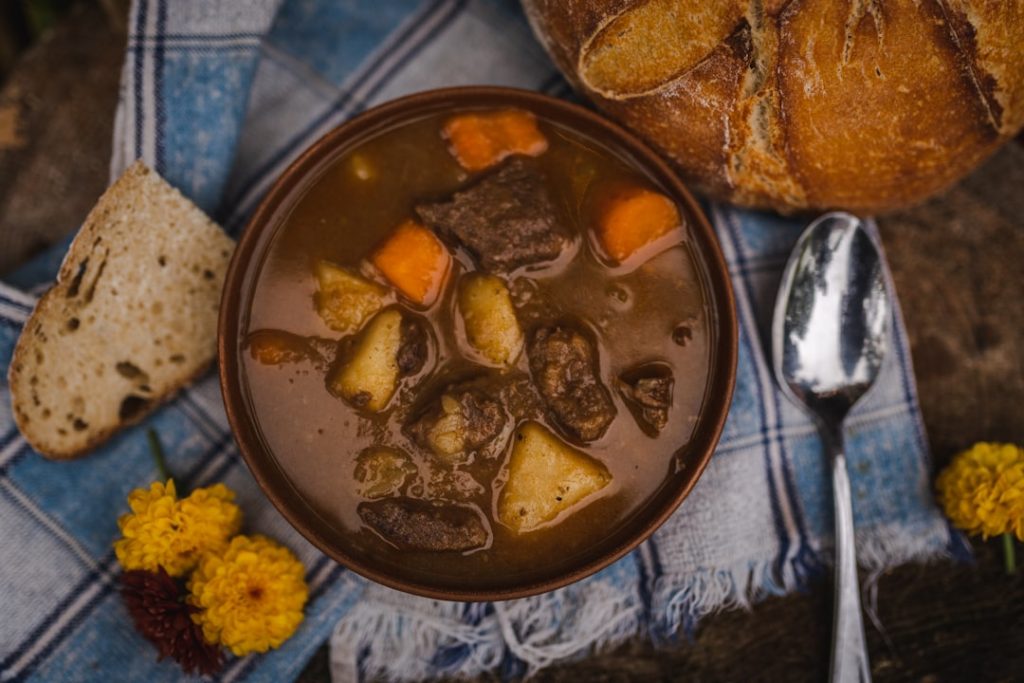
Beef and Guinness casserole is probably the most recognised Irish casserole internationally. The stout adds a slight bitterness and depth to the sauce that softens considerably during cooking. The standard version uses shin or chuck beef, carrots, onions, and bay leaves. Some recipes include tomato purée; others don’t. Both work.
Irish lamb stew (sometimes called Irish stew) is older and simpler. Traditionally it uses lamb neck or shoulder cutlets, potatoes, onions, and water or stock. It’s not a thick casserole in the modern sense — the original version had a relatively light broth. Adding carrots is considered a later addition that has since become standard.
Chicken and leek casserole is a lighter alternative that still delivers on comfort. Chicken thighs work better than breast meat here because they don’t dry out during the longer cooking time. Leeks, cream, and a splash of white wine give it a mild, savoury flavour that most people enjoy.
Bacon and cabbage casserole is a variation on the classic boiled dinner but made as a slow-cooked pot instead. Smoked bacon, green cabbage, potatoes, and carrots in a light stock. It’s not fashionable, but it’s practical, affordable, and deeply familiar to anyone who grew up in Ireland.
What Makes Irish Cold-Weather Food Different
Irish comfort food — whether soup or casserole — tends to rely on a fairly short ingredient list. The flavours come from the quality of the stock, the length of the cooking time, and the particular combination of root vegetables that Ireland’s climate grows well: potatoes, carrots, parsnips, turnips, leeks, and onions.
There’s also a practical tradition behind it. For most of Irish history, both soups and stews were made with whatever was available: leftover scraps of meat, bones for stock, whatever vegetables were in the garden or the pantry. The logic was never about following a precise recipe — it was about using what you had to feed your family something warm.
That practicality is still there. Irish home cooking doesn’t tend toward elaborate sauces or complicated techniques. A good casserole or a decent pot of soup relies on patience and decent ingredients rather than skill. That’s part of why these dishes remain central to how people eat here during the colder months.
The other constant is bread. Whether you’re having soup or casserole, Irish soda bread or a thick slice of white bread is almost always on the table alongside it. The bread mops up the liquid, adds something to chew, and turns a bowl or a plate into a complete meal.
Which One Should You Choose Tonight?
The honest answer is that it depends on three things: how much time you have, what’s in your fridge, and how hungry you are.
If you have under an hour and need something quick, soup is the better call. It requires less prep, less cooking time, and fewer decisions. A basic leek and potato or a vegetable and barley soup can be made in about 40 minutes start to finish.
If you have the afternoon or can set something in the oven before mid-afternoon, a casserole will give you a more substantial and arguably more satisfying result. The longer you can let it cook, the better the outcome.
If you’re cooking for more than four people, a casserole is usually more practical because it scales easily and holds its heat well at the table. A pot of soup can also scale, but it gets harder to serve and keep warm for larger groups.
If you want leftovers for tomorrow — and cold-evening food is always better the next day — a casserole has the edge. It reheats with less water loss than soup, and the flavour continues to develop overnight.
Both are valid. Both are Irish. And both beat eating something cold when the rain is coming in sideways off the Atlantic.
Tours & experiences you might love


Powered by Viator. Some links are affiliate links — we may earn a small commission at no extra cost to you.
Secure Your Dream Irish Experience Before It’s Gone!
Planning a trip to Ireland? Don’t let sold-out tours or packed attractions spoil your journey. Iconic experiences like visiting the Cliffs of Moher, exploring the Rock of Cashel, or enjoying a guided walk through Ireland’s ancient past often sell out quickly—especially during peak travel seasons.

Booking in advance guarantees your place and ensures you can fully immerse yourself in the rich culture and breathtaking scenery without stress or disappointment. You’ll also free up time to explore Ireland’s hidden gems and savour those authentic moments that make your trip truly special.
Make the most of your journey—start planning today and secure those must-do experiences before they’re gone!