

Three hours off the coast of Galway, the ferry slows and a different Ireland comes into view. There are no trees. No hedgerows. No hurrying. Just limestone, Atlantic wind, and miles of hand-built stone walls that nobody planned — and nobody has ever taken down.
The Walls That Cover Everything
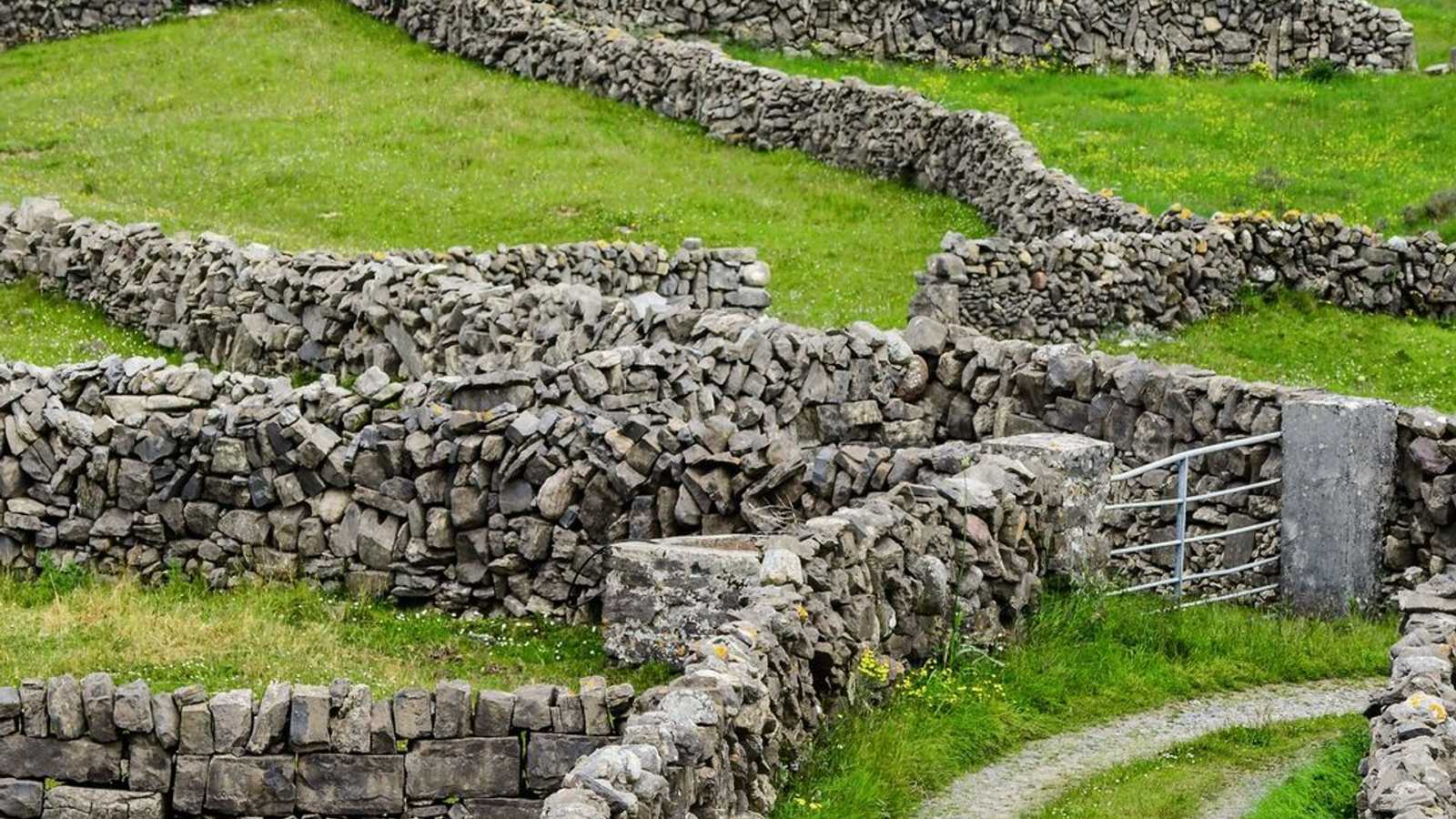
The Aran Islands have approximately 1,500 kilometres of dry stone walls. Nobody designed them from a plan.
Farmers cleared the rock, mixed seaweed with sand, and built the soil by hand over centuries. The walls divided what little land existed and sheltered crops from the Atlantic wind. Over generations, they multiplied until they covered every field, every hillside, every path.
From above, Inishmore looks like a cracked grey mosaic pressed into the sea. On the ground, walking through those walls feels like navigating a maze that someone has been adding to for a thousand years — because they have.
A Language That Never Left
More than half of the permanent residents on the Aran Islands speak Irish as their first language. Not as a heritage project. Not as a school exercise. As the language of the shop, the pub, and the kitchen table.
Children here grow up switching between Irish and English depending on who walks through the door. Road signs on Inishmore are in Irish only. If you ask for directions and a local answers entirely in Irish, that is not an unusual moment — that is just Thursday.
The islands are part of the Gaeltacht, the protected Irish-speaking regions along Ireland’s western coast. The wild Atlantic villages that kept Irish alive stretch north through Connemara and Donegal, but the Aran Islands are where that survival feels most concentrated and most visible.
Getting There — and What That Journey Means
Most visitors arrive by ferry from Rossaveal in County Galway — a 40-minute crossing that can be choppy enough to make you grateful for solid ground when you arrive. A smaller service runs from Doolin in County Clare, passing the Cliffs of Moher on calm days.
There is no car ferry to Inishmore. This is not an oversight. Islanders chose to keep cars off. You hire a bicycle at the pier or take a pony trap — a horse-drawn cart that still carries visitors up to the ancient fort on the cliff’s edge.
If you are planning a trip to the west of Ireland, the Ireland planning hub has everything you need for ferries, accommodation, and timing your visit around the weather.
Enjoying this? 64,000+ Ireland lovers get stories like this every week. Subscribe free
The Currach — a Boat That Defies Logic
The traditional boat of the Aran Islands is the currach — a narrow, black-tarred vessel built from canvas stretched over a timber frame. It looks like it would sink in a swimming pool, let alone the open Atlantic.
But islanders have worked these waters in currachs for centuries, launching them through breaking surf where no sensible craft would go. The currach sits so low in the water that passengers appear to be sitting on the sea rather than above it.
Watching one put out through breaking waves is one of the stranger and more quietly thrilling things you can witness in Ireland.
Three Islands, Three Personalities
The Aran archipelago is not one place but three. Inishmore (Inis Mor) is the largest — with the ancient cliff fort of Dun Aonghasa, the most visitor infrastructure, and the most obvious base for a day trip.
Inishmaan (Inis Meain) is the smallest and most isolated. The playwright J.M. Synge lived here for several summers and wrote Riders to the Sea — a play about islanders and the Atlantic that still gets performed around the world.
Inisheer (Inis Oirr) is the closest to the mainland, with a medieval shipwreck visible through the sand and a castle that rises directly from the middle of the village graveyard. Each island rewards a slower visit. Each one asks for more time than most people give it.
Most visitors come for the day. The ones who stay overnight discover something different. When the last ferry goes, the crowds dissolve and something settles over the place. The walls catch the last light. The pub fills with Irish. The Atlantic does what it always does. You will not leave feeling like you visited a tourist attraction. You will leave feeling like you found a piece of Ireland that was never meant to be easy to reach.
☘️ You Might Also Love
Join 64,000+ Ireland Lovers
Every Friday, get Ireland’s hidden gems, local secrets, and travel inspiration — the kind you won’t find in any guidebook.
Free forever – – Unsubscribe anytime
Tours & experiences you might love


Powered by Viator. Some links are affiliate links — we may earn a small commission at no extra cost to you.
Secure Your Dream Irish Experience Before It’s Gone!
Planning a trip to Ireland? Don’t let sold-out tours or packed attractions spoil your journey. Iconic experiences like visiting the Cliffs of Moher, exploring the Rock of Cashel, or enjoying a guided walk through Ireland’s ancient past often sell out quickly—especially during peak travel seasons.

Booking in advance guarantees your place and ensures you can fully immerse yourself in the rich culture and breathtaking scenery without stress or disappointment. You’ll also free up time to explore Ireland’s hidden gems and savour those authentic moments that make your trip truly special.
Make the most of your journey—start planning today and secure those must-do experiences before they’re gone!