

On the night of 12 October 1651, a detachment of Oliver Cromwell’s New Model Army stood on the east bank of the River Corrib in Galway — and refused to cross. The city had been under siege for more than two months. The parliamentary forces were battle-hardened veterans of the English Civil War. They had stormed Drogheda, sacked Wexford, and marched the length of Ireland. But something in the darkness above the River Corrib stopped them cold. What the soldiers reported seeing — and what Galway families have been telling ever since — is one of the strangest stories of the Cromwellian conquest of Ireland.
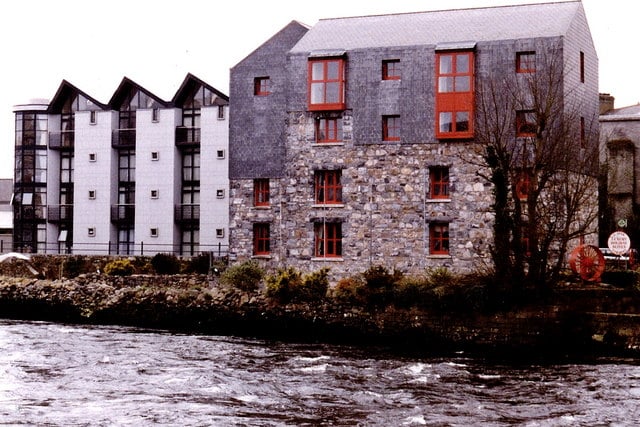
Galway city surrendered to parliamentary forces on 12 May 1652, after a nine-month siege — one of the longest and most gruelling of the entire Irish Confederate Wars. The River Corrib, which flows 6 kilometres from Lough Corrib to Galway Bay and bisects the old city, was the boundary the defenders used and the barrier the attackers feared. The Spanish Arch, which has stood beside the river since the 1500s, still watches over the water today. So does the memory of what happened that October night.
Galway Before the Siege: A City at the Edge of Two Worlds
To understand the siege of Galway, you need to understand what the city was. In the 16th and early 17th centuries, Galway was one of the wealthiest ports in Ireland — a thriving merchant city dominated by 14 powerful Anglo-Norman families known as the Tribes of Galway. They traded Bordeaux wine, Atlantic fish, and Connacht wool. The city faced outward, towards the sea and Spain and France, not inland towards the rest of Ireland.
The River Corrib was more than a geographical feature. It was a cultural divide. To the east lay Connacht — Irish-speaking, Gaelic, wild. To the west lay the city’s merchant heart, its Latin Quarter, its fine 14th-century stone walls. The walls themselves stretched nearly 1,400 metres around the medieval core, in places up to 4 metres thick.
When the Confederate Irish Wars broke out in the 1640s, Galway threw in its lot with the Royalist and Catholic cause. The city’s fate was sealed when the parliamentary army — now victorious in England — turned its full attention to Ireland in 1649. If you are planning a visit and want to stand where this history happened, our complete Ireland travel planning guide will help you build an itinerary around Galway’s medieval city.
The Nine-Month Siege: How Galway Held Out
Oliver Cromwell himself never came to Galway. He had returned to England by May 1650, leaving his commanders to finish the subjugation of Ireland. The parliamentary forces arrived outside Galway’s walls in August 1651 under the command of Charles Coote, who blockaded the city while Henry Ireton, the overall parliamentary commander-in-chief in Ireland, directed the wider Connacht campaign. The city refused to yield.
The siege lasted nine months. It was one of the longest of the entire Irish Confederate Wars. Several factors kept Galway alive through the bitter winter of 1651 to 1652:
- Sea access: Galway Bay remained partially open for much of the siege, allowing supply ships from Spain and France to bring food and ammunition into the city.
- Formidable walls: The medieval fortifications — up to 4 metres thick in places — resisted artillery bombardment far better than the lighter defences at Drogheda.
- An experienced garrison: The defenders included veterans of the Confederate Irish Army, not just a civilian militia. The city’s Tribes of Galway families had private wealth to fund the defence.
- Disease in the besieging camp: Plague ravaged the parliamentary forces camped outside the walls through the autumn and winter of 1651. Henry Ireton himself died of plague at Limerick on 26 November 1651, having never personally come to Galway.
By the spring of 1652, the situation inside the walls had become critical. Plague had crossed into the city. Food stores were exhausted. On 12 May 1652, Galway surrendered on negotiated terms. Its inhabitants were spared — unlike those at Drogheda in 1649, where the garrison was massacred.
Why Did the Surrender Terms Matter?
The negotiated surrender of Galway was unusual in the context of the Cromwellian conquest. The city’s leaders bargained hard. The terms included:
- No massacre of the garrison or civilian population.
- Property rights initially preserved for Catholic families — though the subsequent Cromwellian land settlement overrode most of these protections within two years.
- Freedom of worship protected in principle — again, largely ignored in practice by 1654.
The surrender bought time, but not safety. The Cromwellian land settlement that followed stripped Catholic landowners across Connacht of almost everything they possessed.
☘️ Enjoying this? 64,000+ Ireland lovers get stories like this every week. Subscribe free →
The Night at the River Corrib: Folklore and Fact
The strangest moment of the siege lives not in the official parliamentary records but in Galway’s oral tradition. Local accounts — collected by the Irish Folklore Commission during its field surveys of the 1930s and 1940s — record an incident in October 1651 when a detachment of parliamentary soldiers moved to cross the River Corrib at night and refused.
The accounts vary in their details, as folklore always does. In some versions, the soldiers saw lights moving beneath the surface of the water. In others, they heard voices rising from the river — Irish voices, singing. The most dramatic version describes a figure emerging from the Corrib itself: a tall woman in grey, arms outstretched, standing on the surface of the water. The soldiers broke and retreated. For more of the oral-history versions Galway families still tell — including the dobhar-chú river guardian and the Poor Clare convent story — see our companion feature on the Corrib’s folklore and the locals’ own accounts.
These were not frightened conscripts. They were veterans of Marston Moor and Naseby, men who had fought through five years of the English Civil War. Whatever they saw — or believed they saw — was enough to stop them.
What Might the Soldiers Have Actually Experienced?
Historians have proposed several rational explanations for what may have underlain the legend:
- Bioluminescence. The River Corrib and Galway Bay are known for periodic bioluminescent algal blooms. At night, disturbed water can glow with an eerie blue-green light — a natural phenomenon that would have been entirely inexplicable to any 17th-century soldier.
- A deliberate Irish psychological tactic. The city’s defenders knew the river. They may have staged a deliberate disruption — torches lit beneath the surface using air pockets, or swimmers sent to create confusion and panic in the dark.
- Disease-induced hallucination. Plague was killing men on both sides of the walls by October 1651. Early-stage typhus and bubonic plague produce vivid hallucinations. A unit with fevered men might genuinely have reported seeing things that were not there.
- Simple war-weariness and rational caution. A night river crossing under fire is among the most dangerous operations in siege warfare. The men may have refused a suicidal order. The vision entered the story later as a way of explaining the refusal without attributing cowardice.
None of these explanations is fully satisfying. The story’s persistence — it was still being told in Galway pubs well into living memory — suggests it holds some kind of truth, whether literal, emotional, or both.
The River Corrib Today: Walking Through Living History
The River Corrib flows for just 6 kilometres from Lough Corrib to the sea at Galway Bay. It is one of the shortest rivers in Europe that drains a major lake system. But it carries an enormous volume of water — the Corrib catchment extends over more than 3,000 square kilometres of west Connacht.
Today you can walk the riverbank from the Spanish Arch — which stands exactly where medieval Galway met the water — all the way to the salmon weir at the top of the city. In late May and June, Atlantic salmon run the weir in extraordinary numbers. Watching wild fish leap from the river in the middle of a European city is an experience unlike anything else in Ireland.
What to See Along the Corrib in Galway
- The Spanish Arch (16th century): Built as part of Galway’s original defensive walls, it now stands beside the Galway City Museum. Entry to the museum is free, and its exhibition on the Cromwellian period is worth an hour of anyone’s time.
- The Long Walk: A row of colourful terraced houses along the west bank of the Corrib, one of the most photographed views in the city.
- The Salmon Weir Bridge: Stand here in May or June and watch wild Atlantic salmon holding position in the current below, gathering strength before their run upriver to Lough Corrib to spawn.
- St Nicholas’ Collegiate Church: Founded in 1320 and one of the largest medieval parish churches in Ireland still in regular use. According to local tradition, Christopher Columbus prayed here before his 1492 voyage.
- The surviving city walls: Fragments remain visible throughout the city centre, most clearly near the bus and train station on Eyre Square and embedded in buildings throughout the Latin Quarter.
The Cromwellian Settlement: “To Hell or to Connacht”
The fall of Galway in May 1652 did not end the suffering of its people. What followed was the Cromwellian land settlement — one of the most sweeping forced population transfers in the history of these islands. Catholic landowners across Leinster, Munster, and Ulster were ordered to relocate west of the Shannon by 1 May 1654. The phrase that passed into Irish memory was brutal in its simplicity: “To Hell or to Connacht.”
Connacht — already the poorest province, with thin Atlantic soils and rocky uplands — became a receiving ground for dispossessed Catholic families from across Ireland. The Tribes of Galway lost most of their land. Their merchant houses were seized. Their churches were transferred to Protestant congregations.
How Did This Shape Irish Emigration Patterns?
The Cromwellian settlement created the conditions for every great wave of emigration that followed. Families driven onto poor Connacht land were among the most vulnerable when the Famine struck in 1845. County Galway lost more than 25% of its entire population between 1845 and 1851 — through death and emigration combined. That proportion was among the highest in Ireland.
The River Corrib and the night the soldiers refused to cross it is, in a very real sense, part of the Irish diaspora’s own story. Many of the estimated 70 million people worldwide who claim Irish ancestry are descended from families who were in Connacht precisely because Cromwell’s forces put them there.
For the 70 million people worldwide who claim Irish heritage, this history is personal — the Cromwellian wars reshaped the western seaboard where many Irish-American ancestors once lived. Our free Irish Ancestral Heritage Guide helps you trace exactly which townland your family came from. Start tracing your Irish roots today →
Planning Your Visit to Galway City
Galway is the most visited city in Ireland after Dublin. It combines a medieval street plan, a world-class traditional music scene, superb seafood restaurants, and immediate access to the wild Atlantic coast. The Aran Islands are 40 minutes by ferry from Rossaveel, 40 kilometres west of the city. Connemara National Park begins within 20 minutes’ drive of Eyre Square.
The best time to visit Galway is May to September. July is peak festival season — the Galway International Arts Festival runs for two weeks and now draws over 450,000 visitors a year. Late July to early August brings the Galway Races, one of the great events in the Irish sporting calendar. Book accommodation months ahead for either event.
Our Ireland trip planning guide includes practical advice on getting to Galway by road, rail, and bus, where to stay at every budget level, and how to structure a multi-day itinerary around Connacht’s greatest sites.
Frequently Asked Questions
Did Cromwell personally lead the siege of Galway?
No. Oliver Cromwell returned to England in May 1650, more than a year before the siege of Galway began in August 1651. The siege itself was commanded on the ground by Charles Coote. Henry Ireton — Cromwell’s son-in-law and the overall parliamentary commander-in-chief in Ireland — directed the wider campaign and reinforced Coote’s blockade, but died of plague at Limerick on 26 November 1651 without ever personally coming to Galway. Edmund Ludlow succeeded him as commander-in-chief in Ireland (Charles Fleetwood took over only later, in October 1652). Cromwell’s name is attached to the entire Irish campaign of 1649–52, which is why the Galway siege is described as part of the Cromwellian conquest.
What happened to the Tribes of Galway after the siege?
The 14 merchant families who had dominated Galway for more than three centuries lost most of their property and commercial privileges under the Cromwellian settlement. Some went into exile in Catholic Europe — France, Spain, and the Austrian Empire. Others converted to Protestantism to retain property. A handful maintained reduced positions in the city. The Tribes never recovered their former wealth or influence. By the mid-18th century, Galway had fallen significantly in commercial importance compared to its pre-war standing.
Is the story of the soldiers refusing to cross the River Corrib documented historically?
The incident exists primarily in oral tradition rather than in contemporary written records. The Irish Folklore Commission collected versions of the story in the 1930s and 1940s during its county-by-county field survey. Historians treat it as legend — almost certainly rooted in some real event during the siege — rather than verified history. That does not diminish its interest. Irish folklore has a long tradition of encoding historical trauma in supernatural narrative, and the river stories of Galway are among the most persistent in the west of Ireland.
Can you still see Galway’s medieval walls today?
Fragments of the original 14th-century walls survive in several locations around the city centre. The best-preserved section stands near the bus and train station at Eyre Square. Other sections are visible in the Latin Quarter, embedded in later buildings. You cannot walk the full circuit — most of the walls were demolished as the city expanded in the 18th and 19th centuries — but the surviving sections are well-signposted. The Galway City Museum, beside the Spanish Arch, provides excellent context for the city’s medieval and early modern history. Admission is free.
☘️ Join 64,000+ Ireland Lovers
Every weekday morning, get Ireland’s hidden gems, local secrets, and travel inspiration — the kind you won’t find in any guidebook.
Subscribe free — enter your email:
📲 Know someone who’d love this? Share on WhatsApp →
Love more? Join 43,000 Scotland lovers → · Join 29,000 Italy lovers → · Join 7,000 France lovers →
Free forever · Unsubscribe anytime
Tours & experiences you might love


Powered by Viator. Some links are affiliate links — we may earn a small commission at no extra cost to you.
Secure Your Dream Irish Experience Before It’s Gone!
Planning a trip to Ireland? Don’t let sold-out tours or packed attractions spoil your journey. Iconic experiences like visiting the Cliffs of Moher, exploring the Rock of Cashel, or enjoying a guided walk through Ireland’s ancient past often sell out quickly—especially during peak travel seasons.

Booking in advance guarantees your place and ensures you can fully immerse yourself in the rich culture and breathtaking scenery without stress or disappointment. You’ll also free up time to explore Ireland’s hidden gems and savour those authentic moments that make your trip truly special.
Make the most of your journey—start planning today and secure those must-do experiences before they’re gone!