

What Happened to Ireland’s Lighthouse Keepers When Fastnet and Skellig Rock Were Automated
On 24 March 1997, Principal Keeper Eugene O’Sullivan picked up the radio at Baily Lighthouse on the tip of the Howth peninsula and said something unremarkable. “We’re just calling you to sign off,” he told the shore station. “The Baily is now fully automated and unmanned.”
That was it. No crowd, no ceremony. A short transmission, and a way of life that had existed in Ireland for over two centuries was finished.
RTÉ marked the occasion as the end of a two-hundred-year tradition. That phrase captures the scale but not quite the texture of what had actually ended — not a tradition in the sense of a ceremony or a ritual, but a working system built around absolute isolation, physical danger, and the unrelenting requirement to keep a light burning through whatever the Atlantic chose to throw at it. The machines that replaced Eugene O’Sullivan don’t know any of that. They just flash.
The System Nobody Saw
The Commissioners of Irish Lights is one of the older institutions still operating on the island. It manages lighthouses, buoys, and navigational aids around the entire coastline — north and south, across two jurisdictions — and has done since the eighteenth century. At its peak, the organisation ran a network of light stations staffed around the clock by keepers rotating through postings on a defined schedule: a month or more at a rock station, then relief time at a shore station or at home.
Rock stations were the postings nobody wanted. These were lighthouses built not on headlands or piers but on offshore reefs and exposed islands — places difficult to reach in good weather and effectively unreachable in bad. Blackrock off the Mayo coast. Bull Rock off the Beara Peninsula. Fastnet Rock, south-west of Cape Clear Island. Rockabill, a tiny pair of islets off the Dublin coast. And Skellig Michael, the extraordinary pyramid of stone rising from the Atlantic fifty kilometres off the Kerry coast, already famous as a place of Early Christian hermitage before anyone thought to put a lighthouse on it.
These stations were staffed continuously. The light couldn’t go out, which meant someone always had to be there to tend it — and that someone had to be replaced when his time was up. Before helicopters, relief meant a boat landing in conditions that could turn lethal fast. After helicopters, it still meant being lowered onto a rock in the open Atlantic and hoping the swell cooperated.
The Round Room with Three Bunks
☘️ Join 64,000+ Ireland Lovers
Every weekday morning, get Ireland’s hidden gems, local secrets, and travel inspiration — the kind you won’t find in any guidebook.
Subscribe free — enter your email:
Already subscribed? Download your free Ireland guide (PDF)
📲 Know someone who’d love this? Share on WhatsApp →
Free forever · Unsubscribe anytime
Gerald Butler joined Irish Lights in 1969 and spent twenty-one years in the service, including time on Fastnet Rock. He published a memoir in 2012 — The Lightkeeper, from Liffey Press — and has given several interviews describing what the work was actually like.
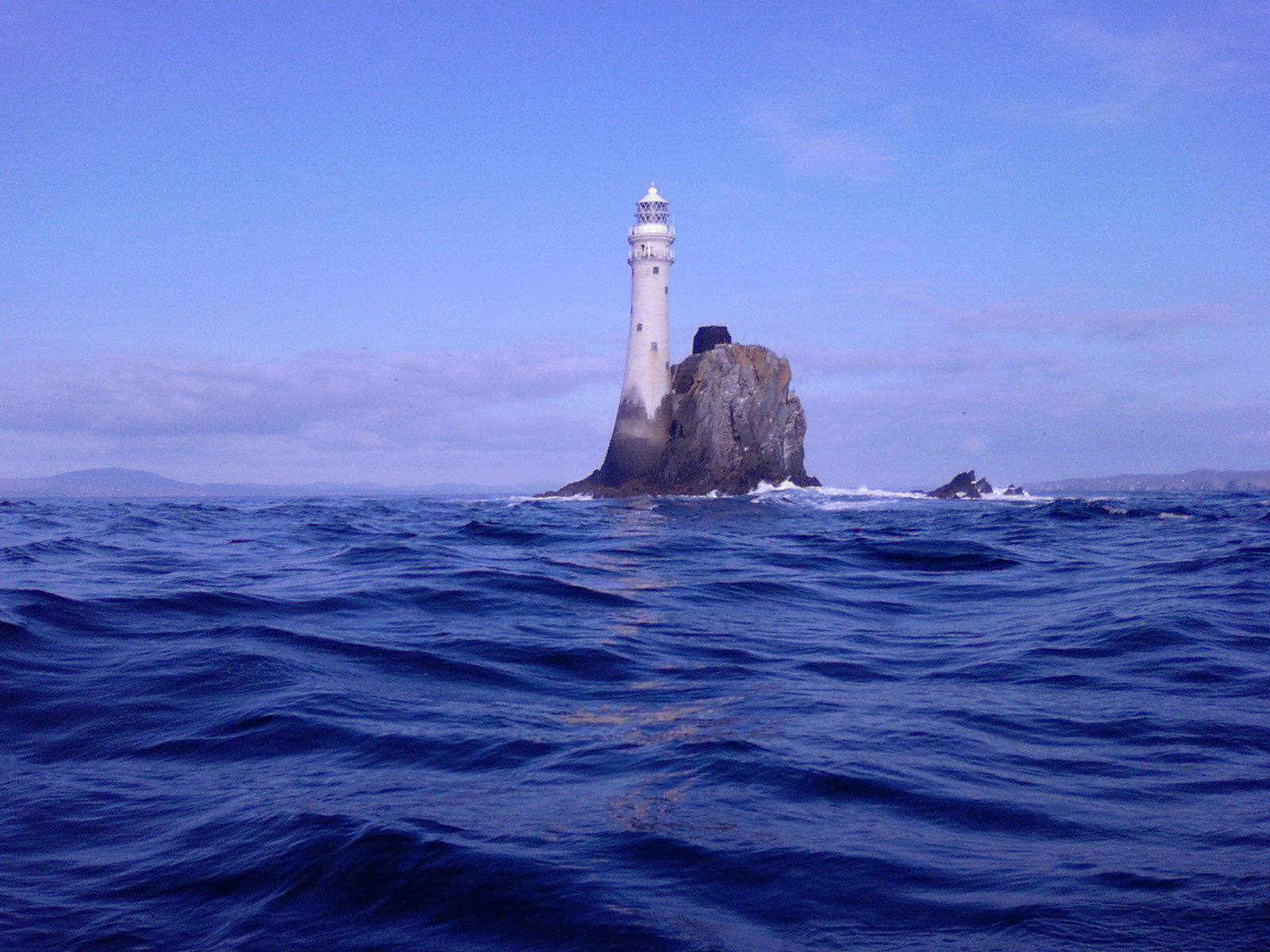
At Fastnet, keepers lived inside the tower itself. “We lived in the tower,” Butler recalled. “So we shared a bedroom. The room was round, and there were three bunks.” The light at the top, the machinery below, and the men in between. The sea outside. Butler described Fastnet as a place that could function as a punishment station — somewhere you got sent when you’d caused problems elsewhere in the service, a place whose conditions made tolerance compulsory.
The isolation was absolute by any modern measure. You were on a rock in the Atlantic with two or three colleagues. If someone was seriously injured, getting them to shore was a major undertaking. If the weather closed in, your rotation extended indefinitely. The mental arithmetic of keeper life involved a lot of waiting and a precise, practised suppression of anxiety.
By the late 1970s, some improvements had arrived. A 1979 RTÉ broadcast about Bull Rock — the lighthouse off the Beara Peninsula that would be automated in March 1991 — noted that conditions “are much better than they used to be” and that “the men who manned the Bull Rock in 1889 would hardly recognise the place which now has central heating, a telephone to the mainland and even a television.” The helipad had been added in 1969, replacing the boat reliefs that had previously been the only way on or off. The dangerous trips, the broadcast noted, had been replaced by short helicopter journeys.
Improved conditions were real. But they were relative. The rock was still the rock. You were still miles offshore on a narrow tower in one of the most storm-prone stretches of ocean in the world.
What the Records Say
Skellig Michael’s lighthouse was first lit in December 1826. It stayed continuously manned for just over 160 years. In that time, the station’s records accumulated a catalogue of what rock lighthouse life could cost.
In 1868 and 1869, two children of Principal Keeper W. Callaghan died on the Skellig. Callaghan petitioned to be removed from the station. A keeper named Michael Wishart fell to his death while cutting grass on the rock — one of those occupational hazards that makes grim sense when you consider that Skellig Michael is essentially a vertical island. On 22 August 1956, keeper Seamus Rohu was sent to store ropes during a storm. He was never seen again.
Richard Foran joined Irish Lights in 1965 and trained for five years at Baily Lighthouse before being posted to Skellig Michael. An Irish Times profile from that era captures a generation of keepers who understood their work as a vocation more than a job — men shaped entirely by the rhythms of the service and the particular demands of wherever they were posted.
Gerald Butler’s most dramatic posting came in August 1979, when a catastrophic storm struck during the Fastnet Race, one of the worst offshore racing disasters in history. Butler was on the rock when the storm hit. The lighthouse kept its light. Butler kept his post. He would later become one of the few living witnesses to describe what the rock felt like in conditions like that.
How the Lights Went Automatic
The Commissioners of Irish Lights began systematically automating stations in the early 1980s, though some had gone automatic earlier. Blackrock off Mayo was converted in mid-November 1974 — an early test of what was coming. The official Irish Lights page records it plainly: “the conversion to automatic operation was completed and the Keepers were withdrawn.”
The offshore rock stations followed across the late 1980s and into the early 1990s. Skellig Michael’s lower lighthouse was decommissioned as a manned station on 22 April 1987, ending what Irish Lights described as just over 160 years of continuous human presence. Fastnet Rock was automated in late March 1989. Rockabill, off the Dublin coast, followed on 1 April 1989. Bull Rock went automatic on 31 March 1991. Each automation meant a small group of keepers walked off a rock for the last time and did not come back.
The process was not accompanied by careful transition planning. Butler’s experience captures what the research confirms was the pattern: “In 1990, I was forced to retire as a full-time lighthouse keeper,” he told the Irish Examiner. “At this stage, I was only 39, but the automation was already taking over, leaving me with no choice but to abandon the career that I loved.”
Thirty-nine years old. Twenty-one years of service. The service gave him a redundancy and a door.
The dominant outcome for keepers was not redeployment or retraining — it was redundancy and early retirement. The men who had lived on the most remote posts in the Irish maritime network were, in most cases, simply let go.
What Happened to the Rocks
The lighthouses kept working. That was, of course, the entire point. The electronic systems required no relief rotations, no helicopter runs, no round bedrooms with three bunks. They cost a fraction of the ongoing operational expense. The lights themselves were not switched off. Just the people.
On Rockabill, something unexpected followed. Those twin islets had been kept so thoroughly clear of casual human interference by the lighthouse presence — nobody visited, landing was genuinely difficult, there was nothing there except keepers doing their jobs — that when the automation came in 1989, the islands were in remarkable ecological condition. BirdWatch Ireland recognised the opportunity. Rockabill is now one of the most important roseate tern breeding colonies in Europe. The isolation that had made keeper life so relentless became, in the absence of keepers, a gift to conservation.
Skellig Michael went in the other direction — toward visitors. Already a UNESCO World Heritage Site for its Early Christian monastery, the island became more accessible after the lighthouse was automated, though “accessible” remains relative: landing on Skellig still requires calm weather, a small boat, and a willingness to climb several hundred steps of ancient stone. The lighthouse structures and keepers’ cottages remain on the lower island, maintained but no longer inhabited.
Fastnet Rock continues to flash its signal across the water south-west of Cape Clear. There is nobody there.
The Final Sign-Off
Eugene O’Sullivan’s radio call from Baily Lighthouse on 24 March 1997 closed the loop on a programme that had been running for fifteen years. The Baily, on the eastern tip of Howth Head, was the last manned lighthouse in Ireland. When O’Sullivan signed off, the era was done.
Gerald Butler wrote his memoir two decades after being made redundant at thirty-nine. He called what he was forced to leave “the career that I loved.” On Skellig Michael, a memorial to Seamus Rohu — who walked out to store ropes during a storm in 1956 and never came back — stands on a rock that now sees tens of thousands of visitors every summer, almost none of whom know his name.
The machines don’t notice the isolation. They don’t extend their rotations when the weather closes in. They don’t write memoirs, and they weren’t stationed on Fastnet Rock in August 1979 trying to keep their footing while the Atlantic did its worst. That was the job. Some people were very good at it — right up until the moment nobody needed them to be any more.
If you ever find yourself on a boat rounding the south-west coast, look out toward that distant tower off Cape Clear. For over a century, someone was up there keeping the light on. The light is still on. That part, at least, hasn’t changed.
Tours & experiences you might love


Powered by Viator. Some links are affiliate links — we may earn a small commission at no extra cost to you.
Secure Your Dream Irish Experience Before It’s Gone!
Planning a trip to Ireland? Don’t let sold-out tours or packed attractions spoil your journey. Iconic experiences like visiting the Cliffs of Moher, exploring the Rock of Cashel, or enjoying a guided walk through Ireland’s ancient past often sell out quickly—especially during peak travel seasons.

Booking in advance guarantees your place and ensures you can fully immerse yourself in the rich culture and breathtaking scenery without stress or disappointment. You’ll also free up time to explore Ireland’s hidden gems and savour those authentic moments that make your trip truly special.
Make the most of your journey—start planning today and secure those must-do experiences before they’re gone!