

Fourteen kilometres off the tip of West Cork, a solitary granite tower rises from the Atlantic Ocean. There are no neighbouring buildings, no harbour, no shelter from the sea. Just a narrow rock, the lighthouse that crowns it, and water in every direction for miles.
For generations of Irish emigrants sailing west in search of a new life, this was the last piece of Ireland they would ever see. They called it the Teardrop.
Watch: Do You Qualify for an Irish Passport?
Tracing your Irish family? If one of your grandparents was born in Ireland, you may be able to become an Irish citizen. This 14-minute guide explains who qualifies, what it costs and how long it takes. Thinking of making the move? Get the free Moving to Ireland checklist.
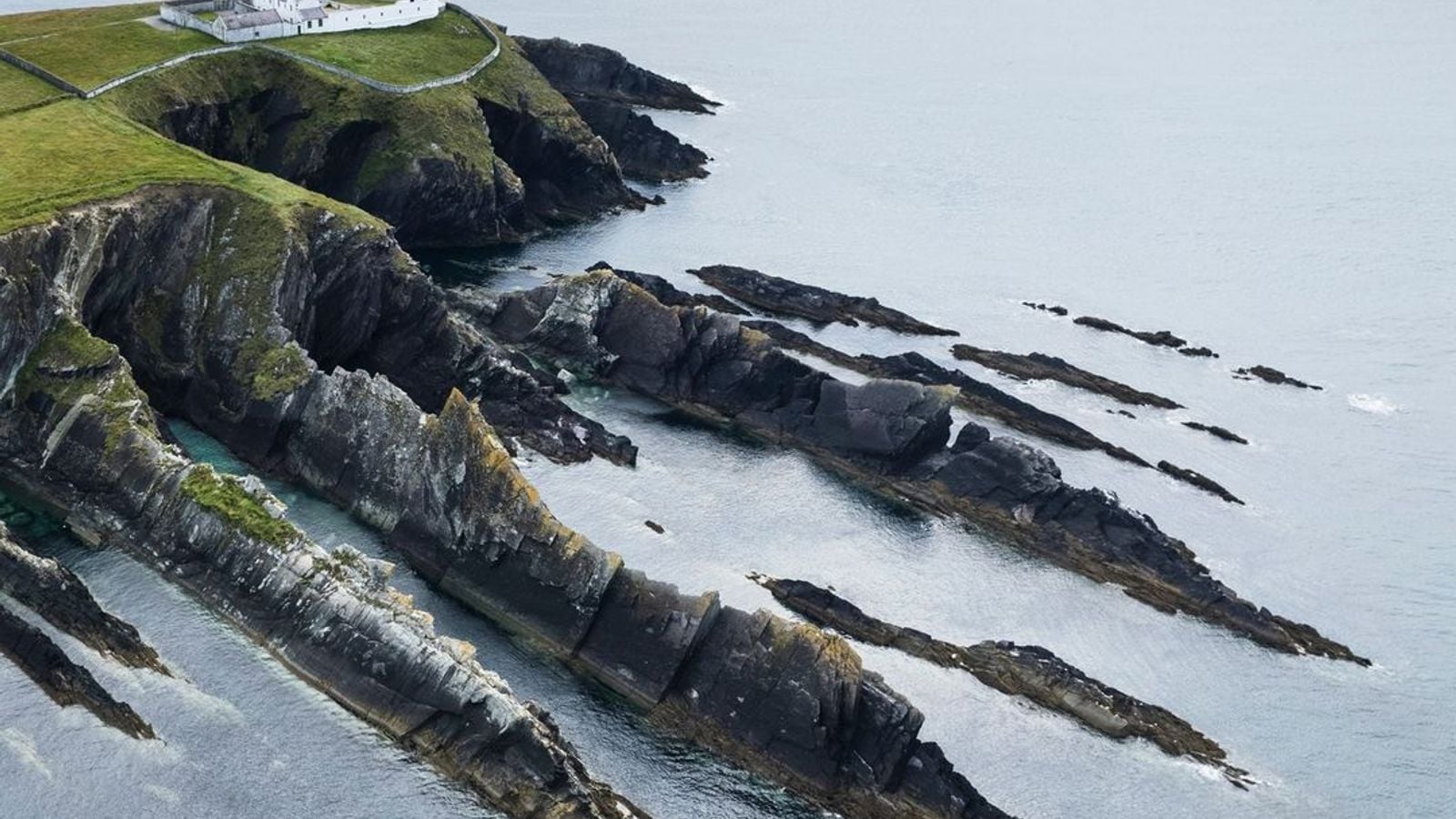
The Rock at the World’s Edge
Fastnet Rock sits further out into the Atlantic than any other part of the Irish mainland coast. The Irish name is Carraig Aonair — the lonesome rock — and the name was not chosen lightly.
On a clear day, you can just make out the lighthouse from Mizen Head, the south-westernmost point of mainland Ireland. It appears as a small white mark on the horizon, almost too faint to be certain. In rough weather, it disappears entirely behind walls of spray.
The rock itself offers very little to stand on. Early lighthouse keepers described arriving at Fastnet for the first time as stepping onto a place that did not want to be inhabited. Great waves regularly break clean across it in winter, and even summer swells can overwhelm anything less solid than granite.
Ireland’s Last Goodbye
During the 19th century and the early decades of the 20th, emigration from Ireland was a constant reality. Whole townlands emptied over generations, their young people boarding ships at Queenstown — now Cobh — and sailing out into the open Atlantic.
As ships moved south-west past Cork Harbour, the Irish coast slowly receded. The last visible landmark before open ocean was Fastnet Rock. It was the point beyond which there was no Ireland left to see.
Passengers gathered on deck as the ships drew level. People watched the lighthouse until it was gone below the horizon, and many understood in that moment that they were truly leaving. The name “Teardrop of Ireland” grew from this ritual of looking back. For countless emigrants, that blinking light was not just a navigational marker — it was a farewell from a country that had no room left for them.
The Granite Giant
A lighthouse had stood on Fastnet Rock since 1854, but the original cast-iron tower was no match for the Atlantic. Storms shook it repeatedly. Engineers agreed it could not last, and plans were drawn up for a permanent replacement.
The current lighthouse was completed in 1904 after five years of demanding work. Building on a bare rock in open ocean, with every stone and tool transported by boat, required extraordinary precision. The tower stands 54 metres tall and was built from 2,074 individually dressed granite blocks, fitted together to create a structure that flexes slightly in heavy seas rather than cracking.
Keepers lived on the rock in rotating shifts for decades. They occupied small rooms inside the tower itself, with very limited supplies, no running water, and no way of leaving if the sea turned bad. The light was automated in 1989, when the last keeper walked away. The flash still comes every five seconds.
☘️ Enjoying this? 64,000+ Ireland lovers get stories like this every week. Subscribe free →
What It Meant to Leave
The emigrants who watched Fastnet vanish below the horizon were not simply leaving a place. They were leaving a language, an extended family, and a network of custom and obligation that had shaped every part of daily life.
Many had attended an “American wake” the night before departure — a gathering that looked like a funeral, because everyone present understood they were unlikely to see the emigrant again. This piece on the American wake tradition describes the full weight of those nights in the homes of rural Ireland.
Fastnet Rock became part of that emotional geography. A lighthouse that stands alone in the Atlantic — visible from far out to sea, fixed while the ship moves away — makes a natural symbol for what it means to leave something behind. It stays while you go. That is what a Teardrop does.
How to See It Today
Fastnet Rock itself is not accessible to visitors, but the lighthouse is clearly visible from the water on calm days. Boat trips leave from the small harbour villages of Baltimore and Schull in West Cork during the summer months, passing close enough for the granite tower to feel genuinely close.
The area around Mizen Head and the Sheep’s Head Peninsula is one of the least-visited corners of West Cork, and one of the most rewarding for slow travel. If you are planning a trip that takes in the south-west, the Ireland trip planning guide covers the key decisions before you book anything. The Wild Atlantic Way continues north into County Kerry, a stretch of coast that rewards another week entirely.
Stand on the cliffs at Mizen Head on a clear afternoon and look south-west. If conditions allow, you can just see the lighthouse on the horizon — a small white mark, blinking steadily every five seconds.
It is easy to imagine, standing there, what it felt like to watch that same light from the other direction. To see it growing smaller. Then smaller still. Then gone altogether, swallowed by the Atlantic.
The Teardrop of Ireland is still out there. It still flashes. Somehow, across all those miles of water and all those years, that still means something.
☘️ You Might Also Love
☘️ Join 64,000+ Ireland Lovers
Every Friday, get Ireland’s hidden gems, local secrets, and travel inspiration — the kind you won’t find in any guidebook.
Subscribe free — enter your email:
Free forever · · Unsubscribe anytime
Tours & experiences you might love


Powered by Viator. Some links are affiliate links — we may earn a small commission at no extra cost to you.
Secure Your Dream Irish Experience Before It’s Gone!
Planning a trip to Ireland? Don’t let sold-out tours or packed attractions spoil your journey. Iconic experiences like visiting the Cliffs of Moher, exploring the Rock of Cashel, or enjoying a guided walk through Ireland’s ancient past often sell out quickly—especially during peak travel seasons.

Booking in advance guarantees your place and ensures you can fully immerse yourself in the rich culture and breathtaking scenery without stress or disappointment. You’ll also free up time to explore Ireland’s hidden gems and savour those authentic moments that make your trip truly special.
Make the most of your journey—start planning today and secure those must-do experiences before they’re gone!
Subscribe Free