

A remarkable proportion of America’s founding generation traced their roots to Ireland — and the numbers tell a striking story. By 1775, an estimated 200,000 Scots-Irish immigrants had crossed the Atlantic from Ulster, making them one of the largest ethnic groups in the 13 colonies. Their centuries-long experience of English rule, combined with a fierce Presbyterian tradition of individual conscience and resistance to tyranny, put them at the very heart of the American Revolution. This is the story of why so many of America’s founders were Irish, and why that connection still matters today.
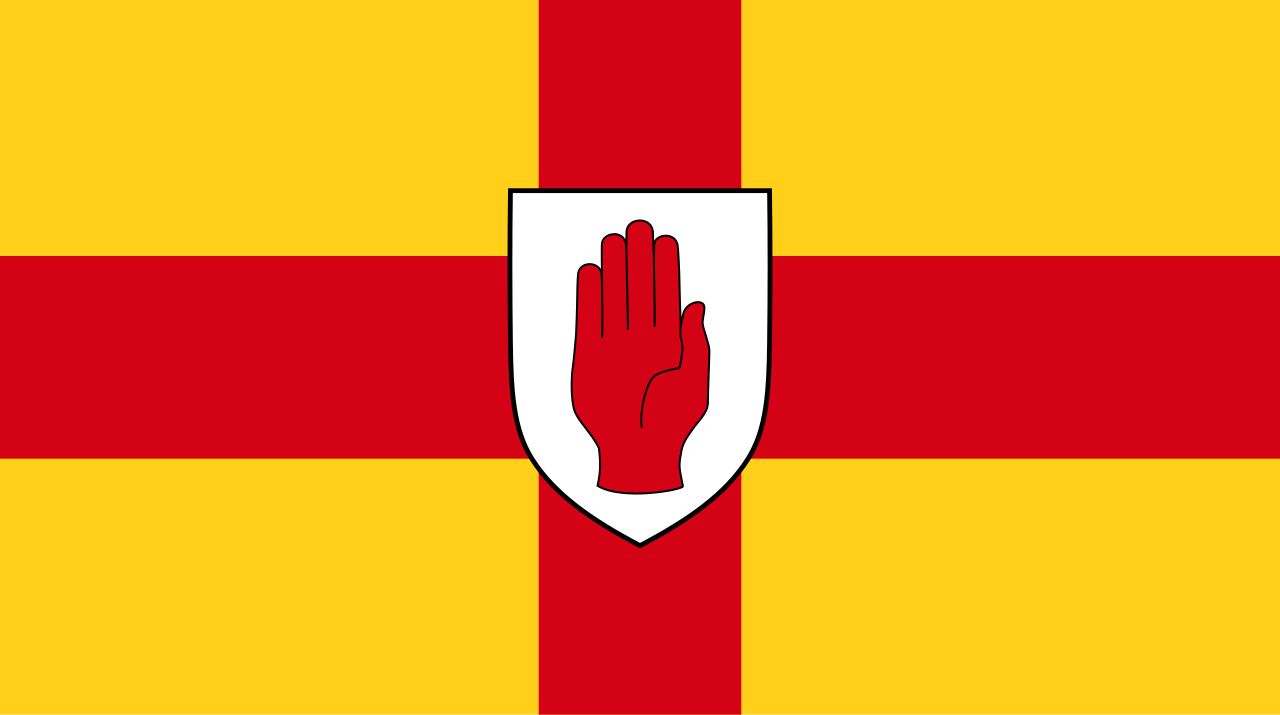
Who Were the Scots-Irish?
The term “Scots-Irish” — known as “Ulster-Scots” in Ireland — refers to the descendants of Scottish Presbyterians who settled in the Ulster province of northern Ireland during the 17th century. They were farmers and tradespeople brought over by the English crown to stabilise a volatile province, but stability never quite arrived. Within a generation, these settlers faced the same harsh landlord system and religious discrimination that had plagued the native Irish for centuries.
The Penal Laws of the early 1700s struck hard. Though Protestant, Presbyterians were excluded from public office, their marriages were not legally recognised, and their churches received none of the protections afforded to the established Church of Ireland. Added to this came a series of catastrophic harvests — the 1716–1717 drought, the brutal famine winter of 1740 — and rack-renting landlords who raised rents beyond what farming families could pay.
The result was emigration on a scale Ireland had never seen. Between 1717 and 1775, Ulster lost an estimated 200,000 to 250,000 people to the American colonies. They sailed primarily from ports at Derry, Belfast, and Newry, packed into small vessels, trading the known misery of Ulster for the uncertain promise of Pennsylvania, Virginia, and the Carolinas. When they arrived, they settled the frontier — the rough, forested backcountry where no one else wanted to go — and they built communities that would produce an outsized share of American history.
The Philosophy They Carried Across the Atlantic
These emigrants arrived in the colonies carrying something more durable than household goods: a fully formed political philosophy. Presbyterian theology held that authority derived from the consent of the governed — a direct challenge to divine-right monarchy. Scots-Irish communities had argued with kings and bishops for generations before they ever set foot in America. By the time they reached the Appalachian frontier, they were ideologically primed for revolution.
Historians note that the Scots-Irish were disproportionately represented among the militia units that fought the British — not just in formal battles but in the brutal guerrilla campaigns of the backcountry South. At the Battle of Kings Mountain in October 1780, a force of roughly 900 frontier militia — almost entirely Scots-Irish — surrounded and defeated a British force in 65 minutes, turning the tide of the Southern campaign and effectively halting the British advance through the Carolinas.
King George III reportedly called the American Revolution “a Presbyterian rebellion.” His prime minister, Horace Walpole, put it more bluntly: “There is no use crying about it. Cousin America has run off with a Presbyterian parson.” The Irish connection was not incidental to the Revolution. It was, in many ways, its backbone.
The Irish Names Behind the Revolution
The founding generation included an extraordinary number of men born in Ireland or of direct Irish parentage. Their contributions shaped the republic in ways that reach to the present day.
Commodore John Barry was born in Tacumshane, County Wexford, in 1745. He emigrated to Philadelphia as a teenager and became a sailor. During the Revolution, Barry commanded multiple Continental Navy vessels and captured the first British warship taken by an American ship. Congress later designated him Senior Officer of the United States Navy — a title that has led many historians to name him the “Father of the American Navy.” A bronze statue of Barry stands outside Independence Hall in Philadelphia, and another on the lawn of the US Capitol.
Charles Thomson was born in Gortede, County Derry, in 1729. Orphaned on the voyage to America at the age of ten, he was raised in Pennsylvania and became one of the most trusted figures of the founding era. Thomson served as Secretary of the Continental Congress for its entire 15-year existence — longer than any other person held that office. He designed the reverse side of the Great Seal of the United States, and the eagle, olive branch, and 13-arrow motif he devised still appears on the dollar bill today.
Matthew Thornton was born in Ireland — accounts differ on the exact birthplace, with County Clare, Lisburn, and Limerick all suggested — and emigrated as a young child to Maine, later settling in New Hampshire as an adult. He was the only signer of the Declaration of Independence born on Irish soil, adding his name to the document in November 1776 after being elected as a delegate following the original August signing. Thornton had served as a battlefield surgeon during the French and Indian War before turning to politics and helping draft the first constitution of New Hampshire.
James McHenry was born in Ballymena, County Antrim, in 1753 and emigrated to Pennsylvania in his teens. He served as military secretary to both General Washington and the Marquis de Lafayette during the war, attended the Constitutional Convention of 1787, and later served as Secretary of War under Presidents Washington and Adams. Fort McHenry in Baltimore — where Francis Scott Key wrote “The Star-Spangled Banner” in 1814 — was named in his honour.
Hercules Mulligan, born in Coleraine, County Derry, in 1740, worked as a New York tailor with access to British officers. He used that access to pass intelligence to George Washington — information that historians believe saved Washington’s life on at least two occasions. When British forces evacuated New York in 1783, Washington’s first act was to visit Mulligan and eat breakfast publicly at his shop, a deliberate signal that Mulligan had served the American cause well.
☘️ Enjoying this? 64,000+ Ireland lovers get stories like this every week. Subscribe free →
The Presidential Irish Connection
The Irish influence did not end with the Revolution. It continued into the highest office in the land. Andrew Jackson, the seventh President, was the son of parents born in Carrickfergus, County Antrim, who emigrated to the Carolinas in 1765 — just two years before Jackson’s birth. He wore his Irish heritage fiercely throughout his life and kept a lock of his mother’s hair until his death.
James Knox Polk, the eleventh President, came from a family of Ulster-Scots. James Buchanan’s father was born in County Donegal. Chester Arthur’s family hailed from County Antrim. The line of Irish-connected presidents runs through to John F. Kennedy (County Wexford), Ronald Reagan (whose great-grandfather left Ballyporeen, County Tipperary), and Bill Clinton (a widely publicised but genealogically disputed claim to County Fermanagh roots). By some counts, more than 20 US presidents have claimed Irish ancestry — a figure that reflects the sheer scale of Irish emigration to America over three centuries.
The Legacy: 31.5 Million Irish-Americans
Today, approximately 31.5 million Americans claim Irish ancestry according to 2020 US Census data — more than six times the population of the Republic of Ireland itself. That number reflects wave after wave of emigration: the Scots-Irish of the 1700s, the Famine emigrants of the 1840s and 1850s, the economic emigrants of the 1880s and 1890s, and more recent flows driven by recession and opportunity alike.
For many of those 31.5 million, the connection to Ireland is felt but not yet traced. The county their ancestors left, the parish records that still exist in stone churches across Ulster, Connaught, Munster, and Leinster — these are not lost. Civil registration records in Ireland go back to 1864, and church records often go back to the early 1800s or earlier. DNA testing has connected Irish-Americans with cousins they never knew existed, scattered across the counties of Ireland.
Frequently Asked Questions
Why were so many of America’s founding fathers Irish?
The large Irish presence among America’s founding generation reflects a massive emigration wave from Ulster in the 18th century. An estimated 200,000 Scots-Irish had arrived in the American colonies by 1775, driven out by religious discrimination, rack-renting landlords, and repeated harvest failures. Their Presbyterian tradition of resisting unjust authority made them natural allies of the revolutionary cause, and they were disproportionately represented in both the Continental Army and the Continental Congress.
Which founding fathers were born in Ireland?
Several key figures in the American founding were born on Irish soil. Matthew Thornton, a signer of the Declaration of Independence, was born in Ireland (accounts differ on the exact birthplace). Charles Thomson, Secretary of the Continental Congress for 15 years, was born in County Derry. James McHenry, who served as Secretary of War and gives his name to Fort McHenry in Baltimore, was born in Ballymena, County Antrim in 1753. John Barry, often called the Father of the American Navy, was born in Tacumshane, County Wexford in 1745.
How many Americans have Irish ancestry today?
Approximately 31.5 million Americans claimed Irish ancestry in the 2020 United States Census, making Irish-Americans one of the largest self-identified ethnic groups in the country. This is more than six times the population of the Republic of Ireland. The number reflects centuries of emigration spanning the Scots-Irish waves of the 1700s, the Great Famine emigration of the 1840s, and multiple subsequent waves through the 20th century.
☘️ Join 64,000+ Ireland Lovers
Every weekday morning, get Ireland’s hidden gems, local secrets, and travel inspiration — the kind you won’t find in any guidebook.
Subscribe free — enter your email:
Already subscribed?
Thinking about it seriously?
If you’ve started actually planning a move, our complete the full Move to Ireland guide walks through every step, every cost, and the paperwork that catches most people out.
📲 Know someone who’d love this? Share on WhatsApp →
Free forever · Unsubscribe anytime
Tours & experiences you might love


Powered by Viator. Some links are affiliate links — we may earn a small commission at no extra cost to you.
Secure Your Dream Irish Experience Before It’s Gone!
Planning a trip to Ireland? Don’t let sold-out tours or packed attractions spoil your journey. Iconic experiences like visiting the Cliffs of Moher, exploring the Rock of Cashel, or enjoying a guided walk through Ireland’s ancient past often sell out quickly—especially during peak travel seasons.

Booking in advance guarantees your place and ensures you can fully immerse yourself in the rich culture and breathtaking scenery without stress or disappointment. You’ll also free up time to explore Ireland’s hidden gems and savour those authentic moments that make your trip truly special.
Make the most of your journey—start planning today and secure those must-do experiences before they’re gone!
Subscribe Free