

The River Shannon — Ireland’s longest river at 360 kilometres — is named after a goddess who drowned while trying to steal the world’s wisdom. Every bridge you cross, every boat trip you take, every moment you stand on her banks: you’re in the presence of Sionna, the granddaughter of a sea god who broke the oldest rule in Celtic mythology and paid for it with her life. This is the story nobody tells you when they hand you a map of Ireland.
Who Was Sionna?
Sionna was not a minor figure in Irish mythology. She was the granddaughter of Manannán mac Lir, the great god of the sea, the keeper of the Otherworld, and one of the most powerful beings in the entire Celtic pantheon. Her grandfather ruled the oceans, owned a magical cloak of invisibility, and had a horse that could gallop across water. Sionna came from serious divine stock.
She was also, by all accounts, brilliant. She lived in a time when knowledge was the most precious thing in existence — more valuable than gold, more powerful than any weapon. The Celts believed that wisdom wasn’t something you gradually accumulated through study. It lived in specific sacred places, concentrated and waiting, like water filling a well.
And Sionna knew exactly where the world’s greatest wisdom was kept.
Connla’s Well: The Most Dangerous Place in the Celtic World
Deep in the Otherworld — the Celtic realm of gods, spirits, and magic that existed alongside but separate from the human world — there was a well called Connla’s Well. Around it grew nine sacred hazel trees. These weren’t ordinary hazels. They were the Hazels of Wisdom, and once a year, in autumn, they dropped their nuts into the water below.
When the hazelnuts fell, the well absorbed their power. Salmon living in the water ate the nuts and the salmon skin would burst with colourful spots — one spot for each nut consumed, each nut representing a unit of ancient wisdom. These salmon became the Salmon of Knowledge, and whoever caught and ate one would possess all the wisdom of the world.
Celtic tradition forbade the well. Not just technically off-limits in the way of a “keep out” sign — genuinely, cosmically, dangerously forbidden. The rules were absolute: only certain beings could approach it, and they could only do so at certain times. The knowledge inside Connla’s Well was so concentrated, so powerful, that approaching it without permission would cause the well to overflow and destroy whoever had violated the rule.
Sionna decided to go anyway.
The Night Sionna Broke the Rule
The old texts don’t tell us exactly why Sionna made her decision. The mythographers who recorded her story — Irish monks writing in the early medieval period — don’t explain her motive in detail. But they don’t need to. Anyone who has ever wanted something so badly they ignored the warnings understands exactly why she went.
She was the granddaughter of a god, which meant she already had more power than most beings in existence. But wisdom was different. Wisdom was the thing that even gods respected most. And here it was, sitting in a well in the Otherworld, waiting. She was divine, she was capable, and she had every reason to believe she could handle what the well contained.
She approached Connla’s Well alone. She reached for the well, or perhaps she reached for the salmon within it — the accounts vary slightly, but they agree on what happened next. The moment she violated the prohibition, the well reacted immediately. The water rose, burst from its boundaries, and flooded out in a torrent that became a river — the river that would carry her name forever.
The flood swept Sionna away. She drowned in the water she had come to drink from. The wisdom she sought destroyed her. And the river that formed from Connla’s overflowing well poured all the way from the Otherworld into the human world, flowing 360 kilometres to the Atlantic Ocean. The Irish call it An tSionainn — the Shannon.
What the Story Actually Means
Celtic mythology almost never tells simple stories. This one contains layers that scholars have argued over for centuries.
The most obvious reading is a warning: forbidden things are forbidden for a reason, and even divine heritage doesn’t protect you from cosmic laws. This same message runs through dozens of Irish myths — from the Children of Lir to the story of Fionn mac Cumhaill and the Salmon of Knowledge. Power without the right to exercise it still destroys you.
But there’s another reading, one that Irish-language scholars have found in the structure of the original texts. Sionna’s name almost certainly comes from a Proto-Celtic root meaning “river” or “flow.” In this reading, she doesn’t die. She becomes the river. Her knowledge, her ambition, her divine nature — all of it pours into the water. The Shannon carries Sionna’s essence all the way to the sea, forever.
Every drop of the Shannon contains a piece of her.
☘️ Enjoying this? 64,000+ Ireland lovers get stories like this every week. Subscribe free →
The Connection to Fionn mac Cumhaill
Most people who know Celtic mythology have heard of Fionn mac Cumhaill and his encounter with the Salmon of Knowledge. In the famous version, a young Fionn apprentices himself to a poet-druid named Finneces, who has spent seven years fishing in the River Boyne trying to catch the Salmon of Knowledge. When Finneces finally catches it, he tells Fionn to cook it — but not to eat any. The salmon burns Fionn’s thumb, he instinctively puts it in his mouth, and gains all the wisdom of the world.
The Sionna story comes earlier. Much earlier. Mythology scholars place it in the age of the Tuatha Dé Danann, the divine race who ruled Ireland before humans — possibly 3,000 or more years before Fionn’s time. The hazel trees, the well, the salmon who ate wisdom — it’s the same mythology. The Salmon of Knowledge that Fionn encountered in the Boyne is the direct descendant of the salmon who swam in Connla’s Well after Sionna’s flood.
In this way, Sionna is the origin point for one of Ireland’s most beloved mythological traditions. The wisdom that flows through Irish mythology — the source of the greatest hero stories the island ever produced — traces back to a goddess who broke a rule alone in the dark.
The Shannon Today: A River Carrying 3,000 Years of History
The River Shannon stretches 360 kilometres from the Shannon Pot in County Cavan to the Atlantic Ocean at Limerick and beyond. It is the longest river in Ireland and in the entire island of Britain and Ireland combined. It drains a catchment area of approximately 16,865 square kilometres — roughly one-fifth of the entire island of Ireland.
Along its length, the Shannon passes through or near 40 towns and villages. It widens into Lough Allen, Lough Ree, and Lough Derg — three vast lakes that together form one of the most beautiful inland waterway systems in Europe. For thousands of years, the Shannon defined the boundary between Connacht and Leinster, Connacht and Munster. It was the line between east and west in Celtic Ireland.
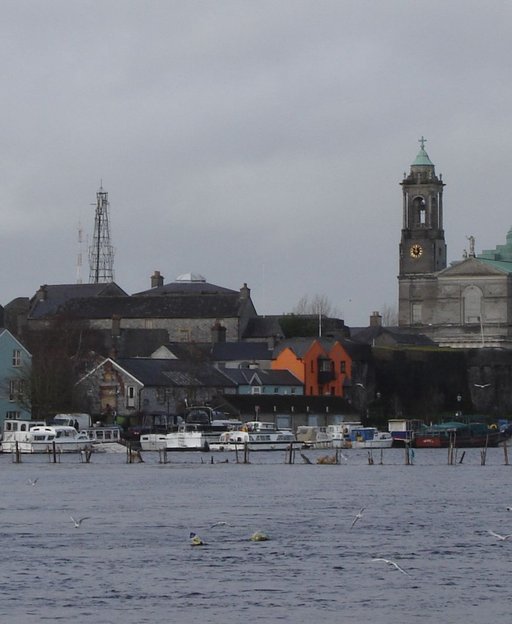
When the Normans arrived in Ireland in the 12th century, they built King John’s Castle on its banks in Limerick — a fortress that still stands today, more than 800 years later, looking out over the same water that once swept a goddess from the Otherworld into this one. The Vikings had settled there before the Normans, recognising that whoever controlled the Shannon controlled a route deep into the heart of Ireland.
Where to Experience the Shannon’s Mythology Today
Ireland doesn’t always mark its mythological sites with tourist boards and interpretive panels. Many of the most significant places in Celtic lore are quiet fields, ordinary-looking hills, and unremarkable stretches of river. The Shannon is different — it’s so large and central to Irish life that you encounter it everywhere.
The Shannon Pot, County Cavan
The source of the river, located near Dowra village in County Cavan, you can reach it with a short walk from the roadside. There’s a small car park and a path to the bubbling spring. The pool is roughly 15 metres in diameter and extraordinarily clear. Read more in our full guide to the Shannon Pot. This is where the story begins — the mythological origin point of the Shannon’s waters.
Lough Derg, Counties Clare, Galway, and Tipperary
The largest of the Shannon lakes at 130 square kilometres, Lough Derg was a sacred site in pre-Christian Ireland. The islands on the lake include Holy Island (Inis Cealtra), which has a remarkable collection of early Christian monastic ruins. The lake sits at the point where three provinces meet — Connacht, Munster, and Leinster — which in Celtic cosmology made it a place of unusual power.
King John’s Castle, Limerick City
Built by the Normans around 1200 AD on the banks of the Shannon in Limerick, King John’s Castle now operates as one of Ireland’s most visited heritage attractions. The museum inside tells the story of the city’s Viking and Norman past. Standing on the battlements and looking out over the Shannon, you’re seeing essentially the same view that every civilisation in Irish history has seen — a wide, dark river moving steadily west toward the sea.
Clonmacnoise, County Offaly
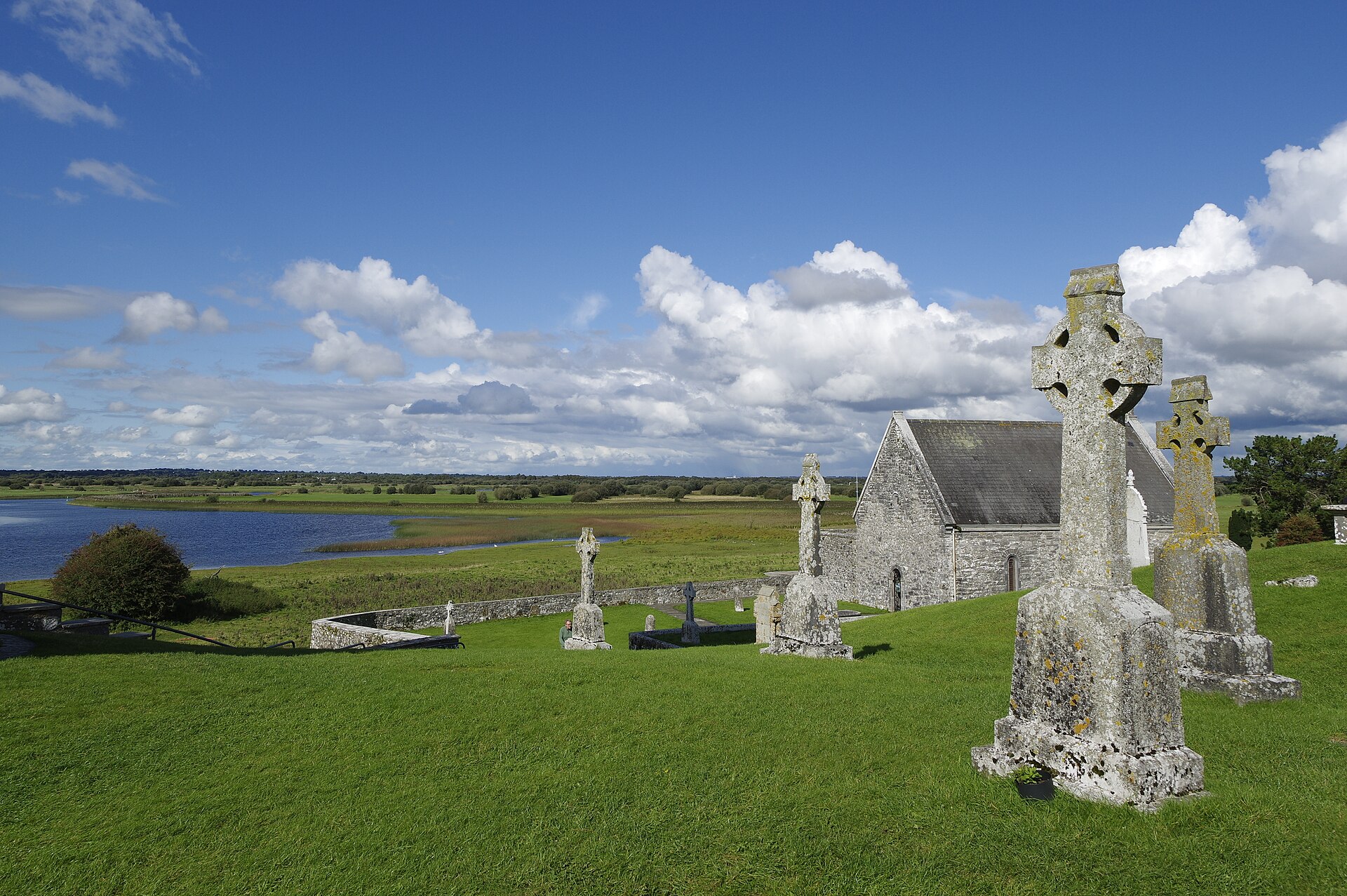
One of the most important monastic sites in Ireland, Clonmacnoise sits directly on the banks of the Shannon in County Offaly. St Ciarán founded it in 544 AD, and it became a major centre of learning — preserving the myths and stories, including those of Sionna, in Irish manuscripts. The monks who wrote down the old myths were living beside the river named after the goddess whose stories they transcribed. The site includes round towers, high crosses, and ruined churches dating back 1,500 years, and welcomes visitors year-round. Adult admission is €8.
The Women Who Became Rivers: A Hidden Pattern
Sionna is not the only goddess to give her name to an Irish river. This pattern appears throughout Celtic mythology across Ireland, Scotland, Wales, and even parts of France and Spain where Celtic peoples once lived.
The River Boyne, site of the famous 1690 battle, takes its name from the goddess Boann, who met a similar fate to Sionna — she approached a forbidden well called Nechtan’s Well, the well overflowed, and the water became the Boyne. The River Erne is named after Erne, a lady-in-waiting to a legendary queen who drowned in the lake when terrified by a vision. The pattern — women becoming the rivers they approach, or the rivers rising to claim them — seems to encode something the ancient Irish understood about water.
Rivers, in the Celtic worldview, were female, generative, and sovereign. They were territorial boundaries, sources of life, and sacred highways between this world and the Otherworld. A goddess who merged with a river didn’t die. She became something larger and more permanent than any individual life could be.
By this reading, Sionna didn’t fail when she approached Connla’s Well. She transformed. The well overflowed not to punish her but to receive her — to make her what she was always meant to be: Ireland’s longest river, flowing for 3,000 years and counting.
Next time you cross the Shannon — whether on the bridge at Limerick, on a boat through Lough Derg, or standing at the shore in County Cavan — you’re crossing the memory of a goddess who wanted to know everything. She got exactly what she came for. Just not in the way she planned.
Know someone who’d love this story? Forward this to them — the Love Ireland newsletter goes out every weekday morning with stories just like this one, completely free. loveireland.substack.com
FAQ: The River Shannon Legend and the Goddess Sionna
What is the River Shannon named after?
The River Shannon takes its name from Sionna, a goddess from Irish Celtic mythology. According to the legend, Sionna approached the forbidden Connla’s Well in the Otherworld seeking wisdom. The well overflowed, swept her away, and the resulting flood created the river that bears her name.
Is Sionna a real figure in Irish mythology?
Yes. Sionna appears in early Irish mythological texts as a granddaughter of Manannán mac Lir, the Celtic sea god. She belongs to the Tuatha Dé Danann, the divine race who ruled Ireland in pre-human times. Medieval Irish manuscripts — preserved in institutions like the Royal Irish Academy in Dublin — record her story.
How long is the River Shannon?
The River Shannon stretches approximately 360 kilometres (224 miles) from its source at the Shannon Pot in County Cavan to its mouth at the Shannon Estuary, which opens into the Atlantic Ocean between County Clare and County Limerick. It is the longest river in Ireland and in the British Isles.
What is Connla’s Well in Irish mythology?
Connla’s Well, also called the Well of Wisdom, is a sacred spring in the Celtic Otherworld surrounded by nine hazel trees. In Irish mythology, the hazelnuts from these trees contain all the wisdom of the world, and salmon in the well absorb this wisdom when they eat the nuts. The well appears in several major Irish myths, including the stories of Sionna and Fionn mac Cumhaill.
Where can I visit the source of the River Shannon?
The Shannon Pot, where the River Shannon begins, sits near the village of Dowra in County Cavan. A short walk from a small car park on the R200 road brings you to the spring. The source is a peaceful, clear-watered spring and opens to visitors throughout the year, free of charge.
☘️ Join 64,000+ Ireland Lovers
Every weekday morning, get Ireland’s hidden gems, local secrets, and travel inspiration — the kind you won’t find in any guidebook.
Subscribe free — enter your email:
Already subscribed?
Thinking about it for retirement?
If you’ve started thinking seriously about retiring there, our complete our full Retire in Ireland guide covers the visa, healthcare, cost-of-living, and the regions worth shortlisting.
📲 Know someone who’d love this? Share on WhatsApp →
Love more? Join 43,000 Scotland lovers → · Join 29,000 Italy lovers → · Join 7,000 France lovers →
Free forever · Unsubscribe anytime
Tours & experiences you might love


Powered by Viator. Some links are affiliate links — we may earn a small commission at no extra cost to you.
Secure Your Dream Irish Experience Before It’s Gone!
Planning a trip to Ireland? Don’t let sold-out tours or packed attractions spoil your journey. Iconic experiences like visiting the Cliffs of Moher, exploring the Rock of Cashel, or enjoying a guided walk through Ireland’s ancient past often sell out quickly—especially during peak travel seasons.

Booking in advance guarantees your place and ensures you can fully immerse yourself in the rich culture and breathtaking scenery without stress or disappointment. You’ll also free up time to explore Ireland’s hidden gems and savour those authentic moments that make your trip truly special.
Make the most of your journey—start planning today and secure those must-do experiences before they’re gone!
Subscribe Free