

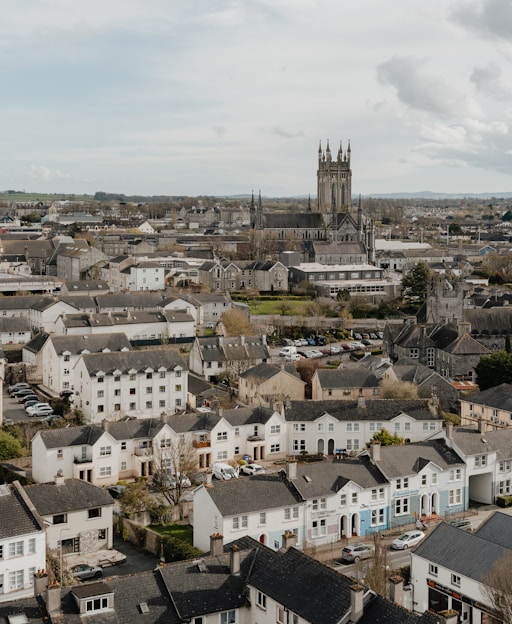
Photo by Clay Banks on Unsplash
In 1324, a wealthy widow in Kilkenny was put on trial for witchcraft. Her name was Dame Alice Kyteler, and her case became the first witchcraft trial in Irish history. She escaped before sentencing. Her maid did not.
The house where Alice lived still stands on St Kieran’s Street. Today it is a pub called Kyteler’s Inn — one of the most visited spots in the city. If you have ever had a pint there and wondered what happened within those walls seven centuries ago, this article will tell you.
Four Husbands, Four Fortunes
Dame Alice Kyteler was born around 1260 into a Flemish merchant family that had settled in Kilkenny. She was well-educated, commercially sharp, and by all accounts very good at accumulating wealth. She married four times, and each of her husbands died — conveniently leaving her richer than before.
Her first husband was William Outlawe, a money-lender. When he died, Alice inherited his business. She then married Adam le Blund of Callan, who also died and left her his estate. Her third husband, Richard de Valle, followed the same pattern. Her fourth, John le Poer, grew suspicious before his own death. He reported to the Bishop of Ossory that his hair and nails were falling out — he believed he was being poisoned.
By the time Alice was widowed for the fourth time, she was one of the wealthiest people in Kilkenny. Her stepchildren from her various marriages were furious. They believed she had manipulated their fathers and robbed them of their inheritances. They went to the Church with their grievances — and that is when things escalated dramatically.
Love stories like this one?
Get Ireland’s history, hidden gems, and travel tips delivered straight to your inbox every week.
The Accusations Against Dame Alice
In 1324, Richard de Ledrede, the Bishop of Ossory, took up the case against Alice and eleven of her associates. The charges were extraordinary even by the standards of the time.
Alice was accused of denying Christ and the Church. She was said to have sacrificed live animals at a crossroads, offering them to a demon named Robin Artisson — named in the bishop’s own register as “Robin, son of Art.” She was accused of brewing potions using the intestines of cocks, worms, the hair and nails of corpses, and the brains of an unbaptised child. She was said to have swept the streets of Kilkenny at night using a broom, chanting as she swept the filth towards the doorstep of her son William Outlawe II, murmuring that all the wealth of the town should flow to him.
She was also accused of having a familiar — a shape-shifting demon who appeared to her in the form of a cat, a shaggy dog, or a black man. Alice allegedly received her powers through this entity and used them to destroy her husbands.
Whether any of this was believed literally, or whether the accusations were a vehicle for seizing a wealthy woman’s property, is a question historians continue to debate. What is not in doubt is that Bishop de Ledrede pursued the case with genuine ferocity.
Ireland’s First Witchcraft Trial
The legal proceedings that followed were complicated and contentious. Alice had powerful connections. Her son William Outlawe II was a significant figure in Kilkenny, and Alice had allies in the civic administration who initially blocked the Bishop’s attempts to arrest her. At one point, de Ledrede himself was briefly imprisoned for his conduct in pursuing the case.
But the Bishop did not give up. He excommunicated Alice and her associates and eventually secured the cooperation of the authorities. A full inquisition was launched — the first of its kind in Ireland.
Alice and her group were charged with heresy and sorcery. The Church’s position was that her alleged activities represented a rejection of the Christian faith and a pact with the devil. This framing mattered: it moved the accusation out of the realm of folk belief and into formal Church law, which carried far more severe penalties.
The trial proceeded through the Church courts with Alice as the central defendant. However, Alice had been using her time and her wealth wisely. Before sentencing could be delivered, she disappeared.
Love stories like this one?
Get Ireland’s history, hidden gems, and travel tips delivered straight to your inbox every week.
Alice Flees — Petronella Burns
It is believed that Alice Kyteler fled to England, possibly with the help of her well-connected son. There is no reliable record of what became of her after she left Kilkenny. She simply vanishes from history.
Her maid, Petronella de Meath, was not so fortunate. Petronella was arrested, tortured, and eventually made to confess. She confirmed the accusations against Alice — including details about the demon Robin Artisson and the making of potions. Whether she spoke the truth or said whatever her interrogators required, no one can know.
On 3rd November 1324, Petronella de Meath was flogged publicly through the streets of Kilkenny and then burned at the stake. She was the first person in Ireland to be executed for heresy. Her death served as a public demonstration of what happened to those who dabbled in witchcraft — and perhaps more usefully for some, it closed the chapter on a very inconvenient trial.
Alice’s son William Outlawe II was also convicted, though his sentence was lenient by comparison. He was ordered to hear three masses daily for a year, feed the poor, and re-cover the choir of St Canice’s Cathedral with lead. He continued to live in Kilkenny and remained influential. Alice’s other associates received varying punishments.
Kyteler’s Inn: Then and Now
The stone building on St Kieran’s Street where Alice Kyteler lived in the early fourteenth century is still standing. Parts of the original structure remain, including the thick medieval walls and low-beamed ceilings on the lower floors. It is one of the oldest surviving buildings in Kilkenny.
At some point in its long history, the building became a pub and restaurant. Today it trades under the name Kyteler’s Inn and leans enthusiastically into its association with Dame Alice. The interior is decorated with medieval imagery, and the story of the witch trial is told prominently for visitors.
The pub is busy most nights, particularly in summer. It serves traditional Irish food and a full bar menu. There is live music regularly. It is, by any measure, a successful and well-run establishment — the kind of place that knows its history and uses it well.
Sitting in Kyteler’s Inn, surrounded by stone walls that have stood for seven hundred years, with the sounds of Kilkenny’s evening outside, it is not difficult to understand why the city has such a hold on visitors. History here is not behind glass. You can eat it, drink it, and sit in it.
Practical Information for Visitors
Kyteler’s Inn is located at 27 St Kieran’s Street, Kilkenny City, R95 RP40. It is open seven days a week, with food served from late morning through the evening. Booking is recommended for dinner, particularly at weekends and during festival periods.
Kilkenny itself is well worth a full day or two. The city’s medieval heritage is remarkably intact. St Canice’s Cathedral, Kilkenny Castle, and the Rothe House are all within easy walking distance of St Kieran’s Street. The Medieval Mile Museum, which runs through an old church and includes a stretch of original streetscape, is one of the best historical attractions in the country. For a full guide to the city, see our guide to the best things to do in Kilkenny.
Kilkenny is approximately 120 kilometres south of Dublin and is easily reached by car or coach. The Bus Éireann service from Dublin city centre runs regularly and takes around two hours. Kilkenny has its own train station, Kilkenny MacDonagh, with direct Irish Rail services from Dublin Heuston on the Waterford line taking roughly 1 hour 40 minutes.
The city hosts several major festivals throughout the year, including the Kilkenny Arts Festival in August, the Cat Laughs Comedy Festival in late May/early June, and Kilkenny Roots in May. Accommodation is plentiful, ranging from large hotels near the castle to smaller guesthouses within the medieval core.
Love stories like this one?
Get Ireland’s history, hidden gems, and travel tips delivered straight to your inbox every week.
Dame Alice Kyteler escaped Kilkenny seven centuries ago and left no trace of where she went. But the building where she lived, the streets she swept at midnight, and the city that tried her are all still here. Kilkenny keeps its history close. A visit to Kyteler’s Inn is as good a way as any to sit down inside it.
Thinking about it for retirement?
If you’ve started thinking seriously about retiring there, our complete our full Retire in Ireland guide covers the visa, healthcare, cost-of-living, and the regions worth shortlisting.
Tours & experiences you might love


Powered by Viator. Some links are affiliate links — we may earn a small commission at no extra cost to you.
Secure Your Dream Irish Experience Before It’s Gone!
Planning a trip to Ireland? Don’t let sold-out tours or packed attractions spoil your journey. Iconic experiences like visiting the Cliffs of Moher, exploring the Rock of Cashel, or enjoying a guided walk through Ireland’s ancient past often sell out quickly—especially during peak travel seasons.

Booking in advance guarantees your place and ensures you can fully immerse yourself in the rich culture and breathtaking scenery without stress or disappointment. You’ll also free up time to explore Ireland’s hidden gems and savour those authentic moments that make your trip truly special.
Make the most of your journey—start planning today and secure those must-do experiences before they’re gone!