

There is an old rule in Ireland that most people still know, even if they no longer say it aloud. When you build a house, you do not build it on a fairy path.
The rule is not written down anywhere. No council enforces it. But if you ask the right person in the right townland, they will point to the exact line on the land it runs through — and they will tell you what happened to the last family who chose not to listen.
The Invisible Roads Running Across Ireland
Before any road was laid or any map was drawn, the land had its own routes. The Irish called them fairy paths — or, in Irish, bóithríní sí. These were the invisible roads along which the sídhe moved between their raths and forts.
The paths ran straight and true between fixed points — most often between two fairy forts, the circular earthworks that still dot the Irish countryside in their thousands. The land between those points was considered sacred and untouchable.
To build on a fairy path was not simply unlucky. It was a direct provocation. And in rural Ireland, you did not provoke something you could not see.
Why the Cottage Had a Door on Each Side
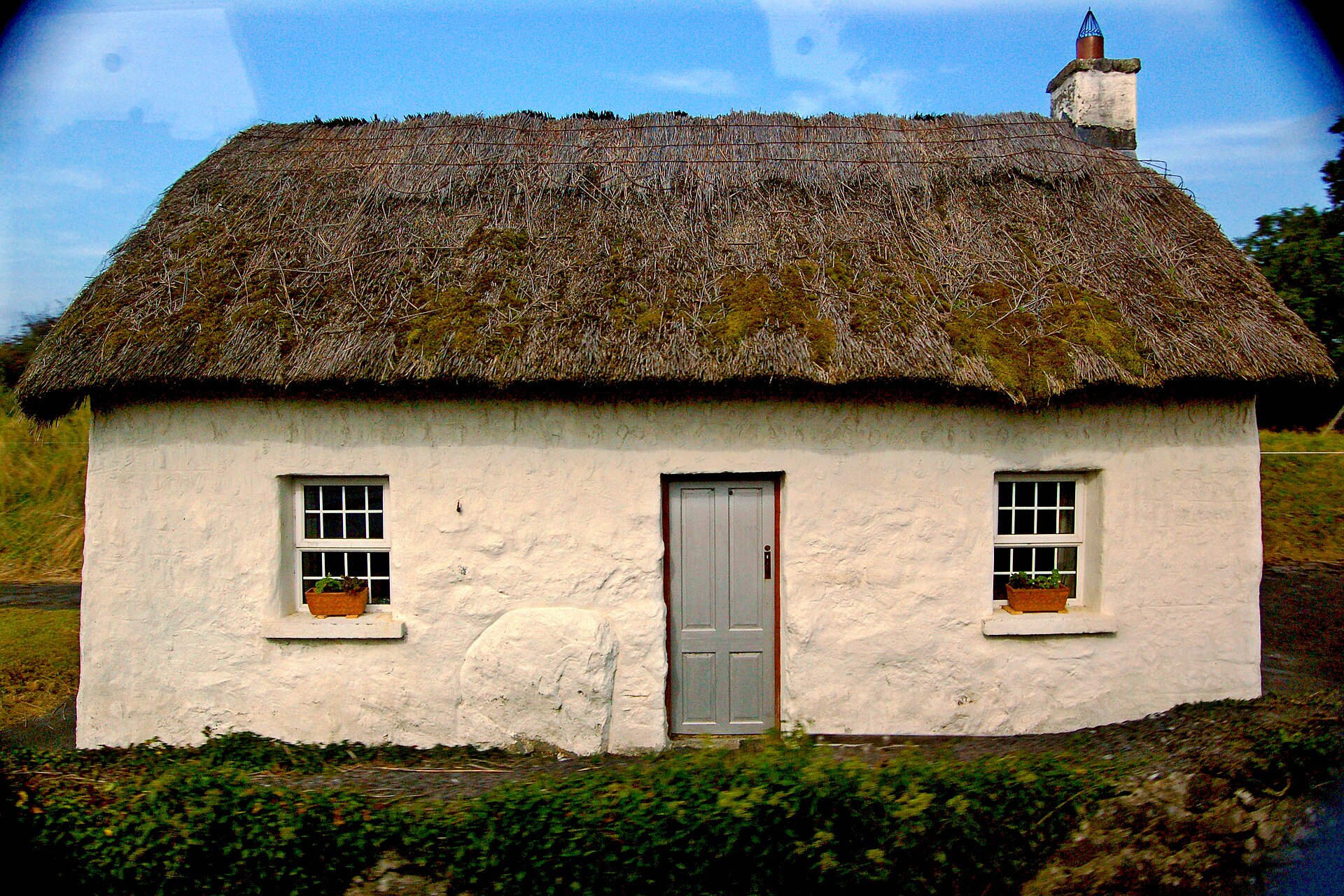
The belief shaped how people built their homes. If a fairy path ran through your land, your cottage was built with a door on each of the two opposite walls that faced the path.
The reasoning was simple. You could not stop the fairies walking their road. You could only step aside.
With a door on each side, the path could pass straight through the house without obstruction. The family lived around the path, not across it. On certain nights — particularly around Samhain and Bealtaine — those doors were left unlocked. Not as an invitation. As a courtesy.
This is why many old Irish cottages have an asymmetric layout that puzzles visitors today. One door faces the lane. Another faces the back field. And the reason has nothing to do with ventilation.
☘️ Enjoying this? 64,000+ Ireland lovers get stories like this every week. Subscribe free →
When the Motorway Bent Around a Bush
The belief did not vanish with modernisation. In 1999, road planners in County Clare proposed routing a new dual carriageway in a way that would have destroyed a lone hawthorn tree standing in a field near Latoon.
Folklorist Eddie Lenihan campaigned loudly to save it. He told anyone who would listen that this was no ordinary tree. It stood on a fairy path, and to cut it down would bring serious trouble to everyone involved in the road project.
The road was rerouted. The tree still stands today.
It is easy to smile at this story. Less easy to explain why, across Ireland, you will find hundreds of bends in roads that serve no obvious geographic purpose. Ask a local about almost any one of them and they will give you the same answer: the road went around something that could not be moved.
The Signs a Path Runs Through Your Land
In older communities, the course of a fairy road through a townland was common knowledge, passed from parents to children with the same matter-of-fact certainty as the location of the well.
Certain signs could also reveal it. A coldness along a strip of ground, even in summer. A line where crops grew poorly no matter what was planted. Animals that refused to settle in one corner of the barn. A house where no family seemed to stay very long.
None of these were proof, of course. But in a country that has always taken its unseen world seriously, they were enough. Ireland carries a deep belief that certain parts of the landscape belong to forces older than memory, and the fairy paths are part of that tradition.
A Courtesy That Has Never Fully Disappeared
Modern Ireland builds motorways and housing estates over ground that once would have required consultation with the oldest members of the community. Most of it passes without publicly acknowledged incident.
But farmers still point out the fairy forts on their land. Builders still hear warnings from neighbours before they break ground. A 2011 survey found that more than half of Irish people admitted they would be reluctant to disturb a fairy fort. Not because they believed in fairies, most of them said. But just in case.
That particular logic is as Irish as the roads themselves — winding around something ancient, staying well out of its way.
There is something quietly remarkable about a culture that, even now, leaves room for the possibility that certain paths belong to someone else. Ireland’s countryside is full of these invisible agreements — old bargains with the land, made by people who understood that not everything worth respecting can be seen.
If you ever find yourself on a twisting Irish road that takes a sudden, unexplained bend, slow down. Ask someone. Chances are, when you visit Ireland, they will know exactly why it turns.
☘️ You Might Also Love
Frequently Asked Questions
Why is this tradition still relevant in Ireland today?
Ireland’s rich cultural heritage means many customs and traditions described in this article have survived for centuries. They continue to shape Irish identity, from rural farming communities to urban life, and are celebrated as part of what makes Ireland unique.
How far back does this Irish tradition or practice date?
Many of Ireland’s folk customs and cultural practices have roots stretching back hundreds — even thousands — of years. This one reflects the deep connection between the Irish people and their land, language, and community life.
Where can visitors experience authentic Irish culture and traditions?
Ireland’s best cultural experiences are found beyond the tourist trail — in rural villages, local festivals, traditional music sessions, and county museums. The Irish Tourist Board (Fáilte Ireland) maintains a directory of authentic cultural experiences at ireland.com.
Do Irish diaspora communities around the world still practice these traditions?
Yes — Irish communities across the United States, Australia, Canada, and the UK actively preserve and celebrate Irish traditions. St Patrick’s Day events, Irish language classes, céilí dancing, and trad music sessions are found in cities worldwide.
☘️ Join 64,000+ Ireland Lovers
Every Friday, get Ireland’s hidden gems, local secrets, and travel inspiration — the kind you won’t find in any guidebook.
Subscribe free — enter your email:
Free forever · · Unsubscribe anytime
Tours & experiences you might love


Powered by Viator. Some links are affiliate links — we may earn a small commission at no extra cost to you.
Secure Your Dream Irish Experience Before It’s Gone!
Planning a trip to Ireland? Don’t let sold-out tours or packed attractions spoil your journey. Iconic experiences like visiting the Cliffs of Moher, exploring the Rock of Cashel, or enjoying a guided walk through Ireland’s ancient past often sell out quickly—especially during peak travel seasons.

Booking in advance guarantees your place and ensures you can fully immerse yourself in the rich culture and breathtaking scenery without stress or disappointment. You’ll also free up time to explore Ireland’s hidden gems and savour those authentic moments that make your trip truly special.
Make the most of your journey—start planning today and secure those must-do experiences before they’re gone!
Subscribe Free