

Every summer, tens of thousands of Irish teenagers pack a bag, say goodbye to their parents, and travel to remote villages on the west coast — where they are not permitted to speak English for up to three weeks. Their parents call it a holiday. The teenagers call it the beginning of everything.
A Summer School Unlike Any Other
The coláiste samhraidh — Irish for summer college — has been sending teenagers to Gaeltacht areas since the early twentieth century.
These are the Irish-speaking regions along the Atlantic coast: Connemara in County Galway, the Dingle Peninsula in Kerry, Gweedore in Donegal, Ring in Waterford. Each one a place where Irish never fully gave way to English. Each one now a summer destination for thousands of students every year.
The tradition began with the Gaelic League, founded in 1893 by Douglas Hyde. Its mission was to keep the Irish language alive. Summer immersion schools in Irish-speaking areas were the strategy. Bring teenagers to the places where Irish was still the everyday language. Let them live it, not just study it.
Over a century later, the model has barely changed. More than 20,000 Irish students attend coláistí samhraidh each year.
The House You Learn to Call Home
Each student is placed with a bean an tí — literally, the woman of the house. This is a local Gaeltacht family who takes in a small group of students for the summer weeks.
The bean an tí feeds them breakfast, checks they are home before curfew, and speaks only Irish from the moment they arrive. There is no easing in gently. Irish is the rule at the table, in the hallway, and at the front door.
Some colleges use a token system. Speak English and you lose a token. Run out and you owe a fine — usually small, but the principle is clear. Many colleges enforce a simple penalty of a few cent per English word spoken.
What students rarely expect is how quickly they adapt. Within a week, the Irish starts to come. Not fluently. Not perfectly. But enough to ask for more bread, to apologise, to laugh.
It is worth noting that every Irish person carries at least a cúpla focal — a couple of words — regardless of how long they spent in school. The Gaeltacht is where those words become instinctive rather than recalled.
Classes by Day, Céilí by Night
Mornings are for classes. Afternoons, for activities: swimming, hill walks across bogs and headlands, visits to local heritage sites.
But it is the evenings that students remember for decades.
Every night there is a céilí — a traditional dance session in the local hall. Sets and reels. Lines forming and reforming. The music loud, the floor packed, the atmosphere electric.
For many Irish teenagers, the céilí is their first experience of traditional dancing as something genuinely joyful rather than an obligatory school performance. It is also, if the stories are to be believed, where many first romances begin.
The Gaeltacht regions are also among Ireland’s most spectacular landscapes. If you are planning a visit, start with our complete Ireland planning guide.
☘️ Enjoying this? 64,000+ Ireland lovers get stories like this every week. Subscribe free →
What the Language Really Feels Like
Irish is one of the oldest written languages in Europe. It sounds like nothing else. Its rhythms are different. Its grammar is reversed by English standards — the verb comes first, the adjective follows the noun.
But in the Gaeltacht, it stops being a school subject. It becomes the language people actually use to buy milk, call their dogs, argue with their siblings, and chat on doorsteps in the evening light.
Students who have spent years struggling with Irish in a classroom often describe their Gaeltacht summer as the week the language finally clicked. Not because the teaching changed. Because the language was suddenly alive around them.
That feeling does not leave. Ask any Irish adult who attended and they can still remember the first full sentence they managed in Irish without stopping to think about it.
Why Adults Come Back
The coláiste samhraidh is for teenagers. But the landscape it sits within is for everyone.
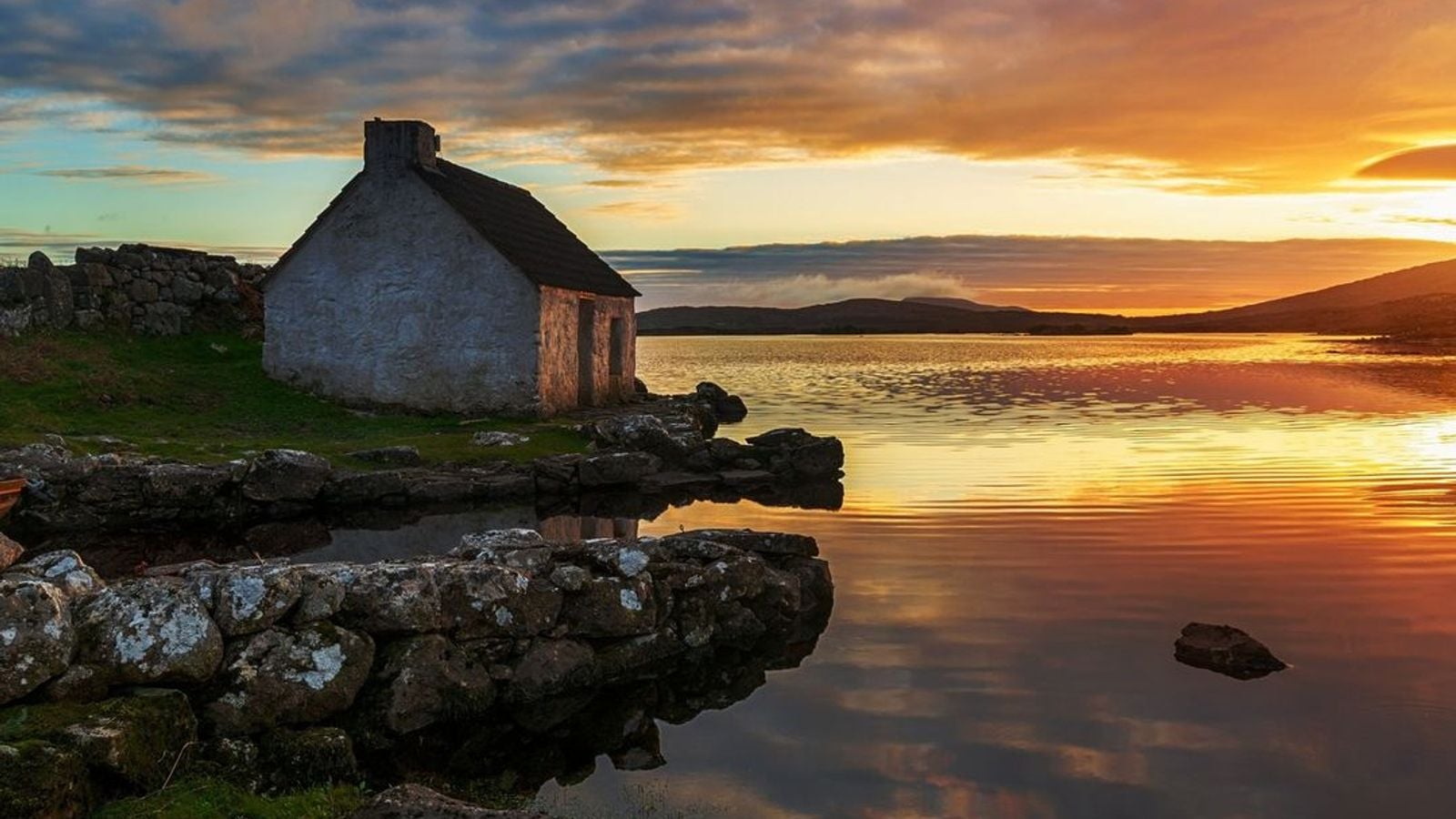
Connemara’s lakes and bog roads. The stone walls of the Aran Islands. The Dingle Peninsula’s cliffs where the Atlantic crashes into nothing but rock. These places do something to a person that is difficult to describe and impossible to forget.
Many adults who attended as teenagers return to the same villages as visitors years later. They walk the same road from the house to the hall. They stop at the same view of the water. The bean an tí is often still there — or her daughter is.
If you want to explore the landscapes that made these summers memorable, County Galway and Connemara are the perfect place to begin.
It is one of the peculiarities of Irish identity that the Gaeltacht summer college does not just teach a language. It gives you a second home. And second homes are the hardest things to leave behind.
Every autumn, when school starts again, Irish classrooms fill with teenagers who are marginally better at Irish than they were before. But that is not really what the Gaeltacht gives them. What it gives them is a corner of Ireland that belongs specifically to them — rocky, windswept, quietly extraordinary. A place where English disappears and something much older takes its place.
☘️ You Might Also Love
Tours & experiences you might love


Powered by Viator. Some links are affiliate links — we may earn a small commission at no extra cost to you.
Secure Your Dream Irish Experience Before It’s Gone!
Planning a trip to Ireland? Don’t let sold-out tours or packed attractions spoil your journey. Iconic experiences like visiting the Cliffs of Moher, exploring the Rock of Cashel, or enjoying a guided walk through Ireland’s ancient past often sell out quickly—especially during peak travel seasons.

Booking in advance guarantees your place and ensures you can fully immerse yourself in the rich culture and breathtaking scenery without stress or disappointment. You’ll also free up time to explore Ireland’s hidden gems and savour those authentic moments that make your trip truly special.
Make the most of your journey—start planning today and secure those must-do experiences before they’re gone!
Subscribe Free