

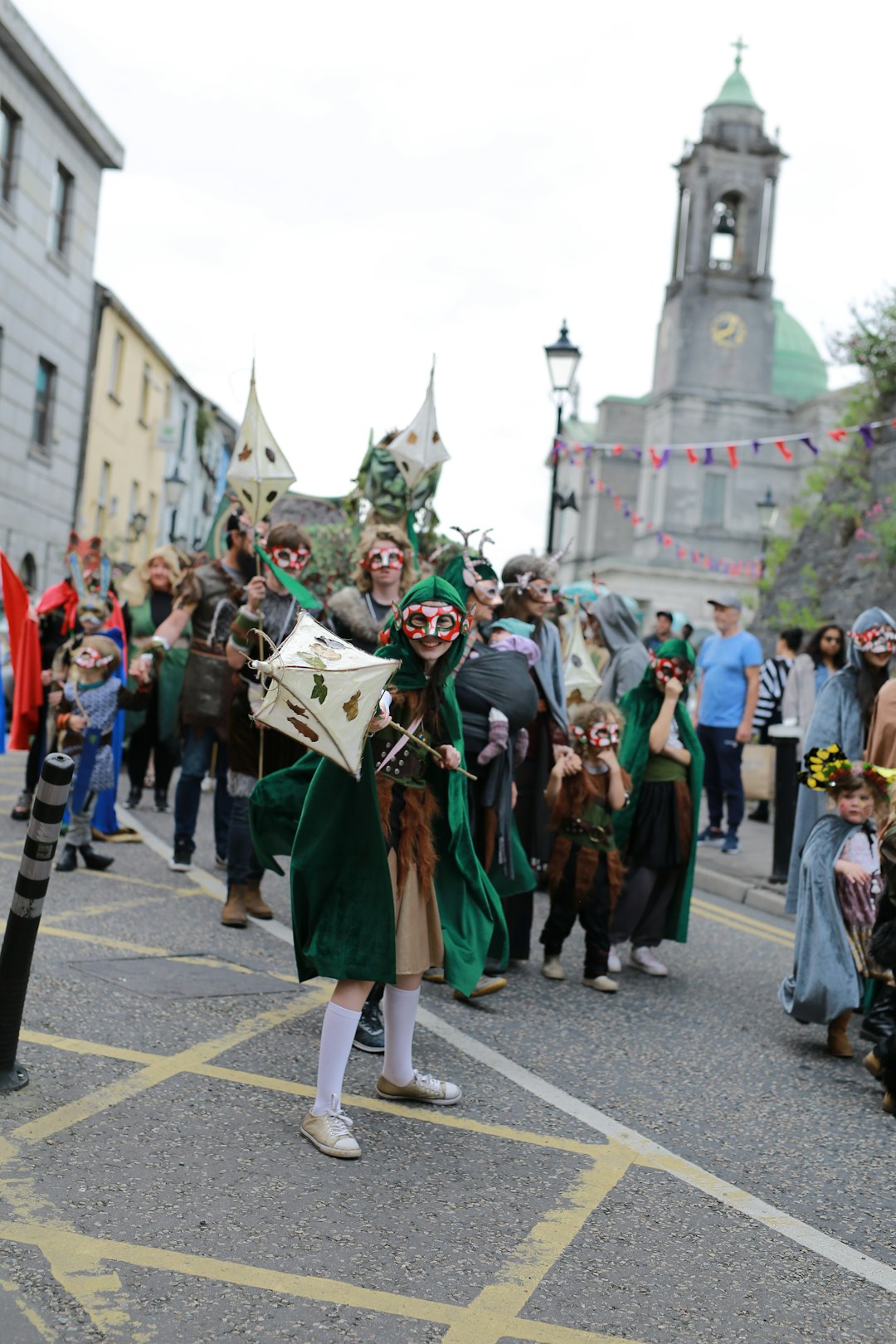
The morning after Christmas in Dingle, County Kerry, is never quiet. By nine o’clock, groups in elaborate costumes — straw hats, painted faces, ribbons and bells — are moving through the streets playing music and knocking on doors. They carry a small decorated pole with the effigy of a bird at the top. This is Wren Day, known in Irish as Lá an Dreoilín. And it has happened every single year on 26 December for as long as anyone here can remember.
What the Wren Boys Actually Do
The groups — called wren boys, or mummers in some parts of the country — march through town collecting donations. At each door or pub, they perform a verse that hasn’t changed much in generations:
“The wren, the wren, the king of all birds / On St Stephen’s Day was caught in the furze.”
The money raised goes to local causes, or funds the community gathering that evening. Every town does it slightly differently. In Dingle, the groups assemble in the square at midday and set off in procession. In Listowel, there’s a competition for the best costume group. In some Clare and Connacht villages, wren boys still go door to door in the old style, staying at each house until invited in for a song and a drink.
The music is real: fiddles, bodhrán, tin whistles, and pipes. The whole town becomes a moving session, spilling from doorstep to doorstep through the cold December afternoon.
Where the Tradition Comes From
The origin stories are several, and none is definitive.
One account says the wren betrayed Irish warriors hiding from Norse raiders by tapping on their shields and waking the enemy. Another says the bird revealed St Stephen to his pursuers when it flew from his hiding spot in a bush. A third links the tradition to an older Celtic cycle in which the wren — the king of winter — was ritually sacrificed at the turning of the year to make way for the light returning.
What is clear is that the custom is very old and once existed across Celtic cultures. Versions of the wren hunt appear in Wales, Brittany, and the Isle of Man. Ireland kept it long after the others let it go. In Kerry and Clare, it never really paused at all.
The Costumes and the Disguise
The disguise is as important as the music.
Traditionally, wren boys blackened their faces and wore suits made of straw — the disguise allowed participants to move through the community anonymously, asking for contributions without the awkwardness of being recognised. The ritual anonymity also gave the day a different kind of freedom. People who might never knock on a neighbour’s door would join the procession without hesitation.
It’s a custom not unlike another ancient Irish disguise tradition, where straw costumes and masked faces allowed communities to step briefly outside the rules of ordinary life.
☘️ Enjoying this? 64,000+ Ireland lovers get stories like this every week. Subscribe free →
Today the costumes are wilder. Painted faces, theatrical hats, ribbons and bells, characters drawn from history and fiction. Some groups spend weeks in preparation. Children march beside their grandparents. The anonymity remains — even when everyone in town knows exactly who is under the painted face.
Where to See It
Dingle is the most famous location. The Dingle Wren Day draws thousands of visitors who travel specifically for the day. Groups fill the streets from midday, and the pubs stay open and playing all afternoon long.
Other strong locations include Listowel and Killarney in County Kerry, pockets of County Clare, and scattered communities across Connacht. The tradition is most intense in Kerry, where it carries the weight of a proper festival — one the whole town takes part in.
If you’re planning a trip to Ireland over the Christmas period, building 26 December in Dingle into your plans could be the most unexpectedly memorable thing you do.
What Happens at the End of the Day
By evening, the wren boys reconvene. Pubs that welcomed them in the afternoon welcome them back. The money collected goes into the pot for a communal gathering: music, food, and company through the short December evening.
In older times, 26 December was one of the few days when farm labourers had nothing required of them. The wren day was theirs entirely. It belonged to the community, not to any family or employer. The street itself was the venue.
That’s still what it feels like. A single December day, after the quiet of Christmas morning, when the street belongs to everyone.
If you find yourself in the right part of Ireland on 26 December, listen before you look. You’ll hear it before you see it — fiddles and drums coming closer, voices rising in an old verse, the sound of something that hasn’t been explained to everyone’s satisfaction in centuries but hasn’t stopped for that reason.
Ireland does this well: keeping things alive not because they’ve been officially preserved, but because people simply love them.
☘️ You Might Also Love
Tours & experiences you might love


Powered by Viator. Some links are affiliate links — we may earn a small commission at no extra cost to you.
Secure Your Dream Irish Experience Before It’s Gone!
Planning a trip to Ireland? Don’t let sold-out tours or packed attractions spoil your journey. Iconic experiences like visiting the Cliffs of Moher, exploring the Rock of Cashel, or enjoying a guided walk through Ireland’s ancient past often sell out quickly—especially during peak travel seasons.

Booking in advance guarantees your place and ensures you can fully immerse yourself in the rich culture and breathtaking scenery without stress or disappointment. You’ll also free up time to explore Ireland’s hidden gems and savour those authentic moments that make your trip truly special.
Make the most of your journey—start planning today and secure those must-do experiences before they’re gone!