

Imagine walking a country lane in the west of Ireland and spotting a gnarled hawthorn tree hung with scraps of cloth — purple, white, faded pink. No sign explains it. No tourist trail marks it. But local people know exactly what it means, and what it costs to touch it.
This is a rag tree. And it has been quietly gathering prayers for well over a thousand years.
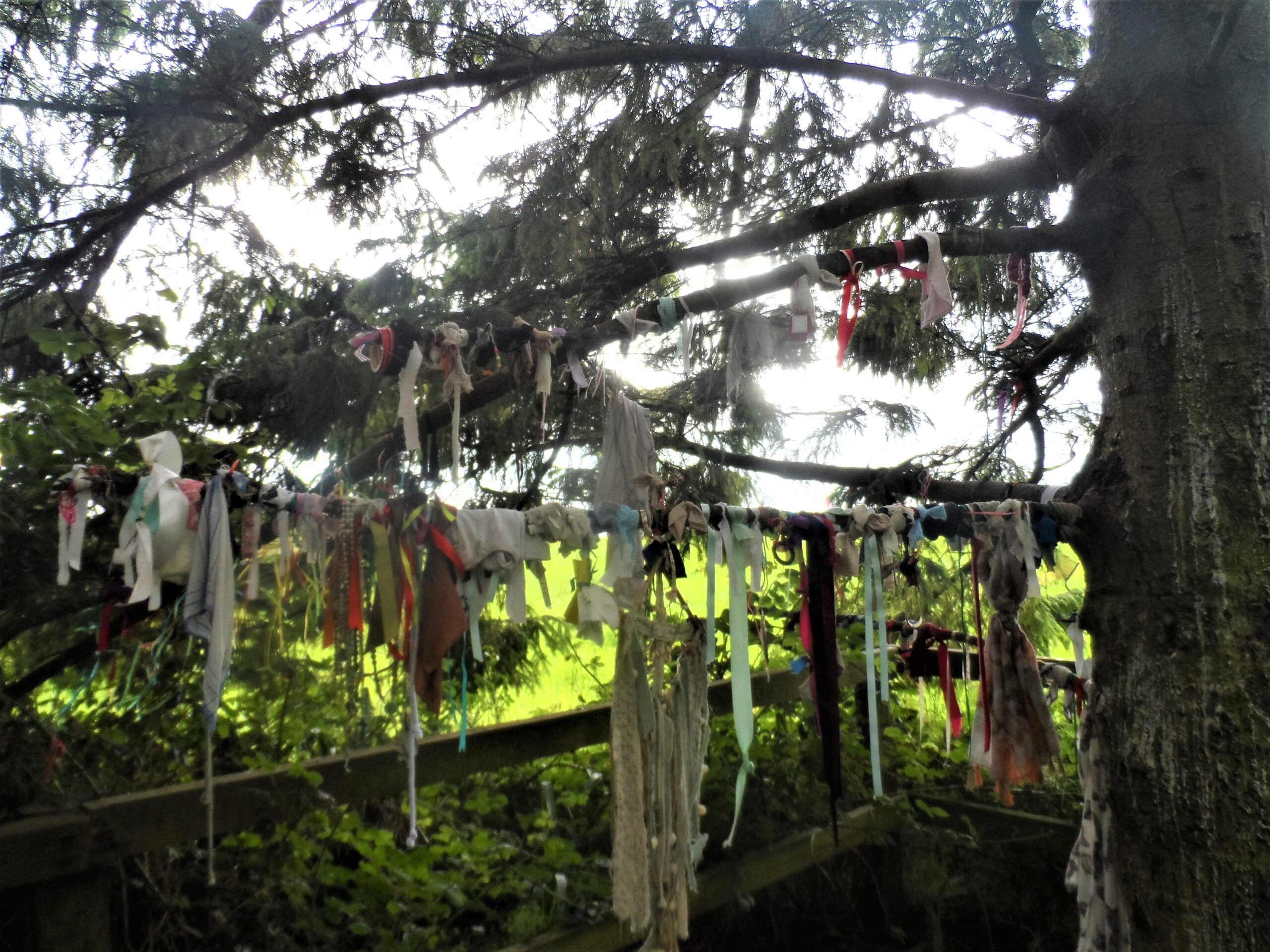
What Is a Rag Tree?
A rag tree — known in Irish as crann bréidín — stands beside a holy well. Visitors tear a small piece of cloth from their clothing, or bring one specially, and tie it to a branch while whispering a wish, a prayer, or the name of someone who is ill.
The belief is simple: as the cloth rots away in the rain and wind, the ailment or sorrow attached to it fades too. Offering and release in one act.
These trees are almost always hawthorns — thorny, long-lived, and considered sacred in Irish folk tradition. Cutting one is still thought to bring serious misfortune. Many Irish people will not remove even a dead hawthorn from their land.
The Sacred Wells They Guard
Every rag tree stands at or near a tobar — a holy well. Ireland has thousands of them. Some are marked on maps; most are not. They hide in hedgerows, beside ruined churches, at the foot of hills.
Long before Christianity arrived, these springs were sacred to the Celts. They were places of healing, fertility, and connection to the Otherworld — where the boundary between this life and the next grew thin.
When Christianity spread across Ireland, the Church was shrewd. Rather than stamping out the old rituals, it folded them in. Springs became dedicated to saints — St Brigid, St Colmcille, St Gobnait — hundreds of wells now carry a saint’s name. But the water still runs from the same ancient source.
Pattern Days — When the Whole Community Walked
The most important ritual at a holy well was the pattern (from the word patron). On a saint’s feast day, people walked from miles around, following a prescribed route called a turas — a journey — around the well, reciting prayers, circling the site a set number of times in a clockwise direction.
Pattern days were major events: part pilgrimage, part fair. Musicians played. Matches were made. Food was sold. The Church tried to suppress the more boisterous elements over the centuries, but the tradition proved stubborn.
Some pattern days still draw hundreds of people. St Brigid’s Well in Liscannor, County Clare, is visited every year. Struell Wells in County Down has been a pilgrimage site since at least the 12th century. The traditions survive because they meet a need that never went away.
☘️ Enjoying this? 64,000+ Ireland lovers get stories like this every week. Subscribe free →
What People Leave Behind
The cloth strips are the most visible offering, but far from the only one. Visitors leave coins pressed into the bark of rag trees. Rosary beads draped over stone crosses. Handwritten notes tucked into crevices in old stonework.
Some wells are surrounded by walking sticks, crutches, and splints — left behind after healing, if the stories are to be believed. Decades of quiet hope arranged in the grass.
The ailments people brought were specific. Eye troubles were taken to wells with clear spring water. Skin conditions, headaches, infertility, grief — each had its well, its patron, its prescribed ritual. This folk tradition and the people who kept it are explored in the story of every Irish village’s healer — someone who carried the cure.
Where to Find Holy Wells Today
Ireland’s holy wells are everywhere if you know what to look for. The well of St Brigid at Faughart in County Louth is one of the most visited in the country. Tobernalt in County Sligo — a site of secret Mass-saying during the Penal Laws — still draws pilgrims every summer.
Tobar Mhuire near Ballinspittle in Cork is visited year-round. The well at Caher in County Galway sits in open bog, stripped of ceremony but not of presence. If you’re drawn to Ireland’s ancient sacred landscape, the same instinct to protect old holy places explains why Irish farmers still refuse to touch the fairy forts in their fields.
Most wells have no visitor centre, no car park, no sign. They ask you to find them the old way — by asking a local, following a lane until it ends, listening for water. If you’re planning a trip and want to seek out places like these, the Ireland travel planning hub is a good place to start.
A Landscape That Still Listens
There is something quietly powerful about a tree hung with prayer. In an age of instant everything, people still walk miles to tie a piece of cloth to a thorn branch in the rain. They still press coins into bark still damp with morning mist.
The wells have not moved. The springs still run. And Ireland, it turns out, has always known where to find comfort.
If you visit the west of Ireland, take one afternoon to follow a lane you have never been down before. You may find a rag tree. You may not even need to know what it means. You will feel it.
☘️ You Might Also Love
☘️ Join 64,000+ Ireland Lovers
Every Friday, get Ireland’s hidden gems, local secrets, and travel inspiration — the kind you won’t find in any guidebook.
Free forever · Unsubscribe anytime
Tours & experiences you might love


Powered by Viator. Some links are affiliate links — we may earn a small commission at no extra cost to you.
Secure Your Dream Irish Experience Before It’s Gone!
Planning a trip to Ireland? Don’t let sold-out tours or packed attractions spoil your journey. Iconic experiences like visiting the Cliffs of Moher, exploring the Rock of Cashel, or enjoying a guided walk through Ireland’s ancient past often sell out quickly—especially during peak travel seasons.

Booking in advance guarantees your place and ensures you can fully immerse yourself in the rich culture and breathtaking scenery without stress or disappointment. You’ll also free up time to explore Ireland’s hidden gems and savour those authentic moments that make your trip truly special.
Make the most of your journey—start planning today and secure those must-do experiences before they’re gone!