

Most visitors walk through the arched entrance of an Irish castle without looking up. Those who do often stop cold.
Got an Irish surname with a castle behind it? ☘️
Find Your Irish Castle — matches your surname to its ancestral castle and the family’s history.
Set into the ceiling directly above most castle entranceways is a small stone opening. It looks almost incidental — like something a builder simply forgot to fill in. It wasn’t.
This feature is called a murder hole. And it was one of the most effective killing devices ever built into stone.
The Hole You Never Noticed
The murder hole — known in architectural terms as a meurtrière — is a gap cut through the ceiling of a castle’s entrance passage. From above, defenders could pour boiling water, hot oil, or molten lead onto attackers trapped below.
Hot sand was another favourite. It slipped under armour in ways water could not, burning the skin of anyone who wore it.
The design was brutally logical. The entrance passage — narrow, roofed, inescapable — was never meant to be crossed. It was meant to be a grave for anyone who tried.
Why the Entrance Was the Most Dangerous Place
Medieval castle builders understood one thing above all: an attacker who made it through the gate had already won half the battle.
So they made gates almost impossible to survive. Attackers were funnelled single-file into a kill zone. Arrow slits lined the walls. Portcullises could drop without warning, trapping a group inside. Murder holes covered every inch of ceiling above.
From a chamber overhead, a single defender could hold off a much larger force. The math of the building itself was the weapon.
Ireland has more medieval castles per person than almost any country on earth, and the murder hole appears in virtually all of them — from great Norman fortresses to the humblest tower house on a County Clare hillside.
Where to Find Them Today
Kilkenny Castle has some of the finest surviving examples in Ireland. The gatehouse complex shows the full defensive system: murder holes overhead, portcullis slots on either side, and interlocking flanking towers that left attackers exposed from three directions at once.
Trim Castle in County Meath — Ireland’s largest Norman castle — still has murder holes clearly visible above its main gateway passage. Standing beneath them today, you can see exactly how an attacker would have been trapped.
Rock of Cashel in Tipperary includes a fortified entrance complex where the stone above the gateway shows clear evidence of defensive openings. Even in ruin, the intent is unmistakeable.
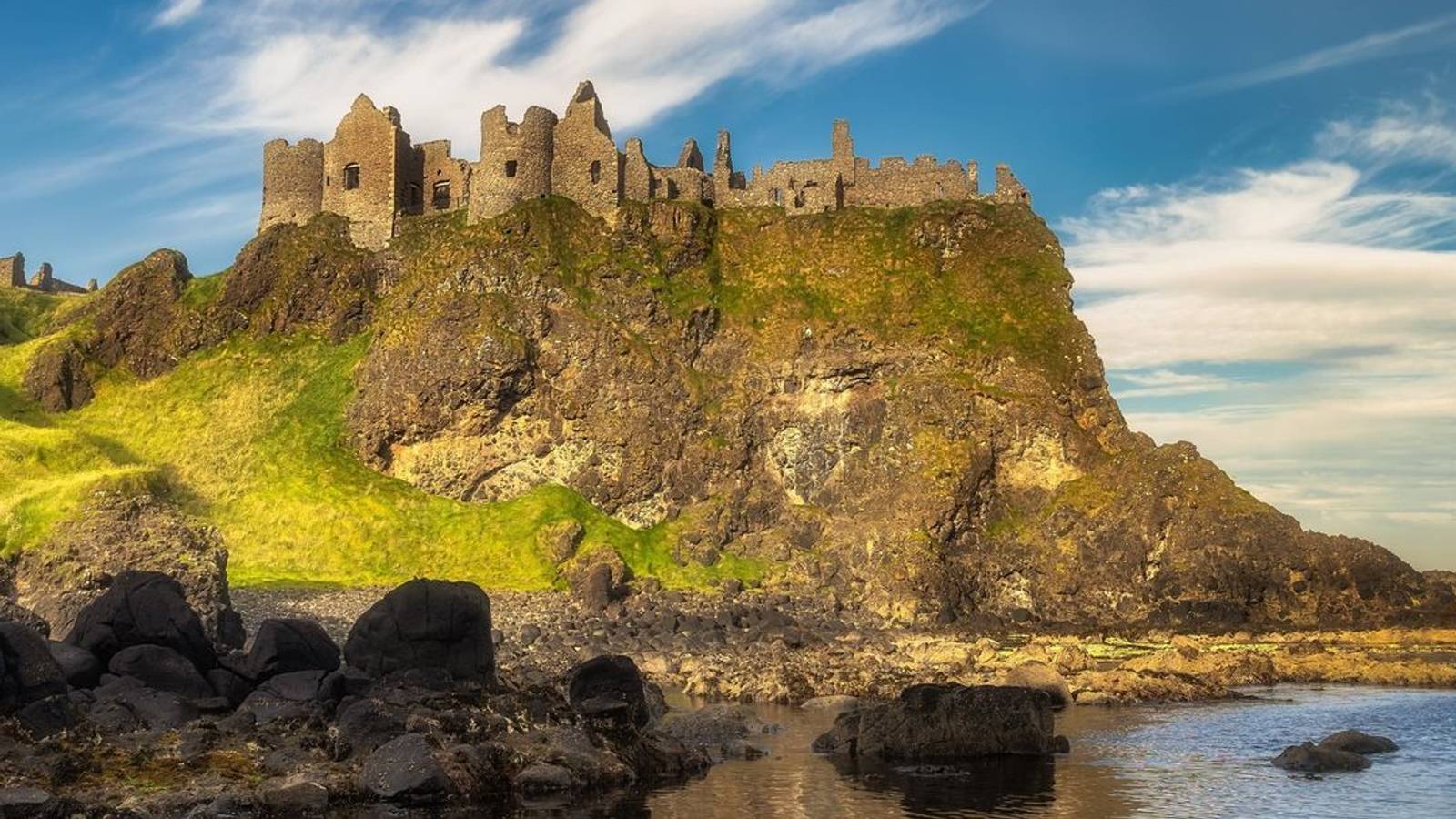
Dunluce Castle in County Antrim, clinging to its sea cliff above the North Atlantic, was effectively its own killing zone. The land approach was narrow and exposed. Anyone who reached the entrance was already exhausted and vulnerable.
☘️ Enjoying this? 65,000 Ireland lovers get stories like this every weekday morning. Subscribe free →
The People Who Stood Above
Behind every murder hole was a human being. Likely frightened. Possibly very young.
Castle garrisons in medieval Ireland were rarely the vast professional armies of popular imagination. Many tower houses — built between 1400 and 1650 — had a permanent garrison of fewer than a dozen people. In a crisis, everyone helped. Women, older children, servants.
The murder hole required no special skill. You heated water or sand in the room above. You waited. If attackers came, you poured. It was a defence designed for ordinary people protecting their home, their lord, and their lives.
Reading about what life was really like inside an Irish tower house in the 1400s brings this closer still — these were not grand distant fortresses but working, lived-in homes that happened to be built for survival.
The Ritual That Kept the Memory Alive
Bunratty Castle in County Clare takes its murder hole tradition a step further. During medieval banquets held in the great hall above, visitors are sometimes brought to the entrance passage below — and shown the defender’s-eye view from the hole overhead.
It’s a small detail. But it collapses the distance between now and then more sharply than any exhibit or information board.
You look down through a stone gap, and for just a moment you understand what it felt like to defend Ireland from that position — one person, one hole, and everything at stake.
They Are Still There
The remarkable thing about murder holes is their survival rate. Cut through solid stone, they didn’t burn, couldn’t rot, and had no reason to be sealed.
Walk through almost any Irish castle entrance today and the hole is still there above your head — the same opening defenders watched through seven centuries ago.
Most people pass underneath without ever looking up.
If you’re planning a castle visit and want to know what else to look for, the Ireland planning hub has everything you need before you go.
The next time you walk into an Irish castle, pause in the entrance. Look up at the ceiling. There it is — a small, unremarkable hole in the stone. Seven centuries old. Still watching.
☘️ You Might Also Love
☘️ Join 65,000+ Ireland Lovers
Every Friday, get Ireland’s hidden gems, local secrets, and travel inspiration — the kind you won’t find in any guidebook.
Already subscribed? Download your free Ireland guide (PDF)
Love more? Join 43,000 Scotland lovers → · Join 30,000 Italy lovers → · Join 7,000 France lovers →
Free forever · Unsubscribe anytime
Tours & experiences you might love


Powered by Viator. Some links are affiliate links — we may earn a small commission at no extra cost to you.
Secure Your Dream Irish Experience Before It’s Gone!
Planning a trip to Ireland? Don’t let sold-out tours or packed attractions spoil your journey. Iconic experiences like visiting the Cliffs of Moher, exploring the Rock of Cashel, or enjoying a guided walk through Ireland’s ancient past often sell out quickly—especially during peak travel seasons.

Booking in advance guarantees your place and ensures you can fully immerse yourself in the rich culture and breathtaking scenery without stress or disappointment. You’ll also free up time to explore Ireland’s hidden gems and savour those authentic moments that make your trip truly special.
Make the most of your journey—start planning today and secure those must-do experiences before they’re gone!