

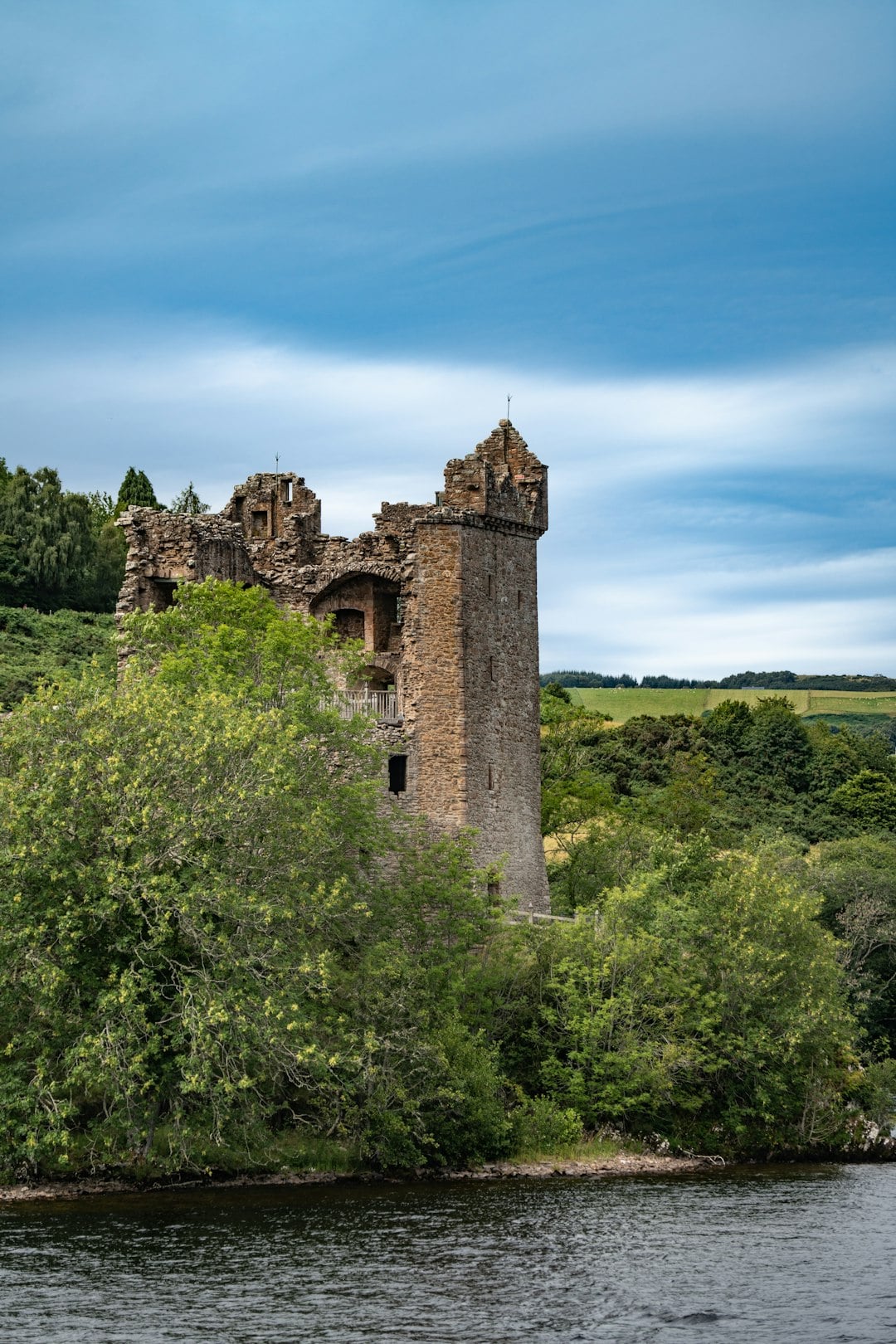
Cahir Castle sits on a rocky island in the middle of the River Suir. The water runs on both sides of it, year after year, century after century. It has been standing here for nearly 700 years — and it looks every bit as immovable today as it did when it was first raised from the river stone.
Built on an Island the River Couldn’t Drown
Most medieval builders dug moats around their castles. Cahir’s architects didn’t need to bother. They found a natural island in the river’s flow and placed the castle directly on top of it, letting the water become the first line of defence.
The walls rise straight from the rock with almost no gap between stone and current. What you see today when you approach from the town is essentially what a Butler clan soldier would have seen six centuries ago: a fortress that appears to grow out of the river itself.
Three separate wards — inner, middle, and outer — give the castle layers of defence that forced any attacker to fight through successive barriers before reaching the core. It is one of the most intelligently designed medieval fortresses in the country. If you are curious about how castles like this actually functioned, this piece on what it was like to live inside a medieval Irish castle goes into the detail that guidebooks rarely bother with.
The Butler Family and Their Tipperary Power Base
The Butlers of Cahir were a Norman family who arrived in Ireland in the 12th century. Over generations, they became so embedded in Irish life that they were described as being “more Irish than the Irish themselves.”
Cahir takes its name from the Irish cathair, meaning fortress — and the Butlers made it exactly that. This was their principal stronghold in Munster, the seat from which they controlled vast territory, dispensed justice, raised fighting men, and hosted the kind of feasts that were the political currency of medieval Ireland.
The great hall you can walk through today was where those feasts happened. Stone walls. Long tables. Firelight that would have reached every corner of the vaulted ceiling. The Butlers held this position for centuries, outlasting rivals and absorbing change with the same quiet resilience as the walls themselves.
At its height, Cahir Castle was considered the most powerful fortification in Munster. That reputation was not accidental.
Engineered to Resist
Every element of Cahir Castle was designed with defence in mind. The entrance passage forces approaching soldiers to turn at right angles — a deliberate trap that broke formations and exposed attackers to fire from the walls above.
Inside the towers, murder holes in the ceilings allowed the garrison to drop stones and pour boiling water on anyone who forced the gate. The portcullis — the heavy iron grate at the entrance — is still intact today. Walk beneath it and the weight of seven centuries is immediately felt.
What makes Cahir exceptional is not just that these features exist, but that they survive in such complete condition. Visitors can move through the castle and understand exactly how each element worked as a system. The inner ward, the towers, the gate passage — they all read as a single, coherent strategy.
☘️ Enjoying this? 64,000+ Ireland lovers get stories like this every week.
Thinking about it for retirement? If you’ve started thinking seriously about retiring there, our complete our full Retire in Ireland guide covers the visa, healthcare, cost-of-living, and the regions worth shortlisting.
The Castle That Caught Hollywood’s Eye
Cahir Castle’s preserved stonework has made it one of Ireland’s most-used filming locations. Most notably, its towers and courtyards served as a backdrop for John Boorman’s Excalibur (1981), one of the most visually ambitious films ever made about Arthurian legend.
The film needed a castle that felt genuinely medieval — not a ruin, not a restoration, but the real thing. Cahir provided exactly that. Several productions have returned since, drawn by the same quality: a fortress that still looks as if it was built to be used, not admired.
There is something quietly strange about walking the same flagstones that once played Camelot. But Cahir absorbs the association without losing any of its own gravity. It was already extraordinary before any camera pointed at it.
What to Expect When You Visit
Cahir Castle is managed by the Office of Public Works and is free to visit with an OPW Heritage Card. The audio tour walks you through each section in enough detail to understand how the building functioned as a home, a garrison, and a centre of power all at once.
The castle is located in the heart of Cahir town, which makes it an easy stop on any journey through Tipperary. A short walk outside the town leads to the Swiss Cottage — a beautifully restored Regency-era thatched cottage built in 1810 as a romantic retreat, as whimsical as the castle is austere. Together they make for a full afternoon.
If you are planning a wider journey through the county, the County Tipperary travel guide is worth reading before you go. Tipperary often gets passed over for the more-visited counties, but it has a habit of surprising people.
Cahir itself is easy to reach from Cork, Limerick, or Kilkenny. If you are building an itinerary around Ireland’s heritage sites, it belongs on the list — not as a footnote, but as a destination in its own right.
Cahir Castle doesn’t shout. It doesn’t need to. It simply stands in the river — exactly as it has for centuries — and waits for you to notice how much history it has quietly absorbed. Some places feel like museums. Cahir feels like a castle that never stopped being used.
☘️ You Might Also Love
☘️ Join 64,000+ Ireland Lovers
Every Friday, get Ireland’s hidden gems, local secrets, and travel inspiration — the kind you won’t find in any guidebook.
Subscribe free — enter your email:
Love more? Join 43,000 Scotland lovers → · Join 30,000 Italy lovers → · Join 7,000 France lovers →
Free forever · · Unsubscribe anytime
Tours & experiences you might love


Powered by Viator. Some links are affiliate links — we may earn a small commission at no extra cost to you.
Secure Your Dream Irish Experience Before It’s Gone!
Planning a trip to Ireland? Don’t let sold-out tours or packed attractions spoil your journey. Iconic experiences like visiting the Cliffs of Moher, exploring the Rock of Cashel, or enjoying a guided walk through Ireland’s ancient past often sell out quickly—especially during peak travel seasons.

Booking in advance guarantees your place and ensures you can fully immerse yourself in the rich culture and breathtaking scenery without stress or disappointment. You’ll also free up time to explore Ireland’s hidden gems and savour those authentic moments that make your trip truly special.
Make the most of your journey—start planning today and secure those must-do experiences before they’re gone!
Subscribe Free