

Every year, about a million people visit a ruined castle in County Cork, lie down on their back at the top of the tower, and hang their heads upside down over a drop to kiss a single limestone block. There’s no evidence it works. Nobody knows for certain where the tradition came from. And yet they keep coming.
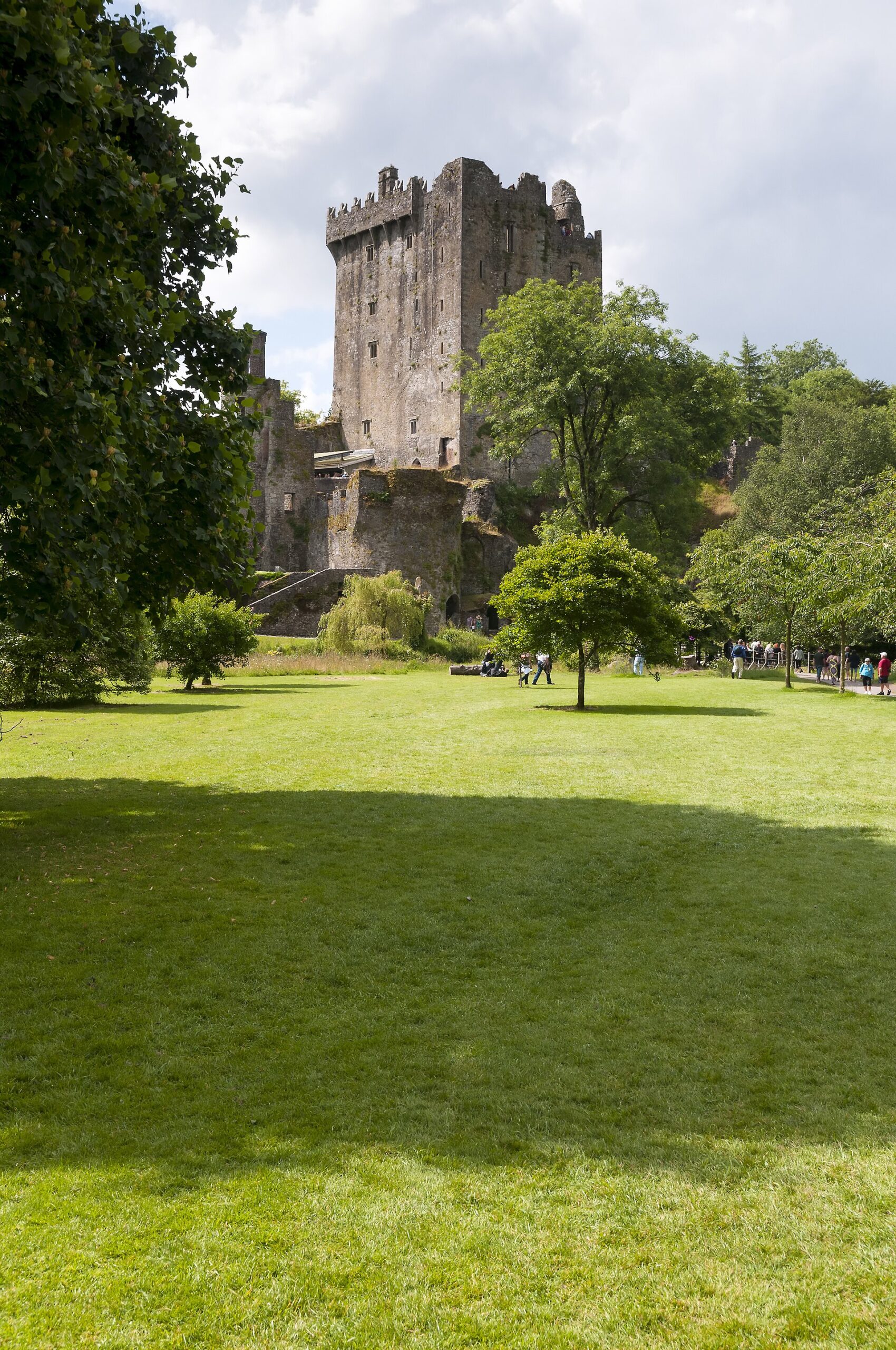
A Castle Built on Legend
Blarney Castle stands about eight kilometres from Cork city, and it has stood in some form since around 1446. The tower that survives today is the third castle on the site — the previous two were destroyed or abandoned over centuries of conflict.
What makes Blarney different from every other medieval castle in Ireland isn’t its architecture. It’s one particular stone, built into the parapet on the south side of the battlements, about 25 metres above the ground.
The Blarney Stone is said to give the gift of eloquence to anyone who kisses it. The “gift of the gab,” as the Irish call it — the ability to speak persuasively, charm any room, and talk your way into or out of anything.
Where Did the Tradition Come From?
The honest answer is: nobody is entirely sure.
The most popular origin story involves Cormac Laidir MacCarthy, lord of Blarney, and Queen Elizabeth I. The story goes that Elizabeth wanted the MacCarthys to abandon their traditional system of land ownership and swear loyalty to the Crown. Cormac wrote letter after letter full of flattering words, elaborate promises, and elegant excuses — but never actually did what was asked.
Eventually, Elizabeth is said to have cried out in frustration that everything the man said was “all Blarney” — meaning charming but meaningless. The word entered the English language as a synonym for empty flattery, and the stone became associated with the gift that produced it.
It’s a good story. It may even have a kernel of truth. Historians, however, point out that the documentation is thin and the timeline doesn’t quite hold up.
The Theories Nobody Can Settle
Some historians connect the stone to the Stone of Scone — the ancient coronation stone used by Scottish kings — claiming a portion was gifted to an Irish clan in gratitude for military support. Others say it’s a piece of local limestone elevated to legend status through centuries of storytelling.
Another theory links the stone to Clíodhna, a goddess of the Munster fairy world, said to have revealed the stone’s powers to a MacCarthy lord in a dream. She told him to kiss a stone he found on the shore before making his case in court. He won, and the tradition spread.
The truth is probably simpler: a local custom grew, someone invented a story to explain it, the story spread, and the rest is history. That’s how a great deal of Irish folklore works.
The Secret Passages Hidden Inside Ireland’s Ancient Castles tells a similar story — practical features of medieval life transformed by centuries of storytelling into something far more mysterious.
☘️ Enjoying this? 64,000+ Ireland lovers get stories like this every week. Subscribe free →
What “Blarney” Actually Means
The word “blarney” has been in use in English since at least the late 18th century, and it doesn’t carry a positive meaning. Blarney is charm deployed in place of truth. It’s flattery that asks for something in return. It’s the honeyed word that makes a “no” feel like a “maybe.”
The Irish have a particular reputation for it — or so the stereotype goes. But it’s worth noting that the ability to say difficult things in a way people can hear them is a genuine skill. In a country where direct confrontation was often dangerous, language became a survival tool.
The Blarney Stone, in this reading, isn’t just a tourist attraction. It’s a monument to the power of words — and to the Irish relationship with language as something both beautiful and strategic.
The Ritual That Changed Everything
The practise of kissing the stone changed significantly in the 19th century. Before then, visitors might have simply touched the stone. The modern ritual — lying on your back, gripping iron bars, and lowering your head to kiss the underside of the parapet — developed as the castle became more popular and attendants were needed to assist visitors safely.
The fact that it’s slightly terrifying is probably part of the appeal. You’ve earned it by the time your lips touch the stone.
The castle grounds are worth at least as much of your time as the tower. The Rock Close — a garden of ancient stones, yew trees, and moss-covered boulders — is genuinely old and genuinely strange. Some of the trees are several hundred years old. For visitors planning to include Blarney in an Irish itinerary, the Complete Guide to Cork covers the full region.
What Visitors Find at Blarney Today
Blarney Castle is managed by Blarney Castle Estate and is open year-round. The walk to the stone is a climb up narrow spiral stairs inside the tower — steep, worn smooth by millions of feet, and lit by arrow-slit windows.
Queues can be long in summer. The ritual itself takes only seconds. But the surrounding estate — gardens, a poison garden, a lake walk, a waterfall — could fill a full afternoon.
The castle is eight kilometres from Cork city and combines well with Cobh, Kinsale, and the Wild Atlantic Way along West Cork. Plan your full Ireland itinerary to make the most of the south.
There’s something deeply Irish about the Blarney Stone. It doesn’t promise strength, or wealth, or long life. It promises words — the ability to say the right thing at the right moment. In a country where language has always been treated as something close to sacred, that may be the most Irish wish of all.
☘️ You Might Also Love
☘️ Join 64,000+ Ireland Lovers
Every Friday, get Ireland’s hidden gems, local secrets, and travel inspiration — the kind you won’t find in any guidebook.
Subscribe free — enter your email:
Free forever · · Unsubscribe anytime
Tours & experiences you might love


Powered by Viator. Some links are affiliate links — we may earn a small commission at no extra cost to you.
Secure Your Dream Irish Experience Before It’s Gone!
Planning a trip to Ireland? Don’t let sold-out tours or packed attractions spoil your journey. Iconic experiences like visiting the Cliffs of Moher, exploring the Rock of Cashel, or enjoying a guided walk through Ireland’s ancient past often sell out quickly—especially during peak travel seasons.

Booking in advance guarantees your place and ensures you can fully immerse yourself in the rich culture and breathtaking scenery without stress or disappointment. You’ll also free up time to explore Ireland’s hidden gems and savour those authentic moments that make your trip truly special.
Make the most of your journey—start planning today and secure those must-do experiences before they’re gone!
Subscribe Free