

If you only visit one city outside Dublin, make it Galway. The best things to do in Galway, Ireland span a medieval city centre, wild Atlantic coastline, world-famous seafood, and some of Europe’s most dramatic scenery just beyond the city edge. Galway is compact enough to explore on foot, yet rich enough to fill a full week. This guide covers everything you need to plan your visit — from the cobbled streets of the Latin Quarter to the cliffs of Connemara and the magic of the Aran Islands.
Before you start planning, visit the Ireland Trip Planning Hub — it covers the essentials for first-time visitors, including how to get around, when to go, and what to budget.
Why Galway Stands Apart
Galway is the gateway to the Wild Atlantic Way. It has a young, creative energy — something you feel the moment you step onto Quay Street. Street musicians, colourful shopfronts, and the sound of traditional Irish music spilling out of pubs greet you at every turn. The city has a university at its heart, which keeps it lively year-round. Yet it sits on the edge of one of Ireland’s wildest landscapes. Within an hour’s drive, you are in the ancient bogs of Connemara or looking out from the cliffs of the Aran Islands over the Atlantic.
Galway is one of the few Irish cities where locals and visitors share the same streets, the same pubs, and the same sense of joy. That is rare. It is worth travelling across the Atlantic to experience it.
Exploring Galway City
The Latin Quarter and Quay Street
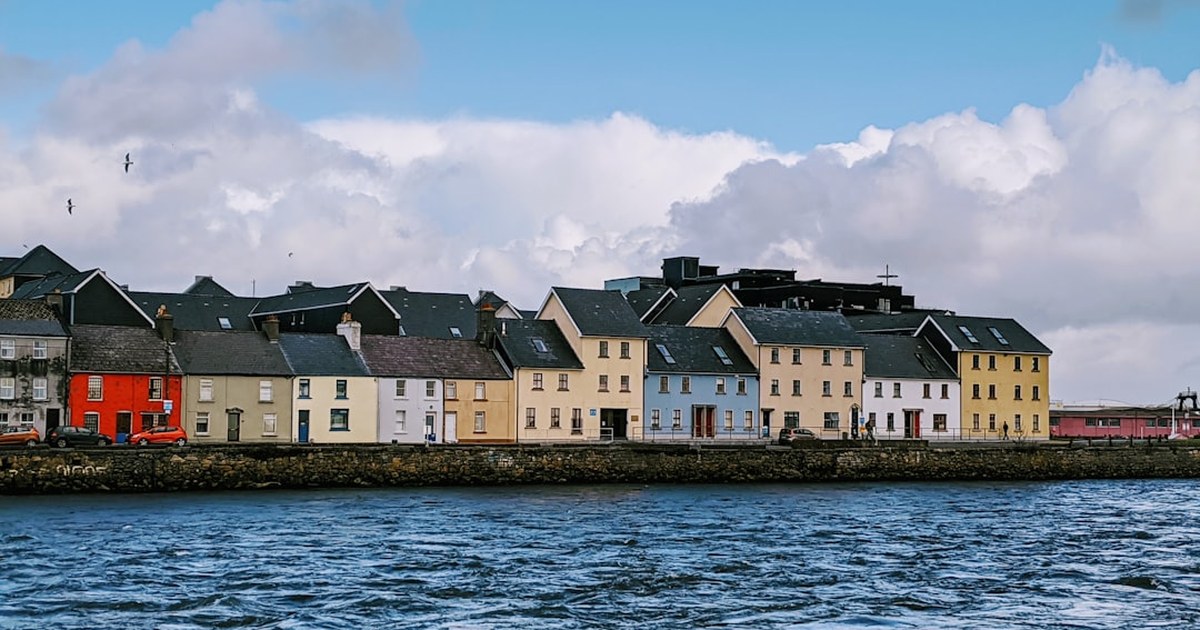
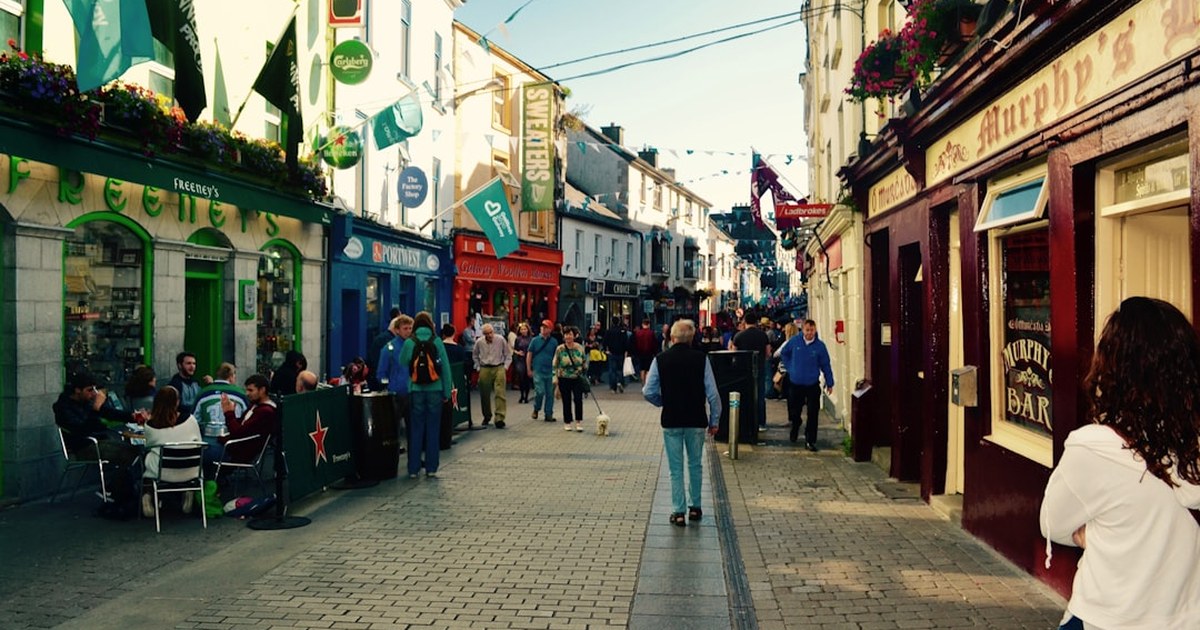
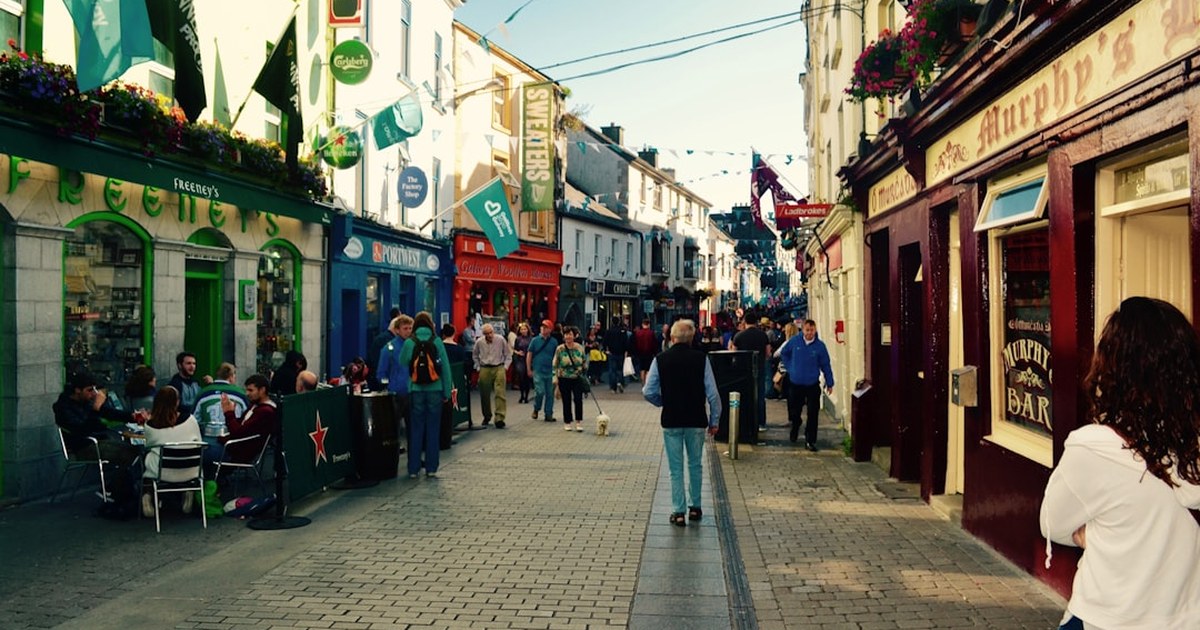
Start on Quay Street. This is the beating heart of Galway city. The street runs from Eyre Square through the Latin Quarter to the Spanish Arch. It is pedestrianised, lined with independent shops, restaurants, and pubs. On a warm afternoon, the whole city seems to be out here.
The Latin Quarter is Galway’s oldest neighbourhood. Its narrow lanes date back to the medieval city walls. Look up as you walk — many buildings still have carved stonework from the 15th and 16th centuries. Nuns’ Island, Abbeygate Street, and Cross Street are all worth exploring on foot.
The Spanish Arch
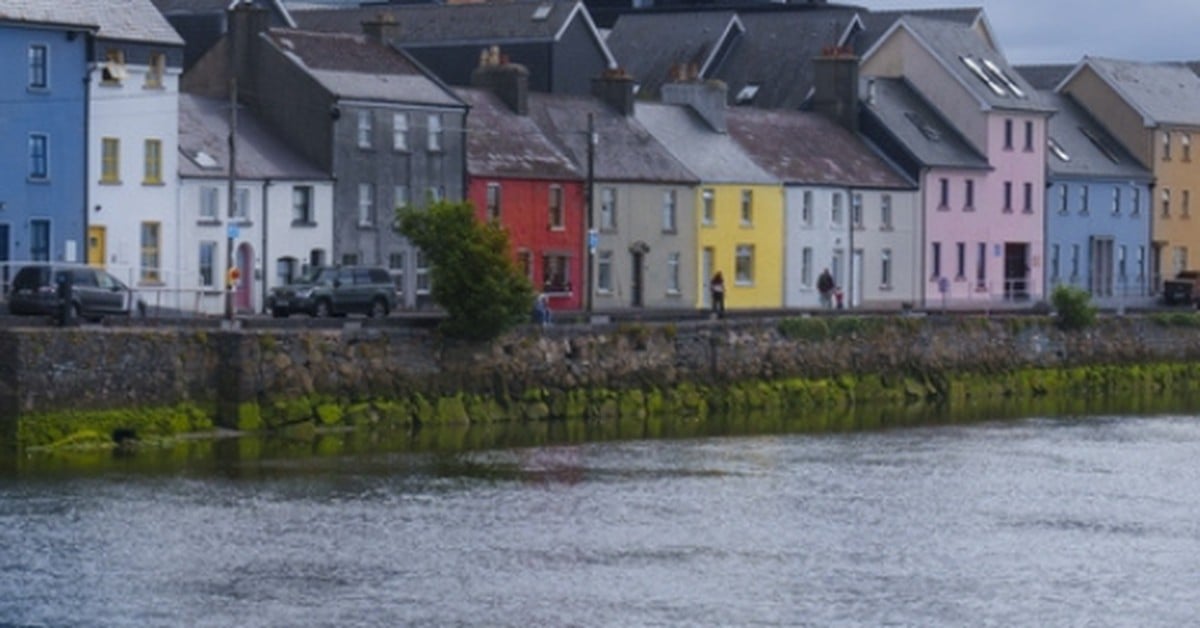
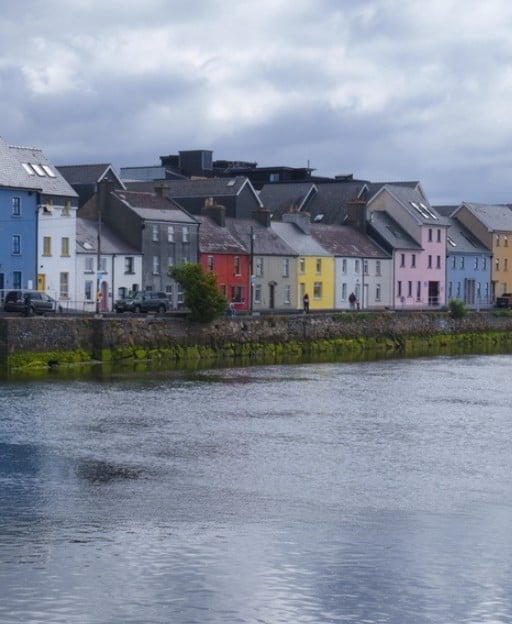
The Spanish Arch stands at the western edge of the Latin Quarter, where the River Corrib meets Galway Bay. It was built in the 1500s to protect the quays where Spanish merchant ships unloaded wine and brandy. Today it is one of Galway’s most photographed landmarks — and the grass area beside it is a favourite spot for locals to sit in the sun.
Just inside the arch is the Galway City Museum, which is free to enter and well worth an hour. It covers the city’s history from its medieval trading roots to the present day.
Galway Cathedral
Cross the Salmon Weir Bridge and you reach Galway Cathedral — a striking limestone building completed in 1965. It is one of the last great stone cathedrals built in Europe. The interior is beautiful. The mosaic behind the altar is worth seeing. Entry is free.
The bridge itself is worth stopping on during spring. Galway is famous for its salmon run, and at certain times of year you can watch salmon leaping through the weir below.
Eyre Square
Eyre Square is Galway’s central public space. It has been the city’s meeting point for centuries. The square holds a memorial to John F. Kennedy, who visited Galway in 1963. At one end stands Browne’s Doorway — a carved stone gateway from a 17th-century merchant’s house. It is a good place to start your day before heading into the city.
The Claddagh
The Claddagh is a short walk from the Spanish Arch. It was once a separate fishing village, distinct from Galway city, with its own traditions and its own king. Today it is a quiet residential area, but the Claddagh ring was born here. The ring — two hands holding a crowned heart — represents love, loyalty, and friendship. You will see it everywhere in Galway. If you want to buy one, go to a proper jeweller on Quay Street rather than a tourist shop.
☘️ Enjoying this? 64,000+ Ireland lovers get stories like this every week.
Thinking about it for retirement?
If you’ve started thinking seriously about retiring there, our complete our full Retire in Ireland guide covers the visa, healthcare, cost-of-living, and the regions worth shortlisting.
Subscribe free →
Day Trips from Galway
Galway’s greatest asset is its location. Everything that makes the west of Ireland extraordinary is within reach.
The Aran Islands
The Aran Islands sit at the mouth of Galway Bay, three limestone islands that feel completely removed from modern life. Inis Mór is the largest. It is home to Dún Aonghasa — an ancient hill fort built on the edge of a sheer 100-metre cliff. Standing at the edge is one of the most dramatic experiences in Ireland.
Ferries run daily from Ros an Mhíl (Rossaveal), a 45-minute drive west of Galway, or from Doolin in County Clare. The crossing takes about 45 minutes. Alternatively, take a short flight from Connemara Airport. The Aran Islands have a fascinating history of survival against extraordinary odds — and that resilience is visible in every stone wall and ancient field.
Connemara National Park
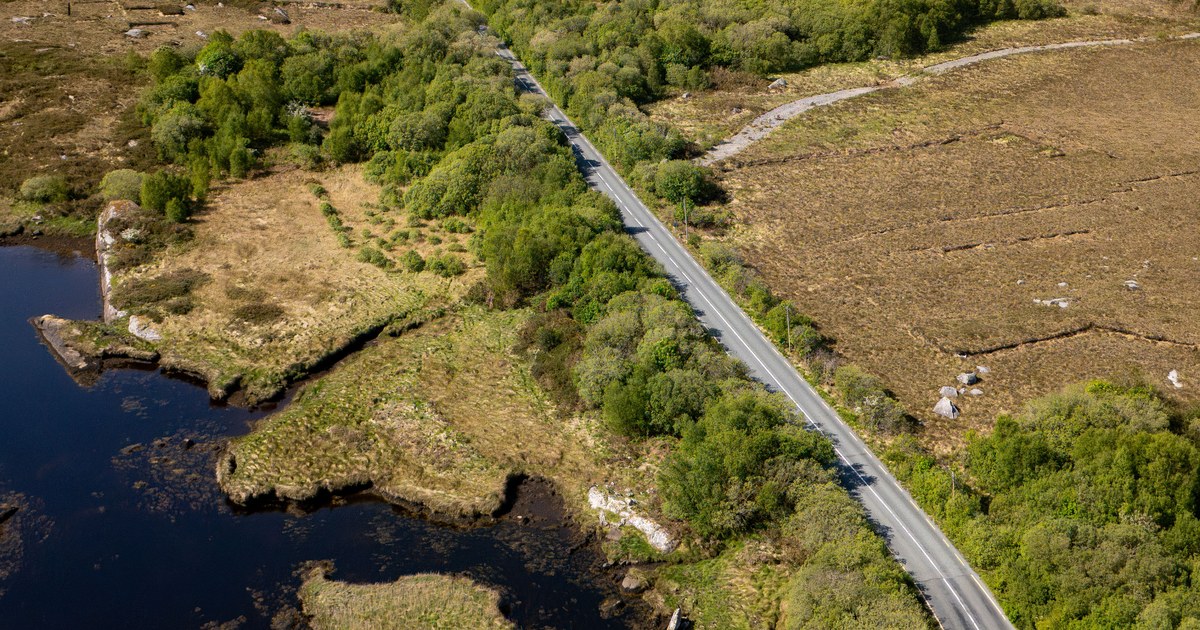
Connemara is the wild country to the north and west of Galway city. It is a landscape of bogs, mountains, lakes, and small coastal villages where Irish is still the first language. Connemara National Park, near the village of Letterfrack, covers 2,957 hectares of blanket bog, heath, and the peaks of the Twelve Bens mountain range.
The park is free to enter. The visitor centre has good displays on the ecology of the bog. The Diamond Hill loop walk takes about two hours and gives you views across the whole Connemara coast.
Kylemore Abbey is nearby — a neo-Gothic castle on the shore of a lake, built in the 1860s by a Manchester merchant for his wife. It is now a working Benedictine abbey. The walled Victorian garden is beautifully restored. It is one of the most photographed places in Ireland for good reason.
The Cliffs of Moher from Galway
The Cliffs of Moher are technically in County Clare, but Galway is one of the best bases for visiting them. The drive south along the coast takes about 75 minutes. Many visitors combine the Cliffs with a drive along the Burren — a remarkable limestone plateau covered in wildflowers, ancient tombs, and rare plants that grow nowhere else in Ireland.
Galway’s Food and Drink Scene
Galway Bay Seafood
Galway is famous for its oysters. The native Galway oyster has been harvested from Galway Bay for centuries. Every September, the Galway International Oyster and Seafood Festival draws visitors from around the world. Even outside festival season, the oysters are exceptional. Try them at Moran’s Oyster Cottage in Kilcolgan, a 20-minute drive south of the city — it has been serving oysters from the same thatched cottage since 1760.
In the city itself, Ard Bia at Nimmos and The Seafood Bar at Kirwan’s Lane are both excellent. The Saturday market at St Nicholas’ Church is a good place to pick up smoked salmon, fresh shellfish, and artisan bread.
Traditional Pubs in Galway
Galway has some of Ireland’s best traditional pubs. Tigh Coilí on Mainguard Street hosts daily traditional music sessions. Monroe’s Tavern on Dominick Street has been a music venue for generations. Taaffe’s Bar on Shop Street is another reliable spot for live trad.
One thing to know about Galway’s pub scene: the music is real. These are not performances for tourists. Musicians gather because they want to play. Sit, order a drink, and listen. Do not interrupt the session — read our guide to the unwritten rules of an Irish trad session before you go.
Shopping in Galway
Galway Saturday Market
The Saturday market beside St Nicholas’ Collegiate Church is one of the best in Ireland. It has been running on this site for over 25 years. You will find fresh produce, hot food, handmade jewellery, ceramics, vintage clothing, and local crafts. Get there before 11am for the best choice.
Independent Shops on Quay Street
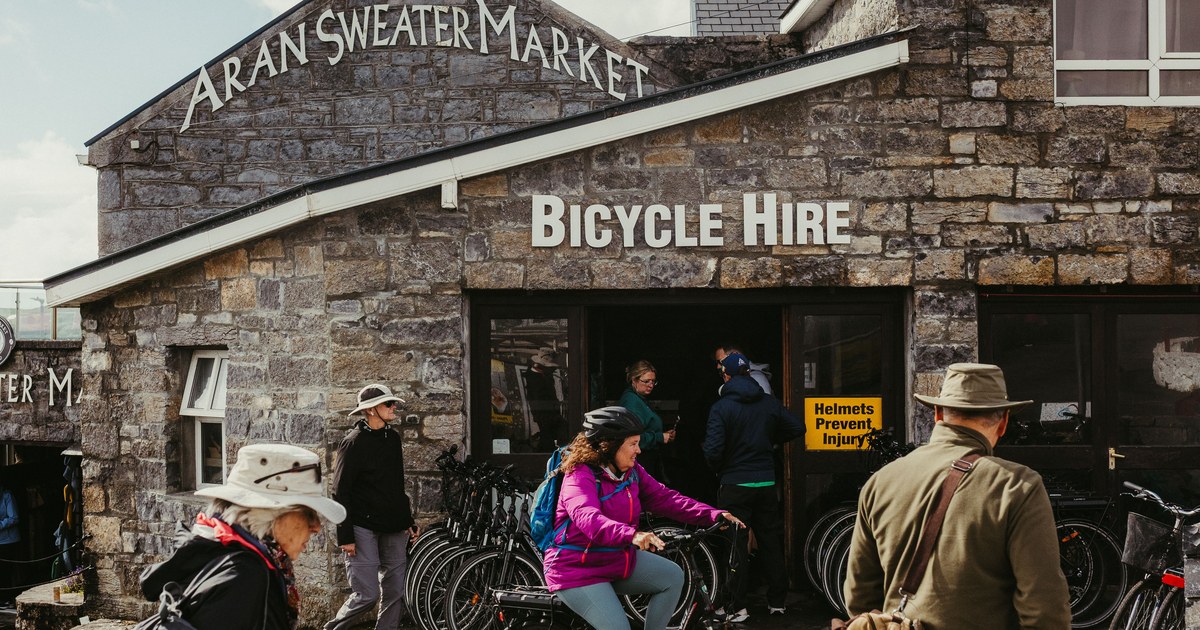
Galway is good for independent shopping. The city has resisted the full takeover by chain stores that has affected many Irish town centres. Look for O’Maille’s — one of Ireland’s oldest family-run stores, selling traditional Aran knitwear since 1938. Cobwebs on Quay Street stocks unusual antiques and silver jewellery. For books, Charlie Byrne’s Bookshop on Middle Street is outstanding — a large, chaotic second-hand bookshop that locals adore.
When to Visit Galway
Galway is worth visiting in any season, but summer brings the city fully to life. July and August are the warmest months. The Galway Arts Festival runs every July and is one of the largest arts festivals in the world. The streets fill with outdoor theatre, live music, and art installations. Book accommodation well in advance if you plan to visit during the festival.
September is the Oyster Festival month. October brings the Galway Film Fleadh and quieter streets. Winter in Galway is mild by Irish standards, but expect rain. The Christmas market in Eyre Square runs through December and is warm and atmospheric.
Spring — April and May — is one of the best times to visit. The Aran Islands are at their most atmospheric, the Connemara wildflowers are coming into bloom, and the crowds have not yet arrived.
How to Get to Galway
From Dublin
The fastest route from Dublin to Galway by car is the M6 motorway — about two and a half hours in normal traffic. The bus is equally reliable. Bus Éireann and GoBus both run frequent services from Dublin city centre and Dublin Airport directly to Galway. The journey takes about two hours and forty minutes. Trains run from Heuston Station and take about two hours fifteen minutes. Book in advance for the best fares.
If you are planning a wider Irish road trip, Galway works well as a base for exploring the west. Pair it with County Mayo to the north or a drive down through County Clare to Killarney. For a structured route, see our 7-day Ireland itinerary for first-time visitors.
From the USA
There are no direct transatlantic flights to Galway, but Ireland West Airport Knock is about 75 minutes north of the city. Aer Lingus flies there from Boston and New York. Shannon Airport is about an hour to the south and has direct US routes. Dublin Airport is the main international hub and has the widest choice of US connections. From Dublin, the train or express bus to Galway is easy and affordable.
Practical Tips for Visiting Galway
How many days do you need? Two full days covers Galway city well. Add a third day for a trip to Connemara or the Aran Islands. If you want to explore both, plan for four days.
Getting around: Galway city is very walkable. Almost everything in the centre is within 20 minutes on foot. For day trips, renting a car is the most flexible option. Bus Éireann serves Connemara routes from Galway Bus Station.
Where to stay: The city centre is the best base. You can walk to everything from there. The area around Eyre Square has a good range of hotels. For a quieter stay, look at accommodation near Salthill — a seaside suburb about 20 minutes’ walk west of the city centre.
Weather: The west of Ireland is wetter than the east. Galway averages about 1,200mm of rain per year. Bring a waterproof jacket regardless of the season. The same clouds that bring the rain also create the dramatic light that makes Connemara and the bay so beautiful.
For a broader look at planning your trip, start with our full Ireland travel planning guide — it covers everything from entry requirements to driving on Irish roads.
What is the best time to visit Galway?
April to September is the best time to visit Galway. July brings the Arts Festival, September brings the Oyster Festival, and spring months offer fewer crowds with mild weather. Galway is open year-round, but summer gives you the longest days and the most outdoor activity.
How do I get from Dublin to Galway?
By car, Dublin to Galway takes about two and a half hours on the M6 motorway. By bus, GoBus and Bus Éireann run regular services taking around two hours forty minutes. By train from Heuston Station, the journey is about two hours fifteen minutes. Trains and buses are frequent and affordable — no car needed if you plan to stay in Galway city.
Is one day enough to see Galway?
One day is enough to see the highlights of Galway city — the Latin Quarter, Spanish Arch, Cathedral, and Claddagh. But Galway’s real magic lies in the surrounding countryside. The Aran Islands and Connemara each deserve a full day. Plan for at least two nights to get a real feel for the city and its surroundings.
What is Galway famous for?
Galway is famous for its traditional music scene, colourful streets, Galway Bay oysters, the Claddagh ring, and the annual Arts Festival. It is also the gateway to Connemara and the Aran Islands — two of Ireland’s most stunning landscapes. The city has a lively student population that keeps it energetic year-round.
📲 Know someone who’d love this? Share on WhatsApp →
Free forever · · Unsubscribe anytime
Tours & experiences you might love


Powered by Viator. Some links are affiliate links — we may earn a small commission at no extra cost to you.
Secure Your Dream Irish Experience Before It’s Gone!
Planning a trip to Ireland? Don’t let sold-out tours or packed attractions spoil your journey. Iconic experiences like visiting the Cliffs of Moher, exploring the Rock of Cashel, or enjoying a guided walk through Ireland’s ancient past often sell out quickly—especially during peak travel seasons.

Booking in advance guarantees your place and ensures you can fully immerse yourself in the rich culture and breathtaking scenery without stress or disappointment. You’ll also free up time to explore Ireland’s hidden gems and savour those authentic moments that make your trip truly special.
Make the most of your journey—start planning today and secure those must-do experiences before they’re gone!
Subscribe Free