

A 7-day Irish ancestry itinerary is unlike any other kind of travel plan. You are not just building a route around attractive scenery — you are building a route around your family’s story. Every archive, every graveyard, every rural road leading to a townland you have only seen on a document becomes part of a journey that belongs to you alone. This guide takes you through seven days designed to maximise what you find, where you feel it most, and how deeply you bring it home.
Free Irish ancestry tool ☘️
Have an Irish surname? Find your ancestral Irish county — we’ll trace your name to where the family originated, with a short note on its history.
This itinerary assumes you have already done some preliminary research — you know at least the county your ancestors came from, and ideally a townland name or a parish. If you are still at the beginning of that process, read our full guide to finding your Irish ancestry before you begin planning your trip. The more specific your information before you land in Ireland, the more specific — and more emotional — your discoveries will be.
Watch: Do You Qualify for an Irish Passport?
Tracing your Irish family? If one of your grandparents was born in Ireland, you may be able to become an Irish citizen. This 14-minute guide explains who qualifies, what it costs and how long it takes. Thinking of making the move? Get the free Moving to Ireland checklist.
Before You Book: The Research That Makes the Difference
The single best investment you can make before any Irish ancestry itinerary is time spent at home on research. You do not need to be a trained genealogist. You need three things: a county, a surname, and ideally a parish or townland.
Start at IrishGenealogy.ie — it is free and holds civil registration records from 1864 onwards, along with a growing collection of Catholic parish registers. FamilySearch.org holds the 1901 and 1911 Irish census records for free, with images showing your ancestors’ actual handwriting. Cross-reference both, and you will usually find enough to identify a parish within a week of searching.
If your roots are in a specific county, our heritage surname guides can help you understand which surnames were historically associated with that area and where those families settled: see our guides to Irish surnames from Cork, Galway, Kerry, Dublin, Clare, and Mayo.
Day 1 — Dublin: EPIC Museum and the National Archives
Fly overnight and arrive in Dublin in the morning. After checking in, begin with EPIC The Irish Emigration Museum in the CHQ Building in the Docklands. EPIC is the world’s first fully digital museum, housed in the vaulted cellars of a 19th-century customs warehouse. Its 20 galleries trace the story of the Irish diaspora from the Famine to the present day.
EPIC won the World Travel Awards title of Europe’s Leading Tourist Attraction in 2019, 2020, and 2021. More importantly for heritage visitors, it puts your family’s story in a broader context. You leave understanding not just where your ancestors came from, but why they left, and what they carried with them. Plan two hours.
After lunch, walk to the National Archives of Ireland on Bishop Street, Dublin 8. On your first visit, collect a free Reader’s Ticket — bring your passport and a recent utility bill. The free Genealogy Advisory Service operates on a drop-in basis; no appointment needed. Arrive before 1pm to maximise your time with the archivists before the lunchtime closure. The 1901 and 1911 census returns are fully digitised and freely accessible at nationalarchives.ie/collections/search-the-census/ — these household records show your ancestors’ names, ages, addresses, and occupations in their own time.
Day 2 — National Library and Glasnevin Cemetery
The National Library of Ireland on Kildare Street holds the largest collection of Catholic parish registers in the country — over 3,500 registers from more than 1,000 parishes. You can browse these online for free at registers.nli.ie before your visit; the Family History Room requires a free Reader’s Ticket for in-person access. These registers are often the only surviving record of Irish families from before 1864, when civil registration began. A baptism entry from the 1830s or 1840s, in the original Latin, with your ancestor’s name in ink — that is a different kind of discovery from anything a database can provide.
In the afternoon, take a taxi or bus to Glasnevin Cemetery in north Dublin. Over 1.5 million burials are recorded here, dating from 1828. The Dublin Cemeteries Trust has made records searchable at dctrust.ie. Even if your family did not bury in Glasnevin, the cemetery itself is a powerful place — the graves of Daniel O’Connell, Michael Collins, and generations of ordinary Irish people lie side by side. For heritage visitors, the emotional weight of the place is difficult to describe.
Evening: allow yourself time to walk around Dublin’s older quarters — the Liberties, the Coombe, Francis Street. These streets have housed working families for centuries. If your roots are in Dublin itself, they may have been your ancestors’ streets too. For a closer look at the families who shaped this city, see our guide to Irish surnames from County Dublin.
☘️ Enjoying this? 64,000 Ireland lovers get stories like this every week. Subscribe free →
Day 3 — Travel to Your Ancestral County
Leave Dublin after breakfast and drive to the county your ancestors came from. In Ireland, no county is more than three hours from Dublin by car — most are under two. A hire car is strongly recommended for this itinerary; public transport in rural Ireland will not get you to townlands or local graveyards. Our guide to planning an Irish heritage trip covers the practicalities of driving and staying in your ancestral county in full.
Check in to accommodation in or near the town closest to your ancestral parish — Ennis for Clare, Westport or Castlebar for Mayo, Clifden or Galway for Connemara. Proximity matters. When you step outside in the morning and see the same hills your great-great-grandmother saw every day of her life, something changes in how you hold the whole trip.
Use the afternoon to orientate yourself. Drive the roads near the parish. Stop in the local town. Go into the local pub — not for atmosphere, but because the person behind the bar has likely lived here their whole life. Ask about the area. In rural Ireland, this kind of conversation costs nothing and yields more than you expect.
Day 4 — County Heritage Centre and Local Archives
Today is your archive day in the county. The Irish Family History Foundation runs a network of 32 genealogy and heritage centres across Ireland, coordinated through RootsIreland.ie. Each centre holds local Catholic parish records, civil registration records, and headstone transcriptions, staffed by genealogists with deep knowledge of that specific county’s records. Many hold collections that are not yet digitised — material you will not find anywhere online.
Contact the relevant centre in advance to let them know you are coming, and bring everything you have: photocopies of documents, DNA results, a written list of all known surnames and approximate dates. Staff can often identify connections within minutes that would take months to find independently. This is the most practically productive day of the whole itinerary.
Allow a full day. Bring a notebook. Photograph everything the staff show you. Ask about local families, about migration patterns, about other visitors who have come looking for the same surnames — sometimes the genealogist will know of distant cousins who visited the previous year.
Day 5 — Your Ancestral Townland and the Graveyard
This is the day most heritage visitors describe as the most significant of the whole trip. You go to the townland your ancestors were from. You walk the land.
Ireland is divided into approximately 62,000 townlands — small, ancient territorial units often covering only a few hundred acres. Once you have a townland name from civil records or Griffith’s Valuation (the 1847–1864 property survey that recorded every Irish household), use the free Placenames Database of Ireland at logainm.ie to find it on a modern map. That plot of land is the address your ancestors left.
Manage expectations — some townlands have changed dramatically since the Famine, while others are entirely unchanged: stone-walled fields running down to the sea, the outline of a potato ridge still visible in a low-light morning, a ruined gable wall standing in bog grass. What the landscape always retains is an atmosphere — a quality of light and silence — that connects you to the people who walked it before you.
In the afternoon, visit the local parish graveyard. In rural Ireland, families buried generation after generation in the same churchyard, and a single headstone can span four or five generations — giving maiden names, addresses, and dates that no civil record preserves. Bring waterproof boots. Photograph every headstone in a family section, even those too weathered to read clearly. Digital enhancement tools can sometimes recover faded inscriptions. Note the townland on headstones — it will often confirm you have found the right family.
The voluntary organisation Ireland Reaching Out (irelandxo.com) has more than 2,500 local volunteers across Ireland who help diaspora visitors connect with their ancestral parishes. Some visits have resulted in introductions to living cousins. It is free. Register before you travel — the connection you make here may outlast the trip itself. Many Irish-Americans who make this kind of return are described by a particular Irish word; read about the name Irish people use for Americans who come home.
Day 6 — Cobh: Ireland’s Emigration Heartland
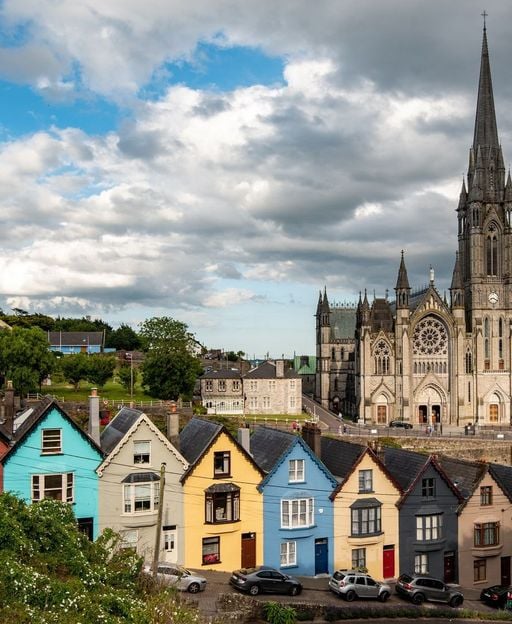
Drive to Cobh (pronounced “Cove”), County Cork. From 1815 to 1970, over three million people embarked from this harbour for new lives abroad. In the years after the Great Famine, approximately 1,000 emigrants arrived in Cobh each week, bound for America. The Titanic docked here on 11 April 1912 — its last port of call before heading into the Atlantic. If your ancestors left Ireland for America in the 19th century, there is a reasonable chance they stood on this quay.
The Queenstown Story at the Cobh Heritage Centre, in the beautifully restored Victorian railway station, tells this history directly. It is not a polished tourist attraction — it is a record of departure, of the conditions aboard emigrant ships, of what families carried and what they left behind. Allow two to three hours. Many heritage visitors find this the most emotionally concentrated day of the trip.
Walk the harbour front afterwards. Look out across Cork Harbour toward the open sea. The departure point your ancestors faced is still there, unchanged. If your roots are in Cork, our guide to Irish surnames from County Cork may help you trace the specific townlands your family left.
Day 7 — Your Last Day and Carrying It Home
Use the final day deliberately. If there is a local heritage site associated with your surname — a castle, a ruined church, a famine memorial — visit it now. If there are photographs to collect from a local historian or librarian, collect them. If there is a grave you photographed that needs a longer look, go back.
The drive back toward Dublin (for most county bases, two to three hours) gives you time to process everything. Many heritage visitors describe a particular kind of quiet on this journey — not sadness, not exactly joy, but something that sits between them. The weight of what has been found.
What you carry home from a trip like this does not fit in a suitcase. It is a set of faces for the names. A sense of scale — how small the field, how large the Atlantic. An understanding of why the people who left did so with such grief, and why they kept Ireland so alive in what they built in America. Our heritage trip planning guide covers the practical preparations in detail; what it cannot prepare you for is how this particular journey will feel once you have made it. Planning your trip? Download our free Ireland travel planner to map out each day.
☘️ You Might Also Love
☘️ Join 64,000+ Ireland Lovers
Every Friday, get Ireland’s hidden gems, local secrets, and travel inspiration — the kind you won’t find in any guidebook.
Or subscribe free — enter your email below:
Free forever · · Unsubscribe anytime
Frequently Asked Questions About an Irish Ancestry Itinerary
How much research do I need before starting this itinerary?
At minimum, you need a county and a surname. A parish name and approximate dates will make every day on this itinerary significantly more productive. A townland name will make Days 4 and 5 transformative rather than approximate. Spend at least six to eight weeks researching at IrishGenealogy.ie and FamilySearch.org before travel. If you are stuck, our guide to tracing Irish ancestry covers every major record source step by step.
Do I need to book archive appointments in advance?
The National Archives of Ireland operates a drop-in Genealogy Advisory Service — no booking required, but arrive early as demand is high. County heritage centres generally welcome walk-in visitors, but calling ahead is strongly recommended; some operate by appointment only during quieter periods. Give them your surnames and county in advance — experienced local genealogists can sometimes prepare relevant records before your visit.
Can I do this itinerary if my roots are in more than one county?
Yes, with some adjustment. Days 1 and 2 in Dublin apply regardless of county. For Days 3–5, choose the county with the stronger or less-researched line and focus there. If you have roots in two geographically close counties — Clare and Galway, for example, or Kerry and Cork — it is possible to cover both in Days 3–5 if your townlands are within reasonable driving distance. A second trip focusing on the other county is often more satisfying than trying to compress two county research days into one.
Is Cobh worth visiting if my ancestors were not from Cork?
Yes. Cobh was the primary emigration port for all of Ireland, not just Cork. Over three million people of every county departed from this quay. Even if your ancestors were from Mayo, Galway, or Donegal, there is a strong likelihood their emigrant ship passed through Queenstown. The Queenstown Story at Cobh Heritage Centre is one of the most emotionally honest accounts of Irish emigration in existence — it belongs on any Irish ancestry itinerary regardless of the county you are researching.
Tours & experiences you might love


Powered by Viator. Some links are affiliate links — we may earn a small commission at no extra cost to you.
Secure Your Dream Irish Experience Before It’s Gone!
Planning a trip to Ireland? Don’t let sold-out tours or packed attractions spoil your journey. Iconic experiences like visiting the Cliffs of Moher, exploring the Rock of Cashel, or enjoying a guided walk through Ireland’s ancient past often sell out quickly—especially during peak travel seasons.

Booking in advance guarantees your place and ensures you can fully immerse yourself in the rich culture and breathtaking scenery without stress or disappointment. You’ll also free up time to explore Ireland’s hidden gems and savour those authentic moments that make your trip truly special.
Make the most of your journey—start planning today and secure those must-do experiences before they’re gone!