

Every Saturday night in 1950s Ireland, something remarkable happened. Across the country, young men and women put on their best clothes and walked — sometimes for miles — to a corrugated iron building at the edge of town. Inside, a band in matching suits played songs from America and local ballads side by side.
This was the ballroom of romance. For two decades, it was arguably the most important building in the parish.
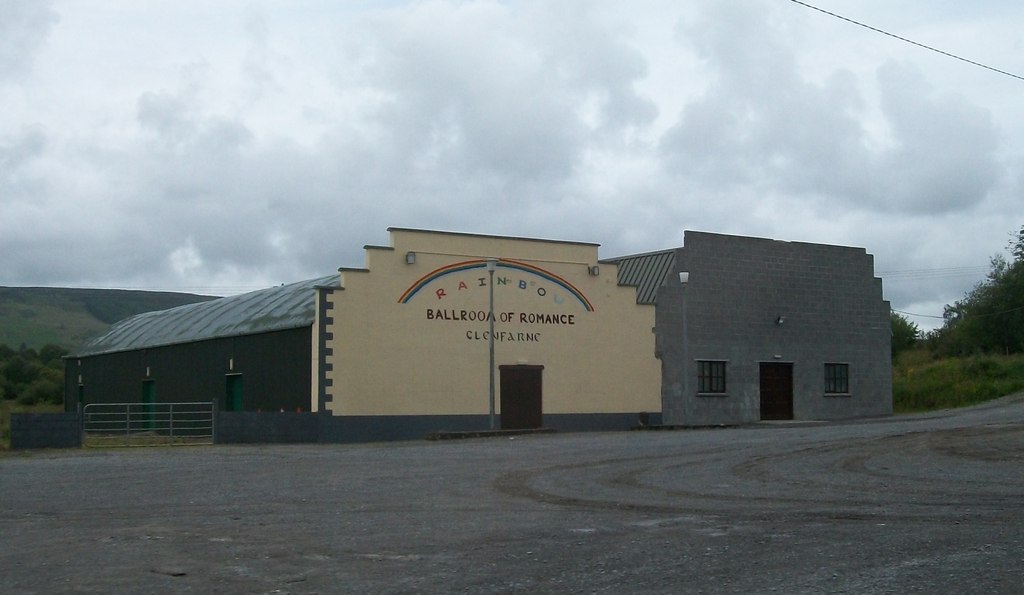
What Was the Ballroom of Romance?
The phrase comes from a 1972 short story by William Trevor, but the places themselves were real and thriving long before anyone wrote about them. From the 1940s to the early 1970s, Ireland had hundreds of these halls.
They were roughly built — often corrugated iron or timber — with a wooden sprung floor and a low stage at one end. No alcohol was served. The lighting was dim, the air warm and close, and the band played from eight in the evening until midnight.
By the mid-1960s, more than 500 ballrooms were operating across the country. Some held a few hundred people. Others could take a thousand or more on a busy Saturday night.
The Showbands Who Played the Circuit
The music was provided by showbands — a uniquely Irish phenomenon. A typical showband had six to eight members, all in matching suits, playing a wide repertoire. One night might include rock ‘n’ roll, country music, waltzes, quicksteps, and a few Irish tunes for good measure.
These were professional musicians who toured constantly. A successful band might play seven nights a week, driving hundreds of miles between counties. Names like the Royal Showband, the Clipper Carlton, and the Capitol Showband were as famous in Ireland as any chart act.
The showbands brought the sound of the wider world to places that had heard little of it. Before television arrived in Ireland in 1961, the local ballroom was often where new music, new fashions, and new ideas first appeared.
The Unspoken Rules of the Dance Floor
The ballroom had rituals, and everyone understood them without being told. Men stood on one side. Women stood on the other. Between them was the dance floor — and crossing it took real courage.
When a man wished to dance with a woman, he walked across that open space in full view of the room. If she accepted, they danced. If she declined, he walked back alone, watched by everyone present.
This was the backbone of rural Irish courtship for a generation. Many couples, even today, will tell you they first met on a ballroom floor. The dance masters who had trained rural Ireland to move with confidence gave many of these dancers their foundation — but in the ballroom, the steps were looser, the music was louder, and the stakes were far higher.
☘️ Enjoying this? 64,000+ Ireland lovers get stories like this every week.
Thinking about it seriously? If you’ve started actually planning a move, our complete the full Move to Ireland guide walks through every step, every cost, and the paperwork that catches most people out.
More Than a Night Out
The ballroom was the social infrastructure of rural Ireland. For young people living on isolated farms, it provided connection, community, and hope.
In a country where courtship was long watched over by community and tradition, the ballroom offered a rare freedom. You could talk to someone from a different parish. You could dance with a stranger. You could, just possibly, change the course of your life.
Many people came not to dance at all — simply to stand at the edge of the floor, to feel the warmth of a crowd, to hear music that shook the thin walls of the hall.
Why the Ballrooms Disappeared
Television changed everything. When RTÉ launched in 1961, families across Ireland suddenly had entertainment at home for the first time. Attendance at ballrooms began to fall. The showbands kept touring, but the crowds grew smaller.
By the late 1970s, the era was largely over. Pubs increasingly offered live music. Discos arrived. The corrugated iron buildings were sold off, converted, or simply left to rust at the edge of town.
Some became supermarkets or community halls. Others still stand, quiet and faded, easily overlooked if you do not know what they once were.
The Legacy They Left Behind
The ballrooms of romance did not last, but what happened inside them did. Marriages formed there. Families began there. Songs were played that people still hum today without knowing where they first heard them.
Cloudland Ballroom in Rooskey, County Roscommon — one of the most celebrated venues from the showband era — has been lovingly restored and still hosts events. It is one of the few surviving examples of what once existed in every corner of rural Ireland.
William Trevor’s short story, and the 1982 BBC film made from it, gave the ballrooms their most enduring memorial. But the real memorial is in the people who danced in them — who still speak of those Saturday nights with a warmth that the decades have not dimmed.
If you are planning a trip to Ireland and want to understand how ordinary Irish people lived and loved before the modern era, the ballroom of romance is the place to start. Not in a museum — but in the memory of anyone over sixty who grew up in rural Ireland, and who still knows exactly how it felt to cross that floor.
☘️ You Might Also Love
☘️ Your Irish family has a story waiting to be found.
Discover where your Irish ancestors came from — their county, their name, their story. Our free step-by-step guide walks you through every record, DNA tool, and ancestry archive. No experience needed.
Get the free guide
Enter your email and we will send you straight to the download.
Love more? Join 43,000 Scotland lovers → · Join 30,000 Italy lovers → · Join 7,000 France lovers →
Free forever · · Unsubscribe anytime
Tours & experiences you might love


Powered by Viator. Some links are affiliate links — we may earn a small commission at no extra cost to you.
Secure Your Dream Irish Experience Before It’s Gone!
Planning a trip to Ireland? Don’t let sold-out tours or packed attractions spoil your journey. Iconic experiences like visiting the Cliffs of Moher, exploring the Rock of Cashel, or enjoying a guided walk through Ireland’s ancient past often sell out quickly—especially during peak travel seasons.

Booking in advance guarantees your place and ensures you can fully immerse yourself in the rich culture and breathtaking scenery without stress or disappointment. You’ll also free up time to explore Ireland’s hidden gems and savour those authentic moments that make your trip truly special.
Make the most of your journey—start planning today and secure those must-do experiences before they’re gone!
Subscribe Free