

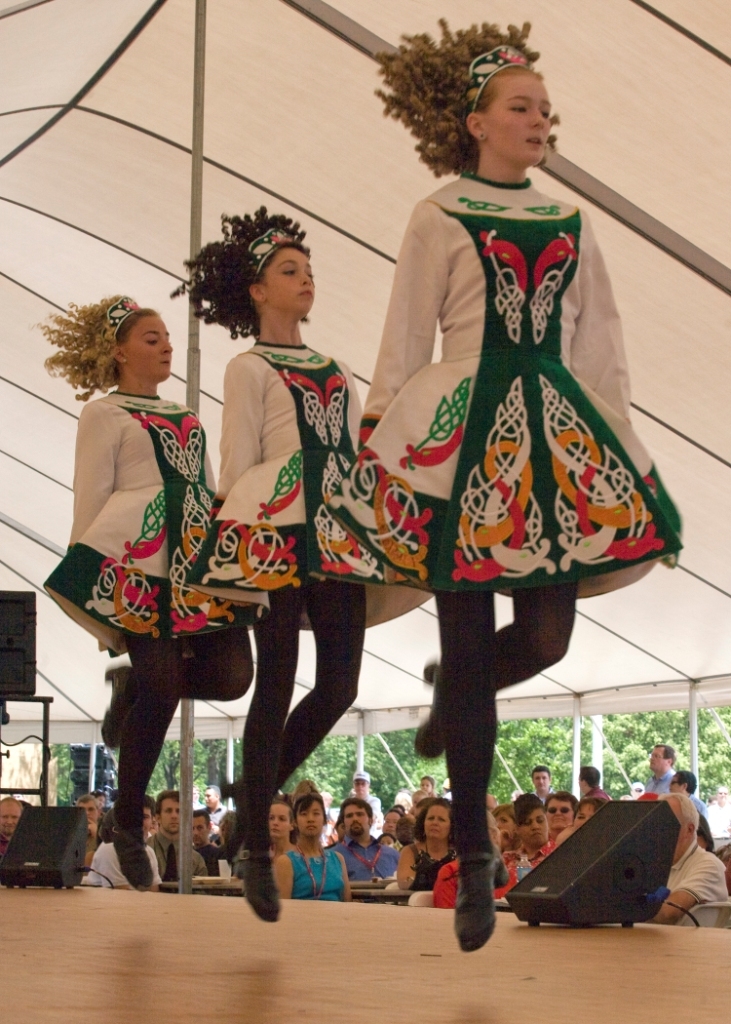
Someone grabs your hand before you’ve even put your coat down. The fiddles are already going. You don’t know the steps. It doesn’t matter. Welcome to an Irish céilí.
There is no other night quite like it. Not in a concert hall, not in a club, not anywhere a crowd gathers to listen rather than join in. A céilí is built on one idea: everyone dances.
What Is a Céilí?
The word comes from the Old Irish céile, meaning companion or neighbour. A céilí (pronounced kay-lee) was originally a social gathering — a visit between households, with music and talk and song. Over time, the dancing took over.
By the 1890s, the Gaelic League had formalised the céilí as a deliberate act of cultural preservation. Irish group dances were codified, named, and taught at events across the country. The céilí became the Irish equivalent of a community dance — but with its own distinct character.
Unlike set dancing, which involves four couples arranged in a square, céilí dances work with larger groups — long lines facing each other, circles, columns moving up and down a hall. The scale changes everything. You’re not dancing with seven other people. You might be dancing with fifty.
The Dances That Rule the Floor
Every céilí runs on a repertoire of named dances. Some are beginner-friendly. Some take practice. All of them pull you in.
The Walls of Limerick is one of the first most people learn. Two long lines face each other. You advance, you retreat, you pass through — and within two minutes you’ve switched partners and the whole floor has shuffled along. It sounds complicated. In practise, the music carries you.
The Siege of Ennis is faster and noisier. Dancers form arches with their arms, and couples duck through them in a chain. There’s usually a moment when the whole room loses the thread and laughs and starts again. That moment is part of the dance.
The Waves of Tory — named after the remote island off the Donegal coast — is one of the most hypnotic. Long lines weave and fold like the Atlantic itself. Watch it from the edge of the hall and you’ll understand why it has that name.
☘️ Enjoying this? 64,000+ Ireland lovers get stories like this every week.
Thinking about it for retirement? If you’ve started thinking seriously about retiring there, our complete our full Retire in Ireland guide covers the visa, healthcare, cost-of-living, and the regions worth shortlisting.
The Caller Makes It Work
At the front of the hall, above the noise of the fiddles and the flute, stands the caller. They are the reason a céilí works.
The caller shouts the next move just before you need to make it. Advance and retire. Turn your partner. Change hands. Swing. For beginners, this is a lifeline. For experienced dancers, it becomes background noise — something they’ve long since absorbed into their feet.
Good callers have a gift. They can read a room. They know when to slow things down for a crowd that’s struggling. They know when to push the tempo for a floor that’s found its rhythm. A great céilí depends as much on its caller as on its musicians.
The music itself comes from a tradition that once travelled with dancing masters across rural Ireland. Reels and jigs, played live, at a tempo that feels just slightly faster than comfortable. That’s deliberate. The music keeps the floor moving.
Why Nobody Sits Down
At a céilí, sitting out is unusual. Not forbidden — but you’ll feel the pull of the floor. Strangers will appear at your elbow. A hand will be extended. The unspoken etiquette is that you join.
This is the point. A céilí is not a performance. It is not something you watch. It is a collective act. The whole room is the event.
That principle — that dancing is something done together, not observed — runs deep in Irish culture. It’s why even people who claim they can’t dance will end up on the floor by the third song. The steps are learnable. The caller is there. The person next to you will show you the rest.
Where to Find a Real Céilí in Ireland
Céilís happen throughout the year in community halls, festival venues, and traditional music strongholds across the country. County Clare, Galway, and Donegal all have strong traditions. The Willie Clancy Summer School in Miltown Malbay runs céilís every evening during its summer week. The Fleadh Cheoil na hÉireann — the world’s largest gathering of traditional Irish musicians — holds céilís on the street as well as in halls.
Comhaltas Ceoltóirí Éireann, the organisation dedicated to Irish traditional music, hosts céilís through its branches in Ireland and across the world. Irish cultural centres in Boston, London, Melbourne, and New York all run regular céilí nights. The tradition has crossed every ocean.
If you’re planning a trip to Ireland, check local event listings for the area you’re visiting. Céilís are rarely ticketed far in advance. They tend to appear on noticeboards and Facebook pages a few days before. That’s also part of the tradition.
The Night That Stays With You
Ask almost anyone who has been to a real céilí and they’ll remember the first one. The shock of being swept in without warning. The moment the steps clicked into place. The feeling of being part of a moving, breathing room full of strangers who are, for that night, your partners.
Ireland has given the world a lot of things. The céilí might be the most generous: a room where nobody stays a stranger for long.
☘️ Join 64,000+ Ireland Lovers
Every Friday, get Ireland’s hidden gems, local secrets, and travel inspiration — the kind you won’t find in any guidebook.
Subscribe free — enter your email:
Already subscribed? Download your free Ireland guide (PDF)
Love more? Join 43,000 Scotland lovers → · Join 30,000 Italy lovers → · Join 7,000 France lovers →
Free forever · · Unsubscribe anytime
Tours & experiences you might love


Powered by Viator. Some links are affiliate links — we may earn a small commission at no extra cost to you.
Secure Your Dream Irish Experience Before It’s Gone!
Planning a trip to Ireland? Don’t let sold-out tours or packed attractions spoil your journey. Iconic experiences like visiting the Cliffs of Moher, exploring the Rock of Cashel, or enjoying a guided walk through Ireland’s ancient past often sell out quickly—especially during peak travel seasons.

Booking in advance guarantees your place and ensures you can fully immerse yourself in the rich culture and breathtaking scenery without stress or disappointment. You’ll also free up time to explore Ireland’s hidden gems and savour those authentic moments that make your trip truly special.
Make the most of your journey—start planning today and secure those must-do experiences before they’re gone!
Subscribe Free