

Ask ten Irish people to name the most beautiful village in Ireland and you’ll get twelve different answers. Everyone has their favourite — the place they first fell in love with the country, or the spot they return to year after year. Thatched roofs, stone walls, river valleys, harbour fronts — Ireland packs an enormous amount of variety into a small island.
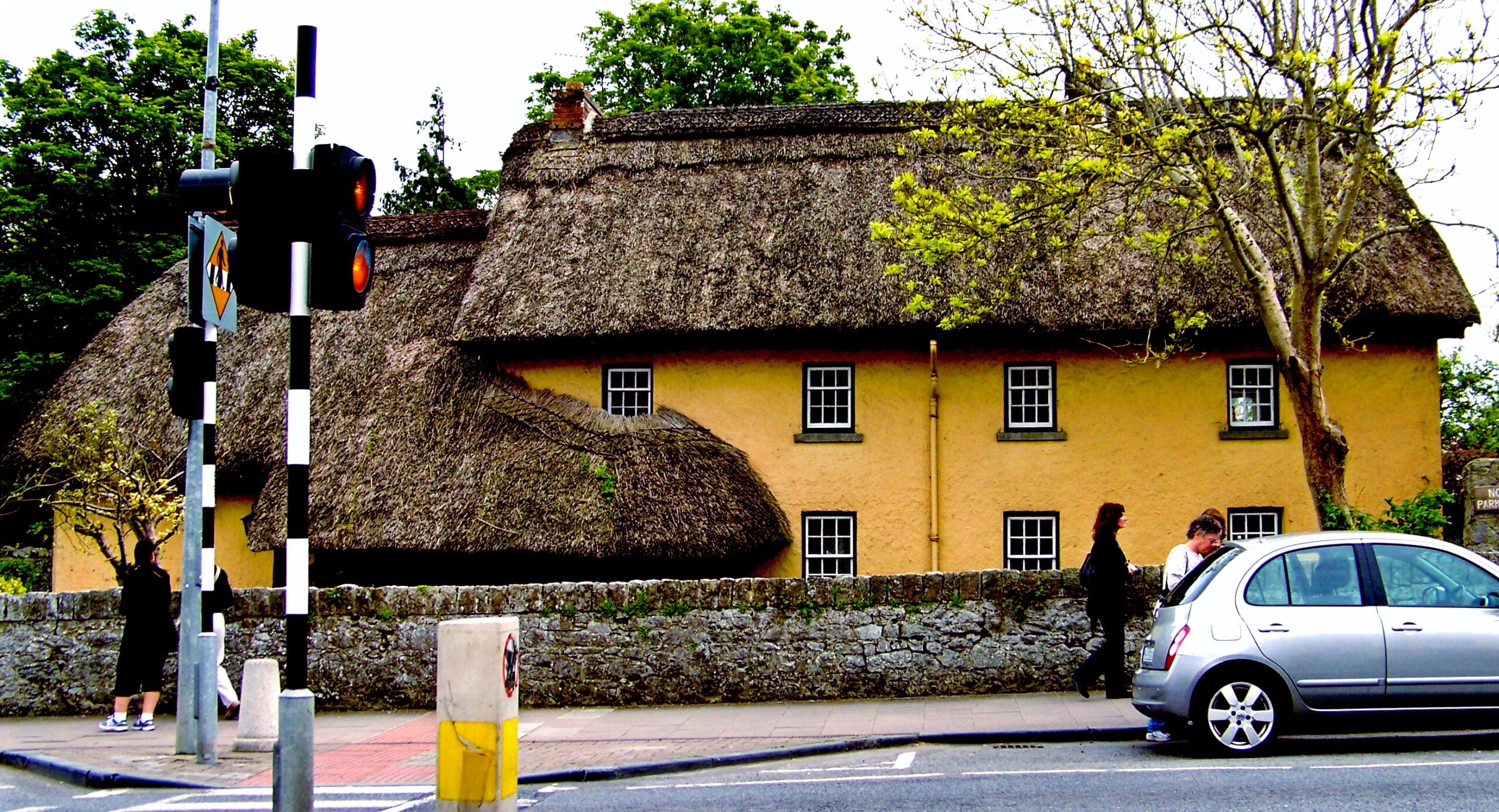
This list ranks ten villages that consistently stop people in their tracks. It’s not definitive. It’s not trying to be. But every village here earns its place on real merit: character, setting, and the kind of atmosphere that makes you slow down and stay longer than you planned.
Want more like this? Subscribe to our free newsletter for the best of Ireland every week — hidden gems, travel tips, and stories worth reading. Join thousands of Ireland lovers here →
10. Cushendun, Co. Antrim
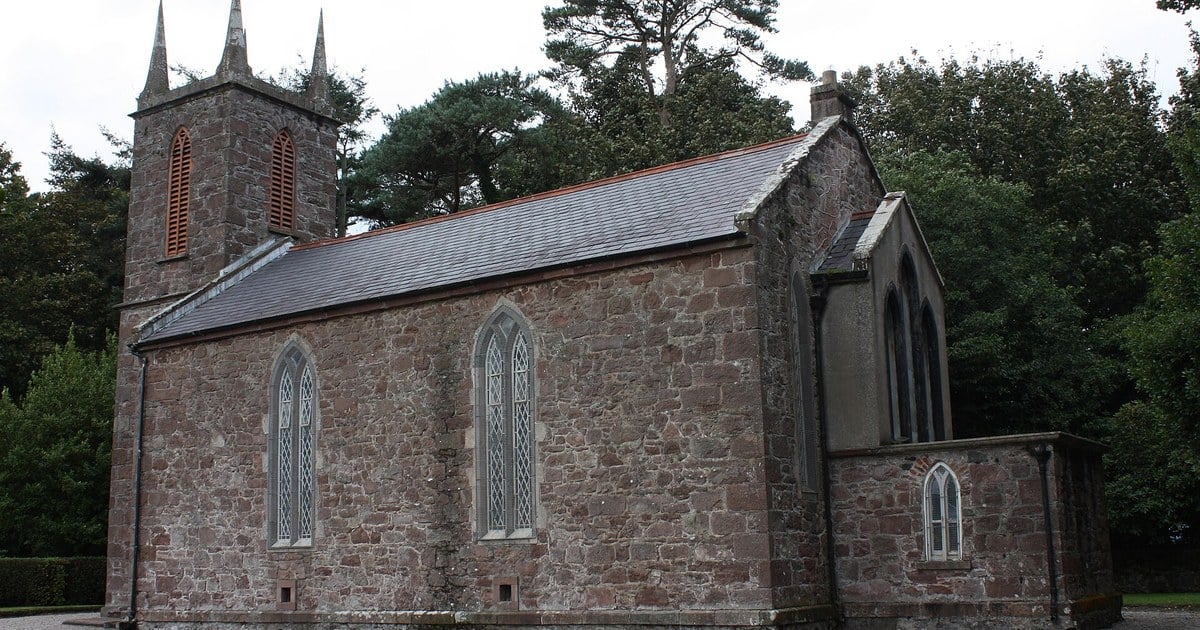
Cushendun sits at the mouth of the River Dun on the Antrim coast, a few miles south of Cushendall. Most of the village is owned by the National Trust, which is why it looks the way it does — a cluster of whitewashed Cornish-style cottages built in the 1920s by architect Clough Williams-Ellis, the same man who later built Portmeirion in Wales. The beach is quiet even in summer. The caves at the southern end of the bay featured in Game of Thrones, which has brought more visitors in recent years, though the village itself remains calm. The coastal drive north to Ballycastle is among the finest short drives in Ulster. Official info: en.wikipedia.org/wiki/Cushendun.
9. Ardmore, Co. Waterford
☘️ Your Irish family has a story waiting to be found.
Discover where your Irish ancestors came from — their county, their name, their story. Our free step-by-step guide walks you through every record, DNA tool, and ancestry archive. No experience needed.
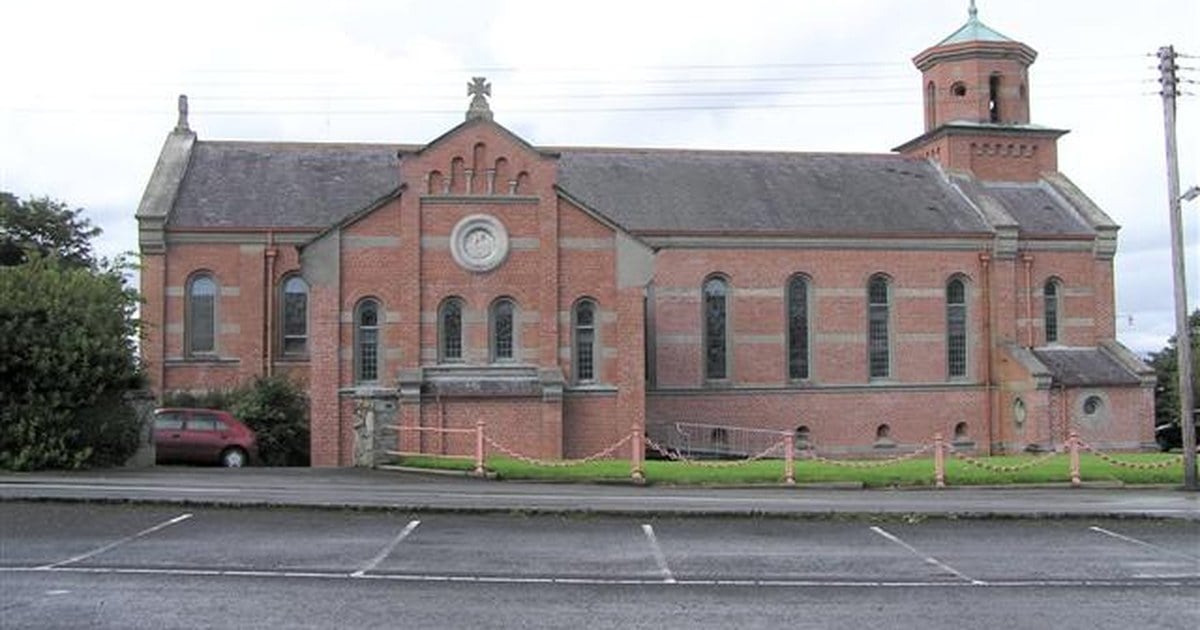
Ardmore is one of the oldest Christian settlements in Ireland, with records of St Declan establishing a monastery here before St Patrick arrived on the island. The round tower on the cliff above the village is one of the best-preserved in Ireland, dating to the 12th century. Below it, the village itself is a tight run of houses and a Blue Flag beach popular with swimmers year-round. The cliff walk from Ardmore to Ram Head gives views back across the village and out over the Celtic Sea. It’s a straightforward two-hour circuit with minimal elevation. The village has a handful of good restaurants and fills up in July and August, but outside those months it’s very quiet. Official info: en.wikipedia.org/wiki/Ardmore.
8. Ballyvaughan, Co. Clare
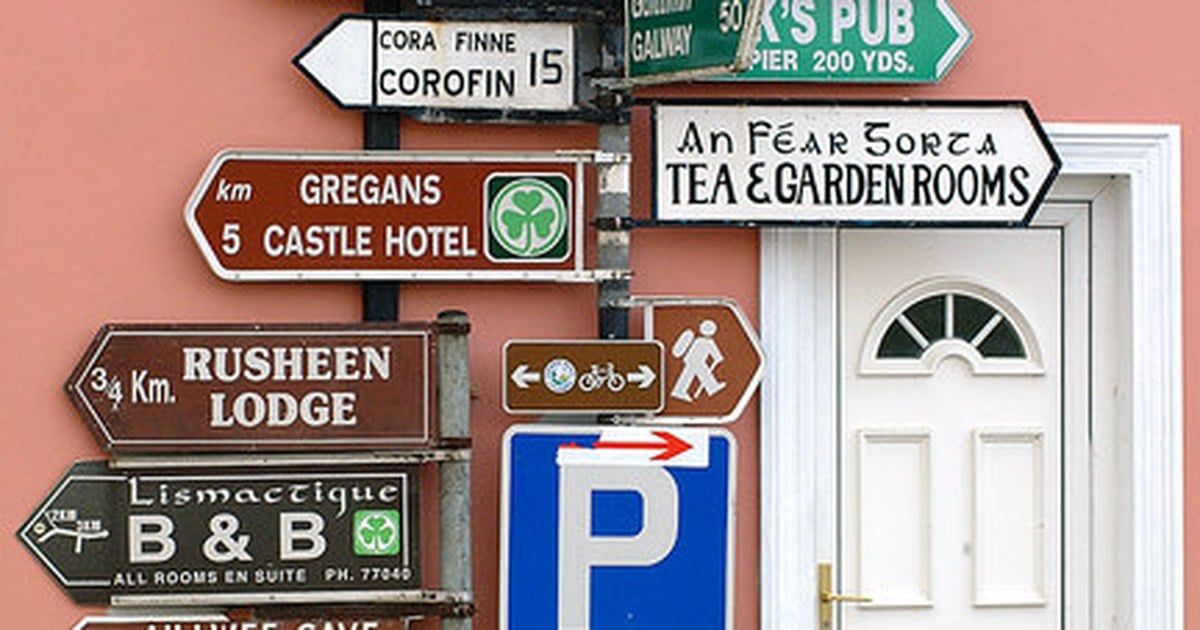
Ballyvaughan stands at the northern edge of the Burren, where the limestone pavement meets Galway Bay. It’s a small working harbour village with a pier, a few pubs, and direct views across the water to the Galway hills. The landscape around it is unlike anywhere else in Ireland — flat, grey rock stretching for miles, broken by wildflowers in spring and early summer. Burren National Park begins just south of the village. Newtown Castle, a 16th-century tower house, is open to visitors nearby. Ballyvaughan is a useful base for walking the Burren Way, and the road east along the coast to Kinvara is one of the most scenic drives in Connacht. Official info: en.wikipedia.org/wiki/Ballyvaughan.
7. Carlingford, Co. Louth
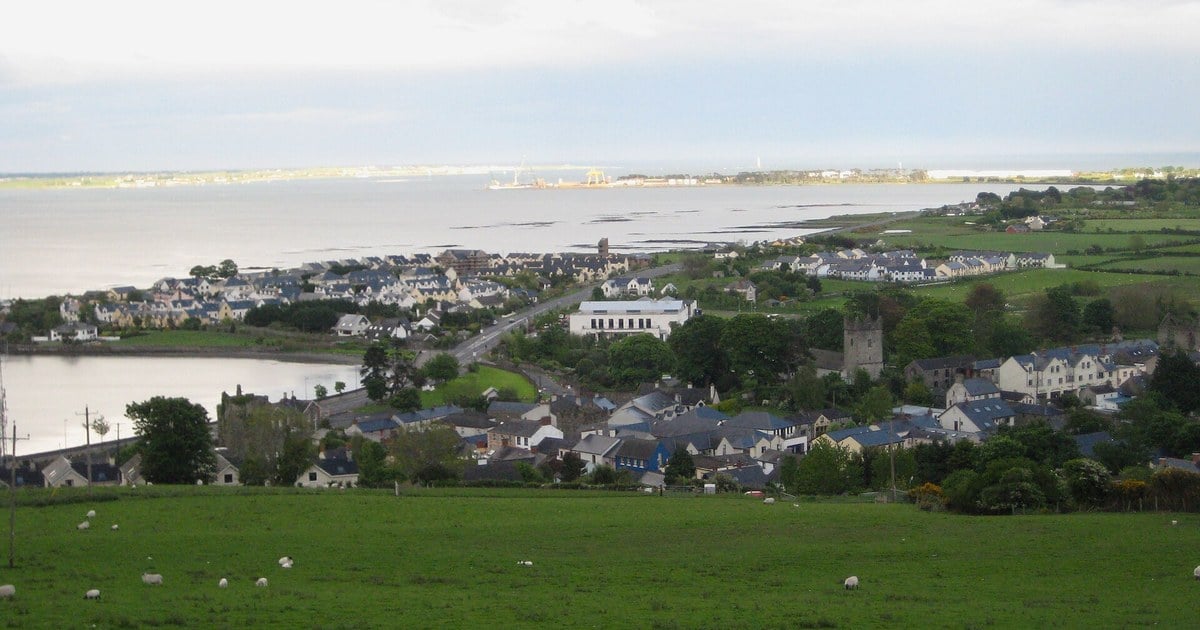
Carlingford occupies a narrow strip of land between Slieve Foy and Carlingford Lough, on the Cooley Peninsula. It’s a medieval village in the most literal sense — the streets follow a plan laid out by Anglo-Norman settlers in the 13th century, and several original structures survive intact. King John’s Castle dominates the waterfront. The Mint, a 15th-century house, is among the finest examples of late medieval architecture in Ireland. The village has become a popular weekend destination from Dublin, which means the restaurants and pubs are well-stocked, though it also means it can get crowded on summer Saturdays. Arrive on a weekday morning in May or September and you’ll have the laneways largely to yourself. Official info: en.wikipedia.org/wiki/Carlingford.
6. Kilronan, Inis Mór, Co. Galway
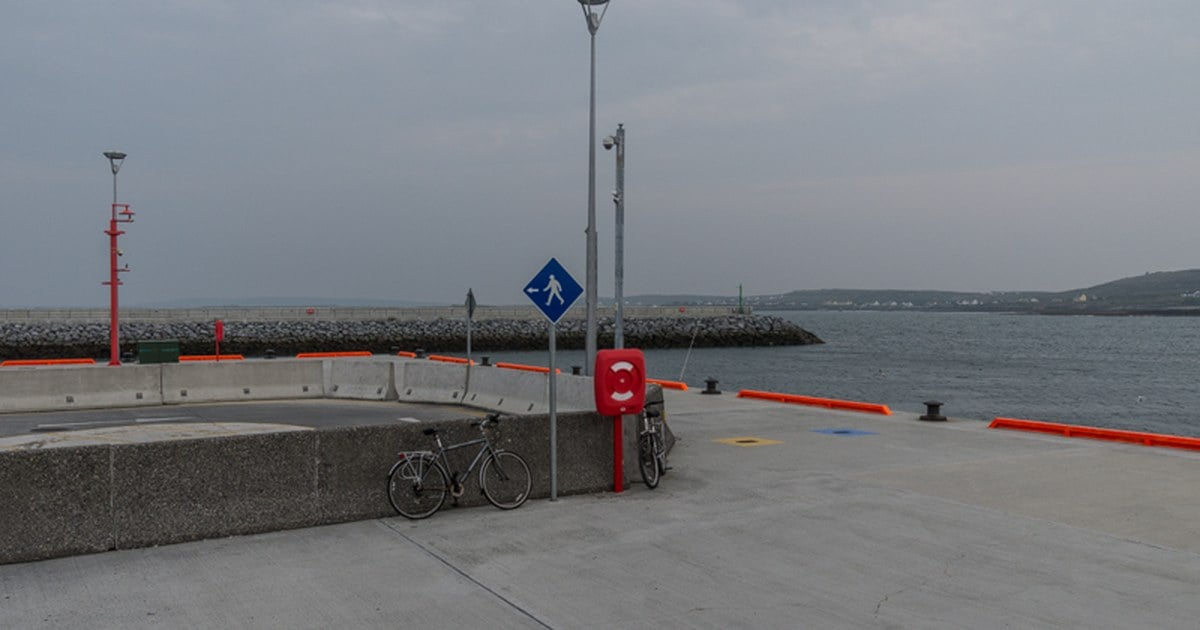
Kilronan is the main settlement on Inis Mór, the largest of the Aran Islands. Ferries from Rossaveal and Doolin land here, and most visitors rent bicycles from one of the shops near the pier and head straight for Dún Aonghasa, the Iron Age fort perched on a 100-metre cliff on the Atlantic side of the island. Kilronan itself is modest — a pier, a pub, a few shops — but the surrounding landscape is extraordinary. Stone walls divide the land into small fields, and the Irish language is spoken as a first language by most residents. The island is best visited on a weekday in April, May, or September when the day-trippers are fewer and the light is clear.
Discovering Ireland one village at a time? Our weekly newsletter covers the corners of Ireland that don’t make the brochures. Subscribe free and never miss a story → Official info: en.wikipedia.org/wiki/Kilronan.
5. Roundstone, Co. Galway
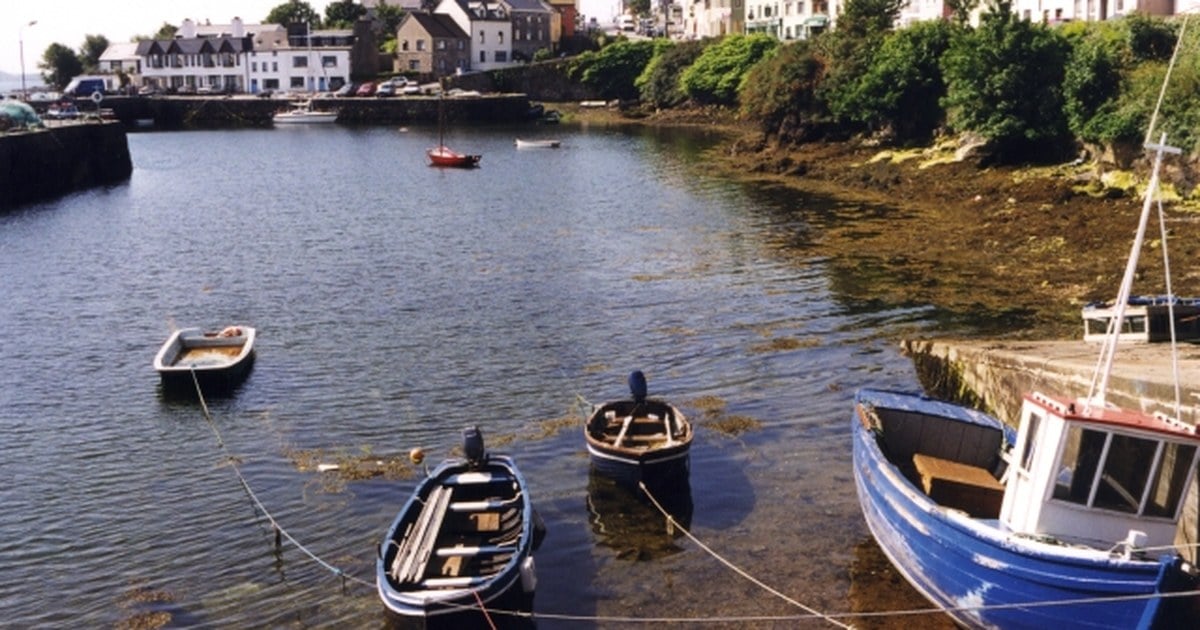
Roundstone is a Connemara fishing village on the south shore of the Roundstone peninsula, about 75 kilometres west of Galway city. The harbour is small and working, with boats moored alongside the pier most days. The village became well-known in the 19th century when Alexander Nimmo, the Scottish engineer who built much of the west of Ireland’s road network, chose it as a base of operations. Today it’s best known for its craft shops — particularly Malachy Kearns’s bodhran workshop, which has operated here since 1978 — and for the walk up Errisbeg mountain behind the village, which gives unobstructed views of Connemara and the Atlantic on a clear day. Official info: en.wikipedia.org/wiki/Roundstone.
4. Kinvara, Co. Galway
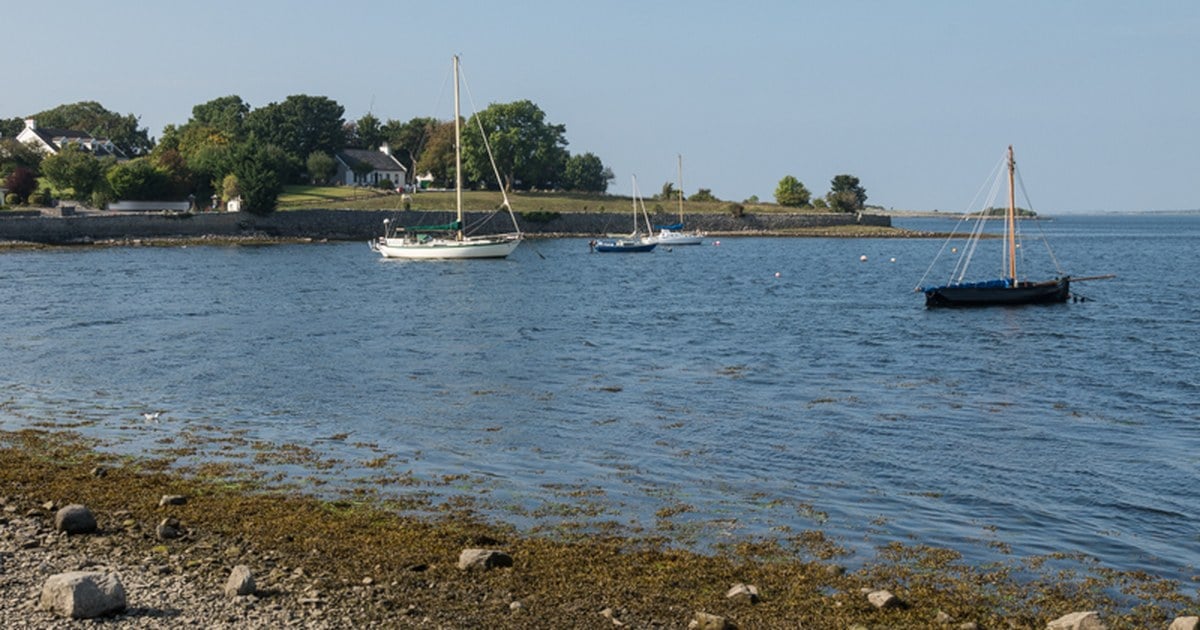
Kinvara sits on a shallow inlet at the southern tip of Galway Bay, with Dunguaire Castle — a restored 16th-century tower house — standing at the edge of the water just outside the village. The view of the castle reflected in the bay at high tide is one of the most photographed scenes in the west of Ireland, and it holds up in person. The village itself has a good main street with pubs and restaurants, and it comes alive every August during Cruinniú na mBád, a traditional sailing regatta that brings dozens of Galway hookers — the distinctive local sailing boats — into the bay. Outside festival weekends, Kinvara is quiet and genuinely pleasant to walk around. Official info: www.discoverireland.ie/kinvara.
3. Cong, Co. Mayo
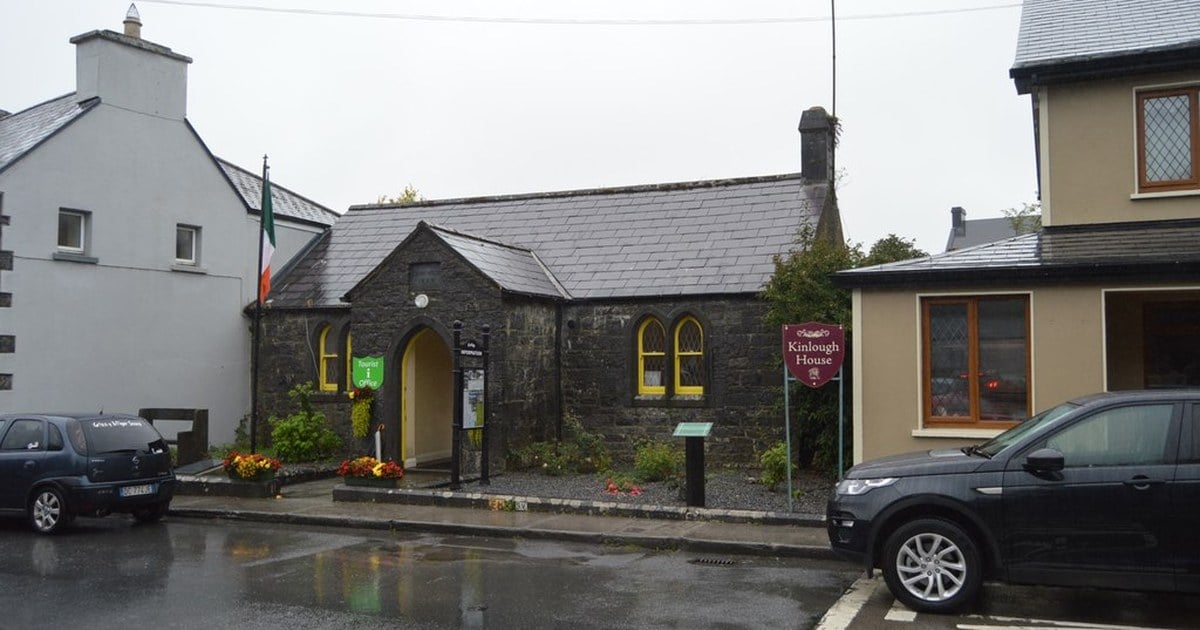
Cong is famous for one thing above all others: John Ford filmed The Quiet Man here in 1951, and the village has never entirely moved on from that fact. There are Quiet Man museums, Quiet Man walking tours, and a replica of the cottage used in the film. Set that aside, and what remains is genuinely lovely — a village on a thin strip of land between Lough Mask and Lough Corrib, with the ruins of a 12th-century Augustinian abbey at its centre and Ashford Castle, one of Ireland’s most celebrated hotels, on its doorstep. The woods between the village and the castle are excellent walking territory. The canal that connects the two loughs runs dry — an engineering failure from the Famine era — but the canal path is one of the better short walks in Connacht. Official info: www.discoverireland.ie/cong.
2. Inistioge, Co. Kilkenny
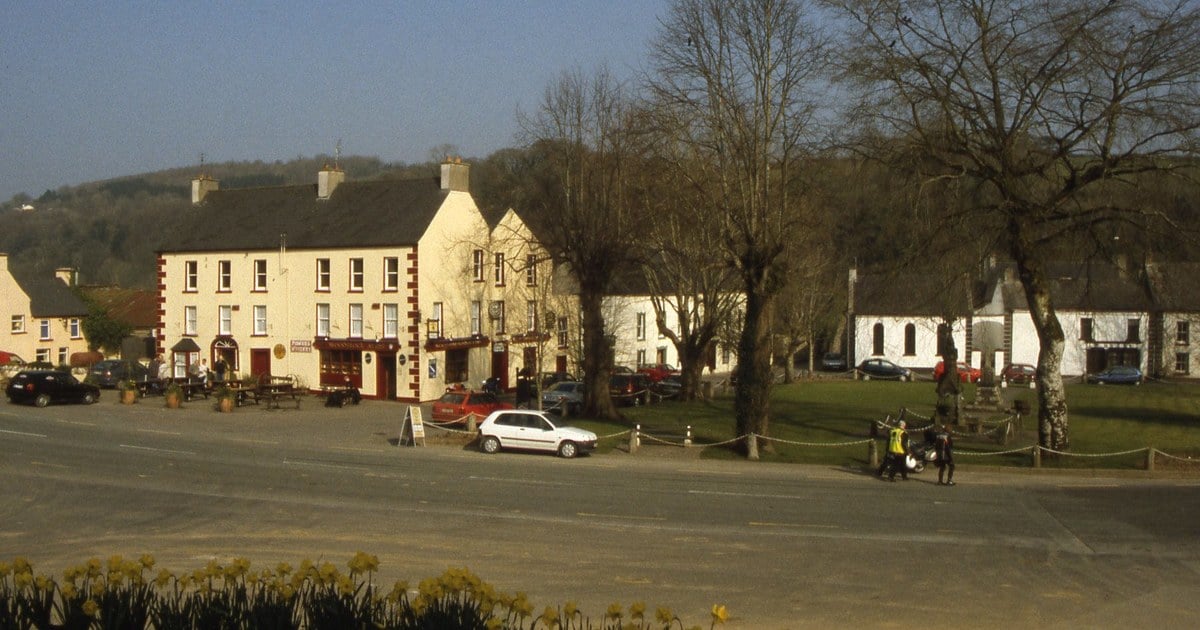
Inistioge (pronounced “inn-ish-TEEG”) sits in a wooded bend of the River Nore in south Kilkenny, about 25 kilometres from Kilkenny city. The village has a ten-arch stone bridge, a tree-lined square with a pump at its centre, and a population of around 250. It has appeared in several films and television productions — Circle of Friends and Widow’s Peak were both filmed here in the 1990s — though it’s not a place that markets itself particularly hard on that basis. The Woodstock Gardens above the village are the main visitor attraction: 50 acres of restored Victorian parkland with long views down the valley. Inistioge is small enough to see in an hour, but the surrounding countryside makes it worth spending a full afternoon. Official info: en.wikipedia.org/wiki/Inistioge.
1. Adare, Co. Limerick
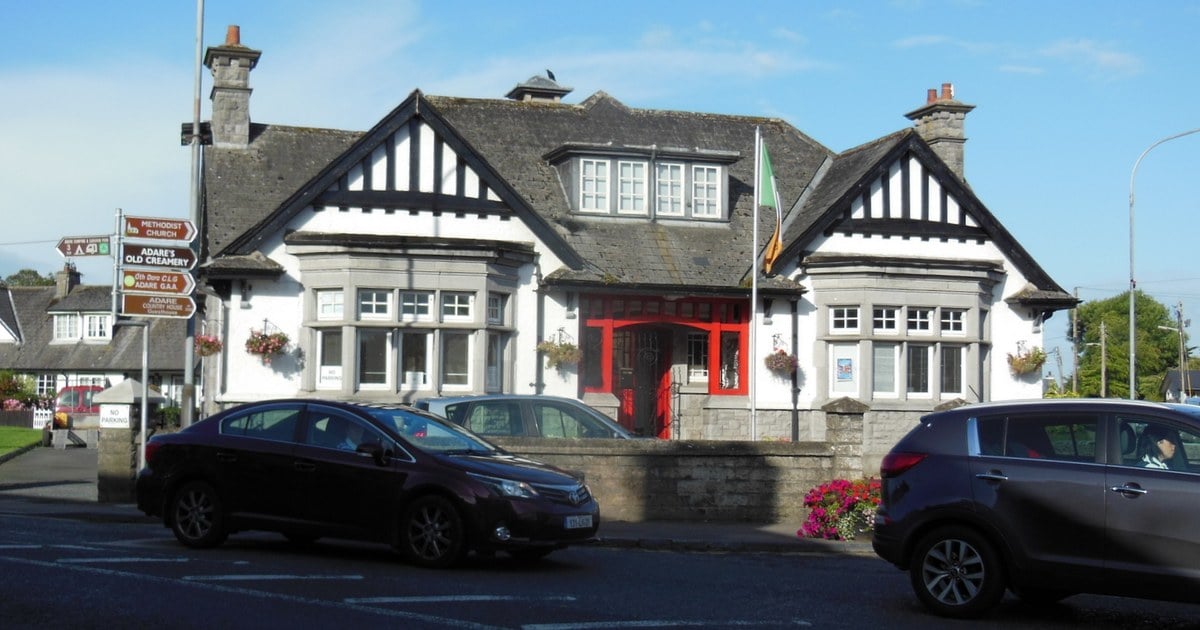
Adare tops most lists of beautiful Irish villages, and the case for it is straightforward. The main street is lined with thatched cottages, most of them dating from the early 19th century when the Earl of Dunraven rebuilt the village in a romanticised English style. They look the way people imagine Irish cottages should look, which is partly why Adare appears on so many postcards. But the village has genuine depth beyond the aesthetics. The medieval heritage is substantial: three monasteries were established here between the 13th and 15th centuries — the Trinitarian Priory (c. 1230), the Augustinian Friary (c. 1315), and the Franciscan Friary (c. 1464). The Augustinian Priory is now the Church of Ireland parish church, and the Trinitarian Priory is the Roman Catholic church on the main street. The Franciscan Friary survives as a ruin within the grounds of Adare Manor. Adare Manor, the former seat of the Dunraven family and now a five-star hotel, sits at the edge of the village on the banks of the River Maigue. The Limerick Greenway, a 39-kilometre off-road trail, begins at Rathkeale, approximately 20 kilometres west of the village. Official info: www.discoverireland.ie/adare.
Where Would You Put Number One?
The villages on this list were chosen because they each have something genuinely worth seeing — not just a nice look, but a character that holds up when you arrive in person. But Ireland has several hundred villages, and there are strong arguments for a dozen more that didn’t make this ranking.
Sneem in Kerry. Westport in Mayo (a town, technically, but it keeps showing up on lists like this). Glencolmcille in Donegal. Clonbur in Galway. Fore in Westmeath, which nobody talks about nearly enough.
If your favourite didn’t make the cut, that’s not an oversight — it’s an invitation. Tell us which village you’d put at the top, and why, in the comments below.
Get the best of Ireland in your inbox every week. We cover the places, stories, and experiences that make Ireland worth visiting and worth loving. No spam. Subscribe to our free newsletter →
Featured image: Photo by Suzanne Mischyshyn / Wikimedia Commons (CC BY-SA 2.0).
☘️ Join 64,000+ Ireland Lovers
Every weekday morning, get Ireland’s hidden gems, local secrets, and travel inspiration — the kind you won’t find in any guidebook.
Subscribe free — enter your email:
Get the free guide
Enter your email and we will send you straight to the download.
📲 Know someone who’d love this? Share on WhatsApp →
Love more? Join 43,000 Scotland lovers → · Join 29,000 Italy lovers → · Join 7,000 France lovers →
Free forever · Unsubscribe anytime
Tours & experiences you might love


_-_Large_Yellow_Thatched-Roof_House_-_geograph.org.uk_-_3125741.jpg)
Powered by Viator. Some links are affiliate links — we may earn a small commission at no extra cost to you.
Secure Your Dream Irish Experience Before It’s Gone!
Planning a trip to Ireland? Don’t let sold-out tours or packed attractions spoil your journey. Iconic experiences like visiting the Cliffs of Moher, exploring the Rock of Cashel, or enjoying a guided walk through Ireland’s ancient past often sell out quickly—especially during peak travel seasons.

Booking in advance guarantees your place and ensures you can fully immerse yourself in the rich culture and breathtaking scenery without stress or disappointment. You’ll also free up time to explore Ireland’s hidden gems and savour those authentic moments that make your trip truly special.
Make the most of your journey—start planning today and secure those must-do experiences before they’re gone!