

Medieval Kilkenny sits in the south-east of Ireland, about 90 minutes from Dublin. It has been quietly thriving for the best part of a thousand years. The castle has stood since the 12th century. The Black Abbey dates to 1225 and ranks among the oldest surviving structures in the city. Parts of the medieval walls still stand today. If you want to understand what Ireland looked like before the 18th century, Kilkenny is one of the best places to start.
This is a city that earns its reputation on substance. It has real medieval architecture, a genuine craft brewing tradition, and a calendar packed with arts events. The city centre covers barely a square mile — you can walk everywhere. Yet it has more going on than towns three times its size.
Love what you’re reading? Join over 64,000 readers who get a weekly dose of Ireland — history, hidden places, and travel inspiration — delivered straight to their inbox. Subscribe free to the Love Ireland newsletter.
Kilkenny Castle: The City’s Centrepiece
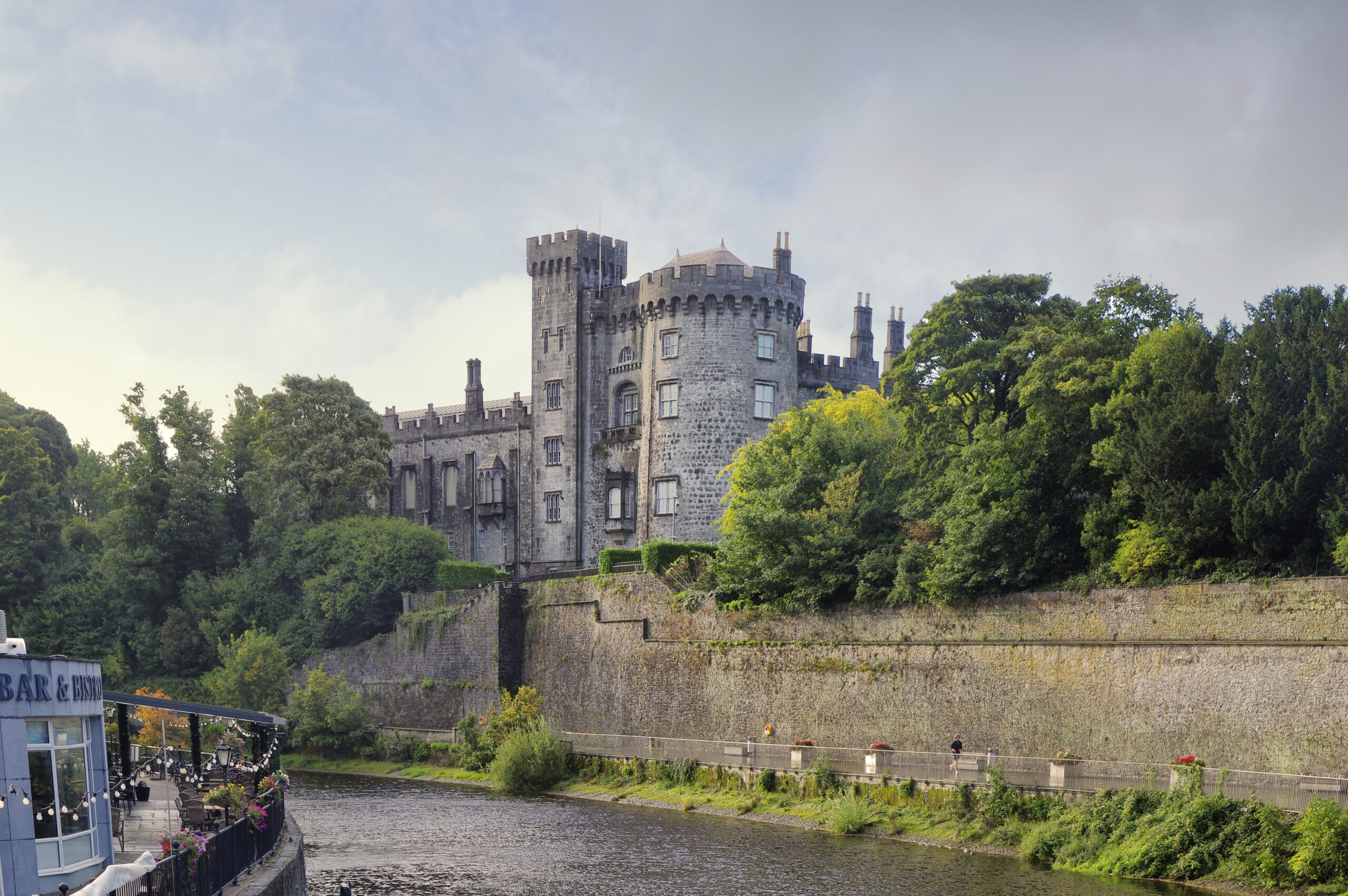
Kilkenny Castle is the obvious place to start. William Marshal, Earl of Pembroke, built it in 1195, making it one of the most important Norman fortresses in Ireland. The Butler family — one of the most powerful dynasties in Irish history — took ownership in 1391 and held it for nearly 600 years.
Much of what you see today reflects 19th-century renovations, but the core of the structure is medieval. Three towers survive from the original Norman build. Most impressive is the Long Gallery, with its hammer-beam roof and Pre-Raphaelite paintings. Workers completed it in the 1830s, and it gives you a vivid sense of how the Butlers lived at the height of their influence.
The Butler family sold the castle to the Irish State in 1967 for the symbolic sum of £50. The Office of Public Works manages it today. The grounds include a large parkland and a restored rose garden — free to enter. Daily house tours are worth doing for the Long Gallery alone.
Admission: Adults €8, children €4, family €20 (self-guided). Open daily, hours vary by season. Check the Heritage Ireland website before you visit.
The Medieval Mile
The Medieval Mile is the historic stretch running from the castle in the south to St Canice’s Cathedral in the north. Along the way, you pass the 13th-century Rothe House — a merchant’s townhouse turned museum — the Black Abbey, St Mary’s Medieval Mile Museum, and surviving sections of the old city walls.
St Canice’s Cathedral is worth a dedicated visit. St Canice of Aghaboe founded it in the 6th century, though the current building dates mostly from the 13th century. The round tower beside it is one of only two in Ireland you can climb. It predates the cathedral and offers views across the city and the Kilkenny countryside. You will need reasonable fitness — it is a vertical ladder inside, not stairs.
For an after-dark alternative, Kilkenny’s nightly ghost tour walks the same medieval streets by lantern light, weaving in the city’s witchcraft trials, plague pits, and reputedly haunted lanes. Tours run year-round and typically start around 8pm.
The Medieval Mile Museum opened in 2017 inside the former St Mary’s Church, a building dating to the 13th century. It covers the full sweep of Kilkenny’s history and holds one of the finest collections of medieval tomb sculptures in Ireland. Admission is €8 for adults.
Craft Beer and the Smithwick’s Legacy
Kilkenny has been brewing beer since the 14th century. Franciscan monks brewed ale on the site that would eventually become the Smithwick’s brewery. Smithwick’s — pronounced ‘Smitticks’ — is one of Ireland’s oldest ale brands. They still brew the red ale in Kilkenny, though the operation moved to a new facility in 2013. Smithwick’s converted the original site into the Smithwick’s Experience visitor attraction.
The Smithwick’s Experience offers guided tours of the historic brewery site, covering the history of Kilkenny brewing from monastic tradition to today. Each tour ends with a tasting. Book in advance during summer.
Beyond Smithwick’s, Kilkenny has a healthy craft beer scene. Left Coast Brewing produces a range of craft ales and lagers. Several city pubs carry strong selections of Irish craft beer on tap. Kyteler’s Inn is one of the most famous pubs in the city. It takes its name from Dame Alice Kyteler, who faced a witchcraft trial in 1324. Visit for the atmosphere as much as the drinks.
Deciding where to raise a glass? Vote for the best pubs in County Kilkenny in Ireland’s 2026 pub poll.
Hurling: The Sport That Defines Kilkenny
No account of Kilkenny is complete without hurling. The county has won the All-Ireland Senior Hurling Championship 36 times — more than any other county in Ireland. Hurling is the city’s sport. On Sunday afternoons in summer, it fills the pubs with conversation and Nowlan Park with noise.
If you visit during the All-Ireland hurling season (roughly May to September), try to catch a county match. The atmosphere at a Kilkenny game is like nothing else in Irish sport. Buy tickets through the GAA website.
Hurling is fast, physical, and demands real skill. Players use a wooden stick — the hurley — to strike a small leather ball called the sliotar at speeds exceeding 150 km/h. It ranks as one of the fastest field sports in the world. Kilkenny has produced some of its greatest ever players.
Discover more of Ireland every week. From Kilkenny’s medieval laneways to the wild Atlantic coastline, the Love Ireland newsletter covers the stories, places, and history that make this country worth exploring. Join 64,000 subscribers — it’s free.
Food and Markets
Kilkenny has a strong food culture rooted in the farming country around it. The Kilkenny Farmers’ Market runs every Thursday morning at the Greens car park. It is one of the better markets in the country — local cheeses, breads, vegetables, and meats from producers in the surrounding counties.
The city has a solid range of restaurants. Campagne on Gashouse Lane is the most acclaimed — it holds a Michelin star and uses Irish produce in French-influenced cooking. Ristorante Rinuccini, just across from the castle, has been a Kilkenny institution for decades. For casual dining, you will find plenty of cafés and lunch spots around High Street and Parliament Street.
The Arts: Kilkenny’s Other Identity
Kilkenny has an arts scene that punches well above its weight for a city of 27,000. The Kilkenny Arts Festival runs every August and is one of Ireland’s largest arts events. It brings theatre, music, visual art, and literature to venues across the city for ten days. The festival launched in 1974 and draws audiences from across Ireland and beyond.
The Watergate Theatre is the city’s main performance venue. It stages drama, comedy, and music throughout the year. The Butler Gallery moved from the castle to the Evans’ Home building in 2020 and hosts a changing programme of exhibitions.
The craft tradition is strong here too. The Kilkenny Design Centre sits in the old coach stables behind the castle. It brings together work from Irish designers and makers — a good place to find quality Irish craft at fair prices.
Getting There and Getting Around
Kilkenny is straightforward to reach from Dublin. Your main options are:
- Bus: Bus Éireann and JJ Kavanagh & Sons both run regular services from Dublin city centre, with journey times of around two hours.
- Train: The Dublin Heuston to Kilkenny MacDonagh service takes about 1 hour 20 minutes; the station is a 15-minute walk from the city centre.
- Car: Via the M9 motorway, the drive takes about 90 minutes. Parking in the city centre is metered, with car parks off John Street and on Ormonde Street.
The city is compact and walkable. You do not need a car once you arrive. Most major sights sit within a 10-minute walk of each other along the Medieval Mile. A full day covers the main attractions. Two days lets you explore at a slower pace and reach Jerpoint Abbey or the Rock of Cashel, both an easy drive away.
Where to Stay
Kilkenny has accommodation to suit most budgets. The Kilkenny River Court Hotel is the main upscale option, with direct views of the castle across the River Nore. Pembroke Kilkenny is a well-regarded four-star in the city centre. For B&Bs, look around Dean Street and Patrick Street — several options sit close to the city centre.
Kilkenny works as a day trip from Dublin, but an overnight stay gives you a better feel for the city. The evening pubs alone make it worth staying.
More Ireland, every week. The Love Ireland newsletter covers the best of Irish history, travel, and culture — from Kilkenny’s medieval streets to the islands off the west coast. Subscribe free and join 64,000 readers who love Ireland.
Frequently Asked Questions
Is Kilkenny worth visiting?
Yes. Kilkenny is one of the most complete medieval cities in Ireland. It has a working castle, a cathedral you can climb, a superb museum of medieval tomb sculptures, and a craft beer scene with a 700-year history. The city is small enough to cover in a day but has enough depth to fill a weekend. If you are travelling anywhere in the south-east of Ireland, Kilkenny deserves a place on your itinerary.
How long should I spend in Kilkenny?
A full day covers the main sights — the castle, the Medieval Mile, the museum, and a brewery tour. Two days gives you room to slow down, explore the food scene, and take a day trip to Jerpoint Abbey or the Rock of Cashel. If you visit during the Arts Festival in August, three days lets you catch several events without feeling rushed.
What is the best time of year to visit Kilkenny?
Kilkenny is a year-round destination. Summer (June to August) brings the most visitors, the Arts Festival in August, and the best weather for exploring on foot. Spring and early autumn offer fewer crowds and lower prices while still giving you good conditions. Visit between May and September if you want to catch a hurling match. Winter is quiet but atmospheric — the medieval streets have a particular appeal on cold, clear days.
Thinking about it for retirement?
If you’ve started thinking seriously about retiring there, our complete our full Retire in Ireland guide covers the visa, healthcare, cost-of-living, and the regions worth shortlisting.
Tours & experiences you might love


Powered by Viator. Some links are affiliate links — we may earn a small commission at no extra cost to you.
Secure Your Dream Irish Experience Before It’s Gone!
Planning a trip to Ireland? Don’t let sold-out tours or packed attractions spoil your journey. Iconic experiences like visiting the Cliffs of Moher, exploring the Rock of Cashel, or enjoying a guided walk through Ireland’s ancient past often sell out quickly—especially during peak travel seasons.

Booking in advance guarantees your place and ensures you can fully immerse yourself in the rich culture and breathtaking scenery without stress or disappointment. You’ll also free up time to explore Ireland’s hidden gems and savour those authentic moments that make your trip truly special.
Make the most of your journey—start planning today and secure those must-do experiences before they’re gone!
Subscribe Free