

An Irish townland is the smallest official land division in Ireland — a named area of countryside, typically covering between 10 and 1,000 acres, that existed long before parish boundaries, county lines, or modern postcodes. There are more than 60,000 townlands across the island of Ireland, and for the 70 million people worldwide who carry Irish roots, the townland is often the most direct path to finding exactly where their family came from. When you find your ancestor’s townland, you move from knowing their country to knowing their field.
What Is an Irish Townland?
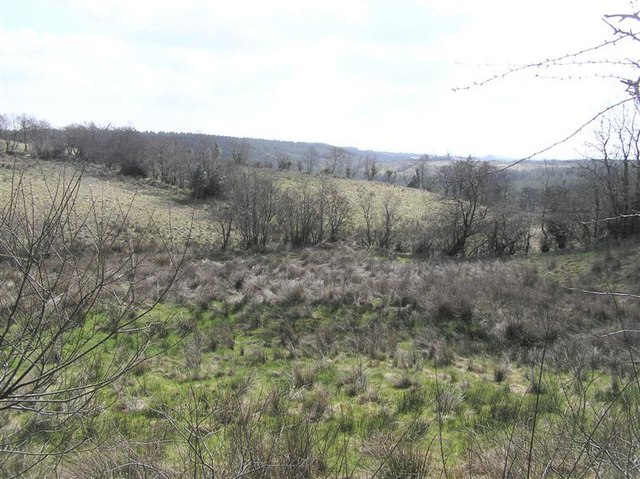
A townland has nothing to do with a town. The name comes from the Irish word baile, meaning a settlement or homestead. In practise, a townland is a named patch of land — a cluster of farms, a hillside, a river valley — that the people who lived there knew by name for centuries before any modern map was drawn.
The townland system is ancient. It predates Norman rule, the plantation era, and the Act of Union. Communities organised their land around these named units long before the English mapped them in the Civil Survey of the 1650s and again in the Ordnance Survey of the 1830s. By the time the Ordnance Survey completed its work in 1846, it had recorded 60,462 townlands across the island — each one named, bounded, and mapped.
Townland sizes vary enormously. The smallest cover just a few acres. The largest stretch to several hundred. On average, a townland in the west of Ireland covers about 325 acres — enough land for a handful of farm families. That intimacy is what makes townlands so valuable for ancestry research. When your great-great-grandfather listed his townland on a ship manifest, he was naming the specific field his family had farmed for generations.
Today, townlands are still used in rural Ireland as everyday addresses. The Irish post code system (Eircode) supplements rather than replaces them. In parts of Connacht and Ulster, you can still hear people giving directions by townland name as naturally as anyone else would use a street name.
Why Townlands Are the Key to Irish Genealogy Research
Most Irish ancestors who emigrated in the 18th and 19th centuries did not think of themselves as being from “County Cork” or “County Mayo”. They were from Kilmacduagh. From Doonbeg. From Ballyroan. The county was an administrative boundary. The townland was home.
This matters enormously for genealogy research. The records that survive from pre-Famine and post-Famine Ireland are organised primarily by townland, not by surname or county. Griffith’s Valuation — the great mid-19th century survey of Irish landholders — lists every head of household in Ireland between 1847 and 1864, organised by county, barony, civil parish, and then townland. The 1901 and 1911 Irish censuses, both freely searchable online, are also organised by townland. Church baptism, marriage, and burial registers reference the townland where each family lived.
Without the townland, Irish genealogy research stalls at county level. With it, you can find the specific household, the neighbours, the landlord, and often a direct link to earlier records stretching back to the 1600s. The townland is the key that unlocks everything else.
☘️ Researching your Irish roots?
Our free step-by-step guide walks you through every record, database, and DNA tool to trace your Irish family — no experience needed.
Step-by-Step: How to Find Your Family’s Townland
When researching Irish roots, the townland system can feel overwhelming at first — until you realise you likely already have a clue. Ship passenger lists, naturalisation papers, and US census records from the 19th century frequently list an Irish townland rather than a county. Here is a reliable sequence for finding yours. (New to this entirely? Start with our complete beginner’s guide to tracing Irish roots from America.)
Step 1: Start With What You Already Have
Check every document your family holds: marriage certificates, death notices, obituaries, letters, immigration papers, and any family Bible entries. Look for place names that are not counties — these are often townlands. A name like “Ballinamore” or “Cloonoghill” is a townland; “County Roscommon” is not.
Step 2: Search the 1901 and 1911 Irish Censuses
Both censuses are fully free at IrishGenealogy.ie. Search by surname and county, then look at the townland column on each result. If your ancestor was still in Ireland in 1901 or 1911, you will find their exact address — including the townland. If they had emigrated, look for brothers, sisters, or cousins who stayed. They will point you to the same townland.
Step 3: Use Griffith’s Valuation
Griffith’s Valuation, conducted between 1847 and 1864, is Ireland’s most comprehensive 19th-century household survey. It lists the name of every tenant and landholder in Ireland, along with the townland where they lived. You can search it free at AskAboutIreland.ie. A search for your family surname in the county you suspect will often return a townland name directly.
Step 4: Cross-Reference With the Townland Database
Once you have a townland name, go to IrishTownlands.ie. Type in the name and you will see the townland’s county, barony, civil parish, and Roman Catholic parish — along with a map showing its exact location. This gives you the civil and religious jurisdictions you need to request the right registers. The National Library of Ireland holds Catholic parish registers on microfilm dating back to the 1820s and, in some cases, to the 1750s.
Step 5: Use DNA to Confirm or Extend Your Research
DNA ethnicity estimates alone will not identify a townland — but a DNA match can. If a close match lists their known Irish family origins, compare them with your documentary research. Shared townlands in documentary records and shared DNA matches point to common ancestry. AncestryDNA and MyHeritage carry large Irish databases and allow matching with other users who have built family trees.
☘️ Enjoying this? 64,000+ Ireland lovers get stories like this every week. Subscribe free →
The Best Free Irish Townland Search Tools
Several free resources exist specifically for Irish townland research. Here are the most reliable.
IrishTownlands.ie
This is the dedicated townland database for Ireland. It covers all 60,462 recorded townlands and allows you to search by name, county, barony, or civil parish. Each entry shows the townland’s civil and Catholic parish, its administrative barony, and a map pinpointing its location. It is the first tool to use once you have a townland name.
IrishGenealogy.ie
The Irish government’s official genealogy portal provides free access to civil registration records — births from 1864, deaths from 1864, and marriages from 1845 for non-Catholic couples (1864 for Catholic couples) — as well as the 1901 and 1911 censuses and Roman Catholic parish registers from across the island. Church register images are free to view and download. This single resource covers more Irish genealogical ground than any paid subscription site.
AskAboutIreland.ie — Griffith’s Valuation
Griffith’s Valuation is available free at AskAboutIreland.ie. You can search by surname and county to find your family’s townland from the 1847–1864 survey period. The original fieldbooks — which record the acreage, quality, and rental value of each holding — are also available and give a vivid picture of what your ancestor’s farm looked like in the years immediately after the Great Famine.
National Library of Ireland — Parish Register Collection
The National Library of Ireland holds microfilm copies of Catholic parish registers covering much of Ireland from the 1820s onwards, with some dating to the 1750s. These records survived the 1922 destruction of the Public Record Office because they were in parish custody, not in Dublin. Once you know your ancestor’s townland and its Catholic parish, you can identify exactly which register to search at NLI.ie.
What Records You Will Find Once You Know the Townland
Identifying the townland opens access to a chain of records that would otherwise be impossible to navigate. Here is what you can expect to find.
Pre-Famine household records: Griffith’s Valuation (1847–1864) and Tithe Applotment Books (1823–1837) both list householders by townland. The Tithe Applotment Books predate Griffith’s by roughly 25 years and are fully free at IrishGenealogy.ie. Together, these two surveys can establish where your family lived from the 1820s through the 1860s.
Civil registration records: Births and deaths recorded by the state from 1864 onwards, and marriages from 1864 (non-Catholic marriages from 1845), all include townland information. A birth certificate from 1878, for example, names the townland where the child was born — and in rural Ireland, that was almost always where the family had farmed for generations.
Catholic baptism and marriage registers: NLI parish registers are organised by Catholic parish, which you can identify from the townland using IrishTownlands.ie. Baptism registers in surviving parishes frequently include the father’s townland of residence, his wife’s name, and the names of two witnesses — often siblings or neighbours from the same townland.
Estate records: Before the Land Acts of the 1880s and 1890s, most rural Irish families rented from a landlord. Each landlord kept rental books listing tenants by townland. Many of these are now held at the National Archives of Ireland, the Public Record Office of Northern Ireland, or county archives — and they often contain names going back to the 1700s.
Ordnance Survey maps from the 1830s: The 6-inch Ordnance Survey maps, completed between 1829 and 1842, show every townland boundary, every farm building, every field wall, and every road. Viewing the 1837 map of your ancestor’s townland alongside modern satellite imagery is one of the most moving experiences in Irish genealogy research — and for many, it is the first step toward actually visiting the field their family left.
County-by-County Townland Highlights
Some counties have particularly rich townland records, and some townland clusters carry surnames that appear again and again in the diaspora.
County Mayo has some of the most concentrated emigration townlands in Ireland. The Erris peninsula — covering roughly 400 townlands in the northwest — produced a disproportionate share of Ireland’s 19th-century emigrants to the United States, particularly to Boston and New York. Surnames like Gallagher, McManamon, Moran, and Burke cluster in specific Erris townlands and appear in the same concentrations in Irish-American communities.
County Cork has more townlands than any other county — over 5,000. Cork emigrants dominated the New South Wales and South Australian settlements of the 1840s and 1850s and contributed heavily to Famine-era migration to the eastern United States. Cobh (then called Queenstown) served as the primary departure port, and many emigrants recorded a Cork townland as their final Irish address. If your roots trace to Cork, see our guide to Irish surnames from County Cork for name clusters tied to specific townlands.
County Donegal has complex townland naming drawn from Gaelic Irish and Plantation-era Scots origins, with many names surviving in near-original form. Donegal diaspora — particularly in Scotland and Philadelphia — often carry townland knowledge passed down through family memory, making it one of the most rewarding counties for combining oral history with documentary research.
Counties Antrim and Down carry significant Ulster Scots townland populations — particularly relevant for those researching Scots-Irish (Ulster Scots) ancestry in the American Appalachian and mid-Atlantic regions. The Public Record Office of Northern Ireland (PRONI) in Belfast holds extraordinary townland-level estate records for these counties stretching back to the 1600s.
How many townlands are there in Ireland?
There are 60,462 official townlands across the island of Ireland, as recorded by the Ordnance Survey between 1829 and 1846. Some small additional areas have been identified or renamed since then, but 60,462 is the standard figure used in genealogical databases and official sources.
Are Irish townland records freely available online?
Yes. The main records tied to townlands — Griffith’s Valuation, the 1901 and 1911 censuses, civil registration records, and Catholic parish registers — are all freely available through IrishGenealogy.ie and AskAboutIreland.ie. The National Library of Ireland also provides free online access to its collection of Catholic parish register microfilms. You do not need a paid subscription to conduct townland-level genealogy research in Ireland.
How do I find which townland my Irish ancestors came from?
Start with documents already in your family: ship passenger lists, US census records, naturalisation papers, and death certificates from Irish-born relatives often list a townland rather than a county. If you have a surname and an approximate county, search Griffith’s Valuation on AskAboutIreland.ie to find where that family name clusters at townland level. Then use the 1901 census on IrishGenealogy.ie to confirm descendants who remained in Ireland at that date. IrishTownlands.ie maps the result precisely and tells you which civil and Catholic parish to search next. Once you know the townland, you are ready to plan a heritage trip to your ancestral county.
☘️ Join 64,000+ Ireland Lovers
Every weekday morning, get Ireland’s hidden gems, local secrets, and travel inspiration — the kind you won’t find in any guidebook.
Subscribe free — enter your email:
Already subscribed?
Thinking about it for retirement?
If you’ve started thinking seriously about retiring there, our complete our full Retire in Ireland guide covers the visa, healthcare, cost-of-living, and the regions worth shortlisting.
Get the free guide
Enter your email and we will send you straight to the download.
📲 Know someone who’d love this? Share on WhatsApp →
Love more? Join 43,000 Scotland lovers → · Join 29,000 Italy lovers → · Join 7,000 France lovers →
Free forever · Unsubscribe anytime
Frequently Asked Questions About Irish Townland Research
What is the best free website to search Irish townlands?
IrishTownlands.ie is the most comprehensive free resource, containing all 60,000+ townlands across Ireland with civil parish and barony details. For census-era research, Griffith’s Valuation (1847–1864) at askaboutireland.ie allows free searches by surname and returns the specific townland where each family lived — making it the most precise free tool for pinpointing Irish ancestry origins.
How many townlands are in Ireland?
There are approximately 60,000 townlands across the island of Ireland, ranging in size from a few acres to several hundred. These administrative units predate the county system by centuries and are recorded in both Griffith’s Valuation and Catholic parish registers, making them the most precise identifier for locating where an Irish family lived before emigration.
How do I trace my Irish ancestry for free?
Begin with IrishGenealogy.ie, which provides free access to civil registration records (births from 1864, marriages from 1845, deaths from 1864) and the National Library of Ireland’s Catholic parish registers at registers.nli.ie. Once you identify a surname and county, Griffith’s Valuation at askaboutireland.ie will narrow your search to a specific townland — the exact location your ancestors lived in mid-19th-century Ireland, when most Irish-American families emigrated.
What is Griffith’s Valuation and why is it important for Irish genealogy?
Griffith’s Valuation (1847–1864) was a comprehensive Irish land survey that recorded the name of every tenant alongside their townland, civil parish, and barony. Because it covers the period immediately surrounding the Great Famine — when the majority of Irish diaspora families emigrated — it is often the single most useful free resource for identifying a family’s precise origin townland. It is fully searchable for free at askaboutireland.ie.
Did Irish genealogy records survive the 1922 Public Record Office fire?
The 1922 Four Courts fire destroyed most pre-1922 Church of Ireland registers and 19th-century census returns. However, Catholic parish registers — held separately by individual parishes and microfilmed by the National Library of Ireland — survived almost entirely intact. These registers are freely available at registers.nli.ie and extend back to the 1820s for most Irish parishes, covering the decades before the Great Famine and mass emigration.
Tours & experiences you might love


Powered by Viator. Some links are affiliate links — we may earn a small commission at no extra cost to you.
Secure Your Dream Irish Experience Before It’s Gone!
Planning a trip to Ireland? Don’t let sold-out tours or packed attractions spoil your journey. Iconic experiences like visiting the Cliffs of Moher, exploring the Rock of Cashel, or enjoying a guided walk through Ireland’s ancient past often sell out quickly—especially during peak travel seasons.

Booking in advance guarantees your place and ensures you can fully immerse yourself in the rich culture and breathtaking scenery without stress or disappointment. You’ll also free up time to explore Ireland’s hidden gems and savour those authentic moments that make your trip truly special.
Make the most of your journey—start planning today and secure those must-do experiences before they’re gone!
Subscribe Free