

You’ve been carrying the name your whole life. Murphy. Gallagher. O’Brien. You’ve heard the county — Mayo, Roscommon, Clare — spoken at family dinners since before you understood what it meant. And now you’re standing in a field on the west coast of Ireland, looking at an outline in the grass, and something in you knows — without being told — that this is where they lived.
This is the Irish homecoming. It happens every year to hundreds of thousands of people. And almost none of them can fully explain what it does to them.
Watch: Do You Qualify for an Irish Passport?
Tracing your Irish family? If one of your grandparents was born in Ireland, you may be able to become an Irish citizen. This 14-minute guide explains who qualifies, what it costs and how long it takes. Thinking of making the move? Get the free Moving to Ireland checklist.
Why So Many People Feel the Pull
Ireland has the largest diaspora of any nation relative to its population. Over 70 million people worldwide claim Irish ancestry. That’s seven times the population of the island itself.
For many, the connection runs quiet and deep. A grandmother’s maiden name. A county mentioned in passing. A great-great-grandfather’s baptism record copied out by hand.
Coming to Ireland doesn’t just fill in those gaps. For most visitors who make this journey, it reframes something they didn’t know they were carrying.
What the Research Gives You — and What It Can’t
Before the trip, there’s usually a paper trail.
The National Library of Ireland holds parish records stretching back centuries, many available free online. Griffith’s Valuation — a mid-19th century property survey — lists householders by townland across the whole country. The 1901 and 1911 census records are fully searchable.
Sites like IrishGenealogy.ie allow many people to trace a family back to a specific parish — sometimes a specific house — before they ever board a plane.
But a name on a map is not the same as standing in the place. You can read a coordinate. You cannot prepare for what that coordinate feels like underfoot.
☘️ Enjoying this? 64,000+ Ireland lovers get stories like this every week.
Thinking about it for retirement?
If you’ve started thinking seriously about retiring there, our complete our full Retire in Ireland guide covers the visa, healthcare, cost-of-living, and the regions worth shortlisting.
Subscribe free →
What You’re Likely to Find
The experience varies more than people expect.
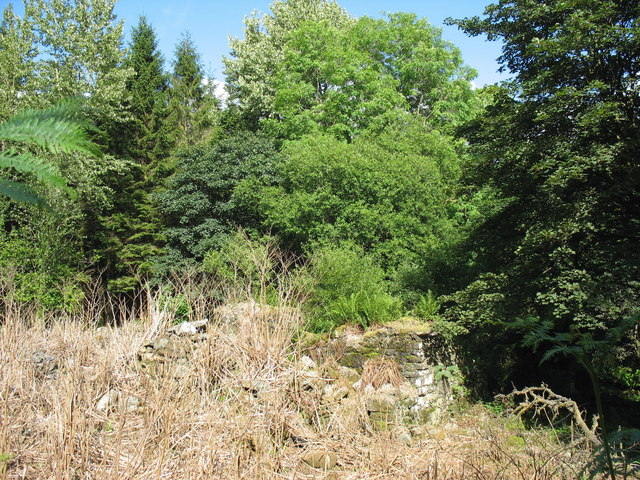
Some visitors find nothing but a trace in the grass — the ghost of a foundation, visible only because the ground has memory. These collapsed outlines are more common than most people realise. Emigration and famine emptied entire townlands. What remains is sometimes no more than an impression.
Others find walls still standing. Roofless, often. Thick stone. Moss along every joint. The hearth still visible from the doorless entrance. A window frame with no glass that has been looking over the same field for two centuries.
And occasionally — more often than you might expect in a country where local memory runs long — someone finds living cousins. Or a neighbour who knew the family name. Or a local historian at the county heritage centre who has been quietly hoping someone with that surname would show up.
Where the Records Still Live
County genealogy centres across Ireland hold records that haven’t made it online yet. Most are staffed by people who know local history intimately and are genuinely glad when someone arrives with a name and a decade.
The Genealogical Office at the National Library in Dublin is the official state authority for Irish genealogy. County libraries often have dedicated heritage rooms with local newspaper archives, estate maps, and land records going back centuries.
It’s worth planning this part of your trip in advance — heritage centre visits often require appointments, and some records need a few days’ notice to retrieve.
The Part Nobody Quite Expects
Not every homecoming ends with a found house or a tearful meeting with a distant cousin.
Some visitors stand in a county and feel what they can only describe as recognition. Not of somewhere they’ve been. Of somewhere they’ve come from. The particular grey of a sky over a bog. The way the light lies flat on a field in the afternoon. The smell of turf smoke drifting from a farmhouse chimney.
Irish people who return from abroad describe something similar — a pull that exists below the level of explanation, and doesn’t quite go away once you’ve felt it.
The Irish word for it is dúchas. It means something like hereditary belonging — the instinctive draw towards the landscape your family came from, even across generations and oceans. You don’t have to find the exact field. Being here is often enough.
How to Start Planning a Roots Trip
Begin with what you already know: a county name, a surname, a decade of emigration. Ireland’s emigration was not uniform — different waves left from different ports and settled in different parts of America, Australia, and Britain. Knowing when and where your family left shapes where your records are most likely to be.
County heritage centres can often work with surprisingly little to get you started. Book an appointment before you travel. Bring anything you have — even a name and a rough decade is somewhere to begin.
And leave time to just stand in the place. To let the wind move through you and the fields and whatever remains of the walls. That part can’t be booked in advance. It can only be waited for.
Love more? Join 43,000 Scotland lovers → · Join 30,000 Italy lovers → · Join 7,000 France lovers →
Free forever · · Unsubscribe anytime
Tours & experiences you might love


Powered by Viator. Some links are affiliate links — we may earn a small commission at no extra cost to you.
Secure Your Dream Irish Experience Before It’s Gone!
Planning a trip to Ireland? Don’t let sold-out tours or packed attractions spoil your journey. Iconic experiences like visiting the Cliffs of Moher, exploring the Rock of Cashel, or enjoying a guided walk through Ireland’s ancient past often sell out quickly—especially during peak travel seasons.

Booking in advance guarantees your place and ensures you can fully immerse yourself in the rich culture and breathtaking scenery without stress or disappointment. You’ll also free up time to explore Ireland’s hidden gems and savour those authentic moments that make your trip truly special.
Make the most of your journey—start planning today and secure those must-do experiences before they’re gone!
Subscribe Free