

The Children of Lir is one of the Three Sorrows of Irish Storytelling — an ancient myth over 2,000 years old that tells of four royal children transformed into swans by a jealous stepmother and condemned to wander Ireland’s lakes and seas for 900 years. This guide explores the legend in full, along with the places to visit in Ireland where their heartbreaking story unfolded — and why it still resonates so deeply with the Irish diaspora today.
Who Was King Lir?
Lir was one of the most powerful lords among the Tuatha Dé Danann — the ancient divine race who ruled Ireland before the Gaelic Celts arrived. He ruled from Sídhe Finnachaidh, a great fairy mound believed to stand in present-day County Armagh.
When the Tuatha Dé Danann were defeated by the Milesian invaders, they retreated underground into the sídhe — the hollow hills of Ireland. Bodb Dearg became their High King in this new subterranean realm. To honour Lir and cement an alliance, Bodb offered his daughter Aobh in marriage.
Lir accepted. The couple had four children: a daughter named Fionnuala and three sons — Aodh, Fiachra, and Conn. By all accounts, Lir adored them. They were, to him, everything.
The Jealousy That Broke a Family Apart
When Aobh died young, Bodb Dearg offered Lir her sister, Aoife, as a second wife. Aoife was beautiful and clever, and in the beginning she cared for the children. But over time, jealousy took hold. She could not bear the depth of the bond between Lir and his four children. She watched how he lit up in their presence. She felt invisible.
The jealousy grew until she could no longer contain it. She hatched a plan to remove the children from Lir’s life — permanently.
Aoife told Lir she was taking the children for a visit to Bodb Dearg’s hall. He kissed them goodbye at the door, not knowing it was the last time he would ever see their faces.
☘️ Planning a trip to Ireland?
Our free 7-day road trip itinerary covers the Wild Atlantic Way from Dublin to the west — day-by-day driving guide with hidden gems, practical tips, and local secrets.
The Curse at Lough Derravaragh
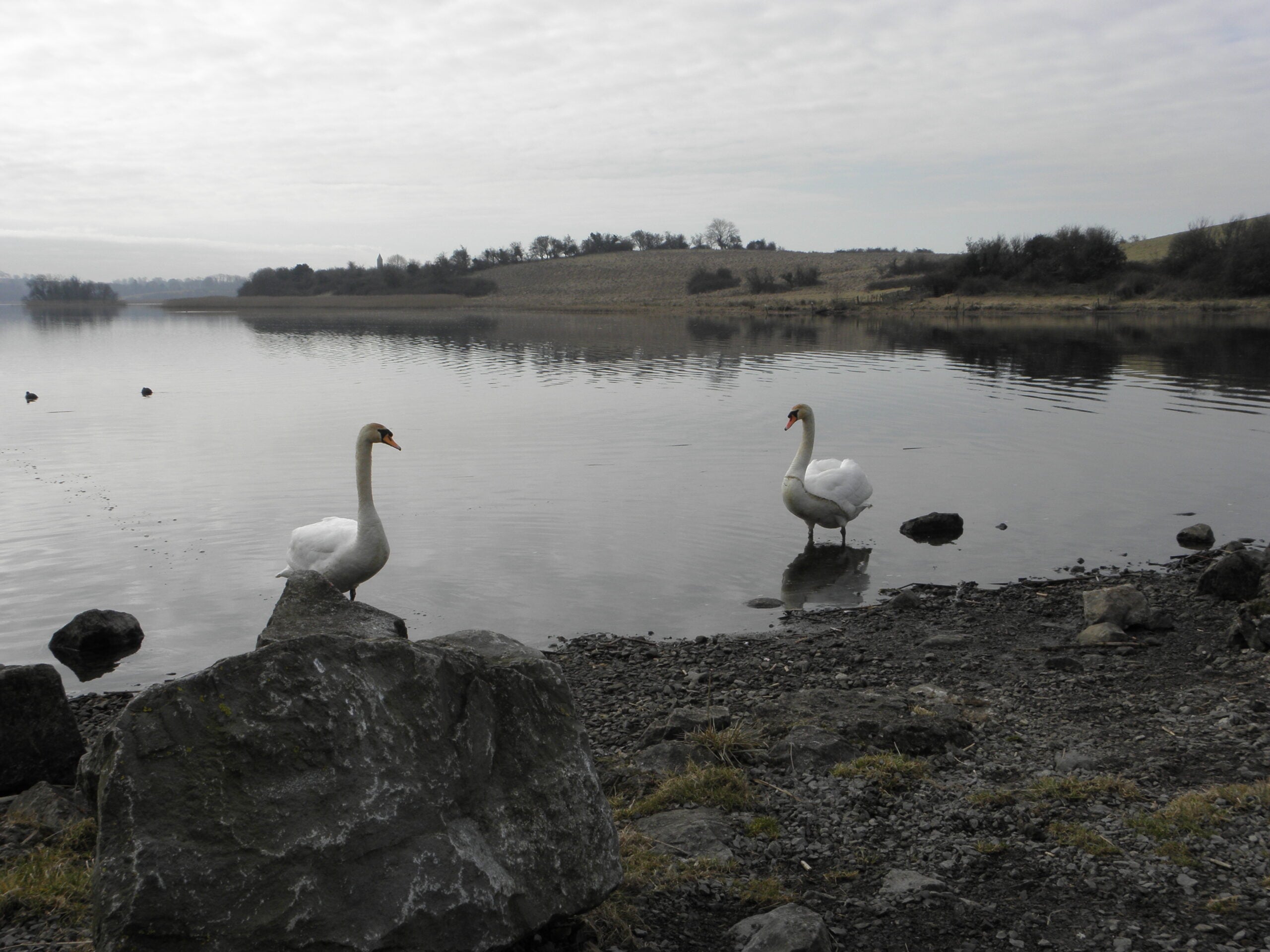
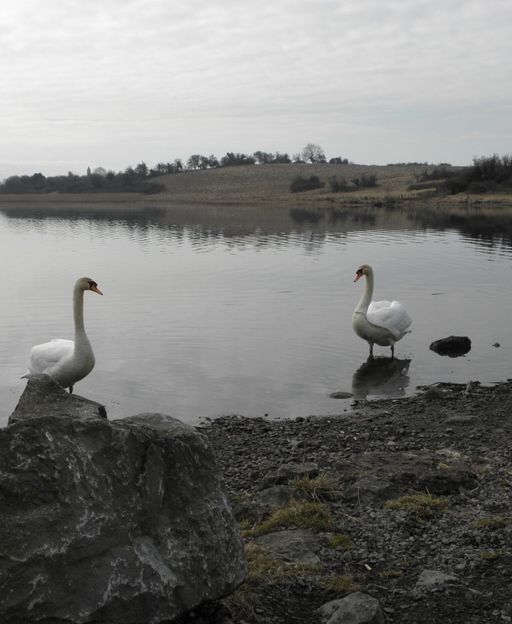
Aoife led the four children to Lough Derravaragh in County Westmeath. She told them they were going for a swim. When they reached the lake’s edge, she raised a druidic wand and spoke a curse in a language older than Ireland itself.
The four children transformed instantly into white swans. Their bodies changed, but their minds did not. They kept their voices, their memories, their capacity for love and grief. They could speak and sing — but they could never take human form again until the time Aoife decreed had passed.
The terms of the curse were brutal:
- 300 years on Lough Derravaragh in County Westmeath
- 300 years on the Straits of Moyle between Ireland and Scotland
- 300 years on the waters of Erris and Inis Gluaire in County Mayo
Nine hundred years in total. Only when they heard the sound of a Christian bell would the spell finally break.
When Lir learned what Aoife had done, he was destroyed by grief. He rode to the lakeside and found his children — four white swans — gliding on the water and calling his name. Bodb Dearg punished Aoife by transforming her into a demon of the air, condemned to drift through storms for eternity.
Three Exiles — Nine Centuries of Sorrow
First exile: Lough Derravaragh, County Westmeath (300 years)
The first 300 years proved the most bearable. Lough Derravaragh lay close to their father’s home. Lir could visit them daily. He aged and died while they remained, unchanged, on the water — and that grief was its own kind of suffering. But the children had each other, and they had the lake’s beauty around them. Their singing became famous across Ireland. People travelled for days just to sit on the lakeshore and hear four swans produce music more beautiful than any human voice.
Second exile: The Straits of Moyle (300 years)
When the first 300 years ended, the children flew north-east to the Straits of Moyle — the rough stretch of water between the north Antrim coast of Ireland and the coast of Scotland. This exile almost broke them.
The Straits of Moyle are notoriously stormy. In winter, the waves are enormous and the water near-freezing. In the hardest storms, the four swans were separated across miles of churning sea. Fionnuala, the eldest, became the family’s anchor. When the others returned after a storm, she would spread her wings and shelter her brothers beneath them — Aodh to her right, Conn to her left, Fiachra tucked before her breast. She held them through centuries of cold.
Third exile: Inis Gluaire, County Mayo (300 years)
For the final 300 years, the children flew west to Inis Gluaire (now called Inishglora), a small island two kilometres off the Erris Peninsula in County Mayo. The wild Atlantic waters around this coast were relentless. But Ireland had changed during their exile. Christianity had arrived. A monk named Caomhóg had built a chapel on the island and lived a life of prayer and contemplation beside the sea.
One morning, Caomhóg heard singing unlike anything he had ever heard. He found four white swans at the water’s edge. They told him their story. He wept. He built them a small shelter and cared for them through the final years of their exile.
☘️ Enjoying this? 64,000+ Ireland lovers get stories like this every week. Subscribe free →
The End of 900 Years
Word reached a princess of Connacht that four magical swans lived on Inis Gluaire. She demanded that Caomhóg hand them over as a gift for her husband. Caomhóg refused. Her men came to take them by force.
At the moment the men seized the swans, the enchantment broke.
The four birds transformed back into human beings — but they had not aged during their long exile. The 900 years they had spent as swans now fell upon them all at once. They became ancient people in seconds: four very old, very fragile people on the shore of an island in County Mayo.
Caomhóg baptised them before the end came. They died peacefully and together. He buried them as Fionnuala had always held them: Aodh at her right, Conn at her left, Fiachra before her face — the formation she had kept through every storm on the Straits of Moyle. They were finally home.
Where to Experience the Children of Lir in Ireland Today
The Children of Lir is more than a myth in Ireland — it is part of the landscape. You can visit the places where the story took place, and you can stand before the sculpture that has become the legend’s most powerful image.
Garden of Remembrance, Dublin
The most famous monument to the Children of Lir stands at the Garden of Remembrance on Parnell Square in Dublin. The long reflecting pool at the garden’s centre is shaped like a crucifix. At its far end, a striking bronze sculpture shows the four children mid-transformation — swans becoming human once more. Sculptor Oisín Kelly created the piece, and the garden opened in 1966 to mark the 50th anniversary of the Easter Rising of 1916. The choice of the Children of Lir was deliberate: their centuries of exile and eventual liberation mirrored Ireland’s own long struggle for independence. Admission is free.
Lough Derravaragh, County Westmeath
Lough Derravaragh, where the children spent their first 300 years, lies about an hour’s drive west of Dublin in County Westmeath. The lake is long and narrow, fringed by quiet farmland and gentle hills. It is peaceful and largely off the tourist trail — which makes it feel exactly as it should. The nearby town of Mullingar makes a comfortable base. Add it to your Irish travel itinerary if you are heading west from Dublin.
The Antrim Coast and Straits of Moyle
The Straits of Moyle — the channel between the north Antrim coast and Scotland — can be seen clearly from Fair Head and Torr Head on the northern tip of Ireland. On a rough day, you immediately understand why the children’s second exile was their hardest. The town of Ballycastle is the nearest settlement. The Causeway Coast, just to the west, makes for a remarkable day’s driving.
Inis Gluaire (Inishglora), County Mayo
Inis Gluaire is a small, uninhabited island off the Mullet Peninsula in northwest Mayo. Summer boat trips from Belmullet provide access. The ruins of an early Christian monastery survive on the island, believed by local tradition to be connected to the legend of Caomhóg. Few visitors ever make it here. The Atlantic silence, the wheeling birds, and the faint outlines of ancient stonework make it one of the most otherworldly places in Ireland. Consider pairing it with the wider County Mayo area, where the Wild Atlantic Way offers some of Ireland’s finest coastal scenery.
Why the Children of Lir Speaks to the Irish Diaspora
For the estimated 70 million people worldwide with Irish heritage, the Children of Lir is not simply a folktale. It is a story about exile — about being wrenched from your home and the people you love, about keeping your identity intact through centuries of displacement, and about the longing for Ireland that never quite leaves you.
Irish emigrant families carried this legend across the Atlantic with them. The image of four white swans singing above the cold grey Straits of Moyle became a symbol of Ireland itself — beautiful, mournful, enduring. It appears on ancient jewellery, on watercolour paintings in Irish pubs from Boston to Melbourne, and in the naming of Irish children’s choirs and community groups the world over.
If your family left Ireland during the Famine years or in the waves of emigration that followed, the Children of Lir speaks directly to something your ancestors would have understood: the weight of what was left behind, and the extraordinary grace required to survive it.
The legend is also a reminder that Ireland has always been a land of storytellers. The Children of Lir survived 2,000 years of conquest, famine, and diaspora because people kept telling it — in cottages, in schools, on ships crossing the Atlantic. Now it survives in gardens and sculptures and in the mouths of people who have never set foot on Irish soil but feel, somehow, that the story belongs to them.
It does. That is precisely the point.
Frequently Asked Questions About the Children of Lir
What is the legend of the Children of Lir?
The Children of Lir is an ancient Irish myth in which four royal children — Fionnuala, Aodh, Fiachra, and Conn — are transformed into swans by their jealous stepmother Aoife. They spend 900 years on Ireland’s waters before the spell is broken by a Christian monk. The myth forms part of the Three Sorrows of Irish Storytelling and dates back more than 2,000 years.
Where did the Children of Lir spend their 900-year exile?
The children spent 300 years on each of three bodies of water: Lough Derravaragh in County Westmeath, the Straits of Moyle between the north Antrim coast and Scotland, and Inis Gluaire (Inishglora) off the Erris Peninsula in County Mayo. Their second exile on the Straits of Moyle was the hardest, battered by Atlantic storms and winter ice.
Is the Children of Lir an ancient myth or a medieval story?
The Children of Lir belongs to the ancient Irish mythological cycle of the Tuatha Dé Danann and is considered one of Ireland’s oldest stories, with roots stretching back more than 2,000 years. The earliest surviving manuscripts date to around the 15th century, but the oral tradition is far older.
Where is the Children of Lir sculpture in Dublin?
The Children of Lir sculpture is the centrepiece of the Garden of Remembrance on Parnell Square in Dublin. Created by sculptor Oisín Kelly, it depicts the four children at the moment their enchantment breaks — transforming from swans back to human form. The garden opened in 1966 to commemorate the 50th anniversary of the Easter Rising. Entry is free.
☘️ Join 64,000+ Ireland Lovers
Every weekday morning, get Ireland’s hidden gems, local secrets, and travel inspiration — the kind you won’t find in any guidebook.
Subscribe free — enter your email:
Already subscribed?
Thinking about it for retirement?
If you’ve started thinking seriously about retiring there, our complete our full Retire in Ireland guide covers the visa, healthcare, cost-of-living, and the regions worth shortlisting.
📲 Know someone who’d love this? Share on WhatsApp →
Love more? Join 43,000 Scotland lovers → · Join 29,000 Italy lovers → · Join 7,000 France lovers →
Free forever · Unsubscribe anytime
Tours & experiences you might love


Powered by Viator. Some links are affiliate links — we may earn a small commission at no extra cost to you.
Secure Your Dream Irish Experience Before It’s Gone!
Planning a trip to Ireland? Don’t let sold-out tours or packed attractions spoil your journey. Iconic experiences like visiting the Cliffs of Moher, exploring the Rock of Cashel, or enjoying a guided walk through Ireland’s ancient past often sell out quickly—especially during peak travel seasons.

Booking in advance guarantees your place and ensures you can fully immerse yourself in the rich culture and breathtaking scenery without stress or disappointment. You’ll also free up time to explore Ireland’s hidden gems and savour those authentic moments that make your trip truly special.
Make the most of your journey—start planning today and secure those must-do experiences before they’re gone!