

If Ireland’s 32 counties could talk, you’d never get a word in. Every one of them has something to say — a proud history, a fierce local identity, a song, a rivalry, a claim to fame. But which one would shout the loudest?
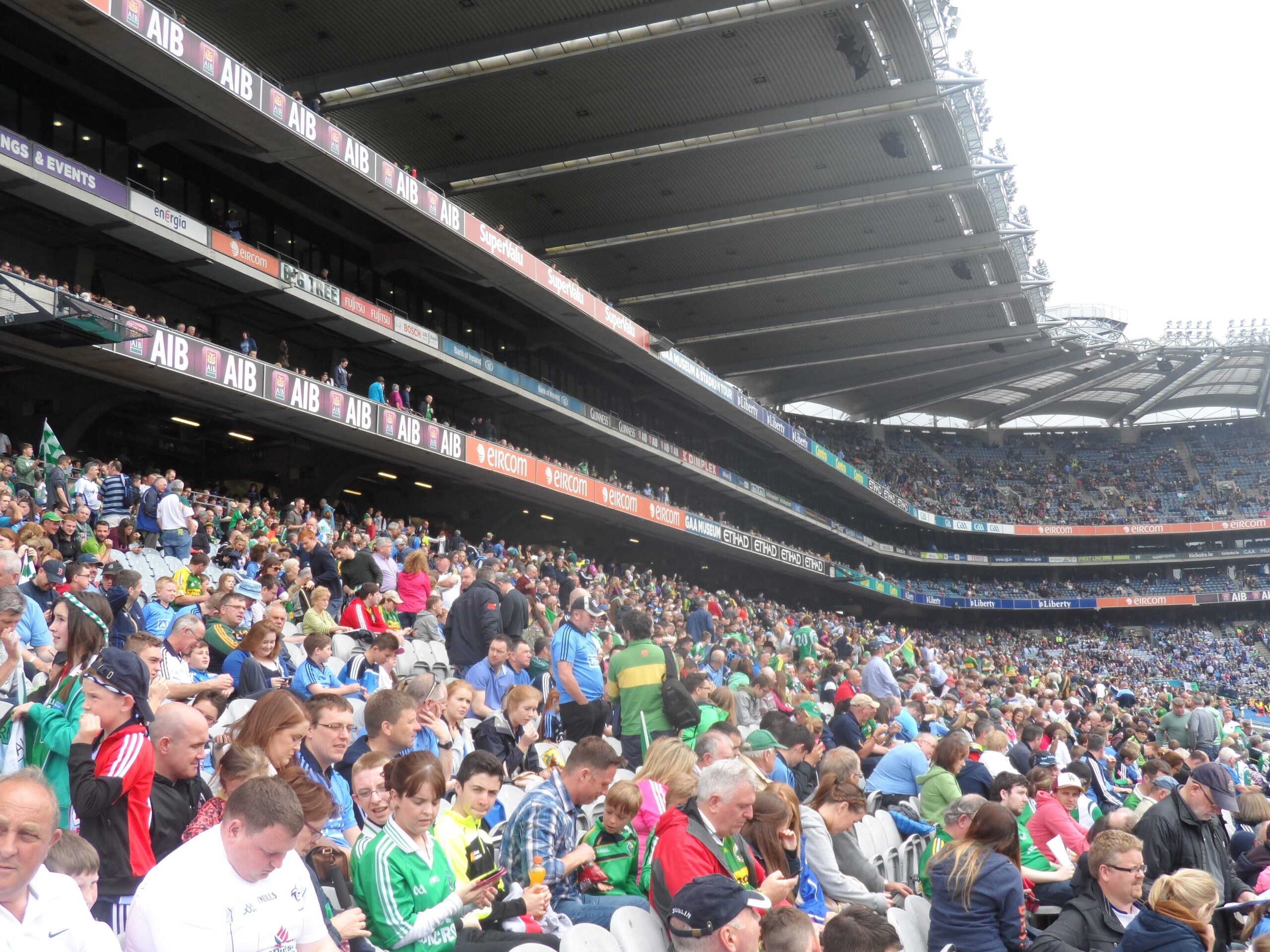
It is a fun question, and not as daft as it sounds. Counties in Ireland are more than administrative lines on a map. They carry distinct accents, sporting loyalties, cultural traditions, and a very particular sense of pride. Here is a look at the top contenders — and what makes each one so hard to ignore.
Cork — The People’s Republic
If any county was going to seize the microphone first, it is Cork. Corkonians have a reputation for civic pride that borders on municipal patriotism. The saying goes that Cork people think Cork is the real capital of Ireland — and they are not joking.
Cork city has a population of over 210,000 in the greater metropolitan area. The county itself stretches across 7,457 square kilometres, making it the largest county in Ireland by area. It has Cobh, where the Titanic made its last port call in April 1912. It has Blarney Castle, which draws close to 400,000 visitors a year to kiss the famous stone. It has Kinsale, one of Ireland’s finest historic towns and a destination known for its food scene and harbourside walks.
Cork people’s pride in all of this is vocal and consistent. Ask anyone from Cork where they are from, and they will tell you — usually twice.
The county also has a strong industrial and commercial base. Cork Harbour is one of the largest natural harbours in the world, and the city has a thriving tech and pharmaceutical sector. Cork is not just loud — it has the substance to back it up.
☘️ Want to explore all 32 counties of Ireland? Subscribe to our free weekly newsletter for honest travel guides and local tips. Subscribe here →
🇮🇪 Plan Your Perfect Ireland Trip
Join 64,000 Ireland lovers. Get weekly travel inspiration, hidden gems and local secrets — free every weekday.
Dublin — The Capital Makes Its Case
Dublin does not need to be loud. It already gets all the attention. But that does not stop it from making noise. With a population of over 1.4 million in the greater Dublin area, the capital dominates Irish political life, business, sport, media, and culture in a way no other county can match.
Dublin’s GPO on O’Connell Street was the centre of the 1916 Easter Rising. The county gave the world Bram Stoker, Oscar Wilde, and James Joyce. Dublin Castle, Trinity College Library, and the Guinness Storehouse are among the most visited sites in the country, drawing millions of tourists each year.
If Cork shouts, Dublin simply speaks and expects everyone to listen. And it usually works. The capital sets the national conversation — on politics, culture, sport, and business — and the other 31 counties respond to it, argue with it, or quietly ignore it depending on the day.
That said, many Irish people outside Dublin will tell you the capital could stand to listen a little more. Which is a very Irish way of saying it is too loud.
Galway — The Creative Voice
Galway punches well above its size. The city’s population is around 83,000, which makes it modest by comparison — but Galway’s cultural output is enormous. It was designated a European Capital of Culture in 2020, and the arts scene, traditional music sessions, and packed annual festival calendar give it a voice that carries far beyond the west coast.
The Galway International Arts Festival draws over 200,000 visitors each July. Galway Races week is one of Ireland’s most famous events, pulling in crowds from across the country and beyond. The Aran Islands sit just off the coast, and Connemara stretches west and north through some of the most dramatic landscape in the country.
Galway people are also famously sociable. The pubs on Shop Street and Quay Street rarely go quiet, traditional music sessions start up without warning, and conversations with strangers are not unusual. The city has a particular energy that is hard to define but easy to feel when you are in it.
Kerry — Confident and Unapologetic
Kerry does not need to shout. It has the landscape and the GAA record to do the talking. The Kingdom, as it is known across Ireland, has won the All-Ireland Senior Football Championship 38 times — more than any other county in the history of the competition. Kerry people are well aware of this, and they will mention it.
Beyond sport, Kerry offers the Ring of Kerry, the Skellig Islands (a UNESCO World Heritage Site), Killarney National Park covering over 26,000 acres, and the Dingle Peninsula with its Irish-speaking communities. Tourism is a major part of the county’s economy, and the locals are experienced hosts who know exactly what they have to offer visitors.
There is a quiet confidence to Kerry — the kind that does not need to raise its voice because it knows it will be heard anyway. Ask a Kerryman or Kerrywoman about their home county and settle in. You will be there a while.
☘️ Planning a trip around Ireland’s counties? Our free weekly newsletter covers everything from major attractions to the roads most people miss. Subscribe free here →
The Counties That Deserve More Attention
Some of Ireland’s 32 counties get overlooked in the noise — but they have plenty to say for themselves.
Leitrim is Ireland’s least populous county, with around 35,000 people, but it has a thriving arts community and some of the most affordable property in the country. It is a county that has quietly built a reputation for independent thinking and creative industries.
Roscommon sits in the heart of Ireland, often passed through rather than stopped in. But it has Roscommon Castle, the Strokestown Park Famine Museum — one of the most important historical sites in the country — and a farming tradition that dates back thousands of years.
Monaghan produced Patrick Kavanagh, one of Ireland’s greatest poets. Cavan has some of the finest lake fishing in Europe, with over 365 lakes across the county. Tipperary gave us the song, and also the Rock of Cashel — one of Ireland’s most remarkable hilltop archaeological sites, rising dramatically from the Golden Vale plain.
Waterford is Ireland’s oldest city, founded by the Vikings in 914 AD, yet it consistently ranks behind Cork, Galway, and Kilkenny in visitor numbers. Wexford is where the 1798 Rebellion began, with a history that shaped modern Ireland, yet it rarely makes the top five in any tourist guide.
These are not the loudest counties. But they are not silent either, and the travellers who spend time in them tend to come away with a fuller picture of what Ireland actually is.
What Makes a County “Loud”?
The idea of a county’s voice comes down to a few practical factors:
- Population — larger counties naturally have more people to make noise, and more media coverage as a result.
- Cultural identity — some counties have a stronger, more distinctive sense of who they are and what sets them apart.
- Sporting achievement — GAA pride runs deep across Ireland, and counties with strong football or hurling traditions wear their colours loudly and often.
- Tourism profile — counties with major attractions attract more visitors, more features, and more online discussion.
- Local character — accent, humour, and personality vary considerably across Ireland, and some counties are simply more expressive than others in how they present themselves.
By these measures, Cork and Dublin are the clear leaders in volume. Galway and Kerry are not far behind. But every county has a story, and every county has people who will tell it given half a chance.
How to Plan a County-by-County Trip Around Ireland
If you want to understand Ireland properly, you need to spend time outside the capital. Dublin is worth two or three days, but the real character of the country reveals itself when you head west, south, or north.
The Wild Atlantic Way covers 2,500 kilometres of coastline from Donegal to Cork, passing through some of the most striking coastal scenery in Europe. The Ancient East route takes in Wicklow, Wexford, Waterford, and Kilkenny, with historic sites at nearly every stop. The Ireland’s Hidden Heartlands trail runs through the midland lakes and river systems — quieter, less visited, and genuinely worth the detour.
For practical county-by-county planning:
- County Clare: best base for the Cliffs of Moher and the Burren limestone landscape
- County Kilkenny: a medieval city with excellent restaurants and a strong craft brewing scene
- County Donegal: dramatic coastline, genuinely remote, and worth the long drive north
- County Wicklow: an easy day trip from Dublin, with Glendalough at its heart
- County Waterford: Ireland’s oldest city and some fine coastal walking routes
- County Sligo: W.B. Yeats country, with Benbulben mountain and some of Ireland’s best surf beaches
Each county rewards time spent in it. The ones with the biggest reputations often live up to them. The ones that fly under the radar often surprise you.
The Verdict
If the map of Ireland could talk, Cork would speak first, Dublin would speak loudest, and Galway would still be going when everyone else had sat down.
But the honest answer is that all 32 counties have something worth saying. Ireland is a small island — roughly 84,000 square kilometres — with a remarkable amount packed into it: deep history, varied landscape, traditional music, fierce sporting rivalries, and people with very strong opinions about where they come from.
The best way to find out which county is truly the loudest is to visit them and ask the locals. You will not be short of answers. And you will probably hear several different answers in the same pub.
That, in the end, is what makes Ireland what it is.
☘️ From Cork to Donegal, our free weekly newsletter covers the full length and breadth of Ireland — real travel, honest guides, no filler. Subscribe to Love Ireland →
☘️ Join 64,000+ Ireland Lovers
Every weekday morning, get Ireland’s hidden gems, local secrets, and travel inspiration — the kind you won’t find in any guidebook.
Subscribe free — enter your email:
📲 Know someone who’d love this? Share on WhatsApp →
Love more? Join 43,000 Scotland lovers → · Join 29,000 Italy lovers → · Join 7,000 France lovers →
Free forever · Unsubscribe anytime
Tours & experiences you might love


Powered by Viator. Some links are affiliate links — we may earn a small commission at no extra cost to you.
Secure Your Dream Irish Experience Before It’s Gone!
Planning a trip to Ireland? Don’t let sold-out tours or packed attractions spoil your journey. Iconic experiences like visiting the Cliffs of Moher, exploring the Rock of Cashel, or enjoying a guided walk through Ireland’s ancient past often sell out quickly—especially during peak travel seasons.

Booking in advance guarantees your place and ensures you can fully immerse yourself in the rich culture and breathtaking scenery without stress or disappointment. You’ll also free up time to explore Ireland’s hidden gems and savour those authentic moments that make your trip truly special.
Make the most of your journey—start planning today and secure those must-do experiences before they’re gone!