

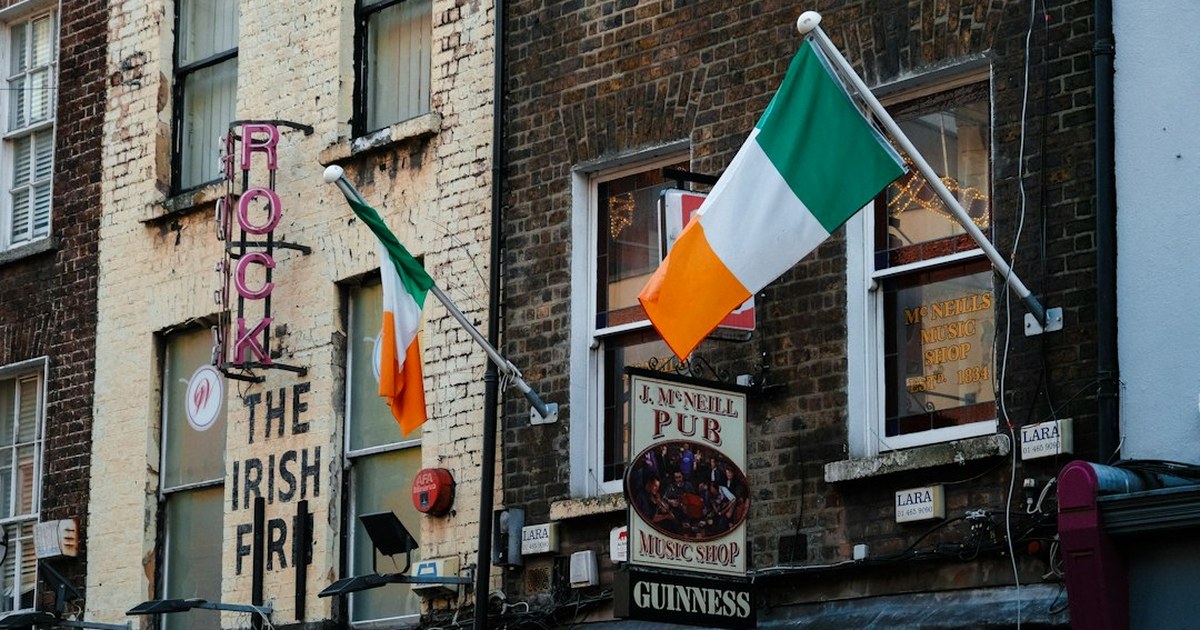
Walk into almost any Irish pub today and you will find women at the counter, pints in hand, as naturally as anyone else in the room. That ease is relatively recent, and the road to it tells you a great deal about how Irish rural and small-town life actually worked for much of the last century. The traditional Irish pub, particularly outside Dublin, operated for decades with an unwritten but firmly understood geography: the bar counter itself was male territory. Women who drank in pubs — and many did — were typically expected to use a separate lounge or snug, a partitioned space with its own hatch or service window that kept them physically removed from the main bar. The snug was not always an unpleasant arrangement; in some pubs it offered genuine privacy and comfort, and women used it freely. But it was also a boundary, and crossing it into the main bar required either a brass neck or an accepted reason, such as collecting a message or accompanying a husband on a short errand.
The legal backdrop matters here. Ireland’s licensing laws through the early and mid-twentieth century gave publicans considerable discretion to refuse service to anyone, and social convention did the rest of the work. In rural counties particularly, where a publican might know every customer by name and where reputation moved faster than news, a woman who positioned herself at the main counter without cause would find service slow in coming and conversation pointed elsewhere. This was not universal — larger towns and city pubs operated with more latitude — but in villages with a single pub doubling as a grocery or hardware shop, the norms were observed closely. Some publicans ran what were called mixed grocers, where women came daily to buy provisions through a counter that seamlessly adjoined the bar. The arrangement required careful choreography: transactions in flour and rashers on one side, pints on the other, with a clear understanding of who belonged where.
Change came gradually and from several directions at once. The expansion of lounge culture from the 1960s onward was commercially driven as much as anything else. Publicans who added or extended lounge areas found they could attract couples, family groups after a funeral or a match, and women who would previously not have entered at all. The lounge brought in trade that the bare main bar had excluded, and that economic logic was persuasive. Television accelerated the shift; once a set appeared in a pub, people arranged themselves around it regardless of the old spatial conventions. By the late 1970s and into the 1980s, women sitting at bar counters in provincial towns was becoming unremarkable in practice even where it remained mildly remarked upon in conversation. Rural pubs changed more slowly than urban ones, but they changed. The snug, in many houses, quietly became a storeroom or simply disappeared in a renovation. A few were preserved with some pride, recognised as atmospheric survivors of an earlier arrangement.
What actually shifted in rural pub life as a result was something beyond furniture and service. The pub had functioned for generations as a place where farming business was discussed, land values talked over, livestock deals concluded on a handshake. That conversation had been effectively male by default. As women moved into the main space, the social function of the pub broadened rather than transformed; the agricultural talk did not vanish, but it now shared the counter with a wider range of voices and purposes. Family occasions — the post-funeral gathering, the wedding celebration that spills back from the hotel — became more naturally centred on the pub rather than alternatives, because the pub itself had become genuinely hospitable to everyone present. The publican’s role shifted too; a house that served the whole community, rather than half of it with a side entrance, became a more central institution in places where other meeting points were thinning out.
Why It Matters Today
If you visit an Irish pub today, especially in a smaller town or village, you are stepping into a space whose current shape is the result of this long, quiet negotiation. The easy sociability you find at the counter — the way conversation crosses between strangers without much ceremony — is partly a product of the pub having genuinely opened up within living memory. Older pubs that retain a snug have often signposted it with some affection, and it is worth asking a publican about the history of the room; you will frequently get a real story in return, and that kind of exchange is exactly what a good Irish pub still does best.
There are few better ways to understand a place than to sit with a drink and pay attention to how a room is used, who is in it, and what the architecture quietly remembers. Irish pubs have more layers than their surfaces suggest, and the story of who was welcome where, and when that changed, is one of the more telling threads running through the social fabric of the country.
☘️ You Might Also Love
64,000 Ireland lovers can’t be wrong.
Every week, our free newsletter delivers hidden gems, seasonal guides, local stories, and practical travel tips — straight to your inbox. Join the community that loves Ireland as much as you do.
FREE GUIDE: 25 Hidden Gems of Ireland That Most Tourists Never Find (PDF)
Tours & experiences you might love


Powered by Viator. Some links are affiliate links — we may earn a small commission at no extra cost to you.
Secure Your Dream Irish Experience Before It’s Gone!
Planning a trip to Ireland? Don’t let sold-out tours or packed attractions spoil your journey. Iconic experiences like visiting the Cliffs of Moher, exploring the Rock of Cashel, or enjoying a guided walk through Ireland’s ancient past often sell out quickly—especially during peak travel seasons.

Booking in advance guarantees your place and ensures you can fully immerse yourself in the rich culture and breathtaking scenery without stress or disappointment. You’ll also free up time to explore Ireland’s hidden gems and savour those authentic moments that make your trip truly special.
Make the most of your journey—start planning today and secure those must-do experiences before they’re gone!