

What’s the best Irish dish of all time? ☘️
Vote in our Best Irish Food poll — recipes nominated by the community.
What’s your Irish county’s signature dish? ☘️
Different counties claim different dishes — Your County’s Signature Food tells you which one your county is known for, with a short story behind it.
Gur Cake Recipe: Dublin’s Beloved Thrifty Spiced Fruit Slice
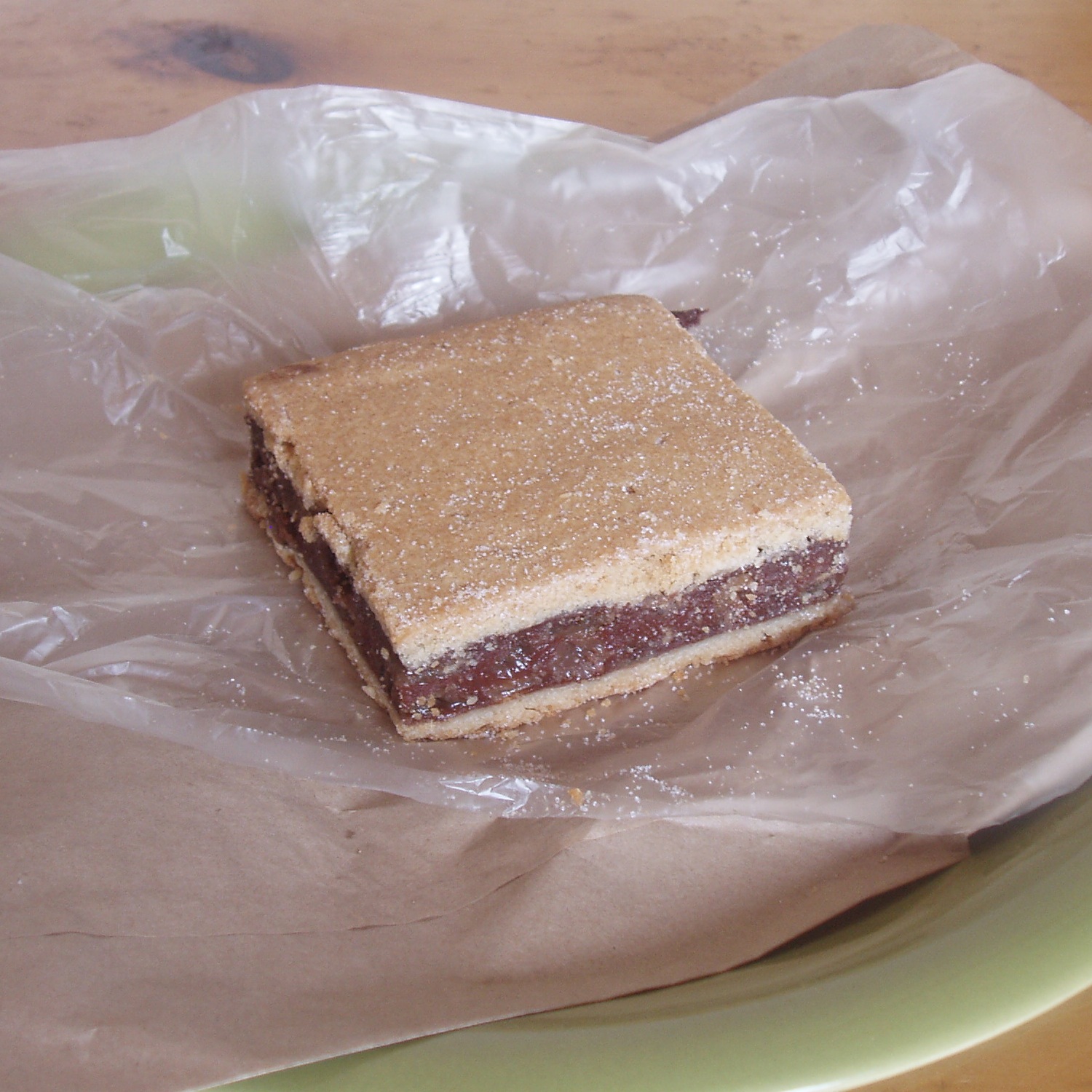
If you wander through the older neighbourhoods of Dublin and strike up a conversation with anyone who grew up there in the mid-twentieth century, mention Gur Cake and watch their face light up. This humble, deeply satisfying slice — a spiced fruit filling sandwiched between two layers of shortcrust pastry — was the treat of the Dublin streets, sold cheaply from bakeries and corner shops to anyone with a penny or two to spare. It was, in the most affectionate sense, a cake of the people.
The name itself tells you everything about its origins. Dublin schoolchildren who skipped class were known as “gurriers,” and playing truant was called going “on the gur.” Gur Cake — a contraction of “gurrier cake” — got its name because those truanting youngsters were exactly the customers buying it cheap from bakeries while they were meant to be in school. Bakers made it from leftover stale bread and cake scraps, soaked down and spiced up, then encased in pastry to stretch every last crumb as far as it would go. Nothing was wasted. In post-war Dublin, where money was tight and food was precious, this was thrift elevated to something genuinely delicious.
Today Gur Cake enjoys a quiet revival, celebrated as a piece of edible Dublin heritage. It is rustic and unpretentious, with a dense, warmly spiced filling that tastes of mixed fruit and nostalgia in equal measure. Making it at home connects you directly to generations of Dublin bakers who fed a city on ingenuity and goodwill. This traditional recipe keeps faith with those roots. It sits alongside other classic Irish store-cupboard bakes, like the overnight tea-soaked Tea Brack, in turning humble ingredients and a little patience into something far better than the sum of its parts.
Ingredients
- For the pastry:
- 350g (12oz) plain flour, plus extra for dusting
- Pinch of salt
- 175g (6oz) cold butter or lard, cubed (or a mixture of both)
- 2–3 tablespoons cold water, to bind
- For the filling:
- 200g (7oz) stale bread, crusts removed (white or brown, or a mixture)
- 100g (3½oz) stale cake or biscuit crumbs (sponge, plain biscuits, or leftover pastry)
- 150ml (5fl oz) cold water or cold tea
- 100g (3½oz) mixed dried fruit (raisins, currants, mixed peel)
- 75g (2¾oz) caster sugar
- 1 teaspoon mixed spice
- ½ teaspoon ground cinnamon
- 1 egg, beaten (for egg wash)
- A little caster sugar for dusting the top
Method
- Begin with the pastry. Sift the flour and salt into a large bowl. Add the cold cubed butter or lard and rub in lightly with your fingertips until the mixture resembles fine breadcrumbs. Add the cold water one tablespoon at a time, stirring with a knife until the dough just comes together. Wrap in clingfilm and rest in the fridge for 30 minutes.
- While the pastry chills, make the filling. Break the stale bread into rough chunks and place in a bowl. Pour over the cold water or cold tea and leave to soak for 10–15 minutes until thoroughly soft.
- Once soaked, squeeze out as much excess liquid as you can with your hands, then place the bread into a fresh bowl. Add the stale cake or biscuit crumbs, mixed dried fruit, caster sugar, mixed spice, and cinnamon. Mix everything together firmly until you have a cohesive, thick filling. Taste and adjust the spice if needed.
- Preheat your oven to 190°C / 170°C fan / 375°F / Gas Mark 5. Grease a shallow baking tin, approximately 28 x 18cm (11 x 7 inches), or a similar-sized tin.
- Divide the chilled pastry into two equal portions. On a lightly floured surface, roll the first portion out to fit the base of your tin. Lay it in carefully, pressing it gently into the corners.
- Spread the fruit filling evenly over the pastry base, pressing it down firmly with the back of a spoon to create an even layer with no gaps.
- Roll out the second portion of pastry and lay it over the filling, pressing the edges down to seal. Trim any overhang neatly. Use a fork to press the edges together firmly around the perimeter.
- Brush the top evenly with the beaten egg wash, then use a sharp knife to score the pastry lightly into portions — this makes slicing much easier once baked. Scatter a little caster sugar over the surface.
- Bake in the preheated oven for 30–35 minutes until the pastry is golden and firm to the touch. Allow to cool completely in the tin before cutting into slices or rectangles to serve.
Tips
- Cold tea adds a lovely depth of colour and a gentle tannin note to the filling — it is the traditional Dublin choice and well worth using if you have it.
- The filling should be thick and almost stiff before it goes into the pastry; if it seems too wet, add a few extra biscuit crumbs to firm it up.
- Gur Cake actually improves on the second day once the filling has settled and the pastry has softened slightly — store it covered at room temperature.
- Lard in the pastry gives a particularly short, crumbly texture that is very traditional; all-butter works beautifully too if you prefer.
- Don’t be tempted to make the filling layer too thin — a generous, hearty depth is the hallmark of a proper Gur Cake.
There is something quietly moving about baking Gur Cake in your own kitchen — the smell of warm spice and golden pastry carrying with it the spirit of a city that made something wonderful from almost nothing at all. Whether you’re Irish, a visitor to Dublin who fell in love with the place, or simply someone who appreciates honest, soul-warming baking, this is a recipe that earns its place on any table. Cut it into generous slices, share it with people you like, and let it taste exactly like what it is: a small, brilliant piece of Dublin’s story. For more traditional Irish bakes, see our 10 most beloved traditional Irish dishes.
☘️ Join 64,000+ Ireland Lovers
Every Friday, get Ireland’s hidden gems, local secrets, and travel inspiration — the kind you won’t find in any guidebook.
Already subscribed? Download your free Ireland guide (PDF)
Free forever · One email per week · Unsubscribe anytime
Tours & experiences you might love


Powered by Viator. Some links are affiliate links — we may earn a small commission at no extra cost to you.
Secure Your Dream Irish Experience Before It’s Gone!
Planning a trip to Ireland? Don’t let sold-out tours or packed attractions spoil your journey. Iconic experiences like visiting the Cliffs of Moher, exploring the Rock of Cashel, or enjoying a guided walk through Ireland’s ancient past often sell out quickly—especially during peak travel seasons.

Booking in advance guarantees your place and ensures you can fully immerse yourself in the rich culture and breathtaking scenery without stress or disappointment. You’ll also free up time to explore Ireland’s hidden gems and savour those authentic moments that make your trip truly special.
Make the most of your journey—start planning today and secure those must-do experiences before they’re gone!