

What’s the best Irish dish of all time? ☘️
Vote in our Best Irish Food poll — recipes nominated by the community.
What’s your Irish county’s signature dish? ☘️
Different counties claim different dishes — Your County’s Signature Food tells you which one your county is known for, with a short story behind it.
There was a time in rural Ireland when a rabbit caught on a Saturday evening meant a proper Sunday dinner the following afternoon. For generations of smallholders, cottiers, and country families, wild rabbit was not a delicacy but a staple — affordable, plentiful, and wonderfully suited to the low, patient heat of a pot hung over a turf fire. This is a dish born not from restaurant kitchens but from necessity, ingenuity, and the kind of cooking that makes the most of whatever the land provides. If you’d rather start with a more familiar cut, our traditional Irish lamb stew recipe follows much the same slow-braised method.
Across the western counties in particular — Galway, Mayo, Roscommon — rabbit stew was a familiar sight on the Sunday table through much of the nineteenth and twentieth centuries. The combination of wild rabbit with onion, thyme, and root vegetables was never written down in any grand cookbook; it was passed from mother to daughter by smell, instinct, and the look of a bubbling pot. The thyme grew wild in the hedgerows, the onions came from the garden, and the rabbit came from the field. Nothing was wasted, and the result, slow-braised until the meat fell from the bone, was deeply satisfying in the way that only honest country food can be. It sits alongside other one-pot staples of the Irish kitchen, such as Dublin coddle, that made the most of whatever was to hand.
Today, farmed rabbit is widely available from good butchers, and wild rabbit can often be sourced from game dealers or farmers’ markets, particularly in autumn and winter. Either works beautifully here, though wild rabbit carries a slightly deeper, earthier flavour that is very much worth seeking out. This recipe stays true to its roots — simple, unhurried, and full of the kind of warmth that Ireland does so well.
Ingredients
- 1 whole rabbit, jointed into 6–8 pieces (approximately 1.2–1.5 kg / 2 lb 10 oz – 3 lb 5 oz)
- 2 tablespoons plain flour, seasoned with salt and black pepper
- 2 tablespoons sunflower oil or lard
- 2 medium onions, roughly chopped
- 3 medium carrots, peeled and cut into chunky rounds
- 3 stalks of celery, sliced
- 3 medium floury potatoes (such as Kerr’s Pink or Rooster), peeled and quartered
- 3 cloves of garlic, sliced
- 6–8 sprigs of fresh thyme (or 1 teaspoon dried thyme)
- 2 bay leaves
- 700 ml / 1¼ pints good chicken or vegetable stock
- 150 ml / 5 fl oz dry cider or dry white wine (optional, but recommended)
- 1 tablespoon tomato purée
- Salt and freshly ground black pepper to taste
- Small handful of flat-leaf parsley, roughly chopped, to finish
Method
☘️ Join 64,000+ Ireland Lovers
Every weekday morning, get Ireland’s hidden gems, local secrets, and travel inspiration — the kind you won’t find in any guidebook.
Subscribe free — enter your email:
Already subscribed? Download your free Ireland guide (PDF)
📲 Know someone who’d love this? Share on WhatsApp →
Love more? Join 43,000 Scotland lovers → · Join 29,000 Italy lovers → · Join 7,000 France lovers →
Free forever · Unsubscribe anytime
- Preheat your oven to 160°C / 140°C fan / Gas Mark 3 (325°F). Pat the rabbit pieces dry with kitchen paper and dust them thoroughly in the seasoned flour, shaking off any excess.
- Heat the oil or lard in a large, heavy-based casserole dish over a medium-high heat. Working in batches, brown the rabbit pieces well on all sides — about 3–4 minutes per batch. Don’t rush this step; a good, golden colour builds flavour that carries through the whole dish. Remove the browned pieces and set aside.
- Reduce the heat to medium and add the onions to the same pot. Cook gently for 6–8 minutes, stirring occasionally, until softened and lightly golden. Add the garlic and cook for a further minute.
- Pour in the cider or wine if using, and let it bubble for 2 minutes, scraping up any caramelised bits from the bottom of the pot. Stir in the tomato purée.
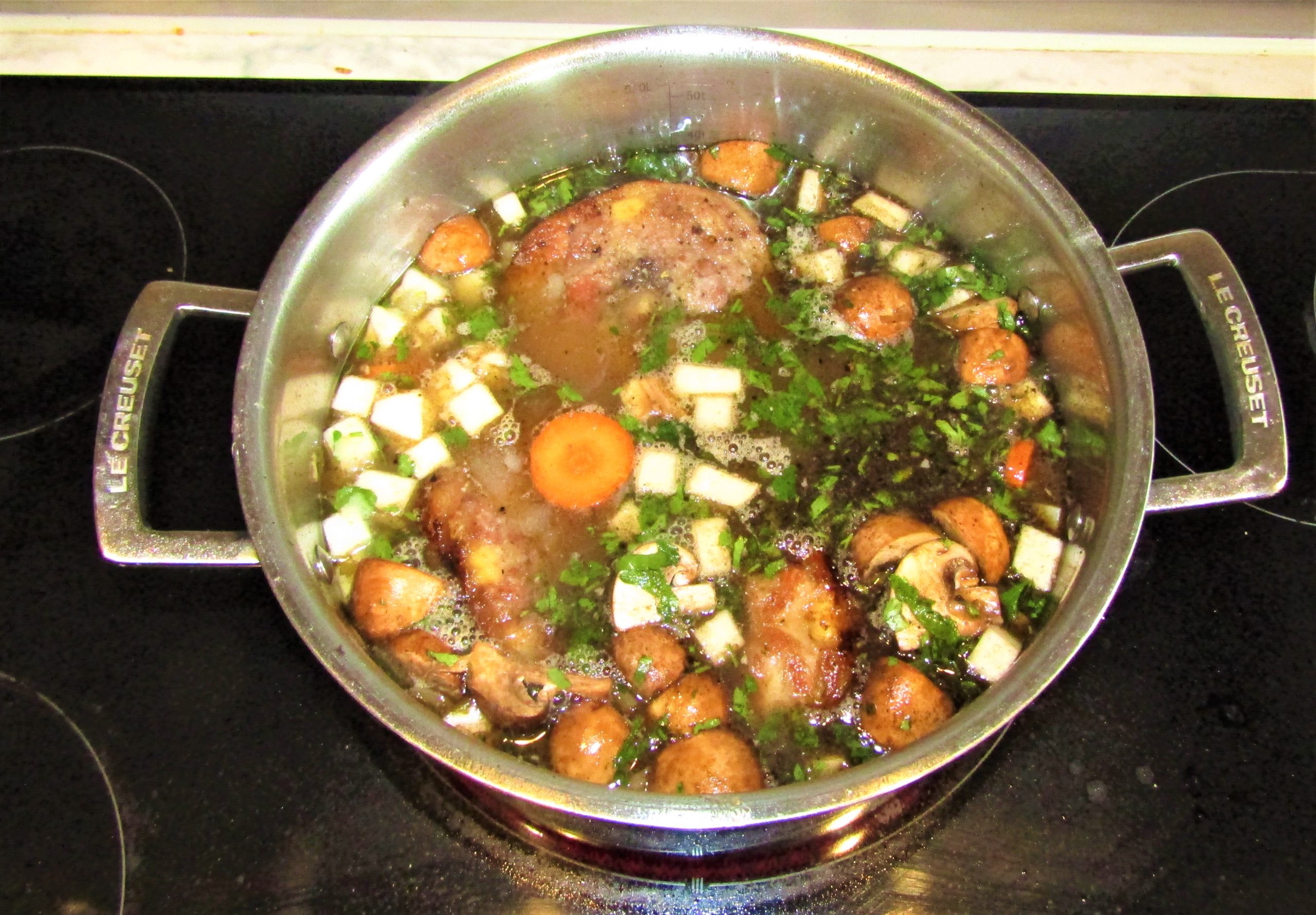
- Return the rabbit pieces to the pot. Add the carrots, celery, thyme sprigs, and bay leaves. Pour over the stock — it should come roughly three-quarters of the way up the rabbit. Season well with salt and pepper.
- Bring to a gentle simmer, then cover with a tight-fitting lid and transfer to the oven. Cook for 1 hour and 15 minutes.
- Remove the pot from the oven, add the potatoes, and return to the oven for a further 40–45 minutes, until the potatoes are tender and the rabbit meat is falling cleanly from the bone.
- Remove the bay leaves and thyme stalks. Taste and adjust seasoning. Scatter over the fresh parsley and serve directly from the pot, with good soda bread to mop up the broth.
Tips
- Ask your butcher to joint the rabbit if you are not confident doing it yourself — most are happy to help, and it saves time.
- Wild rabbit can be slightly leaner and stronger in flavour than farmed; soaking the joints in cold salted water for an hour before cooking helps to mellow the taste without masking it.
- Don’t be tempted to rush the browning stage — it makes a real difference to the depth of the finished stew.
- Leftovers improve overnight as the flavours deepen; gently reheat in the pot over a low flame, adding a splash of stock if needed.
- If you can’t find rabbit, bone-in chicken thighs and drumsticks make a very respectable substitute using exactly the same method and timings.
There is something quietly moving about cooking a dish like this — knowing that the same smell of thyme and onion once drifted through stone-walled cottages across the length and breadth of Ireland on a Sunday afternoon. It is unpretentious food, made with care rather than complication, and it asks very little of you except time and a warm kitchen. Pull up a chair, tear off some soda bread or champ, and let it do what it has always done so well.
Tours & experiences you might love


Powered by Viator. Some links are affiliate links — we may earn a small commission at no extra cost to you.
Secure Your Dream Irish Experience Before It’s Gone!
Planning a trip to Ireland? Don’t let sold-out tours or packed attractions spoil your journey. Iconic experiences like visiting the Cliffs of Moher, exploring the Rock of Cashel, or enjoying a guided walk through Ireland’s ancient past often sell out quickly—especially during peak travel seasons.

Booking in advance guarantees your place and ensures you can fully immerse yourself in the rich culture and breathtaking scenery without stress or disappointment. You’ll also free up time to explore Ireland’s hidden gems and savour those authentic moments that make your trip truly special.
Make the most of your journey—start planning today and secure those must-do experiences before they’re gone!