

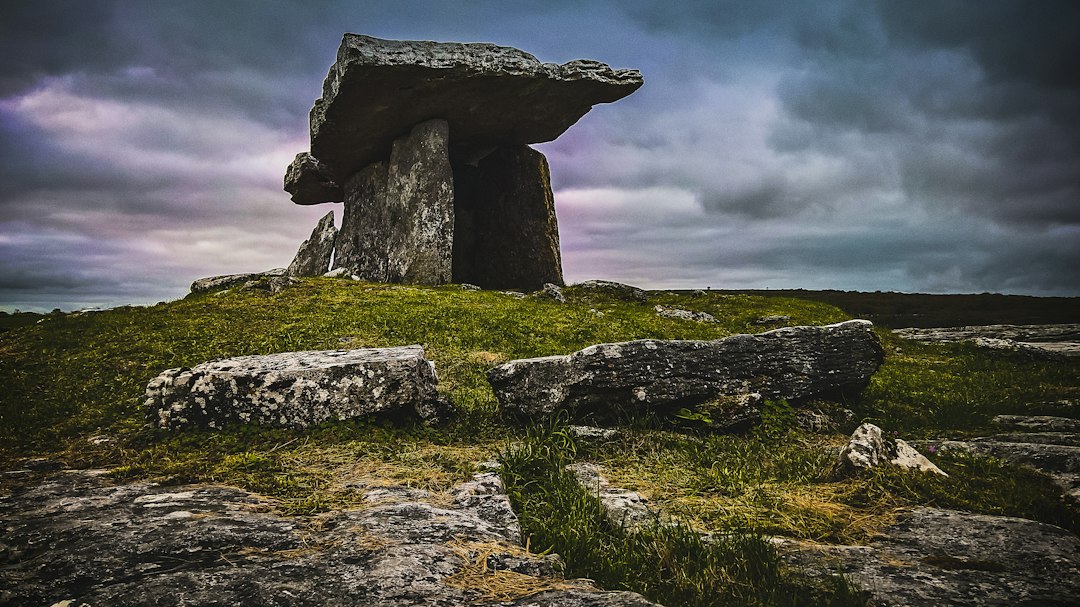
In 1999, plans for a new bypass in County Clare were altered so a single hawthorn would not be disturbed, after folklorist Eddie Lenihan warned that the lone bush at Latoon was a meeting place for the fairies. The road authority spared the bush and built the scheme around it rather than risk the bad luck locals feared. Stories like this sit at the heart of Irish folk belief — half-joked about, half-respected, and rarely tested on purpose. This is Guide № 016 in The Love Ireland Guide series.
Where the Beliefs Come From
Irish superstition is a layering of pre-Christian custom and later Christian practise, carried for centuries almost entirely by word of mouth. Much of what survives was written down only in the late 1930s, when schoolchildren across the Irish Free State were asked to collect folklore from their parents and neighbours between 1937 and 1939. That material, known as the Schools’ Collection, is now digitised and freely searchable through Dúchas, the project run by the National Folklore Collection at University College Dublin.
What the archive shows is that beliefs varied sharply by parish and by family. A charm against the evil eye in one townland might be unknown a few miles away. We treat these not as a fixed national rulebook but as a living oral tradition, which is why the same custom often comes with three different explanations depending on who is telling it.
The Fairy Folk and the Lone Bush
The most durable Irish superstitions concern the sí — the fairies, also called the Good People or the Gentry, names chosen to stay on polite terms with them. Two features of the landscape are traditionally treated as theirs. The first is the ringfort, or fairy fort: a circular earthwork, of which there are tens of thousands across the country. These are in fact the remains of early medieval farmsteads, and disturbing one was long held to bring ruin on a farm. The second is the lone hawthorn standing by itself in a field, believed to mark a fairy gathering spot and left uncut for generations.
Ringforts are not merely folklore, though — many are legally protected archaeological sites recorded by the National Monuments Service, with major examples cared for by the Office of Public Works. The belief and the law happen to pull in the same direction here: both leave the mounds undisturbed.
Magpies, Salt, and Everyday Luck
Many Irish superstitions govern small daily moments. A single magpie is traditionally greeted or saluted to ward off the sorrow the old rhyme assigns it — “one for sorrow, two for joy” — while spilled salt is thrown over the left shoulder to blind the bad luck behind you. Shoes left on a table, an umbrella opened indoors, and cutting a baby’s nails before its first birthday all carry their own warnings. Red-haired strangers met at the start of a journey were, in some coastal communities, considered unlucky for fishermen about to put out to sea.
A good deal of this overlaps with wider European and British folk custom, and it is worth saying plainly that there is no single “authentic” Irish version. We see these customs as social glue as much as belief — a shared shorthand that still surfaces at weddings, christenings and card games across the island.
Death, the Banshee, and the Wake
Few figures are as well known as the banshee — from bean sí, meaning fairy woman — whose keening cry is traditionally said to foretell a death, often attached to particular old Gaelic families. Around a death itself, custom was precise: clocks were stopped at the hour of passing, mirrors turned to the wall or covered, and a window opened to let the soul leave. These practices sat alongside the Irish wake, the long tradition of waking the dead at home.
Objects and stories connected to these beliefs turn up in the folklife collections of the National Museum of Ireland, whose Country Life branch in Mayo documents rural custom in detail. The banshee herself remains firmly in the realm of the told story rather than the recorded fact, and we present her that way.
Charms, Crosses, and Protection
Against all this, people kept protections. A St. Brigid’s cross woven from rushes was hung over the door each February to guard the house for the year. A horseshoe was nailed above the threshold, commonly with the points turned up so the luck would not run out. Holy water, blessed candles and pilgrimages to holy wells blended folk belief with Christian devotion so thoroughly that the two are often impossible to separate.
Some charms became attractions in their own right. Kissing the Blarney Stone at Blarney Castle to gain the “gift of the gab” is a custom only reliably documented from the late 18th century, yet it now draws visitors from around the world — a reminder that a superstition can be young and still feel ancient.
Myths Worth Retiring
Myth: Fairy forts are “just stories” with no basis in anything real. In fact the mounds are genuine early medieval ringforts, which is precisely why the law protects them regardless of folklore.
Myth: Kissing the Blarney Stone is an ancient Celtic rite. The custom is far more recent than the castle; there is no solid record of it before the 1780s, and the elaborate origin legends came later.
Myth: Every Irish person secretly believes all of this. Most treat these customs with affection and a half-smile — honoured more as habit and courtesy than as literal conviction.
Frequently Asked Questions
Are fairy forts actually protected by law?
Yes. As recorded archaeological monuments, ringforts are protected under Ireland’s national monuments legislation, and interfering with one can be an offence. The sites are catalogued by the National Monuments Service, so the folk reluctance to touch them is now backed by statute.
Where can I read original Irish superstitions in people’s own words?
The Schools’ Collection on Dúchas is the best starting point. You can search it by county and topic and read entries exactly as children transcribed them in the late 1930s, including hundreds of local charms, cures and warnings.
Do these beliefs still affect everyday life in Ireland?
In small ways, yes. Builders and farmers still sometimes work around a lone hawthorn or a ringfort, saluting a single magpie and touching wood remain common reflexes, and a St. Brigid’s cross is a familiar sight above a door. Few would call it belief outright, but the customs persist.
More The Love Ireland Guides
The Love Ireland Guide is a numbered series — one tightly focused subject at a time, each with its own downloadable collectible edition. Guide № 001 is Irish Soda Bread, Guide № 002 is St. Patrick’s Day, Guide № 003 is The Claddagh Ring, Guide № 004 is Guinness — The Pour, The Pint, The Ritual, Guide № 005 is Irish Pub Etiquette, Guide № 006 is Irish Slang & Hiberno-English, Guide № 007 is The Irish Wake, Guide № 008 is Irish Whiskey, Guide № 009 is The Irish Trad Session, Guide № 010 is St. Brigid’s Cross, Guide № 011 is The Aran Sweater, Guide № 012 is Fairy Forts, Guide № 013 is Irish Blessings & Sayings, Guide № 014 is The Full Irish Breakfast, Guide № 015 is Irish Halloween / Samhain, This is Guide № 016. More editions are on the way.
☘️ Join 64,000+ Ireland Lovers
Every week, get hidden stories, local secrets, and travel inspiration from people who live and love it.
Subscribe free — enter your email:
Tours & experiences you might love


Powered by Viator. Some links are affiliate links — we may earn a small commission at no extra cost to you.
Secure Your Dream Irish Experience Before It’s Gone!
Planning a trip to Ireland? Don’t let sold-out tours or packed attractions spoil your journey. Iconic experiences like visiting the Cliffs of Moher, exploring the Rock of Cashel, or enjoying a guided walk through Ireland’s ancient past often sell out quickly—especially during peak travel seasons.

Booking in advance guarantees your place and ensures you can fully immerse yourself in the rich culture and breathtaking scenery without stress or disappointment. You’ll also free up time to explore Ireland’s hidden gems and savour those authentic moments that make your trip truly special.
Make the most of your journey—start planning today and secure those must-do experiences before they’re gone!