

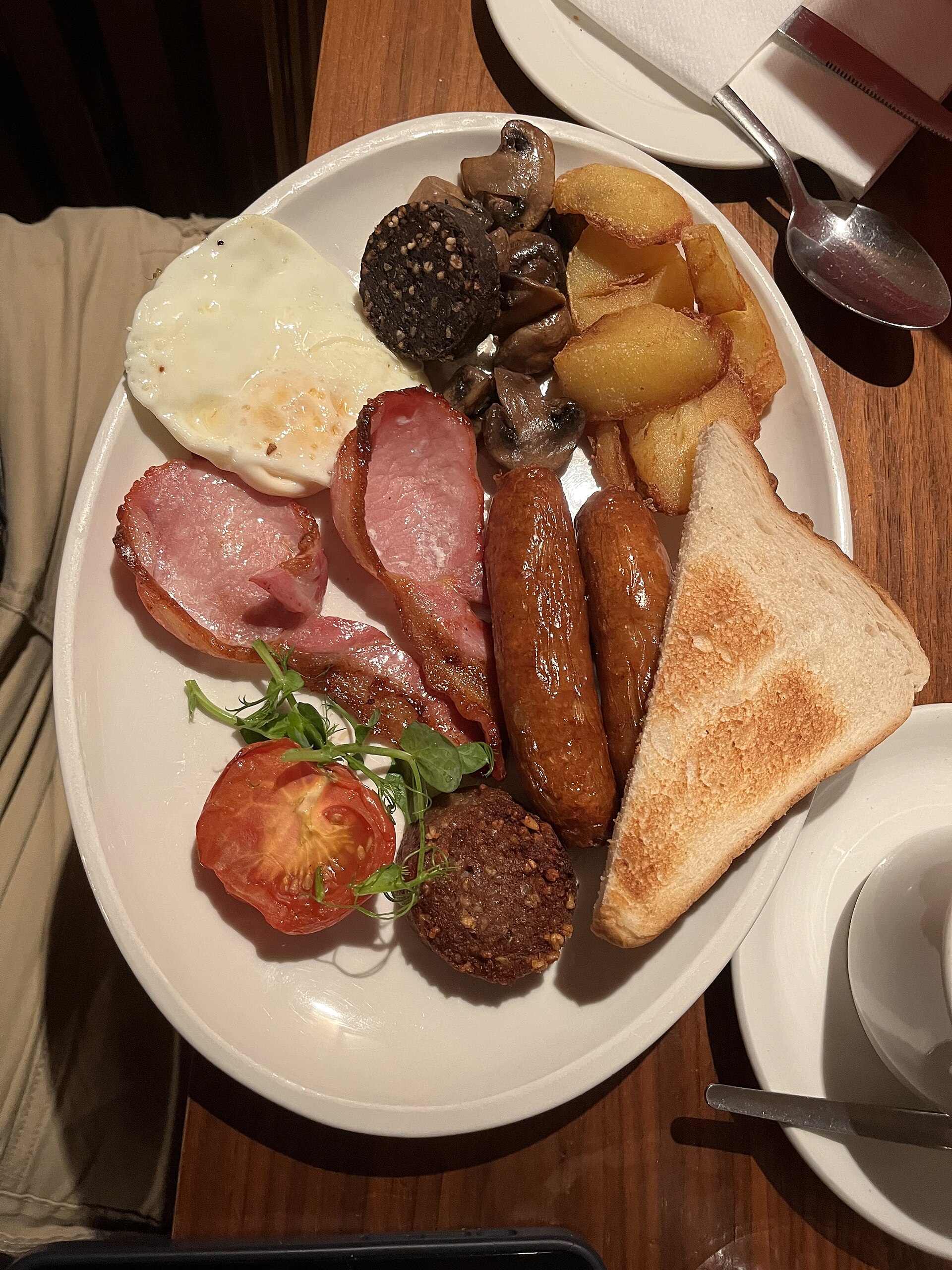
Pull apart a proper full Irish and you will usually find two kinds of pudding on the plate — black, made with pork, oatmeal and pig’s blood, and white, the same mix without the blood. That oatmeal is the tell: it is what separates the Irish plate from its British cousin, a legacy of a country where oats fed people long before wheat did. This is Guide № 014 in The Love Ireland Guide series.
What Actually Goes on the Plate
A full Irish is built around a few non-negotiable items: back and streaky rashers (bacon), pork sausages, fried or grilled eggs, black and white pudding, and a cooked tomato. Beyond that core, the plate flexes — fried mushrooms, baked beans, and a fried slice are common additions, and the bread is almost always soda bread or brown bread rather than the toast you would get elsewhere. In the home and in cafés the whole thing is cooked in one pan and timed so everything lands hot at once. Ready to make one at home? Our step-by-step full Irish breakfast recipe walks through the method.
The ingredients lean on Irish producers that a visitor can actually seek out. Clonakilty in West Cork is one of the best-known pudding makers — Clonakilty Blackpudding traces its recipe to a village butcher’s shop — while quality standards and provenance for Irish meat and dairy are overseen by Bord Bia, the Irish Food Board. The brown soda bread is often made with wholemeal flour from long-standing millers such as Odlums.
Where the Breakfast Came From
The fry-up as we know it is largely a product of the farming day. On a working farm a heavy cooked breakfast made sense before hours of physical labour, and pork — pigs being the most widely kept household animal — supplied the bacon, sausage and pudding. Blood puddings in particular are an old thrift food, a way of wasting nothing at slaughter, and versions of them appear across Europe. The grander hotel-and-guesthouse version that tourists meet today was shaped in the twentieth century as a selling point of Irish hospitality.
The Ulster Fry — A Northern Cousin
Travel north and the breakfast changes shape. The Ulster fry, found across Northern Ireland and the border counties, swaps or adds two griddle breads: soda farls (a quartered soda bread cooked on a hot plate) and potato bread (also called fadge or potato farls), both typically fried in the pan. It tends to go lighter on vegetables than a southern plate and heavier on the bread, and for many people the fried soda-and-potato-bread combination is the whole point of it.
Where to Eat a Serious One
The best versions are usually found where the ingredients are closest to the source. Cork’s English Market, a covered food market trading since 1788, has butchers and stalls selling the puddings, rashers and eggs that make up the plate, and its upstairs café cooks them to order. For a country-house take on breakfast, Ballymaloe House in East Cork built much of its reputation on local produce. If you are planning a trip around food, the official tourism body Fáilte Ireland is the agency that promotes and grades places to stay and eat.
What to Drink With It
Tea, overwhelmingly — strong, with milk. Ireland is among the heaviest tea-drinking nations per head, and the two names you will meet most often are Cork’s own Barry’s Tea and Lyons Tea, a long-running friendly rivalry in Irish kitchens. Coffee has gained ground, and some tables add a bowl of porridge — Irish oats from millers like Flahavan’s — before the fry rather than instead of it. The butter on the soda bread is frequently Kerrygold, made from the milk of grass-fed herds.
Myths Worth Retiring
Myth: The full Irish and the full English are the same thing. They overlap, but the Irish plate is defined by its oatmeal-based black and white pudding and by soda or brown bread in place of toast. The differences are small on paper and obvious on the plate.
Myth: Irish people eat a full fry every morning. For most, it is a weekend, holiday or hangover meal, or something ordered out, rather than a daily ritual. Weekday breakfast is far more likely to be cereal, toast or porridge.
Myth: Black pudding is a uniquely Irish invention. Blood sausages exist across Britain, France, Spain and well beyond. What is distinctive is the particular Irish style and the regional recipes attached to specific towns.
Frequently Asked Questions
What is the difference between black and white pudding?
Both are made from pork, pork fat and oatmeal or barley, seasoned and formed into a sausage, then sliced and fried. Black pudding includes pig’s blood, which gives it its dark colour and richer, mineral taste; white pudding leaves the blood out, so it is paler and milder.
Is a full Irish the same as an Ulster fry?
They are close relatives. The Ulster fry, from Northern Ireland and the border counties, is distinguished by its fried soda farls and potato bread and usually carries fewer vegetables than a southern full Irish.
Can you get a good vegetarian version?
Yes. Many cafés now offer a vegetarian full Irish built around eggs, grilled tomato, mushrooms, beans, bread and sometimes vegetarian sausage or pudding. It is worth asking, as traditional black and white pudding both contain meat.
More The Love Ireland Guides
The Love Ireland Guide is a numbered series — one tightly focused subject at a time, each with its own downloadable collectible edition. Guide № 001 is Irish Soda Bread, Guide № 002 is St. Patrick’s Day, Guide № 003 is The Claddagh Ring, Guide № 004 is Guinness — The Pour, The Pint, The Ritual, Guide № 005 is Irish Pub Etiquette, Guide № 006 is Irish Slang & Hiberno-English, Guide № 007 is The Irish Wake, Guide № 008 is Irish Whiskey, Guide № 009 is The Irish Trad Session, Guide № 010 is St. Brigid’s Cross, Guide № 011 is The Aran Sweater, Guide № 012 is Fairy Forts, Guide № 013 is Irish Blessings & Sayings, This is Guide № 014. More editions are on the way.
☘️ Join 64,000+ Ireland Lovers
Every week, get hidden stories, local secrets, and travel inspiration from people who live and love it.
Subscribe free — enter your email:
Tours & experiences you might love


Powered by Viator. Some links are affiliate links — we may earn a small commission at no extra cost to you.
Secure Your Dream Irish Experience Before It’s Gone!
Planning a trip to Ireland? Don’t let sold-out tours or packed attractions spoil your journey. Iconic experiences like visiting the Cliffs of Moher, exploring the Rock of Cashel, or enjoying a guided walk through Ireland’s ancient past often sell out quickly—especially during peak travel seasons.

Booking in advance guarantees your place and ensures you can fully immerse yourself in the rich culture and breathtaking scenery without stress or disappointment. You’ll also free up time to explore Ireland’s hidden gems and savour those authentic moments that make your trip truly special.
Make the most of your journey—start planning today and secure those must-do experiences before they’re gone!