

What would you do if your son healed your patient better than you? Dian Cécht, the healer of the old Irish gods, chose the worst answer. His story is one of the darkest in Irish myth. It is also one of the most useful, because it explains why Ireland remembers its herb lore.
Dian Cécht belongs to the Tuatha Dé Danann. He was their doctor. In the tales he could mend almost any wound. His son Miach and daughter Airmed were healers too. Together they made a family of healers at the heart of the divine court.
Who Was Dian Cécht?
Dian Cécht appears in the medieval text Cath Maige Tuired. That means the Battle of Mag Tuired. Scribes copied it from older oral tales. It tells how the Tuatha Dé won Ireland and then fought to keep it.
The god had one great job. He kept the Tuatha Dé fit to fight. When a warrior fell, Dian Cécht was there. He worked with his children and with the craftsman Credne, who worked in metal.
You can meet the other gods of this tale in our guides to Lugh and the Dagda. For the wider story of who came to Ireland and when, read our piece on the invasions of Ireland.
The Silver Arm
The story starts with Nuada, the first king of the Tuatha Dé. He lost an arm in the first battle of Mag Tuired. A king had to be whole, so he lost his throne as well.
Dian Cécht went to work. With Credne he made a new arm from silver. The tale says it moved and felt like a real arm. Nuada was called Airgetlám, or Silver Hand, from then on.
It was a fine piece of work. But it was still silver. It was not flesh. And the old rules said a king should be whole in body.
☘️ Enjoying this? 64,000 Ireland lovers get stories like this every week. Subscribe free →
Miach Heals the Real Hand
Miach saw what his father had missed. He went to the place where Nuada’s own arm lay. He took the hand and held it against the stump. Then he spoke a spell. The tale gives it as “joint to joint, sinew to sinew”.
The healing took about nine days, says the text. At the end Nuada had his own hand back. He was whole. He could be king again.
This is the moment the tale turns. A young healer had beaten the master. And the master did not take it well.
The Father Who Killed His Son
Dian Cécht was filled with envy. He took his sword and struck Miach on the head. The cut went through the skin. Miach healed it. A second blow cut into the flesh. Miach healed that too. A third blow reached the bone. Miach healed that as well.
The fourth blow cut into the brain. No healer can fix that. Miach died.
It is a bleak scene. Medieval storytellers did not look away from it. The gods of Ireland are not simply good. They are proud, jealous and sometimes cruel, like people.
365 Herbs From a Grave
Then comes the part that gives the legend its beauty. The tale says 365 herbs grew from Miach’s grave. There was one herb for every joint and sinew of the human body.
His sister Airmed knelt at the grave. She picked the herbs and laid them out on her cloak. She sorted them by the cures each one held.
Dian Cécht saw what she had done. He lifted the cloak and tipped the herbs into a jumble. Now nobody could tell which herb cured which ill. The tale says no one has ever known the whole of that lore since.
- The grave. The herbs grew from the healer’s own death.
- The cloak. Airmed’s cloak is a famous image in Irish folklore.
- The loss. The scattered herbs explain why healing knowledge is partial.
The Well of Health
Dian Cécht kept one great healing tool. The tale tells of a well at the second battle of Mag Tuired. Wounded Tuatha Dé warriors were put in the water. Dian Cécht and his children chanted spells over it. The warriors rose healed and went back to the fight.
The well was called Sláine. The name comes from slán, the Irish word for whole, healthy or safe — the same root behind sláinte, the word you say when you raise a glass today.
Ireland still has thousands of holy wells. People visit them on saints’ days and leave small gifts. Our story of St Brigid’s flame at Kildare shows how older beliefs and Christian saints sat side by side in Irish life.
The Serpent and the Barrow
One more tale sets Dian Cécht beside a real Irish river. Medieval texts say he treated Meche, a child of the goddess the Morrígan. He cut open the child’s heart and found three serpents coiled inside it. They were terrible beasts that could have laid waste to Ireland.
Dian Cécht killed them. He burned the bodies and threw the ashes into a river. The river boiled and every creature in it died. The tales say the river took its old name, Berba, from that boiling.
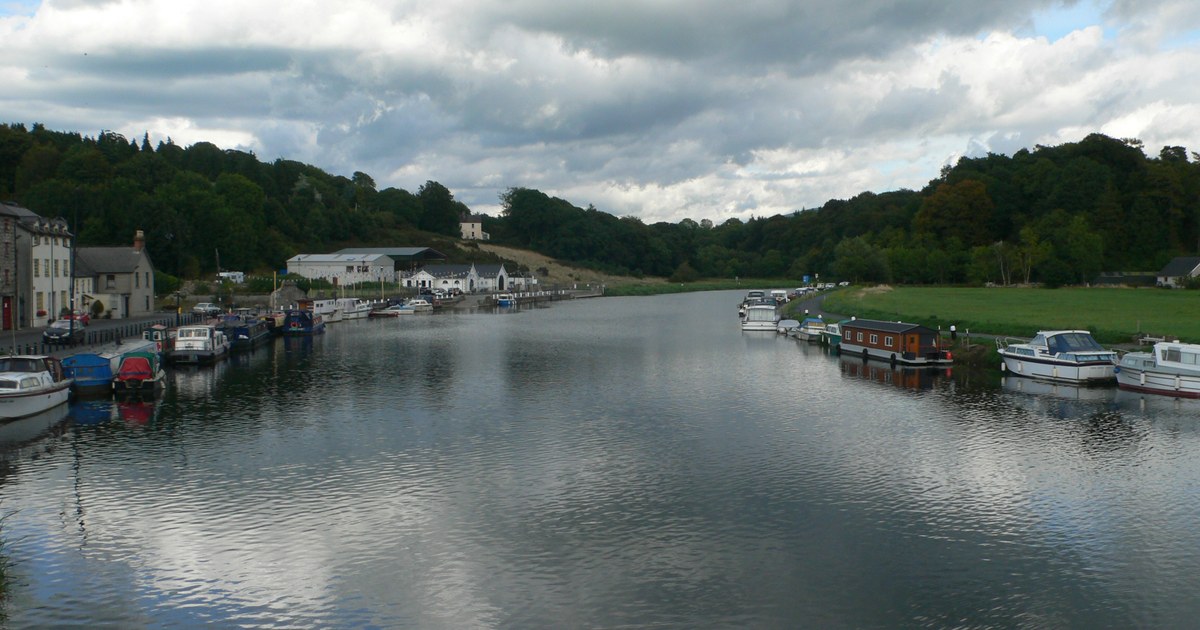
Berba is the River Barrow. It runs for about 192 kilometres through the south-east. Only the Shannon is longer. Whatever you make of the tale, it is a wonderful way to remember a river.
Visiting Dian Cécht’s Ireland
- Start at Cong in County Mayo. Tradition places the first battle of Mag Tuired near here.
- Drive to the lakes around Lough Arrow in County Sligo, linked to the second battle.
- Head south-east to the River Barrow. Graiguenamanagh in County Kilkenny is a fine place to see it.
- Walk a stretch of the Barrow towpath. Look for willow, meadowsweet and other riverside plants.
- Visit a holy well on its saint’s day, if you can. Be quiet and respectful, as these are living places of prayer.
Why This Legend Still Matters
The legend of Dian Cécht and Miach is about more than a family feud. It asks who owns knowledge. It asks what we lose when pride gets in the way of healing.
It also reminds us that herb lore mattered deeply to people in Ireland. The idea of 365 cures, scattered but never quite lost, still feels true. Irish families kept their own remedies and passed them down at the kitchen table.
If your family came from Ireland, you may have heard a remedy or two yourself. Share the story with your own family. Old tales survive only when somebody tells them.
Frequently Asked Questions
Who was Dian Cécht in Irish mythology?
Dian Cécht was the healer god of the Tuatha Dé Danann. He made the silver arm for King Nuada. He also guarded the healing well used at the second battle of Mag Tuired.
Who was Miach in Irish mythology?
Miach was the son of Dian Cécht. He healed Nuada’s real hand and was killed by his jealous father. Tradition says 365 healing herbs grew from his grave.
Who was Airmed?
Airmed was the daughter of Dian Cécht and the sister of Miach. She gathered the herbs from her brother’s grave and sorted them by the cures they held.
Why did Dian Cécht kill his son?
The tale says he was jealous. Miach healed Nuada better than Dian Cécht had. The father struck his son’s head with a sword and, on the fourth blow, killed him.
Is there a link between Dian Cécht and the River Barrow?
Medieval tales link Dian Cécht to the Irish name of the River Barrow, which is Berba. They say the river boiled when he threw in the ashes of three dreadful serpents he had cut from a child’s heart. Treat this as legend, not history.
Can you still visit healing wells in Ireland?
Yes. Many holy wells across Ireland are still visited, often on a saint’s feast day. Wells such as these keep alive an older belief in water that heals.
☘️ Join 64,000+ Ireland Lovers
Every Friday, get Ireland’s lesser-known corners, local stories and secrets, straight to your inbox.
Subscribe free — enter your email:
Already subscribed? Download your free Ireland guide (PDF)
📲 Know someone who’d love this? Share on WhatsApp →
Free forever · One email per week · Unsubscribe anytime
Tours & experiences you might love


Powered by Viator. Some links are affiliate links — we may earn a small commission at no extra cost to you.
Secure Your Dream Irish Experience Before It’s Gone!
Planning a trip to Ireland? Don’t let sold-out tours or packed attractions spoil your journey. Iconic experiences like visiting the Cliffs of Moher, exploring the Rock of Cashel, or enjoying a guided walk through Ireland’s ancient past often sell out quickly—especially during peak travel seasons.

Booking in advance guarantees your place and ensures you can fully immerse yourself in the rich culture and breathtaking scenery without stress or disappointment. You’ll also free up time to explore Ireland’s hidden gems and savour those authentic moments that make your trip truly special.
Make the most of your journey—start planning today and secure those must-do experiences before they’re gone!