

Living in County Kerry means mountains, lakes and Atlantic coast on your doorstep, with a strong community to match. About 156,000 people live here, and Tralee, the county town, sits roughly 300 km from Dublin on the south-west coast. If you want dramatic scenery, live music and real village life, Kerry rewards a close look.
This guide looks at daily life in Kerry. It covers the main towns, the landmark places and the practical side of getting around. It is about the place, not the paperwork. For anything official, check the relevant government site first.
Why living in County Kerry appeals to so many people
Kerry has Ireland’s highest mountain, Carrauntoohil, at 1,038 metres. It also has three long peninsulas that reach into the Atlantic. Visitors come for the views. Residents stay for the pace of life and the sense that everyone knows your name.
Newcomers often mention the same things. Towns are lively, music is everywhere and the outdoors is never far away. The trade-off is distance, because Dublin is a long drive or train ride.
- Scenery: the Ring of Kerry loop is about 179 km, and the Dingle Peninsula is just as striking.
- Airport: Kerry Airport at Farranfore has flights to Dublin and several UK cities.
- Rail: Tralee and Killarney both have train links to Cork and Dublin.
- Culture: Irish language, traditional music and Gaelic football run deep here.
Tralee, Killarney and the county’s other towns
Tralee is the largest town, with about 26,000 residents. It has the main shops, the hospital and the county council offices. Killarney is smaller, at about 14,000 people, but it draws visitors all year and keeps a good run of cafes, pubs and live music.
You can plan a visit with the Discover Ireland page for Kerry, which lists attractions and events across the county.
Dingle, Kenmare, Listowel and the villages
Each smaller town has its own pace. Dingle is a working harbour town with live music most nights, and you can explore the peninsula through the Dingle Peninsula tourism site. Kenmare is a neat heritage town at the head of a bay, and its community website shows what is on. Listowel is a literary town in north Kerry with a strong writing tradition.
Many people choose a village a few kilometres from a bigger town. You get the quiet, and the shops stay close.
☘️ Enjoying this? 64,000+ Ireland lovers get stories like this every week. Subscribe free →
Killarney National Park and the great landmarks
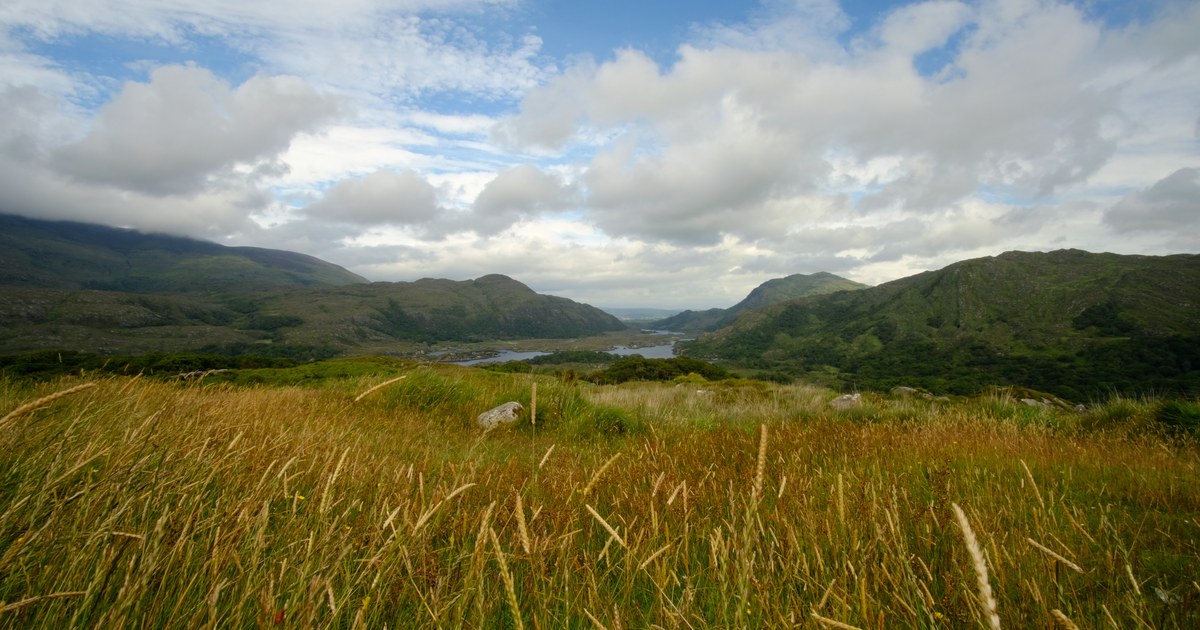
Killarney National Park covers about 10,000 hectares of lakes, woodland and mountain. Ladies View, shown above, is one of its best-known viewpoints on the road to Kenmare. You can read about walks, wildlife and visitor information on the Killarney National Park website.
Further out, Skellig Michael is a UNESCO World Heritage Site, listed in 1996. Monks built a stone monastery on this sea rock about 12 km off the coast. Landings are limited and weather dependent, so read the official Heritage Ireland page before you plan a trip.
For more local history, our Ross Castle guide covers the tower house on the Lough Leane shore, and our Dingle pubs, coast and food guide shows you where to eat and listen to music.
Peninsulas, hills and the coast
Kerry’s coast has three big peninsulas: Dingle, Iveragh (home of the Ring of Kerry) and Beara, which it shares with Cork. Each has quiet roads, small harbours and long beaches. Slea Head Drive on Dingle runs about 47 km and gives you views of the Blasket Islands.
Walking and the outdoors
Walkers have the Kerry Way, a long waymarked route round the Iveragh Peninsula. Many residents simply walk a lake shore or beach before work. It is a big reason people say they feel healthier here.
Daily life: what it is really like
Community comes first in Kerry. Sports clubs, music sessions, parish halls and markets fill the calendar. Newcomers settle fastest when they join something, whether it is a walking group, a choir or a local history society.
- Getting around: most households run a car, because bus times thin out in rural areas.
- Tourism: summer is busy in Killarney and Dingle, and many businesses slow down in winter.
- Weather: expect mild, wet and windy conditions, with soft rain through much of the year.
- Broadband and remote work: coverage varies by townland, so ask locally before you commit to a spot.
Rain keeps the county green. A good coat and a sense of humour will see you through the winter. Local services are listed on the Kerry County Council website.
Is living in County Kerry right for you?
Kerry suits people who want scenery, culture and a close-knit community and do not mind distance from Dublin. It is a poorer fit if you need a big-city job market on your doorstep. Spend a week in the county in winter before you decide, because that is when daily life shows.
If you are weighing up a bigger move, our full Move to Ireland guide walks through the questions to ask yourself. You can also compare Kerry with our living guides for County Clare, County Limerick, County Tipperary and County Waterford.
- Visit in more than one season, including a wet week in winter.
- Base yourself in Killarney or Tralee for a few days, then explore Dingle, Kenmare and the villages.
- Talk to residents in pubs, shops and community groups.
- Check travel times to the nearest hospital, school and train station for your chosen village.
Thinking about the long term? Our guide to the best places to retire in Ireland compares more regions. To plan a first visit, start with our planning hub and the 7-day Ireland road trip itinerary.
Frequently asked questions about living in County Kerry
What is it like living in County Kerry?
It is scenic, social and fairly quiet outside summer. About 156,000 people share the county, and the towns stay busy with music, sport and community events.
What is the main town in County Kerry?
Tralee is the county town, with about 26,000 people. Killarney is smaller but is the best-known town and the hub for the national park.
How far is Kerry from Cork?
Killarney is about 90 km from Cork city by road. Most drivers allow around one hour and thirty minutes.
Is County Kerry worth visiting?
Yes. The Ring of Kerry, the Dingle Peninsula, Killarney National Park and Skellig Michael make it one of Ireland’s strongest destinations all year.
☘️ Join 64,000+ Ireland Lovers
Every weekday morning, get Ireland’s lesser-known corners, local stories and secrets, straight to your inbox.
Subscribe free — enter your email:
Already subscribed? Download your free Ireland guide (PDF)
📲 Know someone who’d love this? Share on WhatsApp →
Free forever · Unsubscribe anytime
Tours & experiences you might love

Powered by Viator. Some links are affiliate links — we may earn a small commission at no extra cost to you.
Secure Your Dream Irish Experience Before It’s Gone!
Planning a trip to Ireland? Don’t let sold-out tours or packed attractions spoil your journey. Iconic experiences like visiting the Cliffs of Moher, exploring the Rock of Cashel, or enjoying a guided walk through Ireland’s ancient past often sell out quickly—especially during peak travel seasons.

Booking in advance guarantees your place and ensures you can fully immerse yourself in the rich culture and breathtaking scenery without stress or disappointment. You’ll also free up time to explore Ireland’s hidden gems and savour those authentic moments that make your trip truly special.
Make the most of your journey—start planning today and secure those must-do experiences before they’re gone!