

Carrowmore is a megalithic cemetery in County Sligo with more than 30 visible monuments, and some of its tombs date to around 3700 BC. That makes it one of the oldest and largest collections of prehistoric tombs in Ireland. It sits a short drive from Sligo town, below the cairn on Knocknarea mountain.
This guide explains what Carrowmore is, what you can see, and how to plan a visit. Check opening times and tickets on the official Carrowmore website before you go. For wider trip planning, use our Ireland trip planning hub.
What is Carrowmore megalithic cemetery?
Carrowmore is a group of stone tombs built by Ireland’s early farming communities. Archaeologists believe the oldest monuments belong to the period from about 3700 BC to 3000 BC. Many experts see this as older than the passage tomb at Newgrange.
The site once held many more tombs. Farming and quarrying removed some over the centuries. Today you can still walk among dozens of stone circles, dolmens and passage tombs spread across open fields.
- Age: Some tombs date to around 3700 BC.
- Size: More than 30 monuments survive in view.
- Centre: The large cairn called Listoghil stands at the heart of the site.
- Setting: Farmland between Sligo Bay and the Ox Mountains.
What you can see at Carrowmore
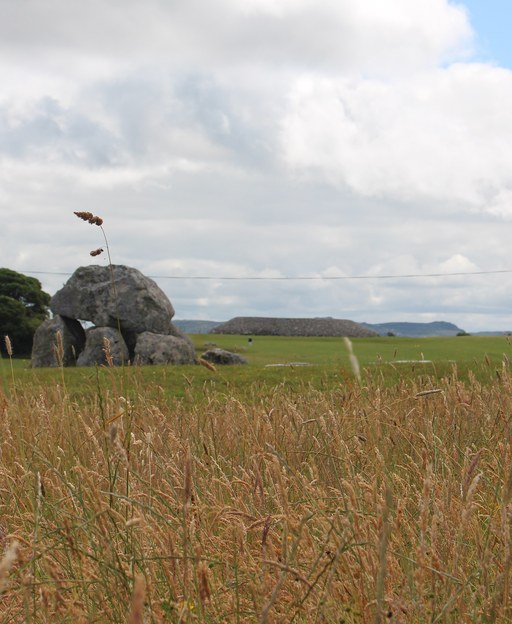
Most tombs are small circles of boulders, often with a stone chamber at the centre. A few have large capstones that rest on upright stones, as in the photograph above. Signs and a guide map help you find each monument.
Listoghil is the best known. It is a mound with a stone chamber, and it sits close to the middle of the cemetery. Beyond the fields, the long cairn on Knocknarea fills the western skyline.
☘️ Enjoying this? 64,000+ Ireland lovers get stories like this every week. Subscribe free →
Knocknarea and Queen Maeve
Knocknarea rises 327 metres above the coast. A large stone cairn sits on its summit, about 10 metres high. Local tradition says that the legendary Queen Maeve lies buried there standing up, facing her enemies in Ulster. Read more in our guide to Queen Maeve’s tomb on Knocknarea.
Archaeologists have not opened the cairn, so nobody knows for certain what it holds. The climb takes most walkers about an hour. The path can be steep and slippery after rain, so wear proper walking shoes.
Why Carrowmore matters
Carrowmore shows how early farmers marked the land and honoured their dead. The tombs sit close together, which suggests that families returned to the same place for generations. People gathered here to bury, remember and meet.
The site also links to the wider Sligo landscape. From the fields you can see Knocknarea to the west and Ben Bulben to the north. Many researchers think the people who built the tombs chose these views on purpose, so that the mountains and the dead stayed linked.
Excavations in the twentieth century recovered bone, stone tools and cremated remains from several tombs. Those finds help scientists date the monuments. New work keeps adding detail, so the story of Carrowmore is still changing.
Tips for a better visit
Start at the visitor centre if it is open, because the staff explain the layout and the map. Then walk the paths slowly. Stop at each tomb and look at how the stones fit together. Take care not to climb on the monuments, and keep to the marked routes.
Bring a camera, but also give yourself time to simply stand and look. The site feels very quiet on a calm morning. In summer, midges can bite near the wet ground, so repellent is useful. In winter, the light is low and the fields are muddy, but the stones look dramatic against a grey sky.
If you travel with children, turn the walk into a game. Ask them to count the stone circles, and to spot the highest capstone. Most families enjoy the open space, and the paths are short. Visitors with limited mobility should check access with the site before travelling.
What else to see near Carrowmore
Carrowmore works well as part of a full day in the area. Strandhill is a few minutes away by car, and it offers a long beach, cafes and one of the best surf spots in Ireland. Sligo town has a medieval abbey, a river walk and plenty of places to eat.
Drumcliffe, the burial place of the poet W. B. Yeats, lies about 8 kilometres north of town beneath Ben Bulben. A morning at Carrowmore and an afternoon at Drumcliffe give you a neat mix of prehistory and poetry. Many visitors also add a sunset walk on the beach.
- Strandhill: Beach, surf lessons and seafood.
- Sligo town: Abbey, music pubs and the River Garavogue.
- Drumcliffe: Yeats’s grave and a high cross.
- Rosses Point: Quiet shore and views of Ben Bulben.
Planning your visit to Carrowmore
Carrowmore lies close to Sligo town and the beach village of Strandhill. The site is run by the state heritage service, and you can find general visitor details on Heritage Ireland. Opening times change with the season, so always confirm them first.
- Allow time: Plan about one to two hours to walk the site.
- Wear: Waterproofs and sturdy shoes, because the fields are often wet.
- Combine: Pair it with Knocknarea, Strandhill and the town of Sligo.
- Best light: Late afternoon in summer gives long shadows across the stones.
For more to see nearby, read our guides to things to do in Sligo, Benbulben and W. B. Yeats and living in County Sligo. You can also see more ancient sites in our Ireland road trip itinerary and our Boyne Valley walking trails guide.
Frequently asked questions
What is Carrowmore in County Sligo?
Carrowmore is a prehistoric cemetery of stone tombs near Sligo town. It has more than 30 visible monuments, and some date to around 3700 BC.
Is Carrowmore older than Newgrange?
Many archaeologists think the earliest Carrowmore tombs are older than Newgrange. Both belong to Ireland’s Neolithic period.
How long does a visit to Carrowmore take?
Most visitors need one to two hours to walk the site. Add about an hour more if you plan to climb Knocknarea.
Where is Carrowmore?
Carrowmore is on the Cuil Irra peninsula, a short drive from Sligo town and close to Strandhill.
☘️ Join 64,000+ Ireland Lovers
Every weekday morning, get Ireland’s lesser-known corners, local stories and secrets, straight to your inbox.
Subscribe free — enter your email:
Free forever · Unsubscribe anytime
Secure Your Dream Irish Experience Before It’s Gone!
Planning a trip to Ireland? Don’t let sold-out tours or packed attractions spoil your journey. Iconic experiences like visiting the Cliffs of Moher, exploring the Rock of Cashel, or enjoying a guided walk through Ireland’s ancient past often sell out quickly—especially during peak travel seasons.

Booking in advance guarantees your place and ensures you can fully immerse yourself in the rich culture and breathtaking scenery without stress or disappointment. You’ll also free up time to explore Ireland’s hidden gems and savour those authentic moments that make your trip truly special.
Make the most of your journey—start planning today and secure those must-do experiences before they’re gone!