

If you ask which symbol is the oldest in Irish culture, most experts point to the spiral. It is carved into stone in County Meath, and it is more than 5,000 years old. That makes it older than the pyramids of Giza and older than Stonehenge.
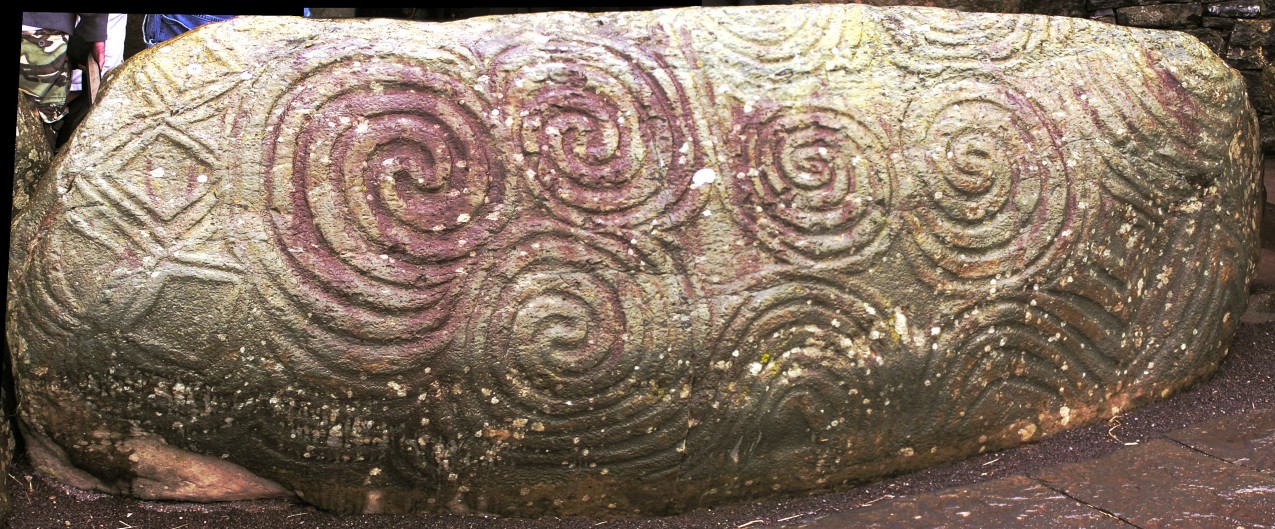
This guide explains where to see the spiral, what it may have meant, how it differs from other Celtic symbols, and how to plan a visit.
Why the spiral is called the oldest Celtic symbol
The spiral is widely seen as the most ancient symbol linked to Celtic culture. Many researchers connect it to the sun, to energy and to the cycle of life. Nobody can say for certain what it meant to the people who carved it, because they left no written record.
There is one point worth getting right. The spirals at Newgrange were made around 3200 BC. The Celts, as a recognisable culture, appeared much later, in the first millennium BC. So the spiral was not invented by the Celts. It was an older symbol that Celtic artists later adopted and made their own.
That long history is part of its appeal. When you stand in front of a spiral carving in Ireland, you are looking at a design that has been in use for around five thousand years.
Where to see the oldest spirals: Newgrange
The best-known spirals are at Newgrange, a passage tomb in the Boyne Valley in County Meath. It was built by Stone Age farmers and is one of the great monuments of prehistoric Europe. It sits within the Brú na Bóinne site, which UNESCO listed as a World Heritage Site in 1993.
At the entrance stands a large kerbstone covered in carved patterns. Spirals and curved lines run across its face. It is one of the most photographed stones in Ireland, and it is the carving most people mean when they talk about the oldest Celtic symbol.
Inside the tomb, a stone in one of the side chambers carries the famous triple spiral. It is made of three spirals joined together by one continuous line. If you would like to read more about that design, see our guide to the triple spiral and what it really means.
What did the spiral mean?
There is no single agreed answer. These are the main ideas, and each one is an informed guess.
- The sun. The curling shape looks like the path of the sun across the sky. Newgrange is built to line up with the winter solstice sunrise, so a sun link makes sense.
- Energy and life. A spiral has no clear start or end. Many people read it as a sign of growth, movement and the cycle of the seasons.
- A journey. Some see the line as a path that leads inward and then out again, like birth, death and renewal.
- Decoration. Some experts think the carvings may have been partly artistic, or a form of marking space inside a sacred place.
It is best to treat any single meaning with caution. Anyone who tells you they know exactly what the spiral meant is going beyond the evidence.
The winter solstice at Newgrange
Newgrange has a narrow opening above the entrance, known as the roof box. On the mornings around the winter solstice, in late December, the rising sun shines through it. A beam of light travels along the passage and lights up the floor of the inner chamber for about 17 minutes.
This shows that the builders understood the movements of the sun very well. It also supports the idea that the sun and the spiral were linked in their beliefs.
For the full story of how this 5,000-year-old tomb captures the sunrise, see our guide to the Newgrange winter solstice.
Places inside the chamber for the solstice are given out through a free lottery run by the site’s managers. Most visitors will not get one. The good news is that a guided tour shows a light recreation of the effect inside the chamber, so you can still get a sense of it at any time of year.
Enjoy stories like this? Join our free newsletter for Irish history, culture and travel tips every week.
Other places to see Celtic spirals in Ireland
Newgrange is not the only site. The Boyne Valley and the hills nearby hold several others.
- Knowth. Close to Newgrange, this site has more examples of megalithic art than any other in Europe. Spirals and other shapes cover many of its kerbstones.
- Dowth. The third great mound in the Boyne Valley also has carved stones, though access is more limited.
- Loughcrew Cairns. These hilltop tombs in County Meath have carvings of flowers, suns and spiral-like shapes inside the chambers.
- The National Museum of Ireland, Dublin. The archaeology collection shows later Celtic metalwork and stone pieces decorated with spirals and curves.
How the spiral shaped later Celtic art
Centuries after Newgrange, Celtic artists used spirals again and again. In the Iron Age, craftspeople made jewellery, weapons and ornaments covered in flowing curves. Historians call this style La Tène art.
Early Christian artists in Ireland kept the tradition alive. Spirals fill the pages of the Book of Kells, made around 800 AD and now kept at Trinity College Dublin. You will also see them on high crosses and on fine metalwork.
So the spiral never really went away. It passed from the Stone Age to the Iron Age to the monastic period, and it is still used today in jewellery, tattoos and design.
Spiral, triskele and triple spiral: what is the difference?
These names are often mixed up, so here is a simple guide.
- Spiral. A single curved line that winds in or out from a centre.
- Triple spiral. Three spirals joined by one line. It is the shape found at Newgrange.
- Triskele. A similar three-armed design, more common in later Celtic art. It is often linked to the number three, which appears often in Irish tradition.
The triple spiral and the triskele look alike, and many shops use the names to mean the same thing. Strictly, the triple spiral is the older form.
Planning a visit to Newgrange
You cannot walk up to Newgrange on your own. Visits begin at the Brú na Bóinne Visitor Centre, on the south side of the River Boyne. From there, a shuttle bus takes you to the monument.
- Book ahead. Tours often sell out in summer and at weekends. Booking online before you travel saves disappointment.
- Allow time. Plan for around half a day if you want to see the visitor centre exhibition and tour the monuments.
- Getting there. The site is about 50 kilometres north of Dublin. It is an easy day trip by car or on an organised coach tour.
- Dress for the weather. Much of the visit is outdoors, and Irish weather can change fast. Wear sturdy shoes.
- Combine it. The Hill of Tara and the Battle of the Boyne site are both nearby, so you can see a lot in one trip.
Opening times, tour options and prices change, so check the official site before you go.
Planning an Irish trip? Subscribe to our free newsletter for practical Irish travel guides in your inbox.
Bringing the spiral home
Many visitors want a keepsake. Spiral designs appear on jewellery, pottery and prints across Ireland. When you shop, look for pieces made by Irish craftspeople, and ask where an item was made. Genuine handmade work usually tells you the maker’s name.
If you want to learn more before you travel, the library at the visitor centre and the museum in Dublin both have good books on Irish prehistoric art.
Key facts about the oldest Celtic symbol
- The spiral is widely seen as the oldest symbol connected to Celtic culture.
- The best examples are at Newgrange, County Meath, dated to around 3200 BC.
- The carvings are older than the Celts themselves, who adopted the symbol later.
- Its meaning is not certain, but the sun, energy and the cycle of life are the most common ideas.
- You can see the carvings on a guided tour from the Brú na Bóinne Visitor Centre.
Final thoughts
The spiral is simple to draw, yet it has lasted for five thousand years. Seeing it carved in stone at Newgrange is one of the most moving moments you can have on a trip to Ireland. Whatever it meant to the people who made it, it still draws visitors from all over the world.
Want more Irish history and travel ideas? Sign up to our free newsletter and never miss a story.
Tours & experiences you might love


Powered by Viator. Some links are affiliate links — we may earn a small commission at no extra cost to you.
Secure Your Dream Irish Experience Before It’s Gone!
Planning a trip to Ireland? Don’t let sold-out tours or packed attractions spoil your journey. Iconic experiences like visiting the Cliffs of Moher, exploring the Rock of Cashel, or enjoying a guided walk through Ireland’s ancient past often sell out quickly—especially during peak travel seasons.

Booking in advance guarantees your place and ensures you can fully immerse yourself in the rich culture and breathtaking scenery without stress or disappointment. You’ll also free up time to explore Ireland’s hidden gems and savour those authentic moments that make your trip truly special.
Make the most of your journey—start planning today and secure those must-do experiences before they’re gone!