

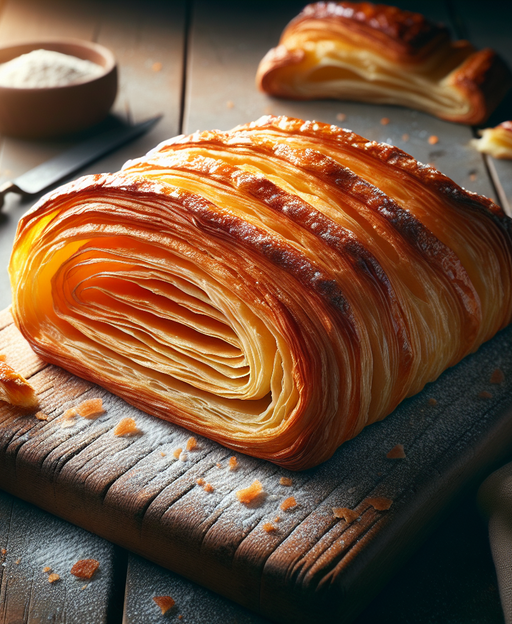
There are few things in baking more satisfying than pulling a perfectly golden, impossibly flaky puff pastry from the oven. Those hundreds of delicate, buttery layers — each one paper-thin and crisp — are the hallmark of a technique that has been refined over centuries. And while shop-bought puff pastry does the job in a pinch, making it from scratch is a completely different experience. The flavour is richer, the texture is more dramatic, and the sense of achievement is second to none.
Chris from The Irish Baker Abroad — a professionally trained baker originally from Ireland, now living in Denmark — has shared his own tutorial for classic French puff pastry. With just four simple ingredients and a bit of patience, Chris demonstrates how anyone can master this foundational baking technique at home.
What Makes This Puff Pastry Recipe Special
What sets Chris’s approach apart is his emphasis on simplicity and proper technique over fancy equipment. He uses just four ingredients — flour, water, salt and butter — and relies on time-honoured French lamination methods to create those signature layers. His key insight? Make the dough the night before. By letting the détrempe (the base dough) rest overnight in the fridge, the gluten relaxes completely, making the dough far easier to roll out the following day. It reduces tension, which means fewer tears and a smoother lamination process.
Chris is also particular about his butter. He recommends using a high-quality European butter with at least 82 per cent fat content — something like Lurpak or Kerrygold. The higher fat content means less water in the butter, which translates to cleaner layers and a crispier finish. It is one of those small choices that makes an enormous difference to the final result. If you are a fan of Chris’s apple pie recipe, you will recognise his knack for getting the most out of quality ingredients.
The Full Recipe
Ingredients
☘️ Love Irish Food & Culture?
Every Wednesday, we send our best Irish recipes, food stories, and kitchen traditions straight to your inbox. Join 64,000+ readers who love Ireland.
For the Détrempe (Dough):
- 500g plain flour
- 280g cold water
- 10g salt
For the Beurrage (Butter Block):
- 375g cold unsalted butter (European-style, 82% fat content)
Equipment Needed
- Large mixing bowl
- Rolling pin
- Baking paper
- Cling film
- Ruler or tape measure
- Clean work surface with room to roll
Method
Day One — Making the Détrempe:
- Add the flour to a large mixing bowl along with the salt. Pour in the 280g of cold water and mix until a rough dough comes together.
- Turn the dough out onto a lightly floured surface and give it a brief knead — just enough to bring it together into a smooth, cohesive mass. Do not overwork it.
- Roll the dough out into a small rectangle, then wrap it tightly in cling film.
- Place in the fridge and leave overnight. This resting period allows the gluten to relax fully, making the dough much easier to work with the next day.
Day Two — Preparing the Butter Block:
- Place the cold butter between two sheets of baking paper. Using a rolling pin, bash and flatten the butter into a rectangle measuring approximately 20cm by 23cm. The butter should be pliable but still cold — not melting or too soft.
Day Two — Lamination (Six Single Folds):
- Remove the détrempe from the fridge. On a lightly floured surface, roll it out large enough to fully encase the butter block.
- Place the butter block in the centre of the dough. Fold the dough over the butter from both sides, sealing the butter inside completely. Press the edges gently to seal.
- Roll the dough out to approximately 60cm by 23cm. Work gently — push the rolling pin away from you rather than pressing down hard. You want to elongate the dough without tearing through those developing layers.
- First single fold: Brush off any excess flour from the surface. Fold one third of the dough into the centre, then fold the other third on top (like folding a letter).
- Turn the dough 90 degrees and roll it out again to 60cm by 23cm.
- Second single fold: Repeat the letter fold. You have now completed one set of two single folds. Press two fingertips gently into the dough to mark that two folds are done — a classic baker’s trick to keep track.
- Wrap the dough in cling film and return it to the fridge for at least 30 minutes to rest and chill.
- Repeat the rolling and folding process for a total of six single folds (three sets of two). Rest the dough in the fridge for at least 30 minutes between each set.
- After the final fold, wrap the completed puff pastry dough and refrigerate until you are ready to use it.
Tips and Variations from Chris
- Keep everything cold. If the butter starts to soften or break through the dough at any point, stop and return the whole thing to the fridge for 20 to 30 minutes before continuing.
- Do not rush the resting periods. The overnight rest for the détrempe and the chilling between fold sets are not optional — they are essential for workable dough and clean layers.
- Use quality butter. Chris specifically recommends European butter with 82 per cent fat content. Lower-fat butters contain more water, which creates steam in the wrong places and can make the pastry heavy instead of flaky.
- Push, do not press. When rolling, push the rolling pin away from you in gentle, even strokes rather than pressing down. This prevents the butter from squeezing out and maintains the integrity of the layers.
- Mark your folds. After each set of two folds, press fingertips into the dough to remind yourself where you are. It is surprisingly easy to lose count.
- Brush off excess flour. Before each fold, make sure to brush away any loose flour from the surface. Trapped flour between layers can prevent them from puffing properly in the oven.
This classic puff pastry dough is incredibly versatile. Chris mentions that he personally uses it to make apple tarts, coffee slices and all manner of sweet and savoury pastries. Once you have mastered this base recipe, the possibilities are genuinely endless — from apple turnovers and cinnamon pastries to sausage rolls and vol-au-vents.
The Science Behind Puff Pastry
Understanding why puff pastry works can help you troubleshoot and improve your results. The magic lies in the lamination process. Each time you fold the dough, you are creating alternating layers of butter and dough. When the pastry goes into a hot oven, the water in the butter turns to steam. That steam pushes up against the dough layers above it, lifting them and creating the characteristic puff. The butter itself melts into each layer, giving it that rich, golden crispness.
With six single folds, you end up with a remarkable number of individual layers — over 700 in total. That is why proper puff pastry is so dramatically different from anything made with a shortcut method. Each fold multiplies the layers, and by the sixth fold, the structure is extraordinarily fine and delicate. It is a testament to the craft of traditional French baking, and Chris brings it to life with his characteristically warm and down-to-earth teaching style.
Frequently Asked Questions
Can I freeze homemade puff pastry?
Absolutely. Once you have completed all six folds, wrap the dough tightly in cling film and place it in a freezer bag. It will keep for up to three months. When you are ready to use it, defrost it overnight in the fridge before rolling it out. This is a brilliant way to have fresh puff pastry on hand without the effort of making it each time.
Why is my puff pastry not rising properly?
The most common causes are butter that was too warm during lamination (causing the layers to merge) or an oven temperature that was too low. Make sure your oven is fully preheated to at least 200°C (or as directed in your chosen recipe) before baking. Also check that you brushed off excess flour between folds, as trapped flour can prevent layers from separating.
Can I use salted butter instead of unsalted?
You can, but you will want to reduce or eliminate the salt in the détrempe to compensate. Chris uses a high-quality European unsalted butter for the best control over seasoning, but the most important factor is the fat content — aim for 82 per cent or higher regardless of whether you choose salted or unsalted.
How long does the whole process take?
Plan for about two days in total, though the actual hands-on time is relatively short. On day one, making the détrempe takes just 10 minutes. On day two, the lamination process takes roughly 90 minutes to two hours, including resting times. The key is to be patient and not rush the chilling periods between folds.
How many layers does homemade puff pastry have?
Six single folds give 729 layers (3 x 3 x 3 x 3 x 3 x 3), which is why the pastry puffs so dramatically in the oven.
What is the difference between puff pastry and rough puff?
Classic puff pastry wraps a full block of butter in a détrempe and folds it in several stages. Rough puff mixes pieces of butter through the dough and folds it fewer times, so it is quicker to make but the layers are a little less even.
A Baker’s Foundation
Classic French puff pastry is one of those recipes that every keen baker should have in their repertoire. It is the foundation for dozens of beloved dishes — from the flaky layers of a warming cinnamon pastry to an impressive dinner party starter. Chris’s tutorial strips away the mystery and shows that with good butter, a little patience and proper technique, professional-quality puff pastry is well within reach of any home baker.
For more of Chris’s brilliant baking tutorials, have a look at his Irish Gur Cake recipe or his Homemade Irish Christmas Pudding — all part of his wonderful collection of recipes on The Irish Baker Abroad YouTube channel. And if you are looking for more traditional Irish food inspiration, do not miss our Guinness Shepherd’s Pie guide.
☘️ You Might Also Love
64,000 Ireland lovers can’t be wrong.
Every week, our free newsletter delivers hidden gems, seasonal guides, local stories, and practical travel tips — straight to your inbox. Join the community that loves Ireland as much as you do.
☘️ Get More Irish Recipes & Stories
Join 64,000+ readers for weekly Irish recipes, food traditions, travel guides, and hidden gems. Free every morning.
📥 Free Download: Ireland Travel Planning Guide
Our most popular resource — itineraries, insider tips, and the 50 places you must not miss.
Tours & experiences you might love


Powered by Viator. Some links are affiliate links — we may earn a small commission at no extra cost to you.
Secure Your Dream Irish Experience Before It’s Gone!
Planning a trip to Ireland? Don’t let sold-out tours or packed attractions spoil your journey. Iconic experiences like visiting the Cliffs of Moher, exploring the Rock of Cashel, or enjoying a guided walk through Ireland’s ancient past often sell out quickly—especially during peak travel seasons.

Booking in advance guarantees your place and ensures you can fully immerse yourself in the rich culture and breathtaking scenery without stress or disappointment. You’ll also free up time to explore Ireland’s hidden gems and savour those authentic moments that make your trip truly special.
Make the most of your journey—start planning today and secure those must-do experiences before they’re gone!