

Bunratty Castle is one of Ireland’s most complete medieval castles — a 15th-century tower house in County Clare that has been fully restored, opened to the public, and visited by millions of people from around the world. Built in 1425 on the banks of the Ratty River, it stands just 13 kilometres from Shannon Airport, making it one of the first historic sites many American visitors see when they arrive in Ireland. If you are planning a trip to the west of Ireland, Bunratty Castle belongs at the top of your list.
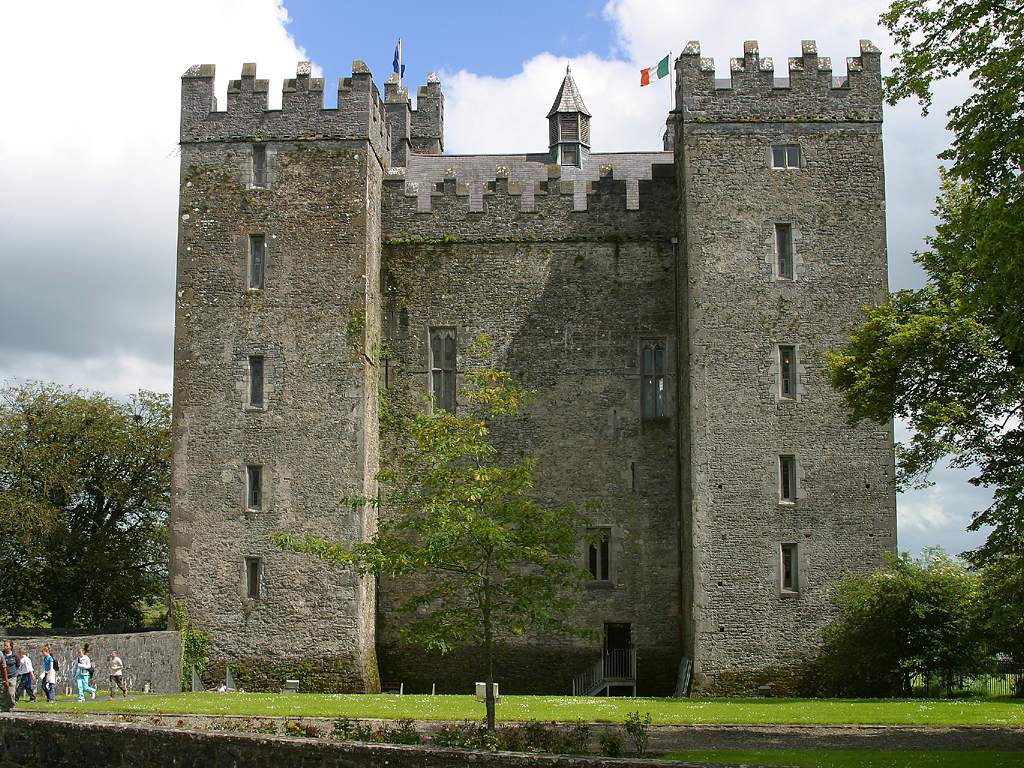
The castle is part of Bunratty Castle and Folk Park, a heritage site operated by Shannon Heritage. It attracts more than 350,000 visitors each year. The complex includes the castle itself, a 26-acre folk park recreating 19th-century rural Irish life, and a famous medieval banquet held in the castle’s Great Hall most evenings. It is hard to find a better introduction to Irish history and culture in a single afternoon.
The History of Bunratty Castle
There has been a fort or castle on this site since around 970 AD. Vikings built the first structure here to protect their trading routes along the River Shannon. The Normans followed in 1250, constructing a timber fort that was later replaced with stone. That early structure was destroyed and rebuilt several times over the next century and a half.
The castle standing today was built in 1425 by the MacNamara family, one of the most powerful Gaelic clans in County Clare. They did not hold it for long. Within a few decades, the O’Brien clan — the Earls of Thomond — seized the castle and made it their principal seat of power. It remained in O’Brien hands for most of the 15th and 16th centuries.
At its height in the late 1400s, Bunratty was one of the most powerful castles in Ireland. The O’Brien chieftains received English kings and their ambassadors here. Henry VIII sent a delegation to negotiate with the O’Briens in 1543, and the castle’s Great Hall hosted some of the most consequential political meetings of medieval Irish history.
The castle changed hands again during the 17th-century wars that convulsed Ireland. By the 18th and 19th centuries, it had fallen into disrepair. A serious restoration project began in 1954, led by Lord Gort and the Office of Public Works. The work took six years and involved careful sourcing of authentic period furniture, tapestries, and artefacts. When it reopened in 1960, Bunratty Castle became the first Irish castle to be fully restored to its medieval appearance.
What to See Inside the Castle
The castle is a classic Irish tower house — four storeys tall, with thick stone walls and a great hall at its heart. You explore it by climbing the original stone staircases and walking through rooms furnished as they would have appeared in the 15th century.
The Great Hall
The Great Hall on the third floor is the centrepiece of any visit. It is a large, dramatic space with a high timber ceiling, stone fireplace, and walls hung with Flemish tapestries dating from the 16th and 17th centuries. The tapestries alone are worth the entrance fee. They depict hunting scenes, biblical stories, and courtly life in extraordinary detail — and many are in near-perfect condition after 400 years.
The hall holds the long dining tables used for the nightly medieval banquets. Standing in this space during the day, it is easy to imagine what it would have looked like when the O’Brien chieftains received their guests.
The Main Guard and Upper Floors
The Main Guard on the ground floor served as the castle’s security post. Soldiers would have sheltered here, guarding access to the floors above. Today it contains displays about the castle’s history and the families who owned it.
The upper floors hold private chambers, solars (private sitting rooms), and smaller rooms used by the lord’s household. The furniture throughout is authentic to the period — collected from across Ireland and Europe during the 1950s restoration. You will see carved oak beds, early Irish pottery, and weaponry from the castle’s active years.
The rooftop walkway offers panoramic views across County Clare and the River Shannon estuary. On a clear day, you can see all the way to the Burren and, on the horizon, the hills of County Galway.
Curious about what daily life inside a medieval Irish castle actually involved? Our article on what it was really like to live inside a medieval Irish castle takes you through the reality of castle life — the smells, the dangers, and the social rituals that governed every hour of the day.
Bunratty Folk Park
The 26-acre Folk Park is, for many visitors, the highlight of the entire site. It is a living reconstruction of 19th-century Irish rural and urban life, with more than 30 original buildings relocated from across County Clare and reassembled on the grounds.
You walk from a west Clare farmhouse to a Limerick city street, from a fisherman’s cottage to a Victorian schoolhouse. Every building has been furnished with period-accurate interiors. Actors and craft workers demonstrate traditional skills including basket weaving, bread baking, and blacksmithing throughout the day.
The village street includes a working post office, pub, hardware shop, and drapery. Livestock roam the farm section — sheep, cows, and hens are all part of the setting. Children in particular tend to love the folk park, and most families spend more time here than in the castle itself.
The folk park is a serious piece of heritage preservation. Many of the cottages represent building types that no longer exist in the Irish countryside. Without this project, that physical record of how ordinary Irish people lived in the 1800s would be lost entirely.
☘️ Enjoying this? 64,000+ Ireland lovers get stories like this every week.
Thinking about it for retirement?
If you’ve started thinking seriously about retiring there, our complete our full Retire in Ireland guide covers the visa, healthcare, cost-of-living, and the regions worth shortlisting.
Subscribe free →
The Bunratty Medieval Banquet
The medieval banquet has been running at Bunratty since 1963, making it one of the longest-running tourist experiences in Ireland. It takes place in the Great Hall of the castle, with guests seated at long wooden tables beneath the 15th-century tapestries.
The evening typically runs for around two hours. Guests are greeted by costumed performers playing the roles of medieval nobility and their household servants. A four-course meal is served — traditional dishes including smoked salmon, Irish stew, and roasted meats — accompanied by wine, mead, and Irish coffee.
Entertainment throughout the evening includes traditional Irish music, songs, and storytelling. The format is theatrical and lighthearted rather than academic. It is designed to give visitors an experience of medieval Irish feasting culture rather than a strict historical re-enactment.
Banquets run on most evenings year-round, typically at 5:30pm and 8:45pm. Booking in advance is strongly recommended, especially in summer and around holidays. Prices for the banquet are separate from daytime castle and folk park admission.
Durty Nelly’s Pub
Directly alongside Bunratty Castle, at the foot of the castle walls, sits Durty Nelly’s. This pub has been operating since 1620, making it one of the oldest continuously licensed pubs in Ireland. The building is a low, whitewashed stone structure with timber beams, open fires, and flagstone floors.
Durty Nelly’s is genuinely atmospheric — this is not a pub that was designed to look old. It simply is old. The low ceilings and crooked walls are original, as is much of the joinery. It draws both tourists and locals, and the traditional music sessions held here are among the best in County Clare.
The pub is a natural stopping point before or after exploring the castle and folk park. Many visitors spend the morning at the site, have lunch at Durty Nelly’s, and continue into the folk park in the afternoon.
Practical Information for Visiting Bunratty Castle
Getting There
Bunratty Castle is located in Bunratty village, County Clare, just off the N18 motorway between Shannon and Limerick. Shannon Airport is 13 kilometres away — approximately 12 minutes by car. Limerick city is 16 kilometres to the south-east, around 20 minutes by road.
Bus Éireann runs regular services between Limerick and Bunratty, with the castle on the 343 route. The journey from Limerick takes around 25 minutes. Shannon Airport is also served by Bus Éireann connections that stop at Bunratty.
For visitors flying into Shannon and driving a loop of the west of Ireland, Bunratty is a natural first stop — close to the airport, easy to reach, and a superb introduction to Irish medieval history before you head further into County Clare and County Tipperary to the south-east.
Opening Hours and Admission
Bunratty Castle and Folk Park is open daily throughout the year, with hours varying by season. The castle and folk park typically open at 9:00am. Last admission is generally around 5:00pm in winter months, extended to 5:30pm in summer. The site is closed on Christmas Day.
Admission covers both the castle and the folk park. Adult tickets have recently been priced around €10, with children’s tickets around €8. Shannon Heritage also offers combination tickets that include the medieval banquet, which provides better value if you plan to attend an evening event. Check the Shannon Heritage website for current pricing before your visit, as rates are updated seasonally.
How Long to Spend at Bunratty
Allow a minimum of two hours for the castle and folk park together. Many visitors spend three to four hours if they explore both sections thoroughly. Adding a meal or drinks at Durty Nelly’s brings the typical visit to half a day.
If you plan to attend the evening medieval banquet, you will want to visit the castle and folk park during the day and return to the site in the evening — or spend the afternoon nearby and come back for the banquet.
What Else Is Nearby
Bunratty is well-placed for exploring the wider County Clare region. The Cliffs of Moher are approximately 60 kilometres to the north-west, around an hour’s drive. The Burren National Park, one of Ireland’s most distinctive landscapes, begins about 40 kilometres from Bunratty.
If food is part of your journey, County Clare produces some of Ireland’s finest seafood, smoked fish, and farmhouse cheeses. The Burren Smokehouse near Lisdoonvarna is one of the best food destinations in the west of Ireland — read the remarkable story of how it came to be.
For castle enthusiasts, Kilkenny Castle in County Kilkenny is one of Ireland’s finest — a different style of castle from Bunratty but equally impressive, and well worth including on a longer Irish itinerary.
Tips for Making the Most of Your Visit
Arrive early. The site opens at 9:00am, and early arrivals typically have the castle interior almost to themselves. By mid-morning in summer, tour groups begin to arrive and the castle can feel crowded.
Book the banquet in advance. The medieval banquet sells out weeks ahead in peak season. If it is on your itinerary, book before you travel. The Shannon Heritage website takes bookings online.
Wear comfortable shoes. The castle staircases are steep and narrow — original stone, not modernised. The folk park involves considerable walking across uneven ground. Good footwear makes a real difference.
Do not rush the folk park. Many visitors spend most of their time in the castle and hurry through the folk park. The folk park rewards slower exploration. The craftspeople demonstrating traditional skills are usually happy to talk through what they are doing.
Plan for Durty Nelly’s. The pub gets busy at lunchtime. If you want a table for lunch, aim to arrive before 12:30pm or after 2:00pm. Traditional music sessions typically run from the early evening.
Frequently Asked Questions About Bunratty Castle
What is Bunratty Castle and what can you see there?
Bunratty Castle is a fully restored 15th-century tower house in County Clare, Ireland. Visitors can explore four floors of the castle furnished with authentic medieval furniture and tapestries, walk through a 26-acre folk park recreating 19th-century Irish life, and attend a medieval banquet in the castle’s Great Hall most evenings.
How far is Bunratty Castle from Shannon Airport?
Bunratty Castle is 13 kilometres from Shannon Airport — approximately 12 minutes by car. It is one of the closest major heritage attractions to any Irish airport, making it a convenient first or last stop on a west-of-Ireland itinerary.
Is Bunratty Castle worth visiting?
Yes. Bunratty Castle is one of the best-preserved medieval castles in Ireland, and the attached folk park adds significant value to any visit. The combination of authentic castle interiors, a living 19th-century village, and the option of a medieval banquet in the evening makes it one of the most complete heritage experiences in the country.
When is the best time to visit Bunratty Castle?
Early morning on a weekday gives you the quietest experience inside the castle. Summer (June through August) brings the largest crowds but also the best weather for exploring the folk park. Spring and autumn offer a good balance — fewer visitors and mild conditions. The castle and folk park are open year-round.
📲 Know someone who’d love this? Share on WhatsApp →
Free forever · Unsubscribe anytime
Tours & experiences you might love


Powered by Viator. Some links are affiliate links — we may earn a small commission at no extra cost to you.
Secure Your Dream Irish Experience Before It’s Gone!
Planning a trip to Ireland? Don’t let sold-out tours or packed attractions spoil your journey. Iconic experiences like visiting the Cliffs of Moher, exploring the Rock of Cashel, or enjoying a guided walk through Ireland’s ancient past often sell out quickly—especially during peak travel seasons.

Booking in advance guarantees your place and ensures you can fully immerse yourself in the rich culture and breathtaking scenery without stress or disappointment. You’ll also free up time to explore Ireland’s hidden gems and savour those authentic moments that make your trip truly special.
Make the most of your journey—start planning today and secure those must-do experiences before they’re gone!
Subscribe Free