

County Sligo is not always the first place people think of when planning an Irish holiday, but for those who make it there, it often becomes the most memorable stop. Two landmarks define the landscape of this northwest county more than any others: Classiebawn Castle on the Mullaghmore Peninsula and the flat-topped bulk of Benbulben mountain rising behind it. Seen together, they form one of the most recognisable views in Ireland.
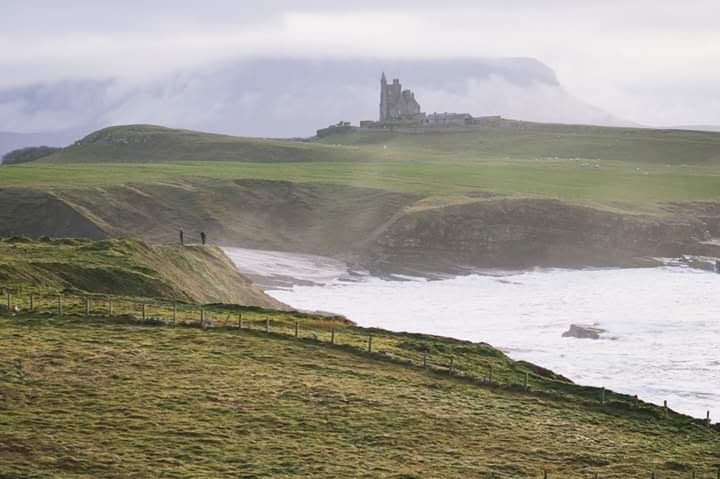
This guide covers what both places are, their history, how to get there, and what to do when you visit.
What Is Classiebawn Castle?
Classiebawn Castle stands on the Mullaghmore Peninsula in north County Sligo, overlooking Donegal Bay. It is a Victorian Gothic Revival castle, commissioned for the Palmerston family by Henry John Temple, the 3rd Viscount Palmerston, and completed in 1874 — nine years after his death in 1865.
The castle passed through several owners before coming to Lord Louis Mountbatten, who used it as a summer retreat for decades. Mountbatten was a British royal — he was Prince Philip’s uncle and a decorated naval officer who served as the last Viceroy of India. He was deeply fond of Classiebawn and of Sligo, returning year after year with his family.
On 27 August 1979, the IRA planted a bomb on Mountbatten’s fishing boat, Shadow V, while it was moored overnight in Mullaghmore harbour. The device was detonated by remote control as the boat headed out to sea that morning, killing him along with three others including his 14-year-old grandson. He was 79. The tragedy cast a long shadow over Classiebawn, though the castle itself survived and has remained privately owned since.
Today, the castle is not open to the public, but its exterior can be viewed from the road and the nearby coastal path. The building remains in private hands, which is why it appears so well preserved — it has not been converted into a tourist attraction.
For a closer look at the castle’s history and visiting details, see our full guide to Classiebawn Castle.
The History of Benbulben
Benbulben — also written as Ben Bulben — is a flat-topped mountain in County Sligo that stands at 526 metres (1,726 feet) above sea level. Its unusual shape, caused by glacial erosion during the last Ice Age, makes it one of the most distinctive peaks in Ireland. The flat summit and sheer limestone cliffs give it an almost architectural quality — it looks carved rather than natural.
In Irish mythology, Benbulben appears in the story of Diarmuid and Gráinne. According to the legend, Diarmuid — a warrior hero — was killed on its slopes by a wild boar, brought about through the jealousy of Fionn Mac Cumhaill. The mountain has been a place of stories for thousands of years.
More recently, Benbulben became closely associated with the poet WB Yeats. Yeats spent much of his childhood in Sligo and the county’s landscape shaped his imagination throughout his life. His poem “Under Ben Bulben” was written as a kind of last testament and ends with the famous inscription he requested for his gravestone: “Cast a cold eye / On life, on death / Horseman, pass by!” Yeats is buried at Drumcliff Churchyard, just a short drive from Benbulben’s base.
For more on the mountain’s geology, mythology, and its Yeats connection, see our full guide to Benbulben.
What Makes the View So Special?
The view from Mullaghmore Head — with Classiebawn Castle in the foreground and Benbulben rising behind it — works because of the contrast between the two elements. The castle is vertical and ornate; the mountain is horizontal and vast. They are separated by several kilometres and considerable elevation, yet in photographs and in person they appear to occupy the same frame naturally.
The light on the north Sligo coast also plays a role. Because the peninsula faces northwest, afternoon and evening sun catches both the castle’s stone and the mountain’s surface at angles that create strong shadows and definition. Photographers who visit tend to find that late afternoon — around 4pm to 6pm in summer — gives the best conditions.
Visiting Classiebawn Castle
The castle itself is private, but visiting the Mullaghmore Peninsula is straightforward. Mullaghmore village is roughly 26 kilometres north of Sligo town, accessed via the N15 and then local roads. The journey takes about 30 minutes by car. There is no direct public bus service to Mullaghmore, so a car or bicycle is the practical option.
Once there, you can park near the harbour and walk the coastal path along Mullaghmore Head. The path gives clear views of the castle from multiple angles. The walk is roughly 3–4 kilometres return and is mostly flat, though it can be muddy after rain.
The pier and harbour area at Mullaghmore are also worth exploring. The village has a small number of pubs and cafés open during tourist season (May to September). Outside these months, facilities are limited.
- The castle is private property — do not attempt to enter the grounds.
- The coastal path can be exposed and windy — bring a layer even in summer.
- Parking is limited during peak season. Arrive early or later in the afternoon.
- Mobile signal is patchy on the headland.
If you love discovering Ireland’s hidden stories and spectacular scenery, join our free weekly newsletter for guides, travel tips, and inspiration delivered straight to your inbox.
Walking and Hiking Near Benbulben
Benbulben itself can be climbed, though the summit route requires care and experience. The most common approach is from Gortarowey, where there is a Coillte car park and forest trail. From there, a marked loop trail runs through the forest and up to the Benbulben plateau, covering approximately 5.5 kilometres with significant elevation gain. The views from the top extend across Sligo Bay, Donegal Bay, and on clear days as far as the Donegal mountains.
The upper section of the mountain should not be attempted in wet or misty conditions. The terrain changes quickly from forested trail to open moorland, and the summit plateau is boggy underfoot. Proper hiking boots and waterproof gear are essential.
For those who prefer a lower-level option, the road along the base of Benbulben gives excellent views of the escarpment without any climbing. Driving west from Drumcliff along the R279, you can pull over at several points to photograph the cliffs.
Drumcliff and WB Yeats
Any visit to the Benbulben area should include a stop at Drumcliff, which sits at the very foot of Benbulben’s southern slopes. The church there is an ancient site — the ruins of a round tower are visible nearby — and it is here that WB Yeats is buried in the churchyard.
The gravestone inscription is modest and frequently visited by travellers from around the world. The church is open to visitors and entry is free, though a small donation is welcomed. The nearby Drumcliff Tea House provides a welcome stopping point before or after.
Yeats’ connection to this area goes beyond the grave. His family had deep roots in Sligo. The landscape — the light off the Atlantic, the shape of Benbulben, the quality of the sky — appears repeatedly in his work. Visiting here gives context to poems that might otherwise feel abstract.
Planning Your Visit to County Sligo
County Sligo has much more to offer beyond these two landmarks. Our complete guide to things to do in Sligo covers the full range of the county’s attractions.
Getting there: By car from Dublin, the journey takes approximately 2.5 hours via the N4/M4 and N17. Irish Rail operates services from Dublin Connolly to Sligo, taking around 3 hours. Bus Éireann runs regular services from Dublin to Sligo town. From Sligo town, hire a car or taxi to reach Mullaghmore and Benbulben — both are within 30–40 minutes of the town centre.
Accommodation: Sligo town has a range of hotels, guesthouses, and self-catering options. For a closer base to Mullaghmore, Bundoran (just across the Donegal border) and Ballyshannon offer more accommodation than Mullaghmore village itself.
Best time to visit: May to September gives the most reliable weather, though Sligo is wetter than the east coast. Even during summer, rain is possible. The shoulder months — May, early June, and September — offer smaller crowds with the landscape still at its best.
What to combine it with:
- Hazelwood Sculpture Trail on Lough Gill (20 minutes from Sligo)
- Sligo Abbey — 14th-century ruins in Sligo town (see our complete guide to things to do in Sligo)
- Knocknarea — hilltop cairn said to be the tomb of Queen Maeve (30 minutes from Sligo)
- Strandhill beach and surf school
Want to explore more of Ireland’s north-west? Subscribe to our free newsletter and we’ll send you practical guides like this one every week — covering the places, stories, and landscapes that make Ireland worth travelling for.
One View, Two Landmarks, One County
The image of Classiebawn Castle beneath Benbulben works because both landmarks carry real weight. The castle has a complex, sometimes tragic history. The mountain is ancient and mythological. Together, they represent what makes Sligo distinctive: a place where the human story and the natural landscape have been in conversation for centuries.
If you visit County Sligo and stand at Mullaghmore Head on a clear afternoon, you will understand exactly why this view stays with people long after they leave.
Sign up for our free weekly newsletter and we’ll keep sharing the places — famous and overlooked — that make Ireland worth exploring.
Thinking about it seriously?
If you’ve started actually planning a move, our complete the full Move to Ireland guide walks through every step, every cost, and the paperwork that catches most people out.
Tours & experiences you might love


Powered by Viator. Some links are affiliate links — we may earn a small commission at no extra cost to you.
Secure Your Dream Irish Experience Before It’s Gone!
Planning a trip to Ireland? Don’t let sold-out tours or packed attractions spoil your journey. Iconic experiences like visiting the Cliffs of Moher, exploring the Rock of Cashel, or enjoying a guided walk through Ireland’s ancient past often sell out quickly—especially during peak travel seasons.

Booking in advance guarantees your place and ensures you can fully immerse yourself in the rich culture and breathtaking scenery without stress or disappointment. You’ll also free up time to explore Ireland’s hidden gems and savour those authentic moments that make your trip truly special.
Make the most of your journey—start planning today and secure those must-do experiences before they’re gone!