

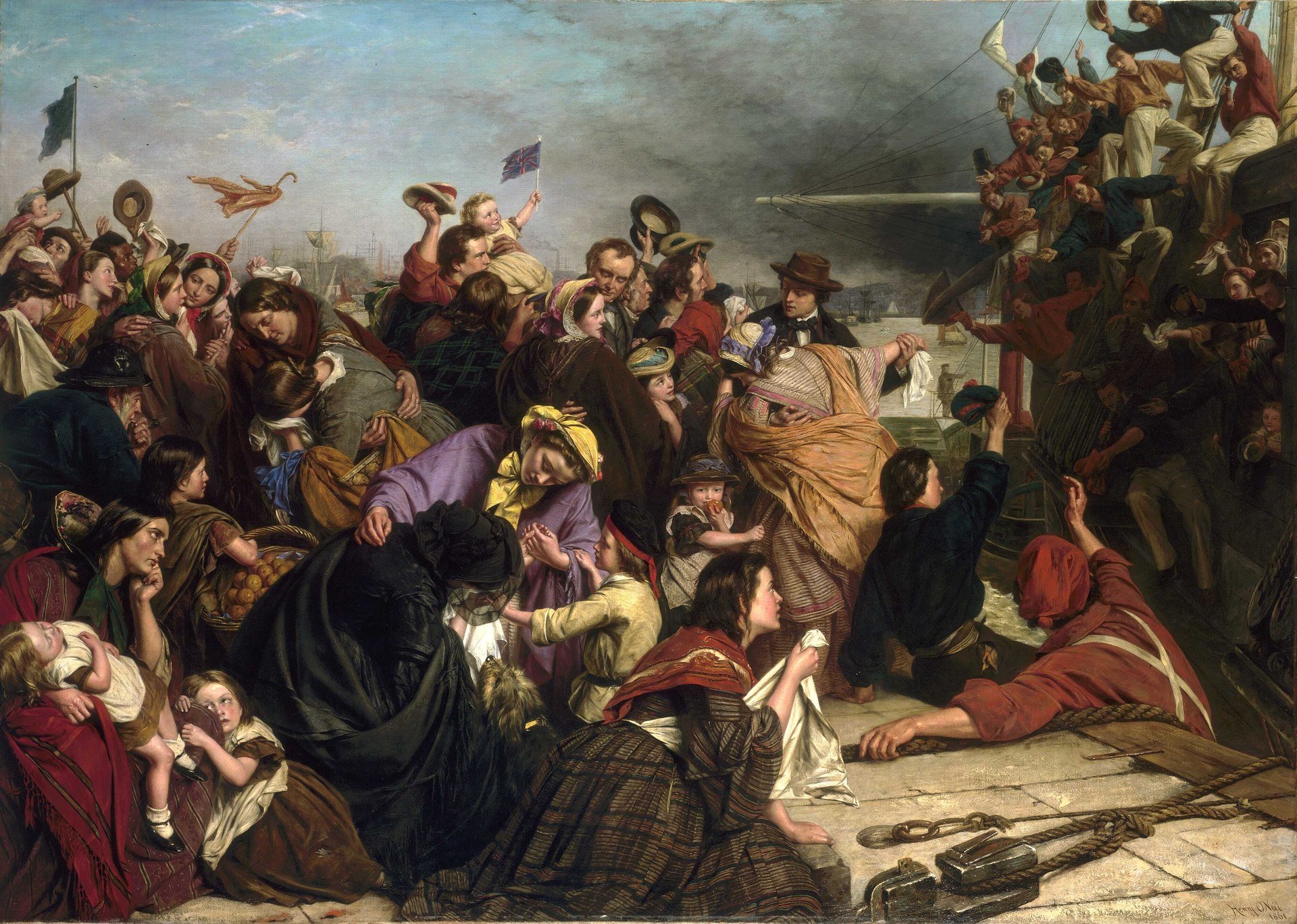
The whole village arrived. There was music, dancing, and whiskey passed hand to hand. Neighbours wept openly. And the guest of honour was still alive.
They called it the American Wake — a farewell so final that the community grieved as though someone had died. Because in most cases, they had.
Watch: Do You Qualify for an Irish Passport?
Tracing your Irish family? If one of your grandparents was born in Ireland, you may be able to become an Irish citizen. This 14-minute guide explains who qualifies, what it costs and how long it takes. Thinking of making the move? Get the free Moving to Ireland checklist.
The Goodbye That Lasted Until Dawn
Before cheap flights and video calls, leaving Ireland for America was permanent. A ticket from Cobh or Liverpool cost more than a labourer earned in six months. The journey took weeks. Letters took a month to arrive — if they arrived at all.
For families in rural Connacht and Munster, emigration during the 19th and early 20th centuries was a kind of death. The parent or child who walked out the cottage door one morning would almost certainly never return. Everyone in the room knew it.
So they held a wake.
What Happened at an American Wake
The gathering began the night before departure. Neighbours came from miles around — down bog roads, across hillsides in the dark. They brought food, poitín, and whatever music they could carry.
The person leaving sat at the centre of it all. They danced every reel and jig they knew. They stayed awake through the night, because sleep meant the morning would come faster.
Old people pressed coins into their palms. Younger siblings clung to their coats. Mothers made the sign of the cross over them again and again, as though repetition could seal in the protection.
The Songs That Tore the Night Apart
The music at an American Wake was particular. Laments sat alongside reels. Slow airs — the kind that move through the chest like cold water — were played between the dancing sets.
Songs like Slán le Máigh and The Parting Glass were not chosen for their beauty alone. They were chosen because they named what everyone felt but could not say out loud. The emigrant’s job was to hold themselves together. The music was allowed to fall apart on their behalf.
For many families, this night was also the last time they would hear the Irish language spoken freely. In America, it would fade within a generation.
☘️ Enjoying this? 64,000+ Ireland lovers get stories like this every week. Subscribe free →
The Morning After
When the sun came up, the dancing stopped. The fire was still burning. The bottles were empty.
Someone walked the emigrant to the road — sometimes the whole village did. They watched until the figure disappeared over the hill. Some accounts describe mothers running after carts for a mile or more, unable to stop themselves.
The emigrant rarely looked back. Not from coldness — but because turning around made it impossible to keep going.
The Villages Nearly Emptied by 1900
By 1900, some townlands in Connacht and Munster had lost more than half their population to emigration. Each American Wake removed another person from the community. Each empty house crept closer to ruin.
The effect on those who stayed was slow and cumulative — a grief without a funeral, because no body ever came home to bury. If you’re tracing your own family’s path out of Ireland, our 7-Day Irish Ancestry Itinerary maps the journey from church records to ancestral townlands.
There is a particular kind of Irish grief that comes from absence rather than presence — from spaces where people used to be. The American Wake was that grief made visible, made communal, made survivable.
Why the Tradition Still Matters
The descendants of those emigrants now number in the tens of millions. Many carry surnames that once rang out over bog and mountain. Many feel a pull toward Ireland they cannot entirely explain.
That pull was built into the farewell. The American Wake was not just a party — it was a declaration: you are ours, even when you’re gone. You carry us with you. Do not forget where you came from.
For many Irish-Americans, that instruction has lasted generations. It’s why so many come back to a country they have never been to and feel, inexplicably, that they have come home. If you want to experience Ireland for yourself, our Ireland travel planning guide is the best place to start.
The American Wake ended with the dawn. But the feeling it carried — love mixed with grief, pride threaded through with loss — has never quite left Ireland. It is in the music. It is in the names above the pub doors. It is in the way Irish people still say goodbye as though the person might not come back.
Because once, they never did.
☘️ You Might Also Love
Tours & experiences you might love


Powered by Viator. Some links are affiliate links — we may earn a small commission at no extra cost to you.
Secure Your Dream Irish Experience Before It’s Gone!
Planning a trip to Ireland? Don’t let sold-out tours or packed attractions spoil your journey. Iconic experiences like visiting the Cliffs of Moher, exploring the Rock of Cashel, or enjoying a guided walk through Ireland’s ancient past often sell out quickly—especially during peak travel seasons.

Booking in advance guarantees your place and ensures you can fully immerse yourself in the rich culture and breathtaking scenery without stress or disappointment. You’ll also free up time to explore Ireland’s hidden gems and savour those authentic moments that make your trip truly special.
Make the most of your journey—start planning today and secure those must-do experiences before they’re gone!