

The question has a way of stopping you mid-scroll. Would you retire in Ireland if money was no object? Thousands of people weighed in online recently — and the answer, overwhelming and unmistakable, was yes. But what does that dream actually look like? Not the spreadsheets, not the visa forms, not the comparative property prices. The dream. The life.
Here is what your dream retirement in Ireland might really look like — from first morning to last light.
Watch: Do You Qualify for an Irish Passport?
If one of your grandparents was born in Ireland, you may be able to become an Irish citizen. This 14-minute guide explains who qualifies, what it costs and how long it takes. Thinking of making the move? Get the free Moving to Ireland checklist.
Where You’d Wake Up in Your Dream Retirement in Ireland
There is no single “Ireland retirement” — the island is gloriously varied, and where you’d settle depends on the version of yourself you’d most like to become.
A Stone Cottage on the Atlantic Edge
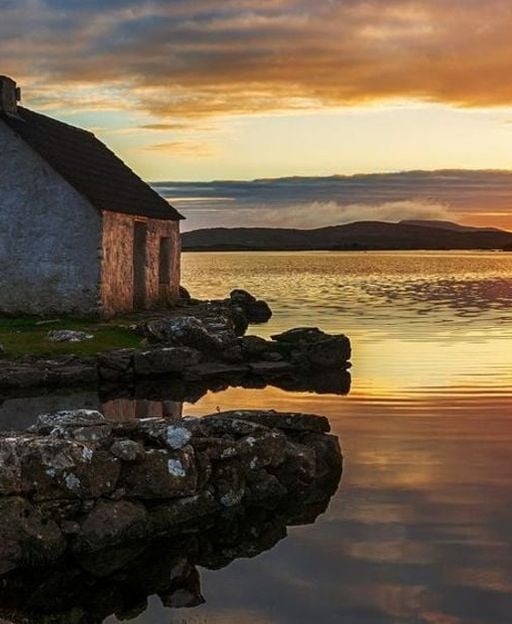
For many, the dream begins and ends in Connemara. A low stone cottage, whitewashed walls catching the morning light, a peat fire already burning before you’ve put the kettle on. Outside the window: bog, mountain, and the silver-grey shimmer of a lough. The Atlantic is ten minutes’ walk. Nothing is scheduled.
Connemara is the Ireland people close their eyes and see. It is raw and elemental, and after years of city commutes, it heals something deep and long-neglected.
Further north, Donegal offers the same wild solitude — dramatic sea stacks, deserted beaches, and a quality of light that painters come from across the world to chase. In the west of Clare, you’d be within walking distance of the Cliffs of Moher and the music sessions that run every night of the week in Doolin.
A Georgian Townhouse in a Market Town
Not everyone dreams in wilderness. Some dream of cobblestones, a farmers’ market on a Saturday morning, a decent bookshop, and a warm pub with a proper fire. Ireland’s market towns deliver all of this in abundance.
Westport in County Mayo. Kenmare in Kerry. Kinsale in Cork. Kilkenny city. These are places where life moves at a pace that reminds you what life is actually for — where you know your butcher, your baker (genuinely), and the man who runs the Friday night traditional session by name. If you are still in the planning stages, our Ireland trip planning guide is the best place to begin exploring which part of the country calls to you most.
How You’d Spend Your Days
A dream retirement in Ireland is not about doing nothing. It is about choosing everything.
The Rhythm of the Morning
No alarm. A slow cup of tea, strong enough to stand a spoon in. A walk — always a walk. Along a clifftop path in all weathers, or up a quiet boreen between hedgerows thick with foxgloves in June. Ireland is a country made for walking slowly, for noticing things.
The morning walk is also when you’d meet people. Ireland has a way of turning strangers into neighbours quickly. The man with the collie who always stops to talk. The woman who keeps bees and occasionally leaves a jar of honey at the gate. Communities form without effort here, in a way that can catch you off guard if you’ve been used to city life.
Afternoons Worth Having
With no object, money or otherwise, your afternoons might look like this: a long lunch at a harbour-front restaurant in Dingle, fresh crab claws and a cold pint of Murphy’s. A browse through an antique shop in Westmeath. Maybe a visit to a National Museum exhibition. Then a long drive on roads that wind through mountain and bog for no particular reason, because sometimes no reason is the best reason.
Or: absolutely nothing. A chair by the window. A book. The rain on the glass — and in Ireland, rain is less an inconvenience and more a companion you eventually learn to appreciate, even love.
If you are drawn to culture, Ireland rewards you generously. The island punches far above its weight in literature, music, visual art, and theatre. You would never run out of things to go to, read, or discover.
The Food and Drink of an Irish Dream Life
Irish food has transformed beyond recognition in recent decades. The country now has a seriously impressive food culture, built on a handful of pillars:
- Artisan cheese producers in Cork and Tipperary.
- Extraordinary fresh seafood along every coastline.
- Craft breweries and distilleries that have made Irish whiskey one of the world’s most exciting spirits.
In your dream retirement, Sunday mornings might mean a proper full Irish at the local café: soda bread, black pudding from a producer three villages over, eggs from a farm you can see from the road. Evenings might mean langoustines pulled from the same bay you watched all afternoon.
The pub remains at the centre of Irish social life — not as a drinking destination so much as a living room that belongs to everyone. The quality of conversation in an Irish pub on a Tuesday night would sustain you through the week.
What the Weather Would Do to You
Here is where Ireland’s dream life asks something of you.
Ireland is not the Mediterranean. It rains. Sometimes sideways. You will own an extraordinary number of waterproof layers within eighteen months of arrival. There will be August days when you light the fire.
And then — there will be days that stop your heart. A winter morning when the frost has turned the fields white and the low sun comes out gold and everything is so still you forget to breathe. Or a summer evening at ten o’clock when it is still bright, the hedgerows humming with insects, the whole island smelling of grass and salt. Then a September afternoon in Kerry so warm and golden you would swear you were dreaming it.
People who have lived in Ireland long enough stop complaining about the weather. They start talking about the light.
The Community You’d Find Yourself In
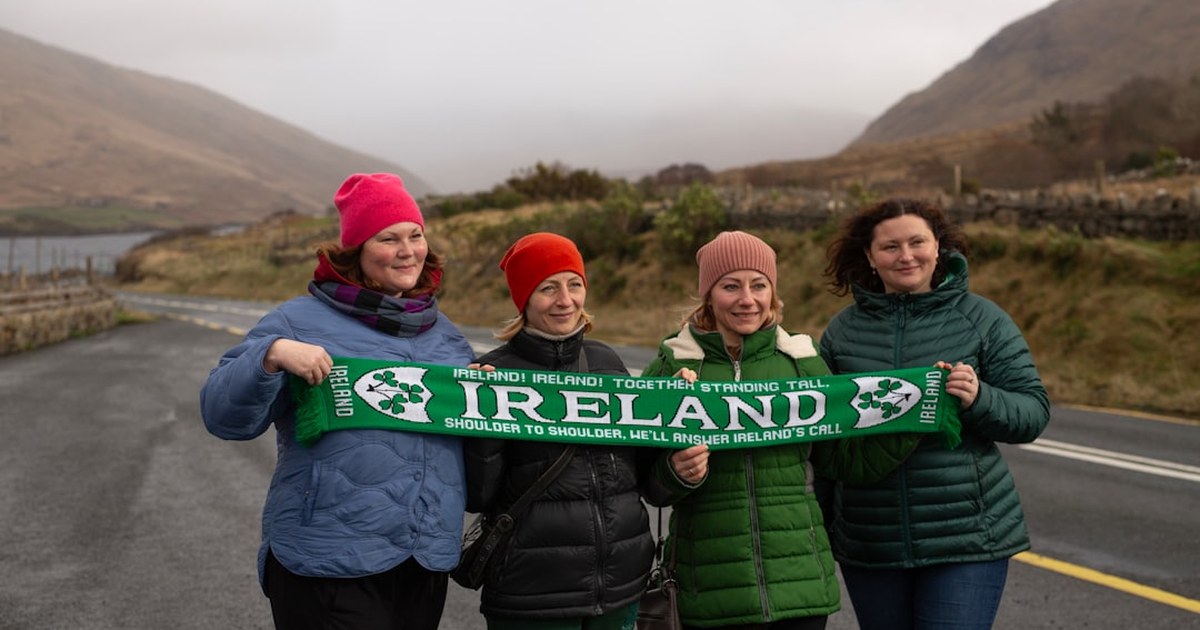
Perhaps more than anywhere else in Europe, Ireland has retained the texture of real community. People talk to each other. Neighbours look out for each other. There is still, in most parts of the country, a generosity of spirit that cities tend to erode over time.
This is especially true for the returning Irish diaspora — people whose grandparents or great-grandparents left, who come back and find themselves inexplicably, emotionally at home in a country they have never technically lived in. Ireland has a way of claiming its own, across generations and across oceans.
For newcomers from elsewhere, the welcome is no less warm. Ireland is one of the most internationally open small nations on earth, and has been absorbing outsiders and making them locals for centuries. It is a skill the Irish have not lost.
If this is starting to feel less like a daydream and more like something worth exploring seriously, our guide to why so many people are seriously considering retiring to Ireland covers the practical landscape in honest detail.
The Question That Won’t Leave You
Would you retire in Ireland if money was no object?
The engagement that question generates every time it is asked online does not surprise those of us who love this island. What Ireland offers — at its best, without constraints — is something rare and hard to find: a life that feels lived, in a landscape that never stops being beautiful, among people who take time for a conversation.
Money, of course, always has an object. But for a moment, let yourself sit with the question. The cottage, the Atlantic, the fire, the sessions. The slow, grey-green light of a Tuesday morning in October when the bog mist has not quite lifted yet.
Would you?
Frequently Asked Questions
Can Americans retire in Ireland?
Yes. Non-EU citizens, including Americans, can retire to Ireland under the Stamp 0 permission (“person of independent means”). It requires proof of a stable income of at least €50,000 a year for a single applicant (around €100,000 for a couple), private medical insurance, and access to a lump-sum reserve for emergencies — you cannot work or claim State benefits on this visa.
How much money do you need to retire comfortably in Ireland?
A comfortable day-to-day retirement outside Dublin can be managed on roughly €40,000 to €55,000 a year for a couple, depending on whether you own your home and how often you travel. Note this is a cost-of-living estimate, not the income figure immigration uses — the Stamp 0 visa itself requires proof of a higher income (around €100,000 for a couple) regardless of your actual spending.
Where are the best places to retire in Ireland?
Popular choices include coastal Kerry and West Cork for scenery, and walkable market towns such as Kenmare, Kinsale, and Kilkenny for their services, community, and slower pace.
Free forever · One email per week · Unsubscribe anytime
Tours & experiences you might love


Powered by Viator. Some links are affiliate links — we may earn a small commission at no extra cost to you.
Secure Your Dream Irish Experience Before It’s Gone!
Planning a trip to Ireland? Don’t let sold-out tours or packed attractions spoil your journey. Iconic experiences like visiting the Cliffs of Moher, exploring the Rock of Cashel, or enjoying a guided walk through Ireland’s ancient past often sell out quickly—especially during peak travel seasons.

Booking in advance guarantees your place and ensures you can fully immerse yourself in the rich culture and breathtaking scenery without stress or disappointment. You’ll also free up time to explore Ireland’s hidden gems and savour those authentic moments that make your trip truly special.
Make the most of your journey—start planning today and secure those must-do experiences before they’re gone!
Subscribe Free