

There is a dish in Ireland so embedded in the national soul that it has its own folk song — one that grandmothers still know by heart and musicians still play in pubs. That dish is colcannon. It is humble, filling, and deeply Irish.
What’s your Irish county’s signature dish? ☘️
Different counties claim different dishes — Your County’s Signature Food tells you which one your county is known for, with a short story behind it.
What Is Colcannon?
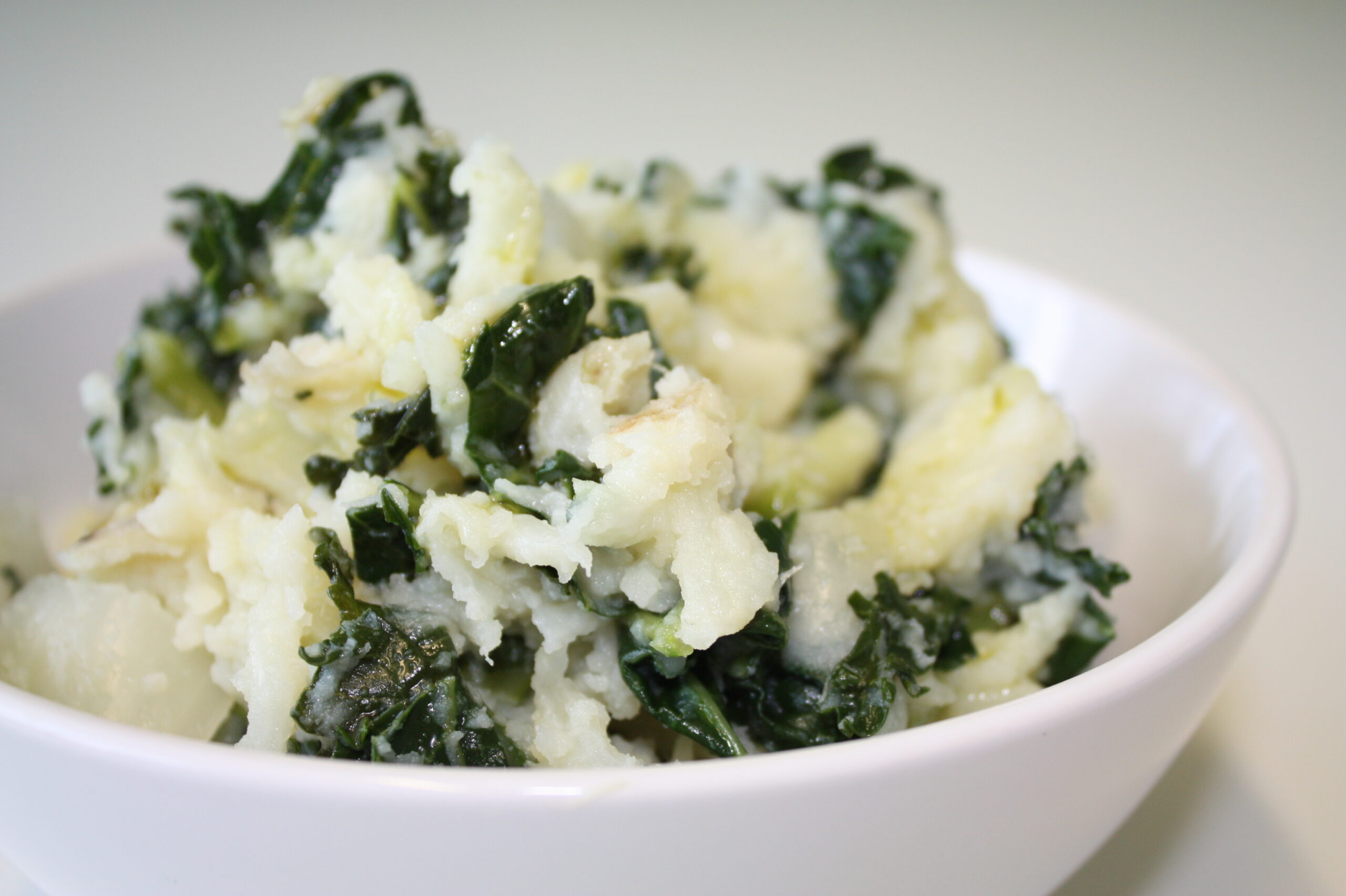
Colcannon is mashed potato blended with kale or savoy cabbage, loosened with hot milk and finished with a generous amount of butter. Each cook has their own version. Some add scallions. Some use curly kale, others savoy cabbage. A few stir in a little cream.
The result looks simple. It doesn’t taste simple.
It appears on menus across Ireland — in pub restaurants, guesthouses, and family homes — usually alongside lamb chops, a slice of bacon, or a bowl of Irish stew. But colcannon is never just a side dish. At the Irish table, it holds its own.
The Song That Lasted Centuries
Ask most Irish people about colcannon and many can recite at least a verse of the folk song without prompting. It begins: “Did you ever eat colcannon, made from lovely pickled cream? With the greens and scallions blended like a picture in a dream?”
The ballad — known as “Colcannon” or occasionally “The Skillet Pot” — has been recorded by everyone from the Dubliners to Sinéad O’Connor. It was collected by Irish folk scholars in the early twentieth century, though its roots are older still.
What is striking about the song is what it chooses to celebrate. Not Ireland as a grand idea. Not heroes or battles. Just a specific smell, a specific warmth, the sound of butter hitting hot mash on a cold evening. A remembered meal.
The fact that a potato dish inspired a song still sung centuries later says everything about how central colcannon is to Irish identity.
The Ring Hidden in the Mash
At Halloween — Samhain in the old Irish calendar — families across Ireland once tucked small objects into their colcannon before serving. A gold ring. A coin. A thimble. A button. A small scrap of cloth.
Each carried a prediction. Whoever found the ring in their bowl would marry within the year. The coin promised wealth. The thimble meant a life of industry and hard work. The button: lifelong bachelorhood. The cloth: lean years ahead.
Children dug through their bowls with a spoon, nervous and hopeful in equal measure. Adults pretended not to be watching.
The tradition belongs to a wider world of Irish Halloween divination — a night when the boundary between this life and the next was thought to grow thin, and ordinary food could carry a prophecy. The colcannon pot became a kind of oracle, read one careful spoonful at a time.
☘️ Enjoying this? 64,000+ Ireland lovers get stories like this every week.
Thinking about it seriously?
If you’ve started actually planning a move, our complete the full Move to Ireland guide walks through every step, every cost, and the paperwork that catches most people out.
Subscribe free →
How Colcannon Was Born
Potatoes arrived in Ireland in the late sixteenth century and were widespread across the country by the eighteenth. Kale had been grown in Ireland far longer — it was frost-hardy, reliable in poor soil, and easy to store through winter.
When the two came together in farmhouse kitchens across the island, they created something filling, affordable, and — crucially — capable of feeding a large family with very little. Colcannon was practical born from necessity.
The butter, melted into a well dug in the centre of the mash, was the small luxury that elevated survival food into something looked forward to. Every household had butter. Every household had a pot. And so colcannon spread — from county to county, from generation to generation — until it became shorthand for Irish home cooking itself.
If you are planning a trip to Ireland, understanding dishes like colcannon helps you read the country as you travel through it. The food here is not decorative. It tells you something about the land, the seasons, and the people.
Where to Find Colcannon in Ireland Today
Colcannon is not a heritage dish preserved for visitors. It is eaten across Ireland by ordinary families on ordinary evenings — particularly through the autumn and winter months.
In pub restaurants throughout the country, it appears alongside slow-cooked lamb, braised beef, or thick cuts of pork. In country guesthouses, it arrives on dinner menus that follow the season and whatever the local farms have produced.
The west of Ireland is particularly good territory for it. In Connemara and County Galway, you’ll find pub kitchens where colcannon is still made the old way — potatoes boiled in their skins, peeled while still hot, mashed with plenty of butter and kale from the garden. It arrives at the table with a pool of melted butter sinking into the centre.
That image — the butter slowly melting into the mash — is the one described in the folk song. When you see it, you’ll understand why the song exists.
Still at the Table
Colcannon has survived three centuries without reinventing itself. The folk song is still sung. The Halloween ring is still hidden by some families. The butter still melts the same way it always did.
Some things in Ireland endure not because they have been preserved, but because they are simply good enough to keep making. Colcannon is one of them.
If you sit down to a bowl of it this year — somewhere in a warm pub, with rain on the window and a fire in the grate — you are eating something that has been on Irish tables for three hundred years. That’s worth savouring slowly.
☘️ Join 64,000+ Ireland Lovers
Every Friday, get Ireland’s hidden gems, local secrets, and travel inspiration — the kind you won’t find in any guidebook.
Subscribe free — enter your email:
Free forever · One email per week · Unsubscribe anytime
Tours & experiences you might love


Powered by Viator. Some links are affiliate links — we may earn a small commission at no extra cost to you.
Secure Your Dream Irish Experience Before It’s Gone!
Planning a trip to Ireland? Don’t let sold-out tours or packed attractions spoil your journey. Iconic experiences like visiting the Cliffs of Moher, exploring the Rock of Cashel, or enjoying a guided walk through Ireland’s ancient past often sell out quickly—especially during peak travel seasons.

Booking in advance guarantees your place and ensures you can fully immerse yourself in the rich culture and breathtaking scenery without stress or disappointment. You’ll also free up time to explore Ireland’s hidden gems and savour those authentic moments that make your trip truly special.
Make the most of your journey—start planning today and secure those must-do experiences before they’re gone!
Subscribe Free