

There is a dish so deeply connected to Dublin that locals say you can tell a true Dubliner by whether they grew up eating it. It does not appear on tourist menus. You will not find it in glossy food guides. But walk into any Dublin home on a cold Saturday evening, and you might just smell it simmering on the stove. That smell — slow-cooked sausages, soft potato, the gentle warmth of bacon — is the smell of Dublin itself.
What Is Dublin Coddle?
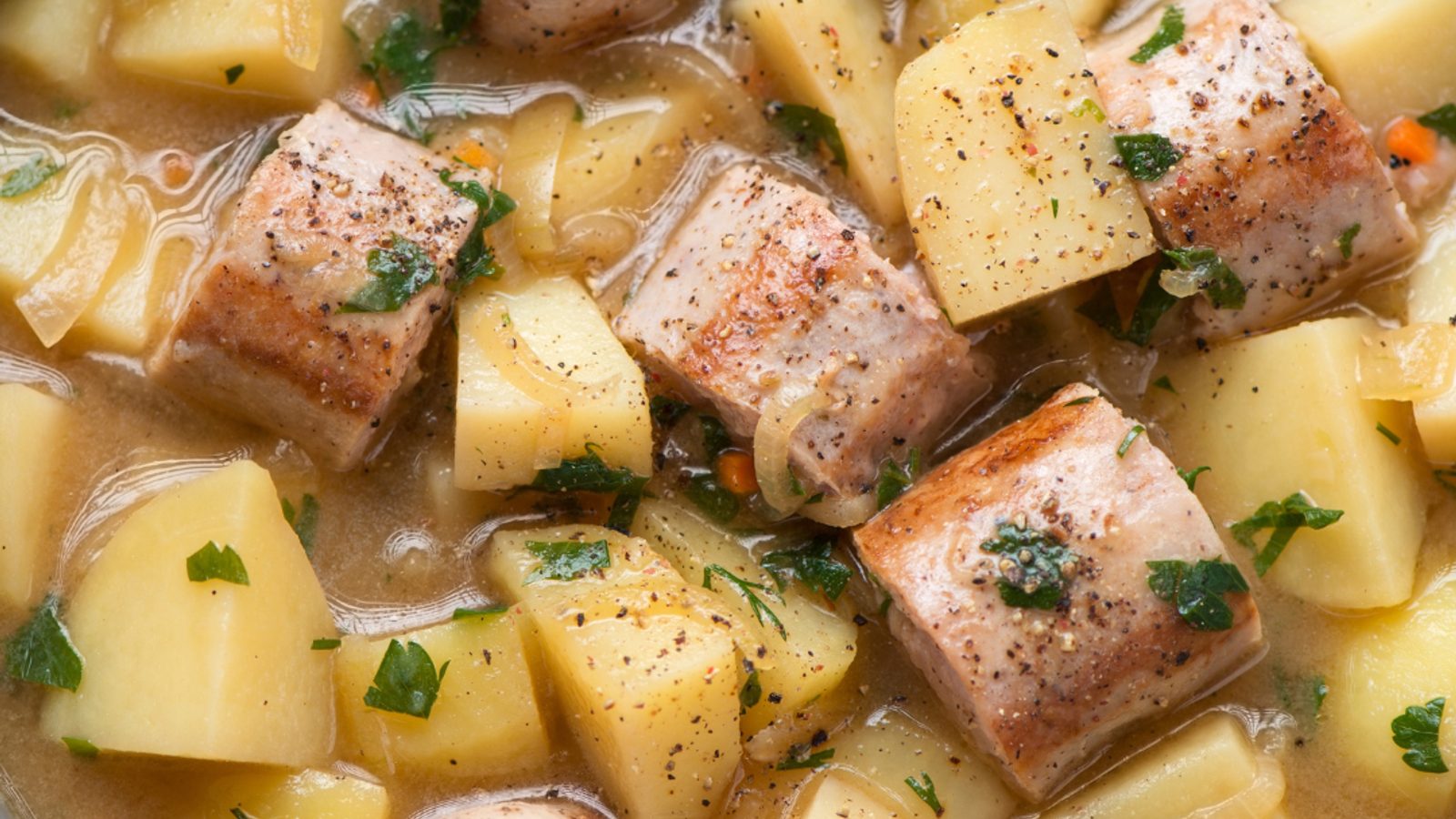
Dublin Coddle is a slow-cooked stew made from four main ingredients: pork sausages, back rashers (bacon), potatoes and onions. A little water or stock brings it all together. That is it.
There is no thick gravy. There are no carrots or turnips in the traditional version. The ingredients cook gently together until the potatoes soften completely and the sausages take on the deep flavour of the bacon. The result is something quietly extraordinary — hearty, warming and full of a savouriness that cannot be rushed.
The name comes from the old English word “coddle” — to cook food gently in water just below boiling point. Dublin cooks have been doing exactly that for at least 300 years. The dish requires no skill and no expensive ingredients, yet it produces something that Dubliners return to again and again throughout their lives.
A Dish Born in Working-Class Dublin
Coddle was never the food of wealthy houses. It began as a practical way to stretch leftovers through the end of the week, and it has never pretended to be anything else.
Dublin’s working-class families bought their sausages and rashers at the Saturday market. Whatever remained at the end of the week went into the pot with some potatoes and onions. The pot sat on a low heat overnight, filling the house with a slow, savoury warmth that crept into every room.
By Sunday morning, after mass, the family ate. It was affordable, filling and wasted nothing. In a city where money was always tight and families were large, those qualities mattered enormously. Coddle became the food of tenements and terraced streets, of dock workers and laundresses, of anyone who needed sustenance without ceremony.
Its simplicity was also its genius. The slow cook overnight meant the mother of the house did not stand over it. She put it on, went to bed, and it took care of itself. The longer it cooked, the better it tasted.
The Saturday Night Ritual
☘️ Love Irish Food & Culture?
Every Wednesday, we send our best Irish recipes, food stories, and kitchen traditions straight to your inbox. Join 64,000+ readers who love Ireland.
For many Dublin families, coddle was not just food. It was a ritual that structured the weekend.
The pot went on Saturday evening after the shopping was done. It cooked through the night on the lowest heat possible — just enough to keep it moving without boiling. By Sunday, the potatoes had softened almost to breaking point and the sausages had given everything their rich, fatty flavour.
Some families added a splash of Guinness. Some used beef stock. Some swore by water alone. Every Dublin mammy had her way of doing it, and every Dublin mammy was absolutely certain her way was the right one.
That is where things get complicated. Ask ten Dubliners for a coddle recipe and you will get ten different answers — and each person will tell you the other nine are wrong. It is one of those dishes that lives in memory rather than cookbooks, passed from hand to hand without ever quite being written down. The debates about the correct method have been running for generations and show no sign of being resolved.
☘️ Enjoying this? 64,000+ Ireland lovers get stories like this every week. Subscribe free →
Famous Dubliners Who Loved It
Dublin Coddle has some notable admirers on the historical record, which says a great deal about how long it has been part of the city’s life.
Jonathan Swift, the author of Gulliver’s Travels and one of Dublin’s greatest literary sons, is reputed to have been fond of coddle himself — one of several signs that the dish was already a familiar part of the city’s life in his eighteenth-century Dublin.
James Joyce, Dublin’s most celebrated writer, gave coddle a place in his work too. In Finnegans Wake, he captures the Saturday-night ritual in a single unmistakably Dublin line: “Dubliners used love have coddle on a Saturday.” For Joyce, coddle was not just food. It was shorthand for the texture of Dublin existence.
Playwright Sean O’Casey, who grew up in the tenements of Dublin’s north inner city, knew coddle as everyday fuel. It fed the world he wrote about. These are not coincidental connections. Coddle sat at the heart of Dublin’s working life for so long that its writers could not help but notice it.
If you are planning a trip to Dublin and want to eat your way through its real history, a bowl of coddle is as authentic as it gets. The ancient Dublin pubs where history was made are the perfect place to find it — and to imagine the city as it once was.
What Makes It Authentically Dublin
Coddle remains distinct from every other Irish stew, and that distinction matters to Dubliners.
While Irish stew — typically made with lamb, carrots and barley — is known across the whole island, coddle belongs entirely to Dublin. Ask someone from Cork, Galway or Donegal about coddle and many will shrug. It was never their dish. In Dublin, it was the fuel that kept a whole working city moving.
Traditional coddle has no thickener. No cornflour, no roux, no flour of any kind. The broth should be light, almost clear, with just the natural starch from the potatoes giving it a little body. The sausages should be proper Irish pork sausages — not chipolatas, not frankfurters, not anything imported or fashionable.
Modern Dublin restaurants now serve versions with carrots, leeks and fresh herbs scattered across the top. Traditionalists argue fiercely about this. The debate between “classical” coddle and “modern” coddle is ongoing, passionate and, frankly, very Dublin in character.
The full Irish breakfast is another beloved Dublin morning tradition — and if you are curious about the unwritten rules of the full Irish breakfast, you will find coddle shares the same culture of firm opinions and strong tradition.
Where to Find Dublin Coddle Today
Coddle is having a quiet revival. After decades of being overshadowed by international cuisine and gastro-pub menus, it is back on tables around the city.
Several traditional Dublin pubs now serve it on their lunch menus during the colder months. The city’s covered food markets feature it regularly on cold mornings. Home cooks across Dublin never really stopped making it — it simply moved out of restaurants and back into kitchens.
If you are visiting Dublin and want to try something genuinely local — something that tourists almost never seek out but that every Dubliner has eaten their whole lives — coddle is the answer. It will not dazzle you in the way a carefully plated restaurant dish might. But it will warm you, fill you and give you something to think about.
To plan your time in Dublin properly, the Ireland trip planning hub has everything you need to make the most of the city and beyond.
A Bowl of Dublin, Simply Put
Coddle is not a dish that dazzles. There is no drama in how it looks. It arrives in a bowl, quiet and unassuming, smelling of sausage and something slow-cooked and deeply warm.
But that is exactly the point. It is the food of a city that never had money to waste, never had patience for pretension, and always knew how to make something remarkable from almost nothing. Three centuries of Dublin families have eaten it. Writers have written about it. Arguments have been had over it. And the recipe — if you can even call it that — still lives mostly in memory, passed quietly from parent to child without ever quite being pinned to a page.
If you ever find yourself at an Irish kitchen table in Dublin on a cold evening, and the pot on the stove smells like slow-cooked sausages and soft potato — sit down. You are exactly where you are supposed to be.
☘️ You Might Also Love
Love Ireland? So do 65,000 of us.
Every week, our free newsletter delivers hidden gems, seasonal guides, local stories, and practical travel tips — straight to your inbox. Join the community that loves Ireland as much as you do.
Love Scotland too? Join 43,000 Scotland lovers → · Love Italy? Join 30,000 readers → · Love France? Join 7,000 readers →
☘️ Get More Irish Recipes & Stories
Join 64,000+ readers for weekly Irish recipes, food traditions, travel guides, and hidden gems. Free every morning.
📥 Free Download: Ireland Travel Planning Guide
Our most popular resource — itineraries, insider tips, and the 50 places you must not miss.
Tours & experiences you might love


Powered by Viator. Some links are affiliate links — we may earn a small commission at no extra cost to you.
Secure Your Dream Irish Experience Before It’s Gone!
Planning a trip to Ireland? Don’t let sold-out tours or packed attractions spoil your journey. Iconic experiences like visiting the Cliffs of Moher, exploring the Rock of Cashel, or enjoying a guided walk through Ireland’s ancient past often sell out quickly—especially during peak travel seasons.

Booking in advance guarantees your place and ensures you can fully immerse yourself in the rich culture and breathtaking scenery without stress or disappointment. You’ll also free up time to explore Ireland’s hidden gems and savour those authentic moments that make your trip truly special.
Make the most of your journey—start planning today and secure those must-do experiences before they’re gone!