

For anyone who has ever stood on a windswept Irish headland, nursed a pint in a creaking pub, or simply felt that Ireland reaches something deep inside them, the idea of making it permanent is not as far-fetched as it might seem. Thousands of people — from returning diaspora to new arrivals chasing a slower, richer life — are choosing Ireland as their home each year. Moving to Ireland is not a holiday decision; it is a life decision. And it might be the best one you ever make.
Whether you are drawn by ancient family ties, the lure of the landscape, or the pull of a country where conversation is still an art form, this guide will walk you through what it actually takes to move to Ireland and build a life worth living there.
Why Ireland Is Drawing People From Around the World
More Than a Holiday Destination
Most people who move to Ireland have visited first — and found that the country did something to them. The west coast, with its raw Atlantic light and unmarked lanes, or a slow morning in Kenmare or Westport, tends to plant a seed that refuses to stop growing.
Ireland consistently ranks among Europe’s most liveable countries. It boasts a strong economy, an English-speaking workforce, world-class universities, and a social fabric built on warmth and inclusion. For families, remote workers, and career-driven professionals alike, the case is compelling. If you are already planning a visit to Ireland, it is worth using that time to explore what permanent life might look like — not just the tourist sites, but the towns, the commutes, and the communities.
The Diaspora Pull
For those of Irish heritage — and there are an estimated 70 to 80 million people worldwide with Irish roots — moving to Ireland can feel like a homecoming rather than emigration. Irish citizenship by descent is available to those who can trace a grandparent born in Ireland, and this route opens doors not just to Irish residency but to full EU citizenship with all that it entails. For many in the Irish diaspora across America, Australia, and the UK, this is the most powerful lever available — and an increasing number are pulling it.
What You Need to Know Before Moving to Ireland
Visas and Residency
Citizens of the European Union and EEA can move to Ireland freely, with no visa required. For those arriving from outside the EU — particularly from the United States, Canada, Australia, or the UK — the pathway depends on your circumstances. Work visas, spousal visas, student visas, and investor visa routes are all available. If you qualify for Irish citizenship by descent, this is often the most powerful and straightforward route to residency. It is always worth consulting an immigration solicitor before committing, as individual circumstances vary significantly.
The Irish Property Market
Ireland’s property market is one of the most talked-about topics in the country. Housing is in high demand, particularly in Dublin and the larger cities. Rents have risen steeply, and buying property is competitive.
That said, rural Ireland tells a different story. In counties like Leitrim, Roscommon, or parts of Clare and Mayo, property prices remain significantly lower, and you can find a cottage with land for a price that would be unthinkable in most Western cities. Many new arrivals find that Ireland’s countryside is where the quality of life truly opens up — and that their money goes considerably further than it ever did at home.
Choosing Where to Live in Ireland
City Life: Dublin, Cork, and Galway
For those who need the infrastructure of a city — international airports, a full range of employment, nightlife, and culture — Dublin is the obvious starting point. It is Ireland’s capital and its economic engine, home to the European headquarters of many global technology and pharmaceutical companies. Expect higher rents and busier streets, but also a city with real energy, excellent restaurants, and strong international communities.
Cork is Ireland’s second city and arguably its most liveable. It has a fierce local pride, a renowned food culture, and a pace that Dublin cannot always match. Galway, meanwhile, is the cultural heart of the west — a festival city with a creative spirit that draws artists, musicians, and free thinkers from around the world. Each of these cities offers a genuinely distinct Irish experience.
The Countryside Alternative
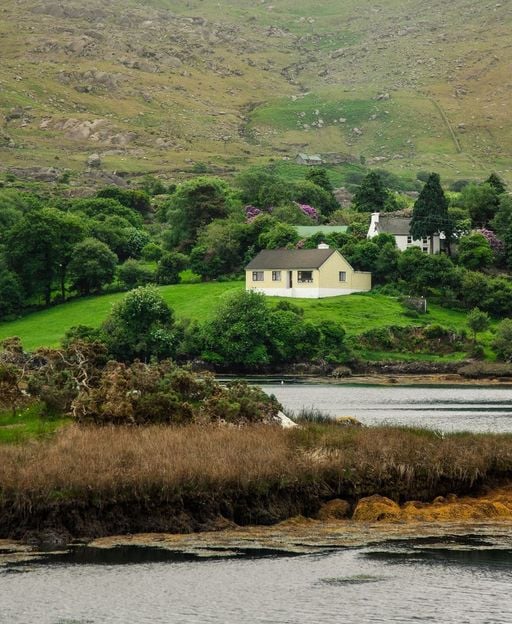
For those willing to embrace a slower rhythm, rural Ireland is extraordinary. Whether you are drawn to the wild beauty of Connemara in County Galway or the rolling green hills of County Wicklow, Ireland’s countryside delivers an authenticity that is becoming increasingly rare in the modern world. Remote working has made this a genuinely viable option for many, and small-town Ireland has seen a quiet renaissance as people arrive seeking community, space, and a pace of life that feels human again.
The Irish Cost of Living: What to Expect
Housing Costs
Housing is the single biggest financial factor in Ireland. In Dublin, a one-bedroom apartment in the city centre typically rents for €1,800 to €2,400 per month. Outside Dublin, prices drop considerably: a two-bedroom house in a rural county town might rent for €900 to €1,300. For buyers, expect to pay from around €200,000 upwards in rural areas, rising to over €500,000 for a modest home in Dublin’s commuter belt.
Day-to-Day Expenses
Ireland is not a cheap country by European standards, but it is not the most expensive either. Groceries, eating out, and transport costs are broadly comparable to the UK. Ireland’s public health system (the HSE) is supplemented by a robust private healthcare sector, and private health insurance is affordable and widely used. Public transport in the cities is reasonable; in rural areas, a car is essentially non-negotiable. Factor that into your plans from the start.
Finding Work and Building a Career in Ireland
Ireland’s economy is one of the strongest in Europe, with a significant cluster of multinational technology, pharmaceutical, and financial services companies. Dublin’s docklands — sometimes called Silicon Docks — host the European operations of Google, Meta, Microsoft, LinkedIn, and dozens of others. For skilled professionals in these sectors, Ireland is one of the most opportunity-rich destinations on the continent.
For those wondering which careers are most accessible, our guide to what jobs you can actually get in Ireland offers a detailed breakdown of sectors, qualifications, and practical entry points. Remote workers and digital nomads have also found Ireland to be a welcoming base — the country’s time zone sits neatly between the US East Coast and mainland Europe, making it ideal for those who work across both markets.
Fitting Into Irish Life
The Pub, the Community, and the Chat
You will hear many things about Irish culture before you arrive, but most of them will not quite prepare you for the reality of the Irish pub. This is not just a place to drink — it is the community living room, the place where news is shared, where strangers become regulars within a fortnight, and where the best conversations of your life might happen on an unremarkable Tuesday evening. The Irish pub is an institution, and it matters enormously to local life.
The Irish are, by and large, extraordinarily warm to new arrivals. A willingness to engage — to take an interest in your neighbours, to turn up for the local club, to show up for things — will repay you a hundredfold. Isolation in rural Ireland is genuinely rare for those who make themselves available to the community around them.
Embracing the Irish Pace
Ireland runs on human connection rather than efficiency. Expect conversations to take longer than expected, for plans to be fluid, and for the unexpected to happen with a cheerful shrug. There is a word in Irish — craic — that roughly translates as fun, good company, and lively conversation, but which really means something harder to pin down: the particular pleasure of being present in a moment with good people. Once you find your craic in Ireland, you will understand why people who move here rarely leave.
Your First Steps to Moving to Ireland
The practical journey begins before you pack a single box. If you have Irish heritage, start by researching your eligibility for citizenship by descent — this single step can open more doors than any visa and give you the freedom to move without employment or financial thresholds. If you are planning a visit to explore options, use that trip strategically: explore a few different counties, talk to locals, and visit in the off-season as well as the summer, when the country shows a more honest version of itself.
Connect with the thriving online communities of people who have already made the move — the Irish diaspora networks, expat Facebook groups, and local community forums are full of people who were once exactly where you are now, wondering whether to take the leap. Their collective experience is invaluable. Ireland has a remarkable way of making new arrivals feel, quite quickly, that they were always supposed to be there. Perhaps they were.
🔒 Thinking About It Seriously?
This piece covers the basics. Our premium deep-dive — Is Moving to Ireland Right for You? — goes further: a practical, honest walk-through of visas, housing, healthcare, work and the everyday reality of the move.
☘️ Join 64,000+ Ireland Lovers
Every Friday, get Ireland’s hidden gems, local secrets, and travel inspiration — the kind you won’t find in any guidebook.
Already subscribed? Download your free Ireland guide (PDF)
Free forever · One email per week · Unsubscribe anytime
Tours & experiences you might love


Powered by Viator. Some links are affiliate links — we may earn a small commission at no extra cost to you.
Secure Your Dream Irish Experience Before It’s Gone!
Planning a trip to Ireland? Don’t let sold-out tours or packed attractions spoil your journey. Iconic experiences like visiting the Cliffs of Moher, exploring the Rock of Cashel, or enjoying a guided walk through Ireland’s ancient past often sell out quickly—especially during peak travel seasons.

Booking in advance guarantees your place and ensures you can fully immerse yourself in the rich culture and breathtaking scenery without stress or disappointment. You’ll also free up time to explore Ireland’s hidden gems and savour those authentic moments that make your trip truly special.
Make the most of your journey—start planning today and secure those must-do experiences before they’re gone!