

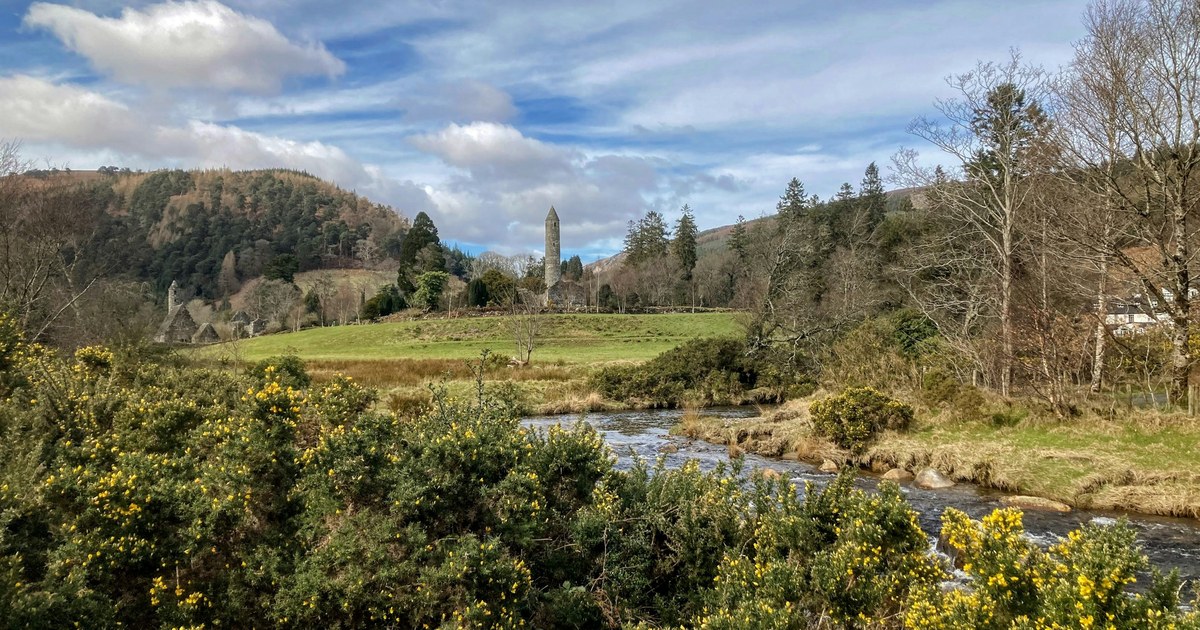
Glendalough is a 6th-century monastic site in the Wicklow Mountains, about 50 km south of Dublin. It is one of the best day trips in Ireland if you want history and scenery in one place. You can see a round tower that stands around 30 metres tall, a ruined monastic city, and two glacial lakes. You can also walk trails of every length from a 30-minute stroll to a full mountain day. This Glendalough guide covers the history, the key sights, the best walks and how to plan your visit.
What Is Glendalough and Why Does It Matter?
The name comes from the Irish Gleann Dá Loch, which means the glen of the two lakes. A young monk named Kevin chose this quiet valley for a hermit’s life in the 6th century. Followers gathered around him, and a monastery grew. By the Middle Ages it was a place of learning that drew students from across Ireland and Europe.
Tradition says Kevin died around the year 618. His name lives on in the site’s best-known church. The monastery survived Viking raids and centuries of change. English forces damaged it in 1398, and it never recovered its old standing.
The ruins you see today mix buildings from roughly the 10th to the 12th centuries. For a wider look at why these towers were built, read our guide to Irish round towers.
What Life Was Like for the Monks
Daily life in the monastery followed a strict rhythm of prayer, study and farm work. Monks copied manuscripts by hand and taught students who travelled long distances to learn. They also grew food in the valley and fished in the lakes. At its height the settlement worked like a small town, with workshops, guesthouses and a school.
Some of the monks lived in tiny stone cells scattered up the hillside. Kevin’s own early retreat stood above the Upper Lake. Legend links a hollow in the rock there to his prayer and fasting. Whatever the truth, the setting explains why people still call Glendalough a place of peace.
The Monastic City: What to See
Most visitors start at the visitor centre. A short exhibition and a model of the site help you read the ruins before you walk among them. The official Heritage Ireland page for Glendalough lists current opening times, so check it before you travel.
The Round Tower
The round tower is the icon of the valley. It rises to around 30 metres and has a conical stone cap. Monks used towers like this as bell towers and lookouts. They may also have stored valuables there during raids. The doorway sits well above ground level, so the monks needed a ladder to enter. For more on its construction and long survival, see our deep dive into the Glendalough round tower.
The Gateway and the Cathedral
The stone gateway is the main entrance to the monastic city. It is one of the few such gateways left standing in Ireland. Beyond it lies the cathedral, the largest church on the site. Its walls show several building phases, from different centuries. Look for the carved stone details around the old doorways.
St Kevin’s Church
Visitors often call this small stone church St Kevin’s Kitchen. It has a steep stone roof and a tiny bell tower rising from one end. Nobody cooked here, so the name is only a nickname. The church is roughly 1,000 years old and still has its original barrel-vaulted roof.
The Graveyard
Old Celtic crosses and worn headstones fill the monastic graveyard. Local families still use many of the graves. Walk slowly and keep to the paths. Our guide to the Glendalough graveyard looks more closely at the stone art and older graves.
The Two Lakes and the Best Walks
A short path leads from the monastic city to the Upper Lake. The Upper Lake sits at the head of the valley, with steep slopes dropping straight into the water. The Lower Lake is smaller and quieter. Glendalough lies inside Wicklow Mountains National Park, which covers about 20,000 hectares. You can read more on the national park website.
Coloured posts mark each trail. Pick one that suits your time and fitness:
- Lakeside stroll (about 30 to 60 minutes): flat paths beside the water with views up the valley.
- Miners’ Road: an easy track past old lead-mining ruins, good for families.
- Spinc and Glenealo Valley loop (about 9 km): a steep climb up wooden steps to a high ridge, then a valley return. Allow three to four hours. See our Spinc walk guide for a shorter version of this route.
- Wicklow Way: Ireland’s first long-distance trail passes through the valley for walkers who want more.
The Spinc loop gives the best views of both lakes, but it is a proper hill walk. Wear walking boots, bring a waterproof layer and carry water. Weather can change fast in the mountains.
☘️ Enjoying this? 64,000+ Ireland lovers get stories like this every week. Subscribe free →
How to Get to Glendalough from Dublin
Glendalough is about an hour’s drive from Dublin when traffic is light. Most visitors take the M11 south and then follow signs through the Wicklow hills. The final stretch is narrow in places, so drive carefully.
You have three main options:
- Drive: this gives you the most freedom. Car parks fill up early at weekends and in summer, so arrive before 10 am.
- Bus: scheduled services link Dublin to the valley. Check the latest timetable before you go, as winter runs are less frequent. Our guide to getting to Glendalough by bus has route and ticket details.
- Guided tour: many day tours pair Glendalough with Kilkenny or the Wicklow countryside. They suit visitors without a car.
Once you arrive, leave the car and explore on foot. The ruins, the lakes and the visitor centre all sit within a short walk of each other. Wet weather is common, so a light rain jacket earns its place in your bag. On a clear day, the valley looks its best from the first ridge above the Upper Lake.
When Is the Best Time to Visit Glendalough?
Early morning is best at any time of year. The paths are quiet and the light on the lakes is soft. Summer weekends are busy. Autumn brings colour to the oak and birch woods, and winter brings crisp air and far fewer people.
Daylight is short in midwinter, and the sun drops behind the hills before 4:30 pm. Plan to finish your walk early. Our guide to the best autumn walks in Ireland has more seasonal ideas.
Plan the Rest of Your Wicklow Trip
Glendalough pairs well with a longer stay in the county. Our guide to living in County Wicklow shows what life in the “Garden of Ireland” is really like. If you enjoy hill walking, see our list of Ireland’s 10 best walking trails.
Building a longer trip? Start with the Ireland trip planning hub, then try our 10-day first-trip guide or the Ireland road trip itinerary.
Quick Visitor Tips
- Allow at least two hours for the monastic city and lakeside paths.
- Wear sturdy shoes, as the ground is often wet.
- Bring food and drink. The site offers few choices.
- Check the official opening times before you set out.
Frequently Asked Questions About Glendalough
How long do you need at Glendalough?
Allow two to three hours for the monastic city and a short lakeside walk. Add three to four hours if you want to climb the Spinc ridge.
Is Glendalough worth visiting?
Yes. It combines a 6th-century monastic city with mountain scenery in one valley, and it is close to Dublin. It suits history lovers, walkers and families.
How far is Glendalough from Dublin?
Glendalough is about 50 km south of Dublin. The drive takes roughly an hour in good traffic.
Who was St Kevin of Glendalough?
Kevin was a 6th-century monk who founded the monastery at Glendalough. Tradition says he died around 618, and he remains one of Ireland’s best-loved saints. Read more in our full profile of St Kevin.
☘️ Join 64,000+ Ireland Lovers
Every weekday morning, get Ireland’s lesser-known corners, local stories and secrets, straight to your inbox.
Subscribe free — enter your email:
📲 Know someone who’d love this? Share on WhatsApp →
Prefer Substack? Subscribe on Substack →
Free forever · Unsubscribe anytime
Secure Your Dream Irish Experience Before It’s Gone!
Planning a trip to Ireland? Don’t let sold-out tours or packed attractions spoil your journey. Iconic experiences like visiting the Cliffs of Moher, exploring the Rock of Cashel, or enjoying a guided walk through Ireland’s ancient past often sell out quickly—especially during peak travel seasons.

Booking in advance guarantees your place and ensures you can fully immerse yourself in the rich culture and breathtaking scenery without stress or disappointment. You’ll also free up time to explore Ireland’s hidden gems and savour those authentic moments that make your trip truly special.
Make the most of your journey—start planning today and secure those must-do experiences before they’re gone!