

There is a story from sixth-century Ireland that most people have never heard. A young monk stretched out his hand to pray in a wooded valley. A blackbird landed in his open palm. She laid her eggs. And he did not move — not for hours, not for days — until the eggs hatched and the chicks took flight. That monk was Kevin. That valley became Glendalough. And that story has been told in Ireland every single generation since.
The Saint Who Ran from the World
Kevin was born around 498 AD into an Irish noble family. By all accounts, he was educated, privileged, and destined for comfort. He chose something else entirely.
At a young age he walked into the Wicklow Mountains and did not come back. He found a glacial valley carved between two dark lakes — the Upper and Lower Lough — and made his home there. For years he lived alone, sleeping in a hollow tree, wearing animal skins, eating whatever the forest offered.
He was not running from failure. He was running toward something. In the Ireland of his time, monks who sought radical solitude were deeply respected. They believed that the further you stripped away comfort, the closer you came to what mattered. Kevin stripped away everything.
He became known across Ireland as a healer, a teacher, and a man who seemed at home with wild animals. Birds and deer came near him without fear. His reputation spread, and people followed him into the valley — first a handful, then hundreds. A community grew around a man who had wanted to be completely alone.
The Valley of Two Lakes
Glendalough — Gleann Dá Loch in Irish — means “valley of the two lakes.” The name is simple. The place is not.
It sits in County Wicklow, about an hour south of Dublin. The valley walls rise steeply on either side, covered in ancient oak forest. The two lakes sit cold and still at the valley floor, even on warm days. Sound carries here in an unusual way. Birdsong, water, wind through leaves. Almost nothing else.
Today, over a million people visit Glendalough every year. They come along a narrow road that threads through the Wicklow Mountains. And most of them feel the shift the moment they arrive — the sense that the noise of the modern world has been left somewhere behind them.
That feeling is not accidental. It is what Kevin chose this place for. And in a strange way, he built it into the landscape by making it sacred to so many generations.
If you’re planning a visit to County Wicklow and beyond, our Ireland trip planning guide covers everything you need to know before you arrive.
☘️ Enjoying this? 64,000+ Ireland lovers get stories like this every week. Subscribe free →
The Blackbird and the Open Hand
The legend at the heart of Glendalough is this:
One morning during Lent, Kevin was praying with his arms outstretched. A blackbird landed in his palm. He held so still that she mistook his hand for a branch. She built a nest. She laid her eggs. She sat on them, day after day, through rain and cold, while Kevin stayed frozen in place, barely breathing, unwilling to disturb her.
He did not eat. He barely slept. He stood through weeks of March weather while the eggs slowly developed beneath the warmth of the blackbird’s body. And when the chicks finally hatched and flew away, he lowered his hand.
It is not a miracle in the thunderbolt sense. It is something quieter. A man so patient, so still, so emptied of urgency, that the wildest of creatures trusted him without thinking. The story has been retold since the ninth century, and it does not get old. Because patience like that — the kind that asks nothing, gives everything, and moves only when the time is right — is the rarest thing in any century.
The Round Tower and the Growing Community
As Kevin’s reputation spread, so did the settlement he never planned to build. Glendalough grew into one of the most important monastic cities in early medieval Ireland. At its peak, it attracted scholars, pilgrims, and craftsmen from across Europe. You can read the fuller story of Glendalough’s 1,400-year monastic history in our companion guide.
The Round Tower that still stands at the site is one of the finest in Ireland — over 30 metres tall, its original conical cap intact. These towers were built as bell towers and places of refuge during Viking raids. Glendalough was attacked multiple times. Each time, it was rebuilt.
You can read more about the remarkable story of Ireland’s round towers and why nobody entirely agrees on what they were built for in this piece.
Around the tower, the monastery grew to include several churches, a cathedral, a gateway arch that survives to this day, and thousands of graves. The scale of it surprises first-time visitors. This was not a small hermit’s retreat. It became an entire city of faith — see a structure-by-structure guide to Glendalough’s monastic city for the full layout.
Kevin died around 618 AD, aged over 120 according to tradition — though historians treat that figure with appropriate scepticism. What is beyond question is what he left behind: a living place that drew pilgrims for over a thousand years.
The Pilgrimage That Never Really Ended
For centuries after Kevin’s death, Glendalough was one of Ireland’s great pilgrimage sites. The tradition held that seven visits to Glendalough equalled one journey to Rome. That was no small claim in a world where Rome was the centre of everything.
Pilgrims walked from across Ireland and from Scotland, Wales, and mainland Europe. They prayed at the churches, bathed in the lakes, and visited Kevin’s cell — the tiny cave above the upper lake where he is said to have lived during his years of solitude.
The pilgrimage was officially banned in the nineteenth century after celebrations became too rowdy. But it never entirely disappeared. People still walk to Glendalough today, often on St. Kevin’s feast day (3 June), to sit by the lake in silence and feel something they cannot quite name.
The site is now protected under Irish and European law. The ancient cemetery at the heart of Glendalough, with its Celtic crosses, carved stones, and cathedral walls — all carefully preserved. And still, every morning, the blackbirds sing.
What Glendalough Says About Ireland
There is something in the Glendalough story that feels specifically Irish. Not the mysticism — that belongs to many traditions. But the particular combination: a man who wanted nothing, and ended up giving everything. A community built in spite of, and because of, its founder’s desire for silence. A place that became more itself by welcoming more people into it.
Ireland’s sacred sites often have this quality. They are not triumphant or imperial. They are worn, quiet, a little melancholy, deeply beautiful. Glendalough carries all of it.
If you ever find yourself standing in that valley on a still morning, looking at the Round Tower rising above the trees, listening to the water — you will understand why Kevin stopped here. And why, fifteen hundred years later, people are still coming.
For more on planning your time in Wicklow and exploring Ireland’s ancient sites, visit our Glendalough visitor guide.
Frequently Asked Questions About St. Kevin and Glendalough
Why is St Kevin the patron saint of blackbirds?
According to legend, St Kevin remained motionless with his arm outstretched for weeks while a blackbird nested, laid eggs, and raised her chicks in his open palm.
When did St Kevin found Glendalough?
St Kevin settled in the Glendalough valley in the late 6th century after years as a hermit; the monastic community that grew around him flourished for centuries after his death in 618 AD.
Where is St Kevin’s cave in Glendalough?
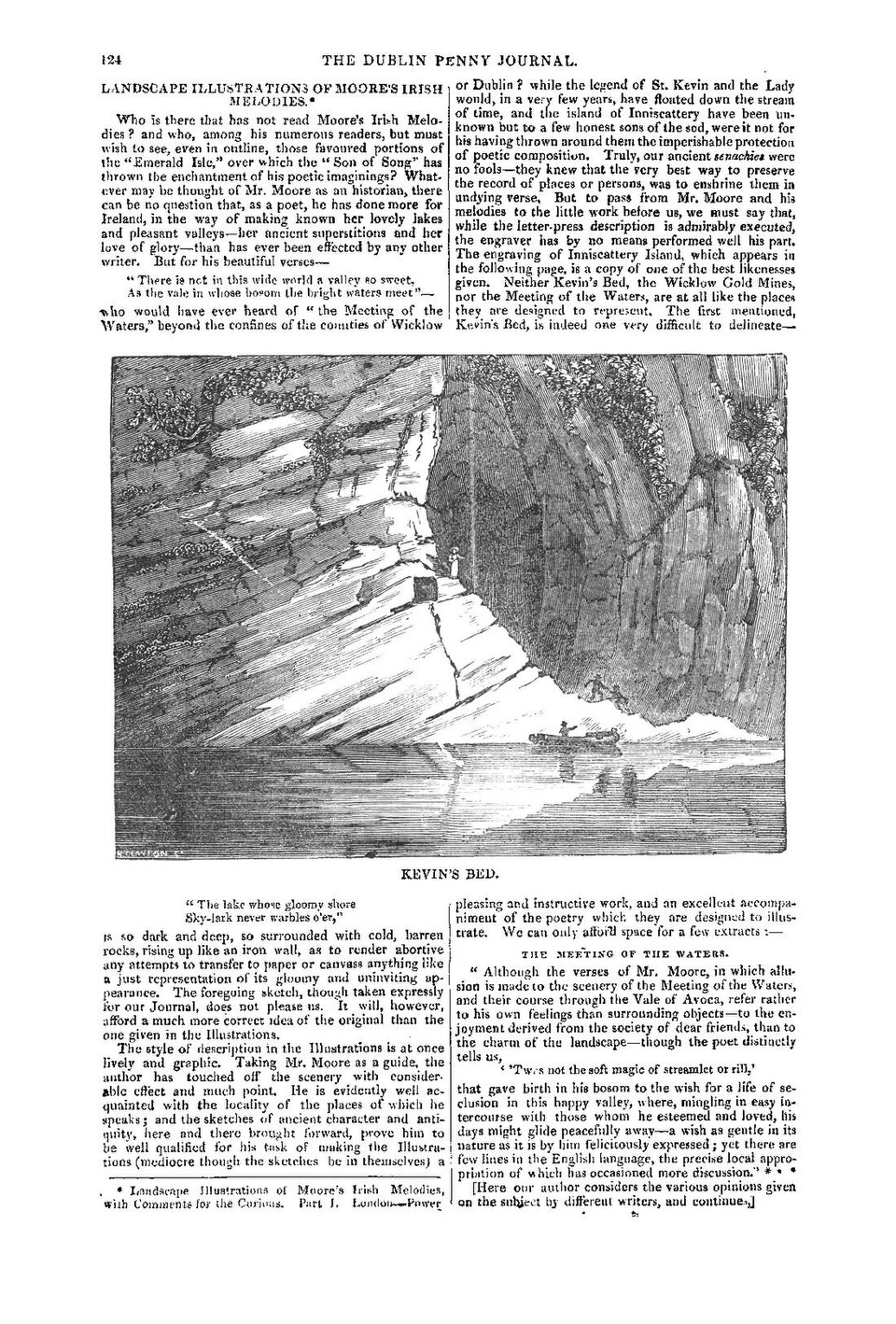
Known as St Kevin’s Bed, it is a small cave halfway up a cliff face above the Upper Lake, reachable only by boat.
☘️ You Might Also Love
Love Ireland? So do 65,000 of us.
Every week, our free newsletter delivers hidden gems, seasonal guides, local stories, and practical travel tips — straight to your inbox. Join the community that loves Ireland as much as you do.
☘️ Want More Hidden Ireland?
Join 64,000+ subscribers who discover Ireland’s best-kept secrets every week.
Subscribe Free — Join the Community →
Free forever · Unsubscribe anytime · No spam
📥 Free Download: Ireland Travel Planning Guide
Our most popular resource — itineraries, insider tips, and the 50 places you must not miss.
Tours & experiences you might love


Powered by Viator. Some links are affiliate links — we may earn a small commission at no extra cost to you.
Secure Your Dream Irish Experience Before It’s Gone!
Planning a trip to Ireland? Don’t let sold-out tours or packed attractions spoil your journey. Iconic experiences like visiting the Cliffs of Moher, exploring the Rock of Cashel, or enjoying a guided walk through Ireland’s ancient past often sell out quickly—especially during peak travel seasons.

Booking in advance guarantees your place and ensures you can fully immerse yourself in the rich culture and breathtaking scenery without stress or disappointment. You’ll also free up time to explore Ireland’s hidden gems and savour those authentic moments that make your trip truly special.
Make the most of your journey—start planning today and secure those must-do experiences before they’re gone!