

Drive deep enough into rural Ireland and the signposts stop making sense. Not because the Irish are unhelpful — quite the opposite. It’s because you’ve entered territory that was mapped long before maps existed, by people who had no interest in making things simple for strangers.
Every place name out there points to something real: a hill, a ford, an ancient well, a long-vanished church. And beneath it all lies a grid that most visitors never notice — over 60,000 tiny territories called townlands, the oldest surviving map of Ireland’s soul.
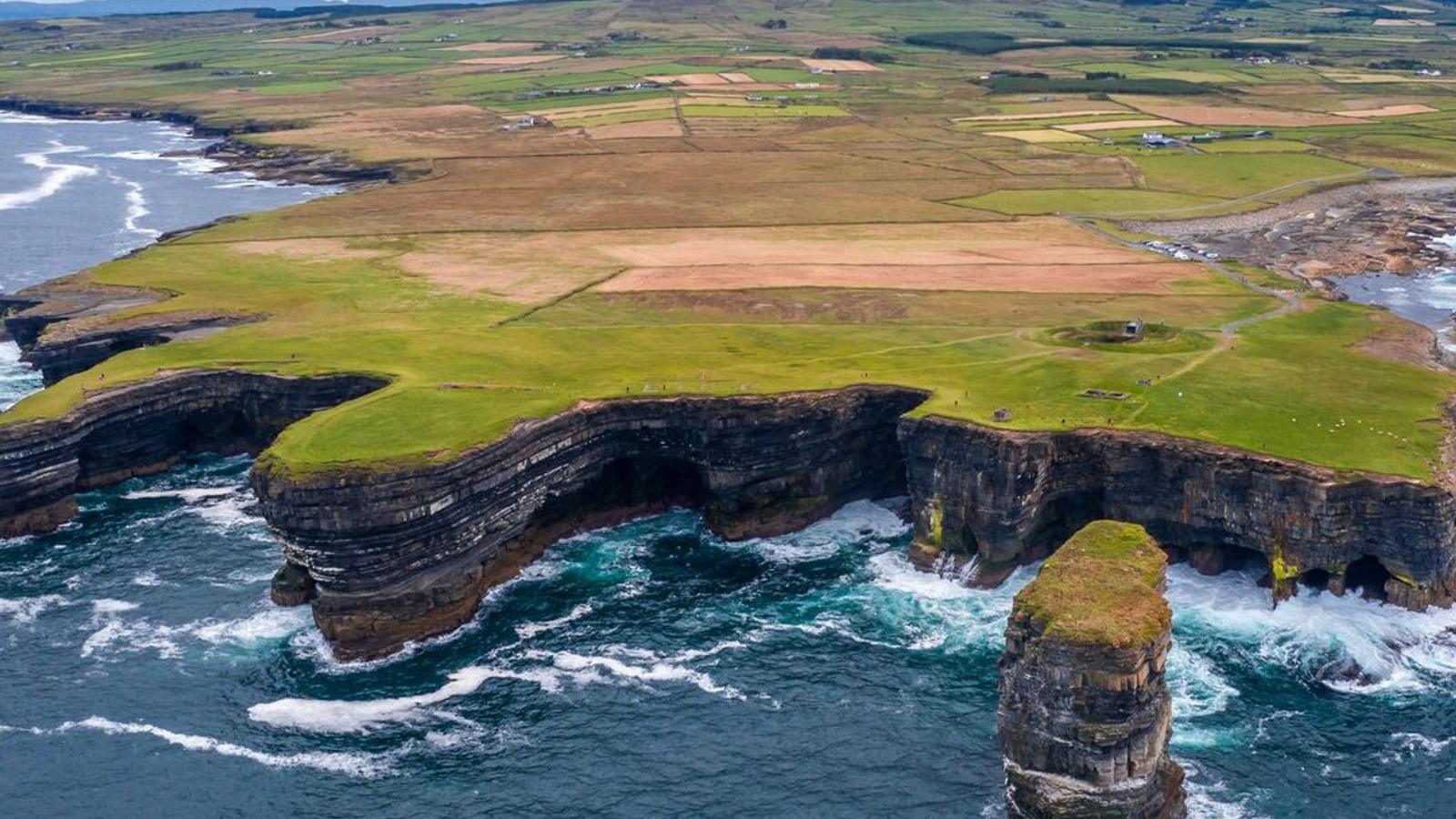
The Invisible Grid Beneath Ireland’s Fields
Ireland is divided into more than 60,000 townlands — small, irregularly shaped territories that existed long before the Norman invasion. They are the oldest surviving layer of Irish geography, and in rural areas, they are still how people tell each other where they live.
A townland might cover fifty acres or five hundred. It might hold a cluster of farms, a single cottage, or nothing habitable at all. Some townlands are smaller than a city park. Others stretch across an entire mountain slope.
What every single one of them has is a name.
Where the Names Come From
Most townland names are anglicisations of much older Irish words, their meanings compressed into sounds that visitors try — and mostly fail — to pronounce.
Baile means a settlement or homestead, and it turns up in hundreds of names across every county. Dún is a fort. Cill refers to a church. Cnoc means a hill. Tobar is a well.
So when you see “Ballymore”, you’re reading baile mór — the big homestead. “Knocknarea” is cnoc na rîogh — the hill of the king. “Killarney” contains cill (church) and airne (sloe bush).
These names are a compressed archive. Every boggy hollow, every rocky outcrop, every ancient spring that mattered enough to a community was given a name describing exactly what it was — or what it once had been.
Why Townlands Defined Who Irish People Were
In a country where official records were often kept badly or not at all, townlands were more than location. They were identity.
Ask an Irish farmer in the nineteenth century where he was from. He wouldn’t say his county. He wouldn’t say his parish. He’d say his townland — because that was the real answer. That was the community that buried his grandparents, helped bring in his harvest, and showed up without being asked when his roof collapsed in a winter storm.
Townlands were how people located themselves in the world. Some families stayed within the same townland for generations. The land itself was passed down, name and all.
☘️ Enjoying this? 64,000+ Ireland lovers get stories like this every week. Subscribe free →
The Names That Got Lost in Translation
When British administrators set about standardising Irish place names in the 1830s — working from maps where names had often been recorded phonetically from Irish speakers — errors crept in and stuck fast.
Toberpatrick should properly be Tobar Phádraig — St Patrick’s Well. Aghadoe in Kerry comes from Achadh Dá Eo, meaning the field of the two yews. The yews are long gone. The name remains.
If you’re curious about how Irish words ended up on modern road signs — and what they were originally trying to say — our guide to the strange names on Irish signposts takes the story much further.
How to Find Your Own Townland
Every Irish person is from a townland, whether they know it or not. If you have Irish roots, your ancestors almost certainly knew the name of theirs — and used it as their primary address long before street numbers existed.
The Irish Townlands website lets you search any address in the country and find the historic townland it sits within, along with old census records and Ordnance Survey maps showing the original boundaries as they were drawn two centuries ago. For anyone researching Irish ancestry, it is a remarkable starting point.
If you’re planning a visit with family history in mind, our 7-day Irish ancestry itinerary maps a route through the key record offices, heritage centres, and landscapes where your family’s story may well have begun. And if you haven’t started planning yet, the Ireland trip planning guide is the place to start.
Still There, Still Counted
Despite more than two centuries of standardisation, townlands survived. They appear on legal deeds. They appear on the sorting lists used by rural post offices. When emergency services need to find a remote farmhouse in Connacht, they still reach for townland names first.
Ireland has a habit of keeping what it cannot bear to lose. The townland system is nearly two thousand years old in places — and Irish people still know which one they’re from.
Ballynahinch. Kiltealy. Cloghoge. Curraghmore. Say any of them to the right Irish person and watch their face change.
That is the thing about a name given when it truly mattered. It stays.
The Next Time You See a Signpost
The next time you drive through rural Ireland and pass a signpost pointing somewhere you’ve never heard of, slow down for a moment. That name on the post is older than the road you’re travelling. Someone was born there, married there, and is buried there. And somewhere in the world, a grandchild of that family still knows exactly which townland they are from.
☘️ You Might Also Love
Tours & experiences you might love


Powered by Viator. Some links are affiliate links — we may earn a small commission at no extra cost to you.
Secure Your Dream Irish Experience Before It’s Gone!
Planning a trip to Ireland? Don’t let sold-out tours or packed attractions spoil your journey. Iconic experiences like visiting the Cliffs of Moher, exploring the Rock of Cashel, or enjoying a guided walk through Ireland’s ancient past often sell out quickly—especially during peak travel seasons.

Booking in advance guarantees your place and ensures you can fully immerse yourself in the rich culture and breathtaking scenery without stress or disappointment. You’ll also free up time to explore Ireland’s hidden gems and savour those authentic moments that make your trip truly special.
Make the most of your journey—start planning today and secure those must-do experiences before they’re gone!
Subscribe Free