

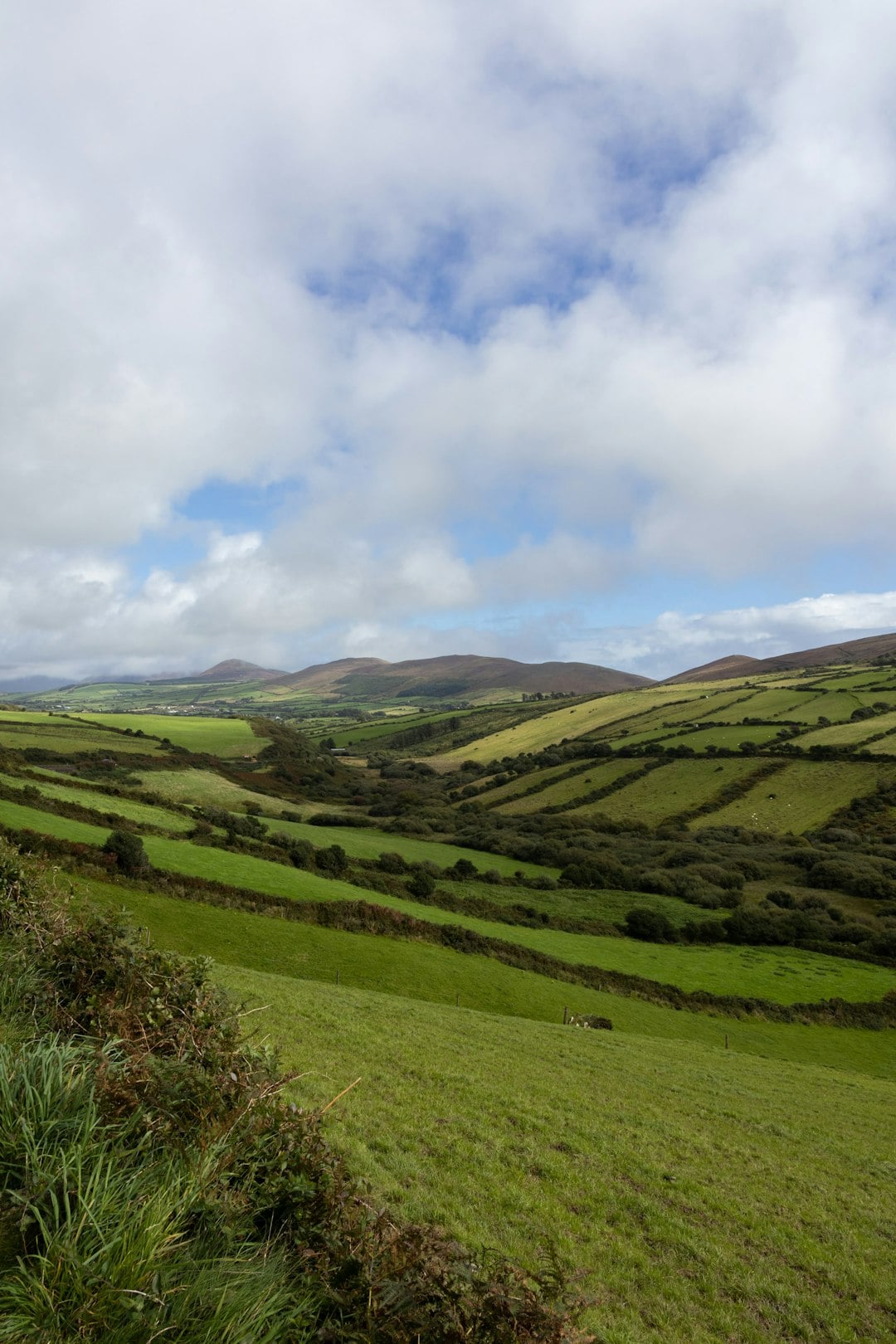
Ask an Irish person where they are from and you will not get a simple answer. They will not just say County Kerry or somewhere in Connacht. They will say Knocknagoshel. Or Clooncan. Or Aghamore. And they will expect it to mean something.
That name is not a village or a town. It is a townland — and Ireland has 64,000 of them.
Watch: Do You Qualify for an Irish Passport?
Tracing your Irish family? If one of your grandparents was born in Ireland, you may be able to become an Irish citizen. This 14-minute guide explains who qualifies, what it costs and how long it takes. Thinking of making the move? Get the free Moving to Ireland checklist.
What Is a Townland?
A townland is a small parcel of land that has been named and recognised as a distinct unit for over a thousand years. Ireland has more than 64,000 of them, covering every inch of the country from coastal headland to mountain bog.
Most townlands cover a few hundred acres. Some are barely a hillside. Others take in a cluster of farms, a stretch of bog, and a bend in the river. Every one has a name — in Irish first, and usually a translated or anglicised version too.
They are not counties, not parishes, not electoral wards. They predate all of those. The word traces back to the Irish tuath, meaning a people or territory. A townland was not just land. It was community, identity, and belonging all folded into one piece of ground.
Names Older Than the Written Record
The names townlands carry are often the oldest surviving words in the Irish landscape. Baile means a homestead or settlement. Cill means a church. Doire means an oak grove. Ráth means a ring fort — one that may no longer stand, but whose memory survives in the name of the land around it.
When you walk through a townland called Rathmore, Kilnasaggart, or Derrybeg, you are reading a message left by people who lived there long before written records began. The land holds what history forgot.
Many names describe what once stood there — a well, a wood, a ford across a river. Others record the family who farmed it first. Some are simply observations: the black field, the long hill, the hollow of the hazel trees. Every name is a small act of witness, preserved in stone and soil.
How the British Almost Erased Them
In the 1830s, the British Ordnance Survey mapped Ireland for the first time. It was a vast undertaking — and a deeply political one. Surveyors anglicised thousands of townland names, sometimes phonetically, sometimes by translation, and sometimes simply by guessing wrong.
What had been Baile na nGallóglach — the settlement of the gallowglass soldiers — became Ballynagallagh on British maps. Meanings were lost. Pronunciations drifted. Brian Friel’s 1980 play Translations dramatised this erasure with devastating clarity, and Irish audiences recognised every moment of it. The loss of a place name felt like the loss of a self.
Yet the townlands survived. In rural Ireland, people kept using the old names long after the maps changed them. The land held its identity even when the paperwork tried to strip it away.
☘️ Enjoying this? 64,000+ Ireland lovers get stories like this every week. Subscribe free →
Why the Diaspora Still Care
For the millions of Irish who emigrated — or whose ancestors did — the townland is often the only thread left connecting them to Ireland. Not the county, not the village. The townland.
Genealogy researchers quickly find that a county is far too broad a net. Even a parish can hold hundreds of families. A townland narrows it to a handful of homes, a particular hillside, a view of the sea from one specific angle.
Many Irish-American families still know their ancestral townland by name, passed down quietly through generations. When they come back to Ireland, that is where they want to go — not a famous attraction, but the field their great-grandmother stood in. If you are tracing your own Irish roots, understanding Irish surnames and where they come from is often the first step, and a townland search usually follows close behind.
Townlands Are Still Very Much Alive
Townlands are not just history. They are in active use today. They appear on official Irish addresses, land registry documents, and road signs throughout rural Ireland. In many parts of the country, a house address lists only a name and a townland — no street number, no postcode, just the land itself.
The Irish language has a word for the connection people feel to their home place: dúchas. It means an inherited belonging, something passed through generations without ever needing to be explained. The townland is where dúchas lives. The hidden language inside Irish place names runs far deeper than most visitors realise — and the townland system is its oldest layer.
If you are planning a visit to rural Ireland, your host’s address may not mean much to a GPS. Ask which townland you are staying in. The story they tell you will be worth more than any map. Our Ireland trip planning guide is a good place to find those quieter corners where townlands still shape daily life.
Ireland is a country that has always known exactly where it stands — not just on a map, but in memory, in story, and in belonging. Every one of those 64,000 townlands is a name that someone once stood inside, looked out from, and called home.
Many still do.
☘️ You Might Also Love
Tours & experiences you might love


Powered by Viator. Some links are affiliate links — we may earn a small commission at no extra cost to you.
Secure Your Dream Irish Experience Before It’s Gone!
Planning a trip to Ireland? Don’t let sold-out tours or packed attractions spoil your journey. Iconic experiences like visiting the Cliffs of Moher, exploring the Rock of Cashel, or enjoying a guided walk through Ireland’s ancient past often sell out quickly—especially during peak travel seasons.

Booking in advance guarantees your place and ensures you can fully immerse yourself in the rich culture and breathtaking scenery without stress or disappointment. You’ll also free up time to explore Ireland’s hidden gems and savour those authentic moments that make your trip truly special.
Make the most of your journey—start planning today and secure those must-do experiences before they’re gone!