

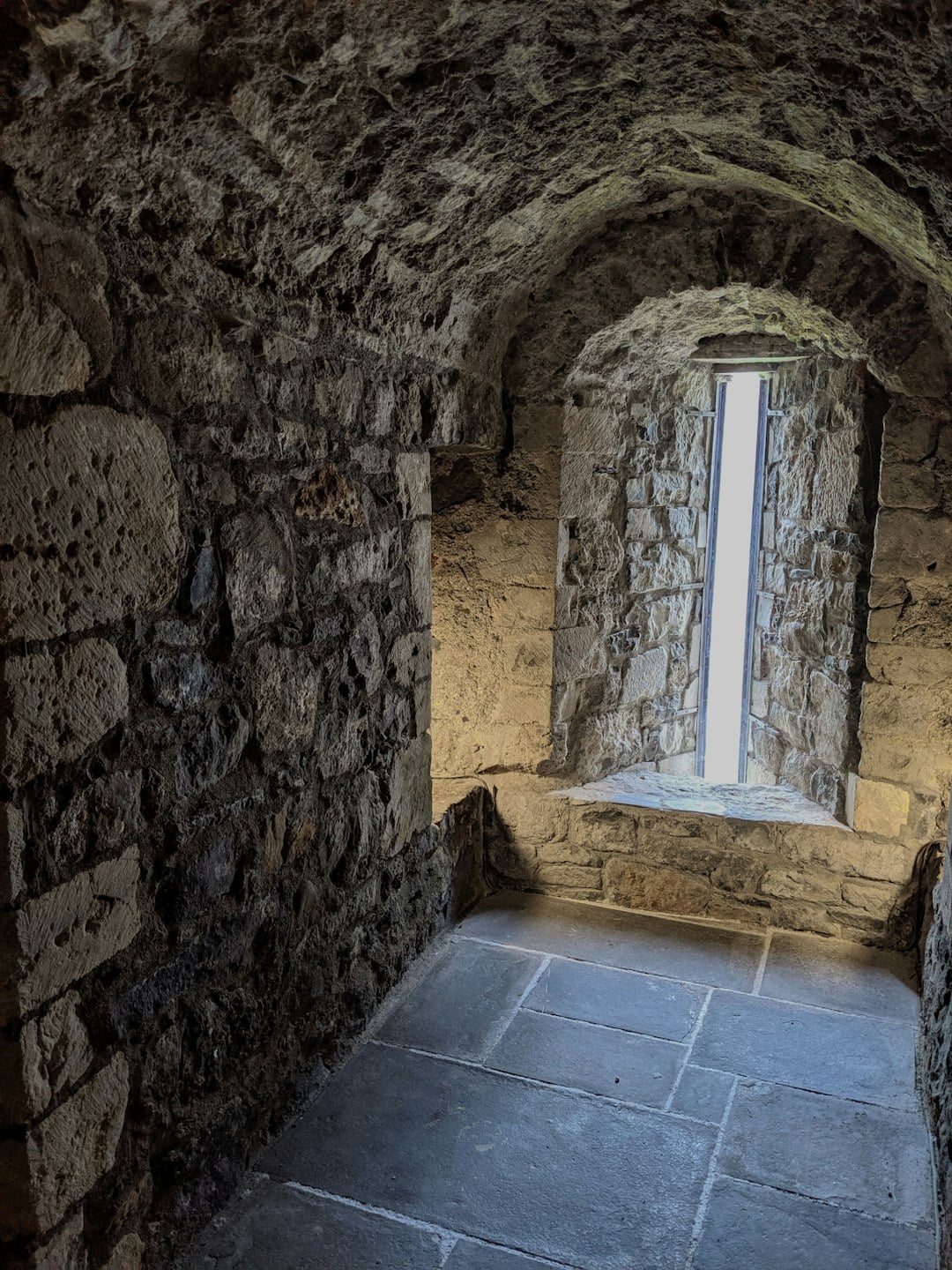
Press the right panel on a 17th-century Irish manor wall, and a door swings open to a space barely big enough to crouch in. No windows. No light. Just stone, silence, and the sound of soldiers searching the rooms beyond. This was where a Catholic priest would hide — sometimes for days.
Got an Irish surname with a castle behind it? ☘️
Find Your Irish Castle — matches your surname to its ancestral castle and the family’s history.
What Were Priest Holes?
Priest holes were concealed rooms or passages built into the walls, floors, and chimneys of Catholic-owned homes and castles across Ireland and England. They became widespread in the 16th and 17th centuries, when practising Catholicism was outlawed under English rule.
A priest discovered sheltering in a home faced execution. So did the family hiding him.
The holes were engineered to be invisible. False walls, rotating panels, hidden trapdoors, spaces behind staircases — builders used every trick they knew. Some were barely two feet wide. Others were large enough to store vestments, a chalice, and candles for a secret Mass.
Why Ireland Needed Them
England’s Penal Laws stripped Irish Catholics of almost every right. They could not own land, vote, hold public office, or openly worship. Priests were banned from living in Ireland at all.
But the Catholic Church did not disappear. Priests moved between safe houses at night. They said Mass in fields, at flat stones, and in the homes of loyal families — families who knew the risk and took it anyway.
The penalty for harbouring a priest was death or transportation. That did not stop them.
The Man Who Built Them in the Dark
The most skilled priest hole builder in history was a Jesuit lay brother named Nicholas Owen — known to those who trusted him as Little John. Working alone, in secret, Owen constructed dozens of hiding places across Britain and Ireland throughout the late 1500s.
He worked at night. He removed the rubble himself so no labourer could betray him. He placed holes inside chimney stacks, beneath hearthstones, behind wainscotting, and inside the shafts of disused wells. Many had two exits in case of discovery.
Owen was eventually caught in 1606 and died under torture — without revealing the location of a single hiding place. The whereabouts of many rooms he built have never been found.
☘️ Enjoying this? 64,000+ Ireland lovers get stories like this every week. Subscribe free →
What It Was Like to Hide Inside One
Survivors described hours — sometimes days — in total darkness. No food, no water, barely enough air to breathe. The sound of soldiers tapping walls and lifting floorboards just inches away.
Catholic priests on the run carried small travel altars — a chalice, vestments, and a missal folded into a leather case small enough to push through a narrow gap. Some of these kits still survive in Irish museum collections today.
One account describes a priest remaining inside a chimney cavity for three days while soldiers camped in the hall below. He emerged grey with soot and barely able to stand. The soldiers never found him.
Where to Find Them in Ireland Today
Several Irish castles and manor houses still have documented priest holes. Kilbolane Castle in County Cork has a concealed room built into its walls. Barberstown Castle in County Kildare has one of the best-documented examples: a hidden tunnel linking the castle to St Bridget’s Catholic Church in nearby Straffan, uncovered during renovation work after new owner Ken Healy bought the castle from musician Eric Clapton in 1987 — believed to have sheltered priests during the Penal Laws. Properties across County Tipperary and Kilkenny are known to have sheltered priests — and some continue to reveal hidden spaces during renovation work.
Many were only discovered in the Victorian era, when builders knocking through walls found unexplained voids with no structural purpose. Others have never been found at all.
If you want to explore the castles where this history played out, our Ireland travel planning guide covers the best castle regions to visit. For more on what lies hidden in Irish castle design, read about the sinister features above every Irish castle entrance that most visitors never notice.
The Legacy in the Stone
Not every castle room with a story announces itself. Some of Ireland’s most powerful history hides behind a fireplace or beneath a floor that sounds slightly hollow underfoot.
The families who built these rooms left no records of where they were. That was the point. Safety depended entirely on silence.
What priest holes represent — quiet resistance, loyalty under threat, faith kept alive in complete darkness — is stitched into the story of Ireland in a way that no monument or plaque fully captures.
Walk through a restored Irish castle today and you may never know what the walls still hold.
☘️ You Might Also Love
☘️ Join 64,000+ Ireland Lovers
Every Friday, get Ireland’s hidden gems, local secrets, and travel inspiration — the kind you won’t find in any guidebook.
Free forever · · Unsubscribe anytime
Tours & experiences you might love


Powered by Viator. Some links are affiliate links — we may earn a small commission at no extra cost to you.
Secure Your Dream Irish Experience Before It’s Gone!
Planning a trip to Ireland? Don’t let sold-out tours or packed attractions spoil your journey. Iconic experiences like visiting the Cliffs of Moher, exploring the Rock of Cashel, or enjoying a guided walk through Ireland’s ancient past often sell out quickly—especially during peak travel seasons.

Booking in advance guarantees your place and ensures you can fully immerse yourself in the rich culture and breathtaking scenery without stress or disappointment. You’ll also free up time to explore Ireland’s hidden gems and savour those authentic moments that make your trip truly special.
Make the most of your journey—start planning today and secure those must-do experiences before they’re gone!